
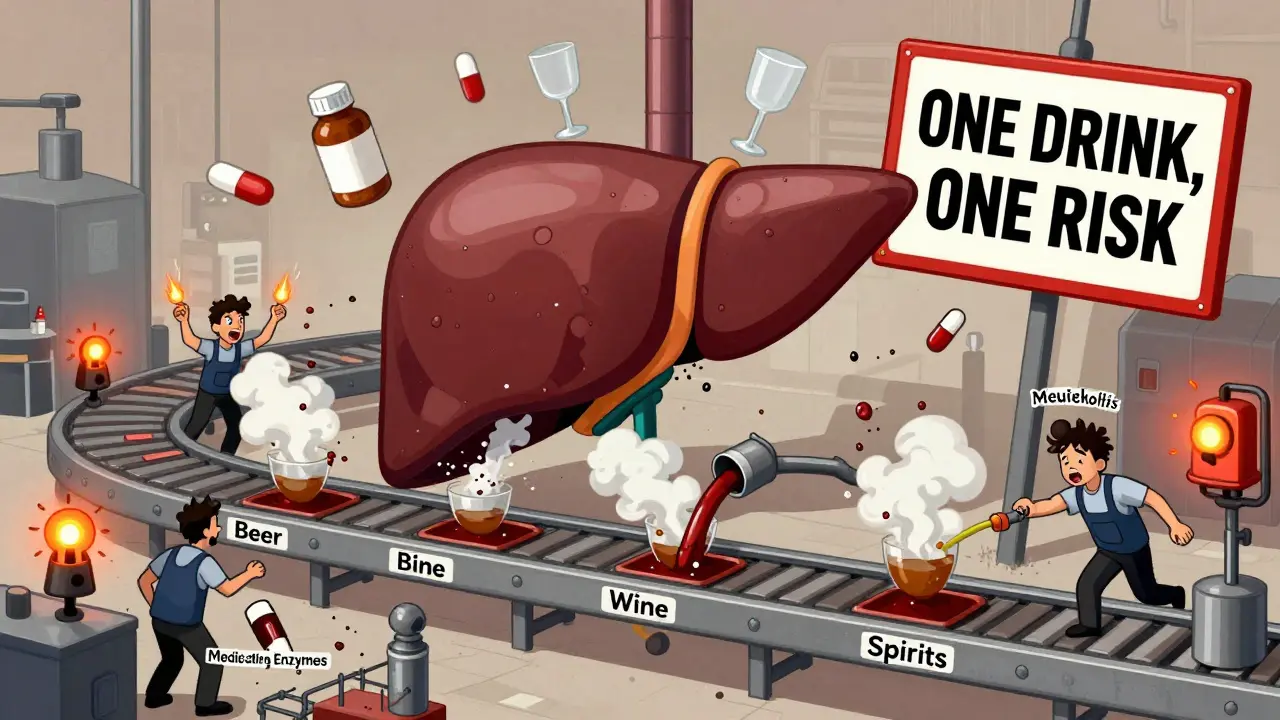
It’s not about whether you drink beer, wine, or whiskey. It’s about how much ethanol is in your bloodstream when you take your medication. Yet most people think red wine is safer than a shot of vodka, or that a couple of beers won’t matter if they’re on painkillers. That’s not just wrong-it’s dangerous.
Every year, tens of thousands of people end up in emergency rooms because they didn’t realize that alcohol and their prescription drugs don’t mix. And it doesn’t matter if it’s a glass of wine with dinner or a shot of gin before bed. The science is clear: the type of alcohol you drink doesn’t change the risk. The amount does.
One Drink, One Risk
A standard drink contains 14 grams of pure alcohol. That’s 12 ounces of beer, 5 ounces of wine, or 1.5 ounces of spirits. Every single one delivers the same ethanol punch to your liver. The confusion comes from how fast you consume it. A shot of whiskey goes down in seconds. A beer takes minutes. A glass of wine? Maybe 10. But once it hits your bloodstream, your body treats them all the same.
When you take a medication-whether it’s an antibiotic, a sleep pill, or a blood thinner-your liver has to process both the drug and the alcohol. They compete for the same enzymes. When alcohol wins, your medication either builds up to toxic levels or gets broken down too fast, making it useless. The result? Dizziness, nausea, internal bleeding, liver damage, or even sudden unconsciousness.
Spirits: The Silent Threat
Spirits get blamed a lot. And for good reason. Emergency room data shows 68% of alcohol-medication overdose cases involve distilled spirits. Why? Speed. People don’t sip a shot. They knock it back. That means your blood alcohol level spikes fast-sometimes hitting 0.08% after just one drink. At that level, sedatives like benzodiazepines become 300-500% more powerful. You might think you’re just having a nightcap. Your body thinks it’s being overdosed.
And it’s not just about the alcohol. Dark spirits like bourbon or rum contain congeners-chemical byproducts of fermentation. These don’t change how alcohol interacts with your meds, but they can make you feel worse. Nausea. Vomiting. Headaches. If you’re on an antibiotic like metronidazole, those symptoms can be mistaken for an allergic reaction. But they’re just the alcohol and congeners teaming up to wreck your stomach.
Wine: The Misunderstood Drink
Red wine gets a pass because it’s "healthy." But that’s a myth when meds are involved. One Mayo Clinic study found that red wine increased bleeding risk with warfarin by 15% compared to the same amount of ethanol from spirits. Why? Polyphenols and tannins in red wine act as natural blood thinners. They don’t replace your medication-they add to it. The combination? Unpredictable bruising, nosebleeds, or worse.
And then there’s the myth that "a little wine is okay." A 2022 survey of over 5,000 adults found 41% believed red wine was safer than other alcohols with medication. Those people were more likely to have serious side effects. Because they drank more, thinking they were being careful. The truth? One glass of wine carries the same risk as one shot. No exceptions.
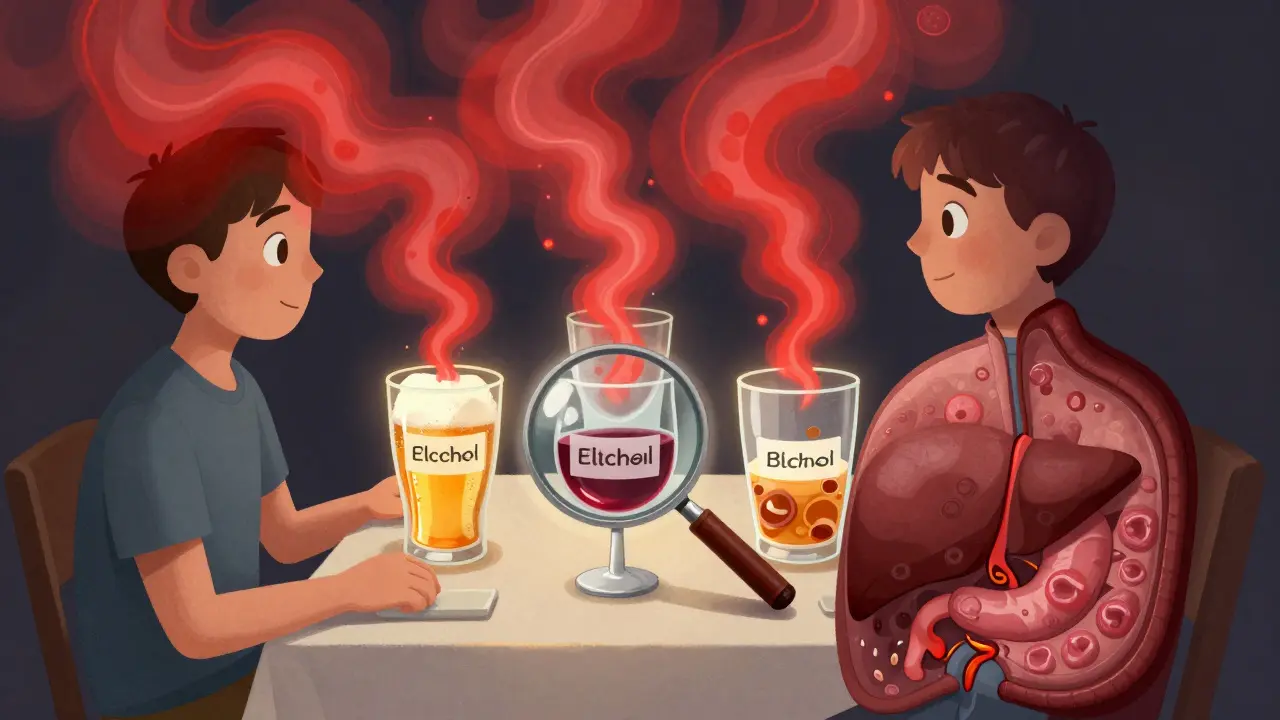
Beer: The False Sense of Safety
Beer has the lowest alcohol percentage-usually around 5%. That leads people to think they can have a few without consequences. But here’s the problem: people don’t stop at one. The CDC reports that beer accounts for 52% of total alcohol consumed in the U.S. And 47% of unintentional alcohol-medication interactions happen because someone had three or four beers with ibuprofen or a sleep aid.
Here’s what happens: one beer? Fine. Two? Still okay. Three? Now you’re at 1.5 standard drinks. Four? You’ve hit two. And if you’re on NSAIDs like Advil? That’s when your stomach lining starts breaking down. Unexplained bleeding. Black stools. Hospital visits. All because someone thought, "It’s just beer."
Carbonation makes it worse. Sparkling wine, beer, or mixed drinks with soda? They empty from your stomach 25% faster than flat drinks. That means alcohol hits your bloodstream quicker. Your meds? They get hit harder and sooner.
The Real Danger: Cumulative Dose
It’s not just one drink with one pill. It’s the pattern. A glass of wine with dinner. A beer after work. A shot before bed. Over time, that adds up. Your liver gets tired. It stops keeping up. Medications like acetaminophen (Tylenol) become deadly. Just two standard drinks-any type-can triple your risk of liver damage. And you won’t feel it until it’s too late.
Studies show that people who drink regularly while on long-term meds are 3 times more likely to develop liver toxicity. It doesn’t matter if it’s from wine, beer, or spirits. The ethanol is the enemy. Not the bottle.
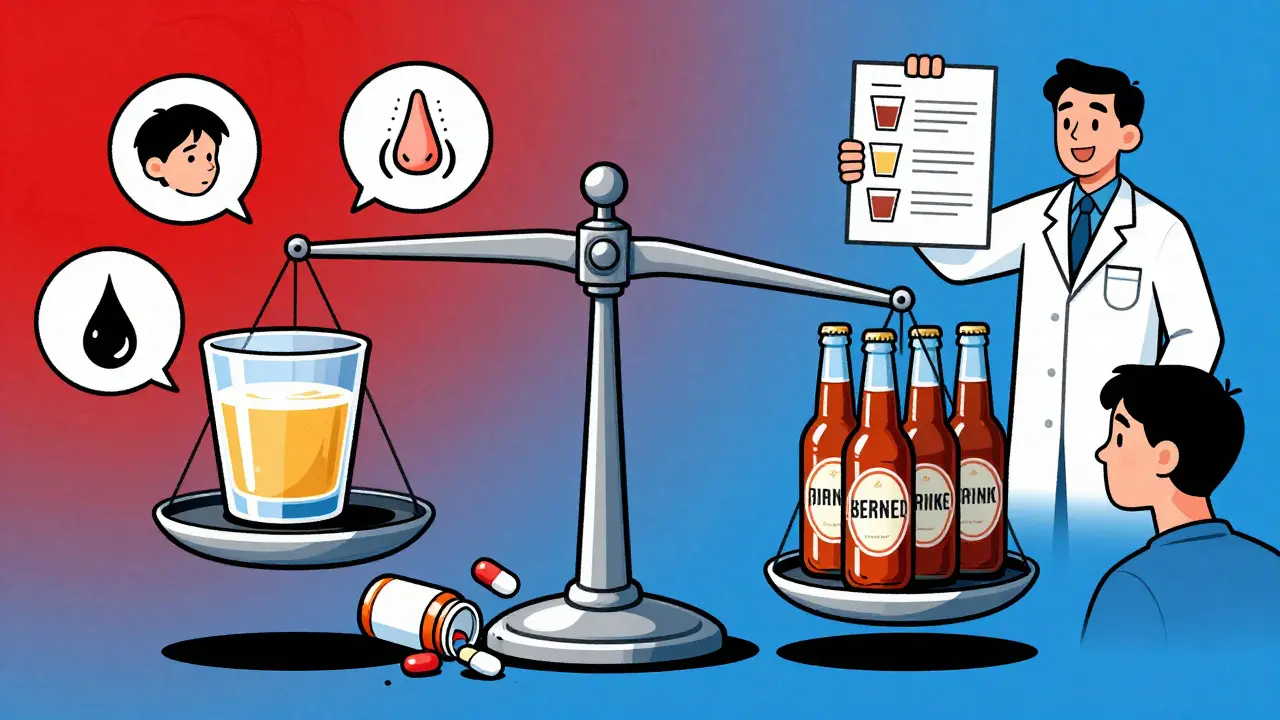
What You Need to Do
Stop thinking about the drink. Start thinking about the dose.
- If your medication says "avoid alcohol," that means all alcohol. No exceptions.
- One standard drink = 12 oz beer, 5 oz wine, 1.5 oz spirits. Use that as your limit-if you’re allowed any at all.
- Never drink on an empty stomach. Food slows absorption. It’s not a cure, but it helps.
- Check your labels. The FDA now requires "alcohol" warnings on over 200 common medications. If it’s not listed, ask your pharmacist.
- Use apps like GoodRx’s Alcohol Check. They scan your meds and tell you exactly how much, if any, is safe.
Pharmacists now spend an average of 7 minutes per patient explaining this. Most patients still don’t get it. That’s why the NIH rolled out visual drink charts. Patients who used them improved their understanding from 38% to 89%. That’s not magic. That’s clarity.
The Bottom Line
There is no safe alcohol type when you’re on medication. Wine isn’t better. Beer isn’t safer. Spirits aren’t the only danger. The only thing that matters is ethanol. And ethanol doesn’t care what kind of glass it’s in.
The safest choice? Don’t drink at all. If you must, stick to one standard drink-and only if your doctor says it’s okay. And even then, wait at least two hours after taking your pill. Because your liver doesn’t multitask well. And when it’s overwhelmed, your body pays the price.


This is the kind of info we NEED more of. I used to think wine was "gentle" on my blood thinners until I ended up in the ER with a nosebleed that wouldn't stop. One glass. That's all. My doctor said ethanol is ethanol. No exceptions. I stopped drinking altogether. Best decision I ever made. 🙌