
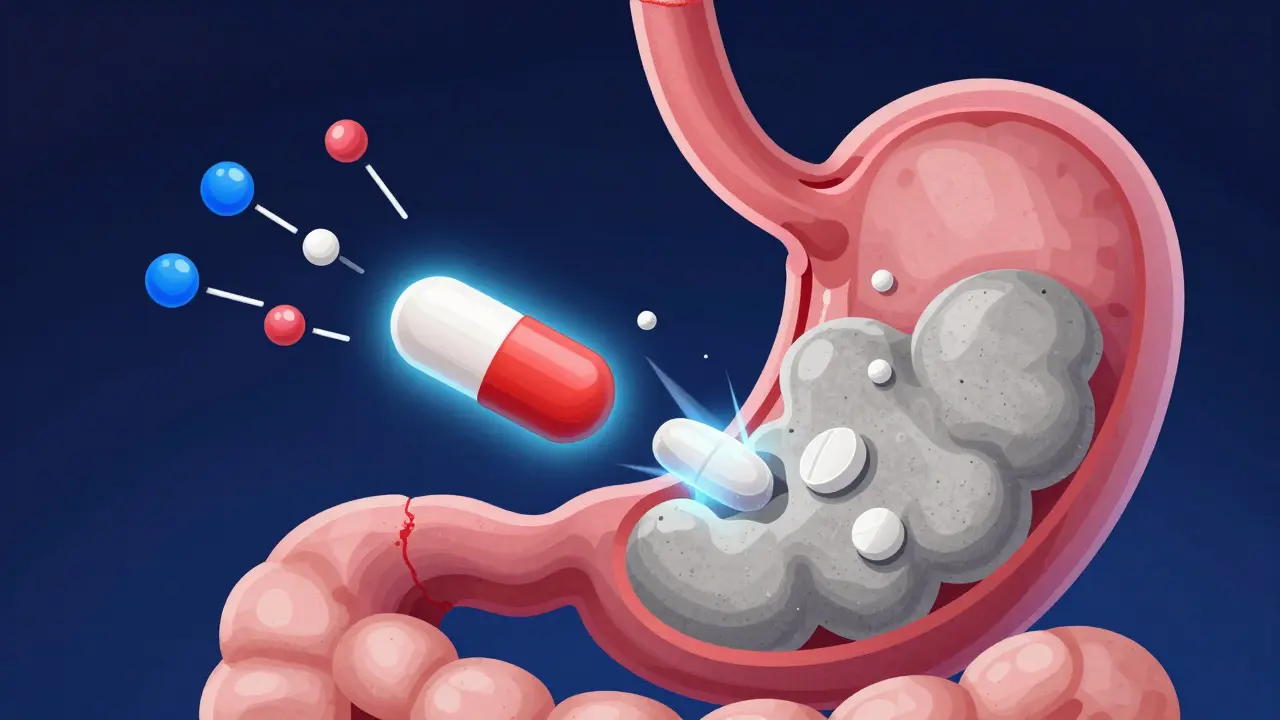
Take your antibiotic with your antacid. It seems harmless - maybe even smart. You’ve got heartburn, you’ve got an infection, and you want to feel better fast. But here’s the truth: if you do that without spacing them out, your antibiotic might not work at all. Not a little less. Not just slightly weaker. Antacids and antibiotics can clash in your stomach in ways that cut antibiotic absorption by up to 90%. And if your infection doesn’t clear, it doesn’t just mean more discomfort - it can lead to longer illness, stronger bacteria, and even hospital visits.
Why Antacids Kill Antibiotic Effectiveness
Antacids like Tums, Rolaids, Maalox, and Mylanta work by neutralizing stomach acid. That’s good for heartburn. But your body needs acid to absorb certain antibiotics properly. When you swallow an antacid right before or after an antibiotic, two things happen: the acid gets blocked, and the antacid’s minerals bind to the drug. The minerals in antacids - aluminum, magnesium, calcium - act like tiny magnets for antibiotics. They latch onto tetracyclines (like doxycycline) and fluoroquinolones (like ciprofloxacin and levofloxacin), forming a solid lump your gut can’t absorb. Think of it like trying to drink a smoothie that turned into concrete. You swallow it, but your body can’t use it. Studies show that taking ciprofloxacin with an antacid can drop its absorption by 75% to 90%. Doxycycline? Down 50%. Even amoxicillin, which is usually safe, loses 15-20% of its strength. That might not sound like much - until you realize that antibiotics need to hit a minimum level in your blood to kill bacteria. Drop below that threshold, and the infection keeps growing.Which Antibiotics Are Most at Risk?
Not all antibiotics react the same way. Some are barely affected. Others are extremely sensitive. Here’s what you need to know:- Fluoroquinolones (ciprofloxacin, levofloxacin, moxifloxacin): These are the most vulnerable. Even a single Tums can cut absorption by over 80%. The NHS and FDA say you must wait at least 2 hours before or 4 hours after taking an antacid.
- Tetracyclines (doxycycline, tetracycline): These are next in line. Antacids reduce their absorption by 50-70%. Separate them by 2 to 3 hours.
- Macrolides (azithromycin, clarithromycin): Minimal interaction. Still, experts recommend a 2-hour gap just to be safe.
- Beta-lactams (amoxicillin, cephalexin): Only a small drop in absorption (15-25%). You can usually take them together if needed, but spacing them by 1-2 hours is better.
- Metronidazole: No significant interaction. You can take it with antacids without timing issues.
And here’s a key detail: not all antacids are the same. Calcium-based ones (like Tums) bind more tightly than magnesium-based ones. So if you’re on ciprofloxacin and you take Tums, you need the full 4-hour wait. If you take magnesium hydroxide (like Milk of Magnesia), 2 hours might be enough - but don’t gamble. Stick to the longer window.
What Happens When You Get It Wrong
You might not notice right away. But if your antibiotic doesn’t work, the infection doesn’t go away. You feel worse. You go back to the doctor. They prescribe another round. Then another. And each time, the bacteria get stronger. A 2021 FDA analysis of 15,000 patients found that those who took ciprofloxacin with antacids without spacing had a 22% higher chance of treatment failure - especially for urinary tract infections. That’s not rare. In the U.S., over 45 million antibiotic prescriptions are filled each year. About 22% of those patients also use antacids. That’s millions of people risking treatment failure because they didn’t know the timing mattered. Real stories back this up. On Reddit, a doctor shared that five patients with recurring UTIs kept failing treatment - until they found out they were taking ciprofloxacin with Tums. Once they spaced the doses by 4 hours, the infections cleared. On Amazon Pharmacy, a patient wrote: “My pharmacist caught that I was taking doxycycline with my antacid. She told me to take the antibiotic 2 hours before. My acne cleared up in 3 weeks.”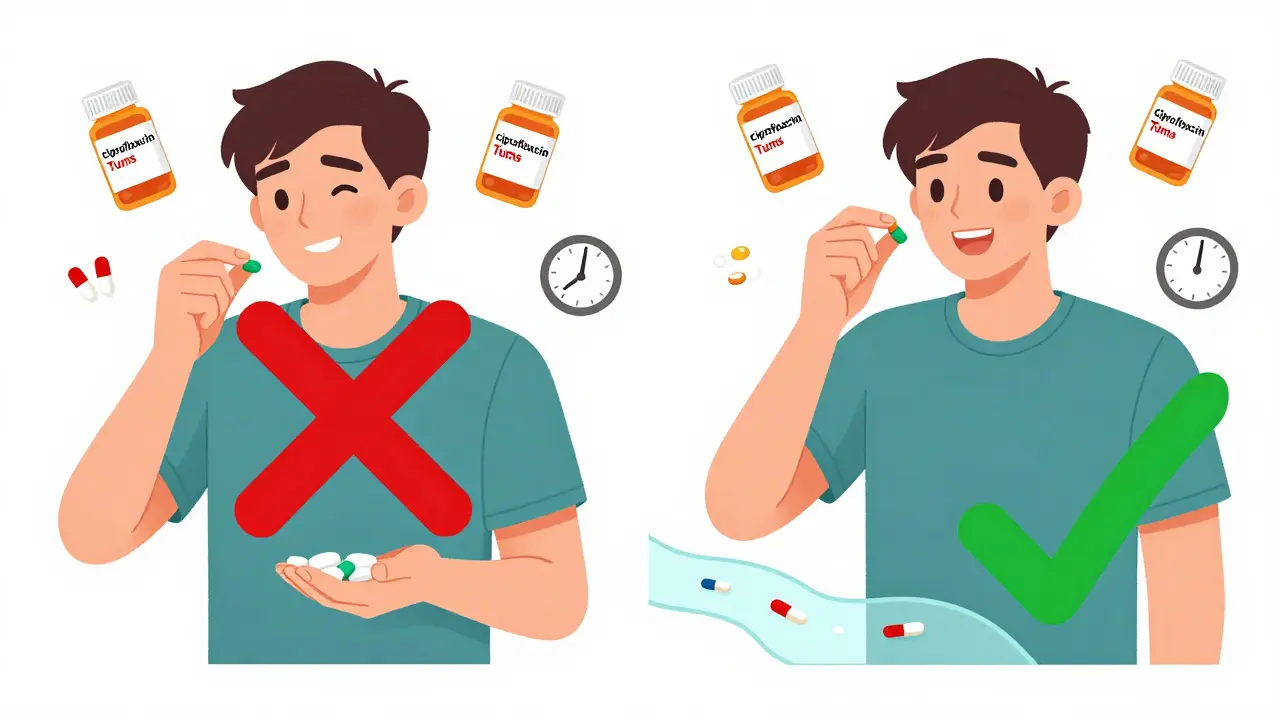
How to Actually Get the Timing Right
Knowing the rules is one thing. Doing them every day is another. Especially if you’re on antibiotics twice a day, take antacids after meals, and juggle other meds. Here’s a simple, practical plan:- Take your antibiotic on an empty stomach. Most work best 1 hour before or 2 hours after eating. That’s already a good habit.
- Wait 2 to 4 hours after your antibiotic before taking an antacid. For ciprofloxacin, wait 4 hours. For doxycycline, wait 3.
- If you need an antacid first, take it 2 hours before your antibiotic. That gives your stomach time to clear the minerals.
- Use a pill organizer with time labels. Label each compartment: “AM Antibiotic,” “PM Antibiotic,” “Afternoon Antacid.”
- Download a reminder app. MyMedSchedule and Medisafe have built-in alerts for antacid-antibiotic conflicts. They’ll ping you: “Wait 4 hours before your next Tums.”
Doctors at Mayo Clinic found that giving patients a visual chart - a simple timeline showing “Antibiotic → 4 hours → Antacid” - reduced timing errors by 37%. Print one out. Tape it to your bathroom mirror.
What If You Can’t Avoid Antacids?
Some people need daily acid control - GERD, ulcers, chronic heartburn. If you’re on antibiotics for weeks, waiting hours between doses isn’t practical. Here’s what works better:- Switch to H2 blockers. Famotidine (Pepcid) or ranitidine (if available) don’t contain metal ions. They reduce acid without binding antibiotics. They’re safer to take with ciprofloxacin or doxycycline.
- Try proton pump inhibitors (PPIs). Omeprazole (Prilosec) or esomeprazole (Nexium) are also better choices. They work differently and don’t interfere with absorption.
- Ask your doctor about newer antibiotics. In 2023, the FDA approved Cipro XR-24 - a new version of ciprofloxacin that’s designed to work even with antacids. It only drops absorption by 8%, not 90%. If you’re on long-term antibiotics, this could be a game-changer.
One 2023 study showed that switching from antacids to PPIs cut treatment failure rates from 27% to just 9% in patients needing both drugs.

What About Other Medications?
Antacids don’t just mess with antibiotics. They also interfere with:- Iron supplements
- Thyroid meds (levothyroxine)
- Some osteoporosis drugs (like alendronate)
- Certain antifungals (ketoconazole)
Always check the label or ask your pharmacist before mixing anything with antacids. If you take more than three medications a day, you’re at higher risk. Pharmacists now see this as one of the top 10 preventable causes of treatment failure in outpatient care.
Bottom Line: Timing Matters More Than You Think
This isn’t about being perfect. It’s about being smart. You don’t need to remember complex rules. Just follow this:- If you’re on ciprofloxacin, levofloxacin, or doxycycline - wait 4 hours after the antibiotic before taking an antacid.
- If you need an antacid first - wait 2 hours before taking your antibiotic.
- If you’re on amoxicillin or metronidazole - you’re mostly safe, but spacing helps.
- If you’re on antacids daily - ask your doctor about switching to famotidine or omeprazole.
Antibiotics save lives. But they only work if your body can absorb them. Antacids aren’t the enemy. But taking them at the wrong time? That’s where things go wrong. A simple 2- to 4-hour gap can mean the difference between healing and another round of pills - or worse.
Can I take Tums with amoxicillin?
Yes, but it’s still better to separate them. Amoxicillin isn’t strongly affected by antacids - absorption drops only 15-20%. That’s usually not enough to cause treatment failure in healthy people. But if you’re elderly, immunocompromised, or treating a serious infection, wait 1-2 hours between doses to be safe.
What if I forget and take them together?
Don’t panic. One accidental mix-up won’t ruin your treatment. But don’t repeat it. If you realize you took them together, skip your next antacid dose and wait until the next scheduled antibiotic time. Resume your normal schedule. If you’re on a short course (like 5-7 days), it’s unlikely to matter much. But if you’re on a longer course (like 10-14 days), contact your doctor - especially if symptoms aren’t improving.
Is it safe to take antacids at night if I take my antibiotic in the morning?
Yes, if you’re taking your antibiotic once a day in the morning. Wait at least 4 hours after your antibiotic before taking the antacid at night. For example: take doxycycline at 8 a.m., then take Tums at 1 p.m. or later. If you take antibiotics twice a day, space them so the last dose is at least 4 hours before your nighttime antacid.
Do liquid antacids interact the same as tablets?
Yes. The active ingredients - aluminum, magnesium, calcium - are what matter, not the form. Whether it’s a liquid, chewable, or tablet, the chemical interaction is identical. Don’t assume liquids are safer. A tablespoon of Maalox has the same binding power as two Tums tablets.
Can I use natural remedies like baking soda instead of antacids?
No. Baking soda (sodium bicarbonate) is an antacid too. It raises stomach pH and can interfere with antibiotics the same way. It also contains sodium, which can be risky for people with high blood pressure or kidney issues. Stick to proven, labeled antacids so you know exactly what you’re taking - and how to time it.
Why don’t doctors always warn patients about this?
They should. But in busy clinics, prescriptions are often written without detailed timing instructions. A 2023 CMS audit found only 63% of antibiotic prescriptions included proper antacid timing advice. That’s changing. Most EHR systems now flag these interactions, and pharmacies are getting better at counseling. Still, if your prescription doesn’t mention spacing, ask your pharmacist. They’re trained to catch this.
What to Do Next
If you’re currently taking antibiotics and antacids:- Check your antibiotic name - is it ciprofloxacin, doxycycline, or something else?
- Look at your antacid label - does it contain aluminum, magnesium, or calcium?
- Write down your daily schedule: when you take each pill.
- Call your pharmacist. Ask: “Do I need to space these?”
- If you’ve had a failed treatment before, ask your doctor if this interaction could have been the cause.
There’s no magic pill here. Just timing. And timing is something you can control. Get it right, and you’re not just avoiding side effects - you’re making sure your antibiotic does its job. That’s not just smart. It’s essential.


OMG I did this exact thing with my cipro and Tums 😭 I thought it was fine since I had heartburn and was already taking meds. My UTI came back worse. This post saved me.