
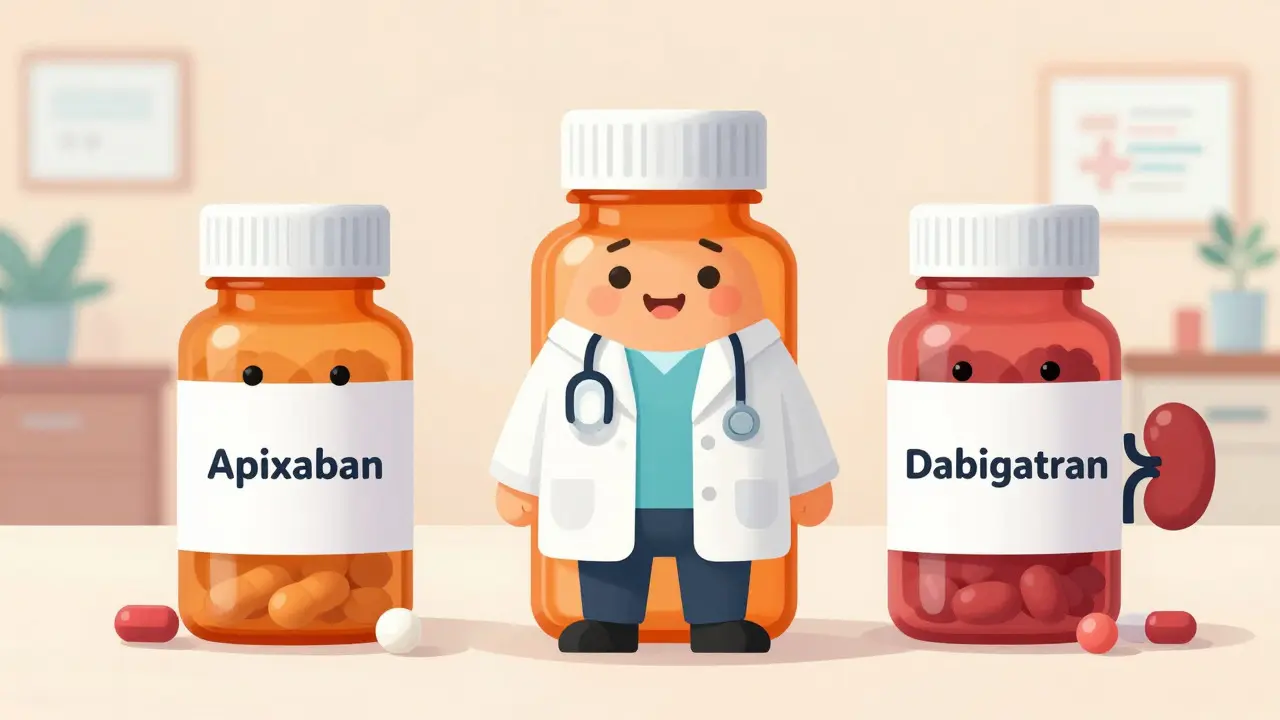
You’ve been prescribed a Direct Oral Anticoagulant (DOAC). Maybe it’s apixaban (Eliquis), rivaroxaban (Xarelto), or dabigatran (Pradaxa). These drugs are lifesavers for preventing strokes in atrial fibrillation and treating blood clots. But they aren’t all created equal when it comes to how your body handles them. While they all thin your blood, their side effect profiles differ significantly. Understanding these differences isn’t just academic-it can help you discuss the best option with your doctor, especially if you have specific health concerns like kidney issues or a history of stomach problems.
Key Takeaways
- Apixaban generally has the lowest risk of gastrointestinal (GI) bleeding among the three major DOACs.
- Dabigatran is cleared mostly by the kidneys and may carry a slightly higher risk of heart attack compared to factor Xa inhibitors.
- Rivaroxaban offers once-daily convenience but shows higher rates of GI bleeding and major extracranial bleeding in some studies.
- Kidney function plays a critical role in choosing the right drug; dabigatran requires more caution in renal impairment.
- No direct head-to-head trials exist between all three, so decisions rely on indirect comparisons and real-world data.
How They Work: Different Mechanisms, Different Risks
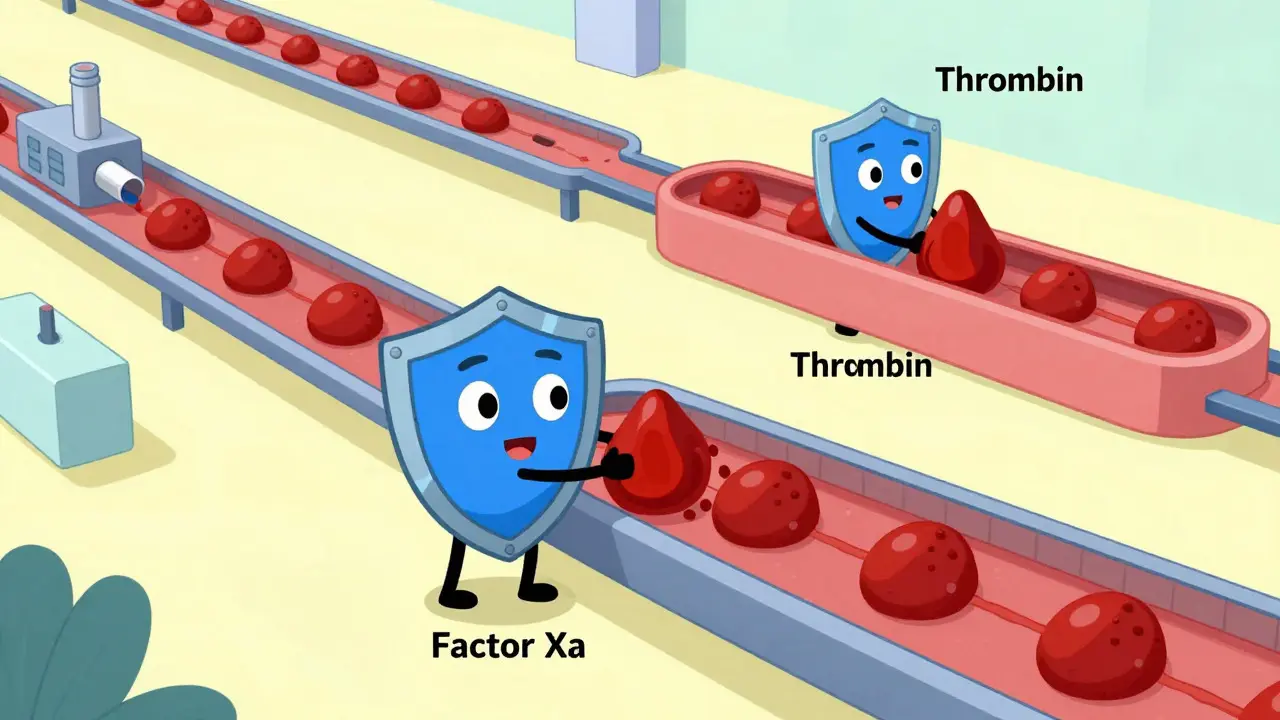
To understand why side effects vary, you first need to know what these drugs actually do inside your body. All three are anticoagulants, meaning they slow down the clotting process. However, they target different parts of the coagulation cascade.
Dabigatran is a direct thrombin inhibitor. It blocks thrombin (Factor IIa), an enzyme that converts fibrinogen into fibrin-the mesh that holds a blood clot together. In contrast, apixaban and rivaroxaban are Factor Xa inhibitors. They block Factor Xa, an earlier step in the chain reaction that leads to thrombin production.
This mechanistic difference matters. Because dabigatran acts directly on thrombin, some researchers hypothesize it might trigger pro-inflammatory effects similar to older, discontinued drugs like ximelagatran. This theoretical link helps explain why dabigatran has been associated with a modestly increased risk of acute coronary syndrome (ACS) or myocardial infarction (MI) in several meta-analyses. Apixaban and rivaroxaban, acting upstream, do not show this same pattern of cardiac risk.
The Bleeding Profile: Where the Drugs Diverge Most
Bleeding is the most common serious side effect of any anticoagulant. But not all bleeds are the same, and not all drugs cause them at the same rate. The biggest differentiator among these three is gastrointestinal (GI) bleeding.
| Drug | GI Bleeding Risk | Major Extracranial Bleeding | Intracranial Hemorrhage | Cardiac Events (MI/ACS) |
|---|---|---|---|---|
| Apixaban | Lowest among the three | Lower than rivaroxaban | Low (similar to others) | Neutral/Low |
| Rivaroxaban | Highest among the three | Highest among the three | Low (some data suggests lower than apixaban) | Neutral |
| Dabigatran | Higher than apixaban | Moderate | Low (lower with 110mg dose) | Potentially Higher |
A landmark 2022 study published in JAMA Network provided stark numbers. Rivaroxaban was associated with 35.2 GI bleeds per 1,000 person-years, while apixaban had only 16.3. That’s more than double the risk. Another study in EHJ Cardiovascular Pharmacotherapy confirmed that both dabigatran and rivaroxaban carried significantly higher GI bleeding risks compared to apixaban.
If you have a history of peptic ulcers, gastritis, or take NSAIDs regularly, this distinction is crucial. Dr. Gregory Y.H. Lip, a leading cardiovascular medicine professor, has noted that differential GI bleeding risks should heavily inform clinical decision-making. For patients with high GI risk, apixaban is often preferred.
Kidney Function: The Clearance Factor
Your kidneys play a massive role in clearing these drugs from your system. If your kidneys aren’t working well, the drug builds up, increasing bleeding risk. This is where the pharmacokinetics get very specific.
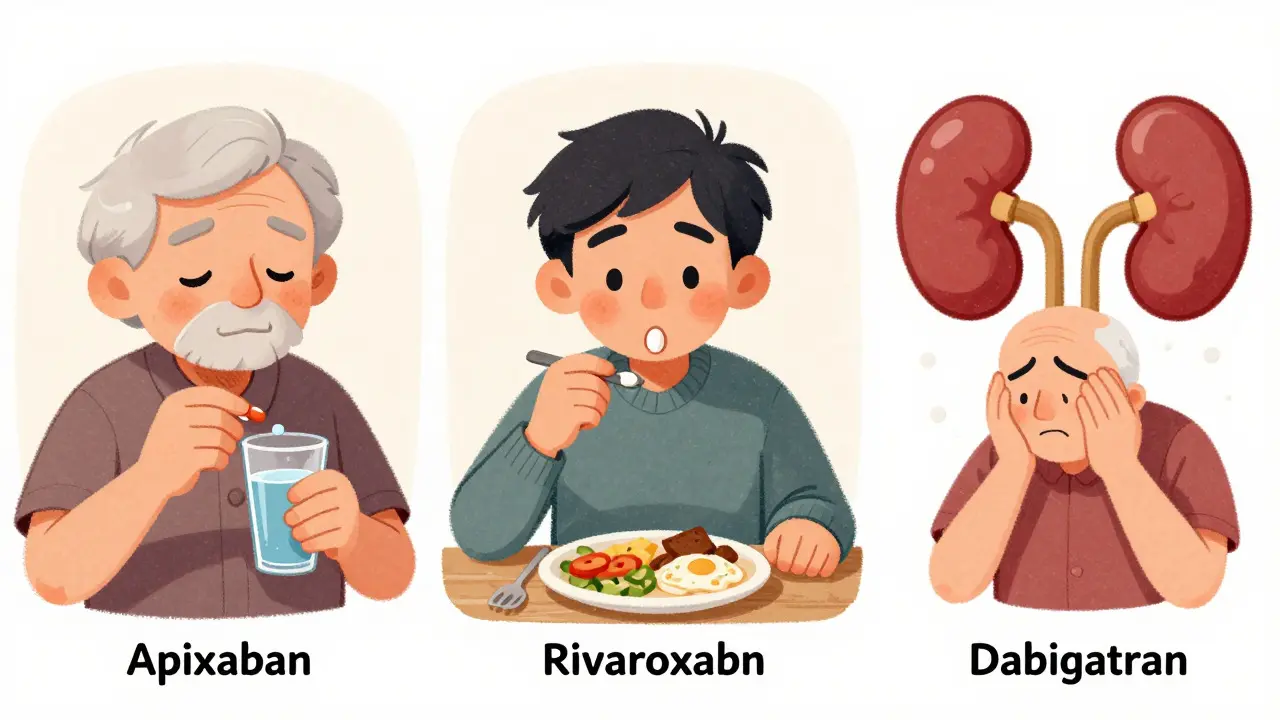
- Dabigatran: About 80% is excreted unchanged by the kidneys. It has the highest renal clearance dependency. If you have chronic kidney disease (CKD), dabigatran requires careful dose adjustment or avoidance. The FDA contraindicates the 150 mg dose if creatinine clearance is below 30 mL/min.
- Rivaroxaban: Approximately 33% is renally excreted. It also requires caution in severe renal impairment (contraindicated if CrCl <15 mL/min).
- Apixaban: Only about 25-27% is renally excreted. It has the most favorable profile for patients with kidney issues. It is still contraindicated if CrCl <15 mL/min, but it tolerates moderate impairment better than the others.
Because of this, if you have declining kidney function, apixaban is frequently the go-to choice. Dabigatran’s long half-life (12-17 hours) combined with high renal excretion means it stays in your system longer if your kidneys are sluggish, raising the stakes for bleeding events.
Heart Health: The Dabigatran Question
While all DOACs reduce stroke risk better than warfarin, there’s a nuanced conversation around heart attacks. Multiple meta-analyses, including one by Uchino & Hernandez, have suggested a consistent association between dabigatran and an increased risk of myocardial infarction (MI) or acute coronary syndrome (ACS).
One analysis of five randomized controlled trials reported a statistically significant 48% relative increase in MI with dabigatran compared to controls. The JACC 2012 analysis corroborated this, noting more MI events with dabigatran (>50% increase) compared to rivaroxaban. The exact mechanism remains unclear, but as mentioned, the direct thrombin inhibition might promote inflammation in arterial plaques.
If you have existing coronary artery disease or a history of heart attacks, your doctor might lean away from dabigatran toward apixaban or rivaroxaban, which don’t show this elevated cardiac signal.
Dosing Convenience vs. Safety
Adherence is a huge part of medication success. If you forget your pill, you’re unprotected. This is where rivaroxaban shines for many patients.
Rivaroxaban is typically dosed once daily for stroke prevention in atrial fibrillation. Apixaban and dabigatran require twice-daily dosing. However, rivaroxaban must be taken with food for doses above 10 mg to ensure proper absorption. Apixaban and dabigatran can be taken with or without food.
So, you face a trade-off: Rivaroxaban offers simpler scheduling (once a day) but comes with higher GI bleeding risks. Apixaban requires two pills a day but offers a safer GI profile and better tolerance in kidney disease. Dabigatran requires two pills a day, has no food restrictions, but carries higher renal and potential cardiac risks.
Cost and Accessibility
All three medications are now available as generics, which has dramatically lowered costs. Brand-name Eliquis (apixaban) can cost over $500 for a month’s supply, but generic versions are significantly cheaper through discount programs like GoodRx. Generic rivaroxaban and dabigatran follow similar pricing trends.
Market data from IQVIA indicates that apixaban captured approximately 45% of the US DOAC market by 2020, partly due to its perceived safety advantages. Rivaroxaban holds about 35%, while dabigatran has declined to roughly 10%. This shift reflects prescribers’ growing awareness of the differential side effect profiles, particularly the GI safety advantage of apixaban.
What About Intracranial Hemorrhage?
Bleeding in the brain (intracranial hemorrhage) is rare but devastating. All three DOACs perform better than warfarin here. However, recent head-to-head observational data adds complexity. A 2022 PubMed study found rivaroxaban demonstrated a lower rate of intracranial hemorrhage compared to apixaban (HR 0.86). Conversely, other analyses suggest dabigatran 110 mg BID may have less intracranial bleeding than rivaroxaban.
Despite these nuances, the absolute risk of intracranial hemorrhage is low for all three agents. For most patients, the higher risk of GI bleeding with rivaroxaban and dabigatran outweighs the subtle differences in brain bleed protection, making apixaban the pragmatic choice for overall safety.
Making the Right Choice for You
There is no single “best” DOAC. The right choice depends on your individual risk profile. Here’s a quick decision framework:
- Choose Apixaban if: You have a history of GI bleeding, use NSAIDs frequently, have mild-to-moderate kidney disease, or are over 80 years old (where bleeding risk is naturally higher).
- Choose Rivaroxaban if: Once-daily dosing is critical for your adherence, you have normal kidney function, and you have no history of GI issues.
- Choose Dabigatran if: Cost is a primary driver (generics vary by region), you prefer a drug with a shorter half-life for surgical planning (though all are short-acting compared to warfarin), and you have no significant kidney or cardiac history.
Always discuss your full medical history with your cardiologist or primary care provider. They will weigh your stroke risk against your bleeding risk, considering factors like age, weight, kidney function, and concomitant medications.
Which DOAC is safest for elderly patients?
Apixaban is generally considered the safest option for elderly patients (over 80). Studies, including those in the Annals of Internal Medicine, show it has a lower risk of gastrointestinal bleeding and major bleeding events compared to rivaroxaban and dabigatran in this demographic. Elderly patients are at higher baseline risk for falls and bleeding, so the safer GI profile of apixaban is a significant advantage.
Can I take rivaroxaban without food?
For doses of 10 mg or lower, rivaroxaban can be taken with or without food. However, for doses of 15 mg or 20 mg (common for stroke prevention and VTE treatment), it must be taken with food to ensure adequate absorption. Taking it on an empty stomach at these higher doses can lead to subtherapeutic levels, increasing stroke risk.
Does dabigatran really increase heart attack risk?
Yes, multiple meta-analyses suggest a modestly increased risk of myocardial infarction (MI) or acute coronary syndrome (ACS) with dabigatran compared to factor Xa inhibitors like apixaban and rivaroxaban. The exact mechanism is unclear but may relate to pro-inflammatory effects of direct thrombin inhibition. If you have existing coronary artery disease, your doctor may prefer apixaban or rivaroxaban.
Which DOAC is best for people with kidney disease?
Apixaban is usually the preferred choice for patients with chronic kidney disease (CKD). It has the lowest renal excretion rate (approx. 25%) compared to rivaroxaban (33%) and dabigatran (80%). Dabigatran requires strict dose adjustments or avoidance in moderate-to-severe renal impairment, making it the least suitable option for compromised kidneys.
Are generic DOACs as effective as brand names?
Yes, generic versions of apixaban, rivaroxaban, and dabigatran are bioequivalent to their brand-name counterparts. The FDA requires generics to demonstrate identical efficacy and safety profiles. Switching to generics can significantly reduce out-of-pocket costs without compromising therapeutic outcomes.
Why does apixaban have a lower GI bleeding risk?
The exact reason isn't fully understood, but it likely relates to apixaban's selective binding to Factor Xa and its pharmacokinetic properties. Unlike dabigatran, which is highly acidic and can irritate the gastric lining, apixaban is less irritating to the stomach mucosa. Real-world data consistently shows apixaban has fewer GI bleeds than rivaroxaban and dabigatran.
Can I switch between these DOACs?
Yes, switching between DOACs is possible and sometimes necessary due to side effects or cost. However, it should be done under medical supervision. Typically, you stop the first drug and start the second after a washout period based on the half-life of the first drug and your kidney function. Never switch without consulting your doctor to avoid gaps in coverage or overlapping toxicity.
