
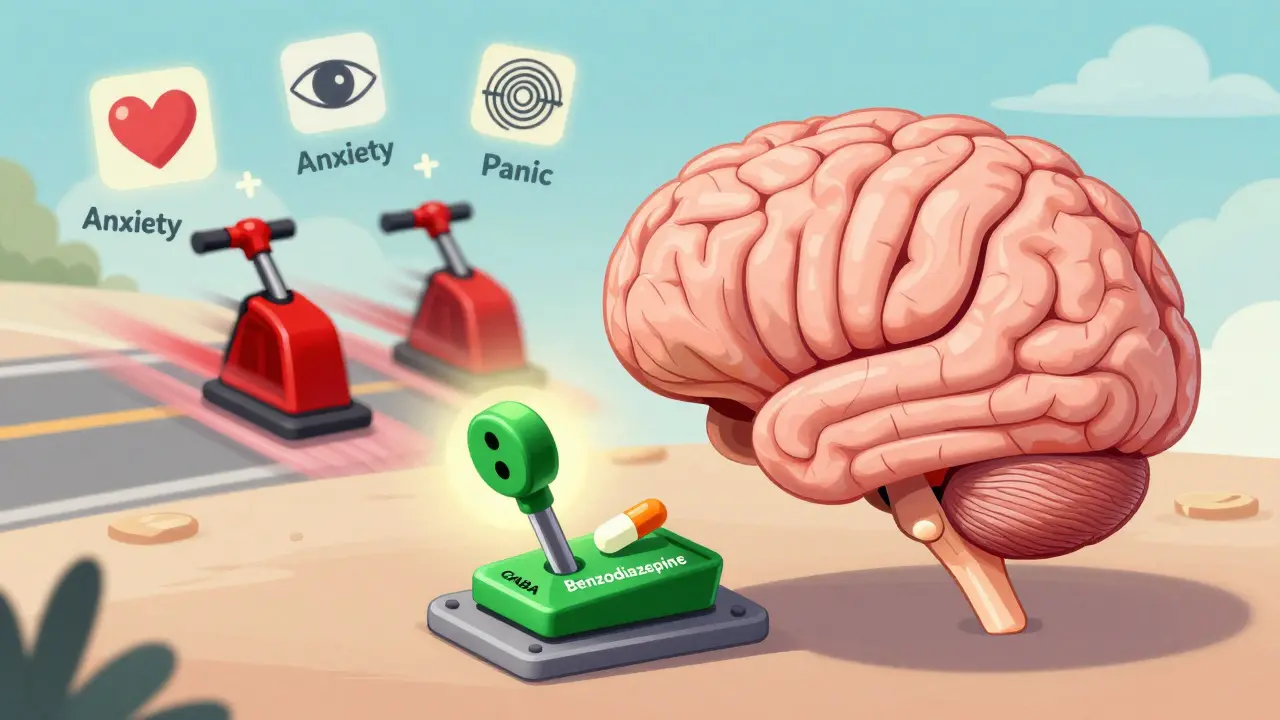
For many people, a benzodiazepine is the only thing that stops a panic attack in its tracks. One pill, and the racing heart, the tunnel vision, the feeling of drowning in air - gone. Within minutes. That’s why doctors still prescribe them. But here’s the catch: what helps today can trap you tomorrow.
How Benzodiazepines Work - and Why They Work So Fast
Benzodiazepines don’t just calm you down. They directly slow down your brain’s overactive signals. They boost GABA, the brain’s main calming chemical. Think of GABA as the brake pedal in your nervous system. When you’re anxious, your brain’s gas pedal is stuck. Benzodiazepines press the brake - hard and fast.
That’s why they’re used in emergencies. A person having a seizure? Diazepam can stop it in under 10 minutes. Someone in acute panic? Alprazolam can bring them back to earth before they even leave the ER. This speed is unmatched. SSRIs, the other go-to for anxiety, take weeks to work. Benzodiazepines? 30 minutes.
Not all benzos are the same. Short-acting ones like triazolam and lorazepam clear your system quickly. That’s why they’re used for sleep - you don’t want to feel groggy all day. Longer-acting ones like diazepam stick around for days. That’s why they’re used for alcohol withdrawal or chronic anxiety - steady levels mean fewer ups and downs.
When Benzodiazepines Are a Lifesaver
They’re not just for anxiety. They’re critical in hospitals. Midazolam is used to sedate people on ventilators. It’s given before surgery to make you forget the procedure. In ICU units, it’s standard for stopping prolonged seizures. Without it, brain damage or death becomes a real risk.
For people with severe, treatment-resistant panic disorder, benzos can mean the difference between staying home and being able to leave the house. One woman on Reddit said she hadn’t left her bedroom for 11 months until a low dose of clonazepam let her walk to the mailbox again. That’s not hype - that’s real life.
Alcohol withdrawal? Benzodiazepines are the gold standard. Without them, seizures and delirium tremens can kill. In these cases, benzos aren’t just helpful - they’re life-saving.
The Hidden Trap: Dependence Builds Quietly
Here’s what no one tells you when they hand you the script: your brain starts to change within days.
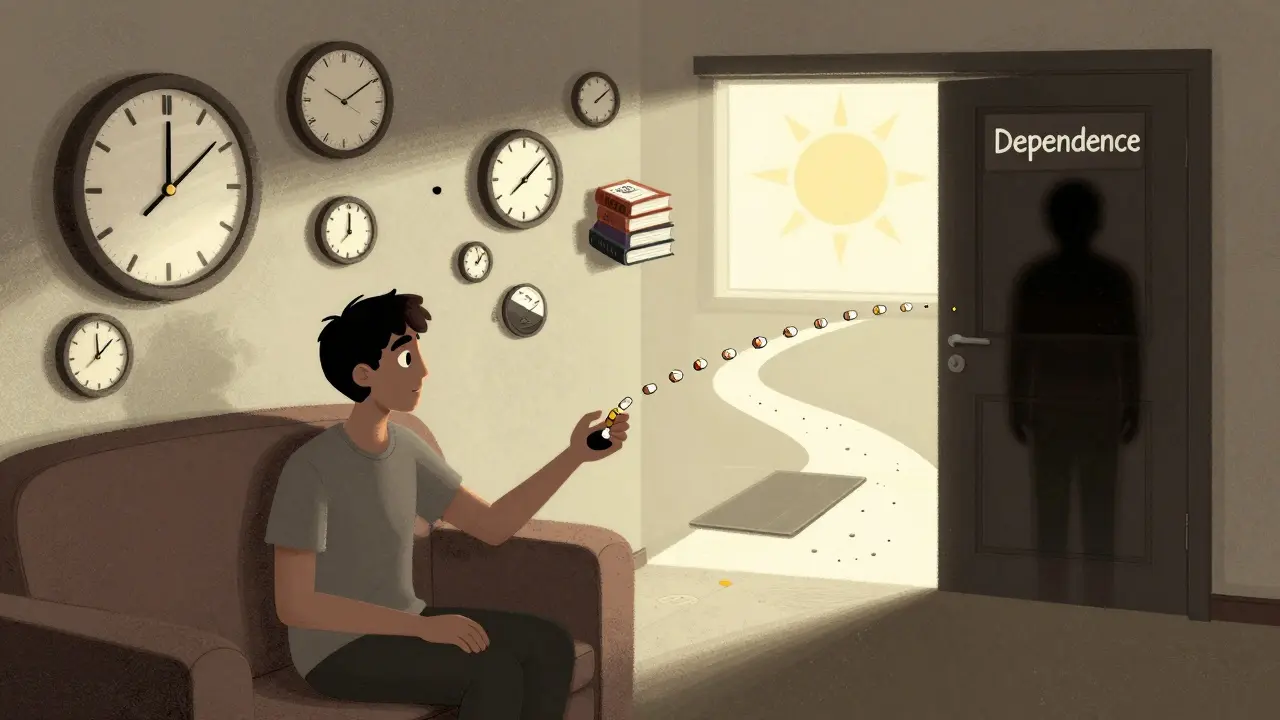
After just two weeks of daily use, your brain begins to rely on the drug to stay calm. It downregulates its own GABA receptors. You don’t feel anxious anymore - but only because the drug is there. Stop it, and your brain has no brakes left. That’s dependence. It’s not addiction. You don’t crave it for the high. You crave it because your nervous system is screaming.
Studies show 30% to 50% of people taking therapeutic doses for more than four weeks become physically dependent. That’s not rare. That’s expected. And it doesn’t mean you’re weak. It means your biology responded to the drug the way biology always does.
Even people taking exactly what their doctor prescribed - no more, no less - can end up stuck. One 2021 study found 61% of problematic cases involved people who just kept taking the pills because they didn’t realize they’d become dependent. They weren’t abusing them. They were just trying to feel normal.
What Happens When You Try to Quit
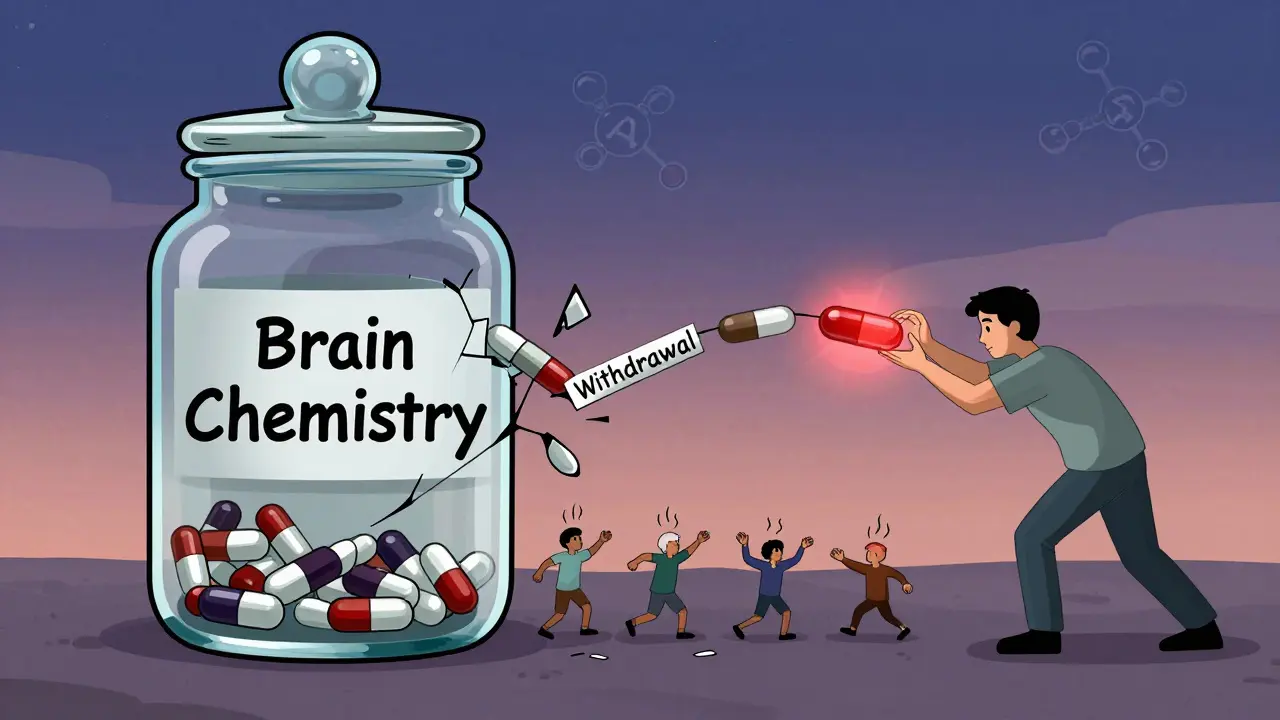
Stopping cold turkey is dangerous. Seizures. Psychosis. Suicidal thoughts. Even with a taper, withdrawal can last months.
The Ashton Manual - the most trusted guide for benzo withdrawal - says 70% to 80% of people who’ve used benzos for more than six months need at least three to six months to taper safely. Some need over a year. Symptoms include:
- Rebound anxiety - worse than before you started
- Insomnia that won’t quit
- Tremors, muscle pain, tingling
- Sensory overload - lights too bright, sounds too loud
- Memory gaps, brain fog, derealization
One man in a support group described it as “feeling like your nerves are exposed to the wind.” He was on 10 mg of diazepam for three years. Tapering took 14 months. He still has bad days.
And here’s the cruel twist: some people experience anterograde amnesia - forgetting things that happened while they were on the drug. One survey found 23% of users had gaps in memory during normal activities. You don’t remember your kid’s birthday. You forget a conversation with your partner. You wonder why you feel so disconnected.
Who Should Never Take Them
Not everyone should get a benzo prescription. The American Geriatrics Society says they should be avoided entirely in people over 65. Why? They double the risk of falls. They raise the chance of dementia. Even short-term use can cause confusion in older adults.
People with a history of substance abuse? High risk. Those with severe depression? Can worsen suicidal thoughts. Pregnant women? Linked to birth defects. People with sleep apnea? Can shut down breathing.
And yet, in 2021, 76 million benzodiazepine prescriptions were filled in the U.S. - 12.6% of adults got at least one. Women were prescribed them nearly twice as often as men. Why? Because anxiety is still seen as a “woman’s problem,” and quick fixes are easier than long-term therapy.
The Real Alternative: Therapy, Not Just Pills
There’s a better way - and it doesn’t involve pills at all.
Cognitive Behavioral Therapy for Insomnia (CBT-I) works better than sleeping pills long-term. For anxiety, CBT has been shown to be as effective as benzos - without the dependence. And the benefits stick. After treatment ends, people keep feeling better. With benzos, you feel better only as long as you keep taking them.
A 2023 JAMA study found that combining low-dose benzos with CBT cut dependence risk by 58%. That’s huge. It means you can use the drug to get through the worst of it - then learn to manage without it.
But here’s the problem: therapy takes time. It costs money. Insurance doesn’t always cover it. And many doctors don’t have the time or training to offer it. So they write the script. It’s easier. It’s faster. But it’s not better.
What Safe Use Looks Like
If you’re going to take a benzodiazepine, here’s how to do it without getting trapped:
- Use it for the shortest time possible - ideally under two weeks.
- Take it only when needed, not daily.
- Never combine it with alcohol, opioids, or sleep aids - deadly mix.
- Know your dose and half-life. Don’t switch brands without checking.
- Set a clear end date with your doctor before you start.
- Plan your exit strategy before the first pill.
Some doctors now use electronic alerts in their systems to flag prescriptions over 90 days. Kaiser Permanente cut long-term use by 37% just by doing that.
And if you’ve been on them for months or years? Don’t quit cold turkey. Talk to a doctor who understands withdrawal. Find the Ashton Manual. Join a support group. You’re not alone.
The Future of Benzodiazepines
The FDA added a boxed warning in 2020 - the strongest kind - about addiction and withdrawal. The UK’s NICE guidelines now say don’t start benzos for anxiety at all. The American Psychiatric Association recommends no more than 2-4 weeks.
Prescriptions are already falling. Analysts predict a 15-20% drop over the next decade. But they won’t disappear. They’re still essential for seizures, ICU sedation, and acute alcohol withdrawal.
The goal isn’t to ban them. It’s to use them like a fire extinguisher - not a daily drink. They’re powerful tools. But like all powerful tools, they demand respect.
If you’re on them now - whether you’ve been taking them for weeks or years - know this: you didn’t fail. Your brain didn’t break. You just used a drug that changes your biology. And now, with the right plan, you can get your brain back.
Can you get addicted to benzodiazepines if you take them as prescribed?
Yes. Addiction means compulsive use despite harm. Dependence means your body needs the drug to function normally. You can become physically dependent even if you take your exact dose exactly as prescribed. About 30-50% of people who take benzodiazepines daily for more than four weeks develop dependence. That’s not addiction - but it’s still risky.
How long does it take to become dependent on benzos?
Dependence can start in as little as two to four weeks of daily use. Even at therapeutic doses, your brain begins adapting. That’s why guidelines say to limit use to 2-4 weeks for anxiety and 7-10 days for insomnia. The longer you take them, the harder it is to stop.
What are the safest benzodiazepines for short-term use?
For anxiety, lorazepam and alprazolam are short-acting and effective. For sleep, triazolam and temazepam are preferred because they leave your system quickly. But safety isn’t about the drug - it’s about duration. Even the safest benzo becomes dangerous if taken daily for months.
Can benzodiazepines cause memory loss?
Yes. Benzodiazepines can cause anterograde amnesia - trouble forming new memories while on the drug. Studies show about 23% of users report gaps in memory during normal activities. This isn’t just forgetting where you put your keys. It’s forgetting conversations, meals, or even parts of your day. It’s one reason they’re used before surgery - you don’t want to remember.
Is it safe to stop benzodiazepines on your own?
No. Stopping suddenly can cause seizures, hallucinations, or even death. Withdrawal symptoms can be severe and last for months. Always work with a doctor who understands tapering. The Ashton Manual is the gold standard for safe discontinuation. Tapers usually take weeks to months, depending on how long you’ve been using them.
Are there better long-term alternatives for anxiety?
Yes. SSRIs and SNRIs (like sertraline or venlafaxine) are first-line for long-term anxiety. They take 4-6 weeks to work, but they don’t cause dependence. Cognitive Behavioral Therapy (CBT) is equally effective and has lasting results. Combining low-dose benzos with CBT reduces long-term dependence risk by over half, according to a 2023 JAMA study.
What to Do Next
If you’re on benzodiazepines and want to stop - start by talking to your doctor. Don’t wait until you’re desperate. Ask for a taper plan. Ask about CBT. Ask about support groups.
If you’re not on them but have anxiety - ask your doctor about non-drug options first. Therapy, exercise, sleep hygiene, mindfulness - these aren’t just “nice to have.” They’re proven, powerful, and free of risk.
Benzodiazepines saved lives. They still do. But they’re not meant to be a permanent fix. The goal isn’t to live with a pill in your pocket. It’s to live without it.


Benzos saved my life during my worst panic attack in college. I couldn’t breathe, couldn’t speak, just sat on the bathroom floor shaking. One pill and suddenly I was human again. But I didn’t know it would become my shadow.