
When you’re taking medication, knowing exactly what you’re on-and why-can make all the difference. But most online drug sites are packed with ads, sponsored content, or oversimplified advice that leaves you more confused than when you started. The truth? The most reliable, accurate, and free drug information online doesn’t come from a pharmacy chain or a health blog. It comes from U.S. government agencies and nonprofit health researchers who have no financial stake in what you take. These are the tools that doctors and pharmacists use behind the scenes. And if you know where to look, you can use them too.
DailyMed: The Official Source for FDA Drug Labels
DailyMed is the only place online where you can find the exact, unedited drug labels approved by the U.S. Food and Drug Administration. Every prescription and over-the-counter medicine sold in the U.S. must submit its full labeling to DailyMed, which updates it within 24 hours of FDA approval. As of October 2023, it held over 142,000 drug entries. That’s more than any commercial site.
What makes DailyMed different? It doesn’t rewrite or summarize. It shows you the full text the FDA reviewed-the warnings, side effects, dosing instructions, and clinical trial data. If your pill bottle says “take one daily” but the label says “take two 2.5 mg tablets once a day,” DailyMed will show you the official wording. One patient in Melbourne told me they caught a dangerous error this way: their pharmacy had misprinted the dosage, but DailyMed confirmed the correct amount.
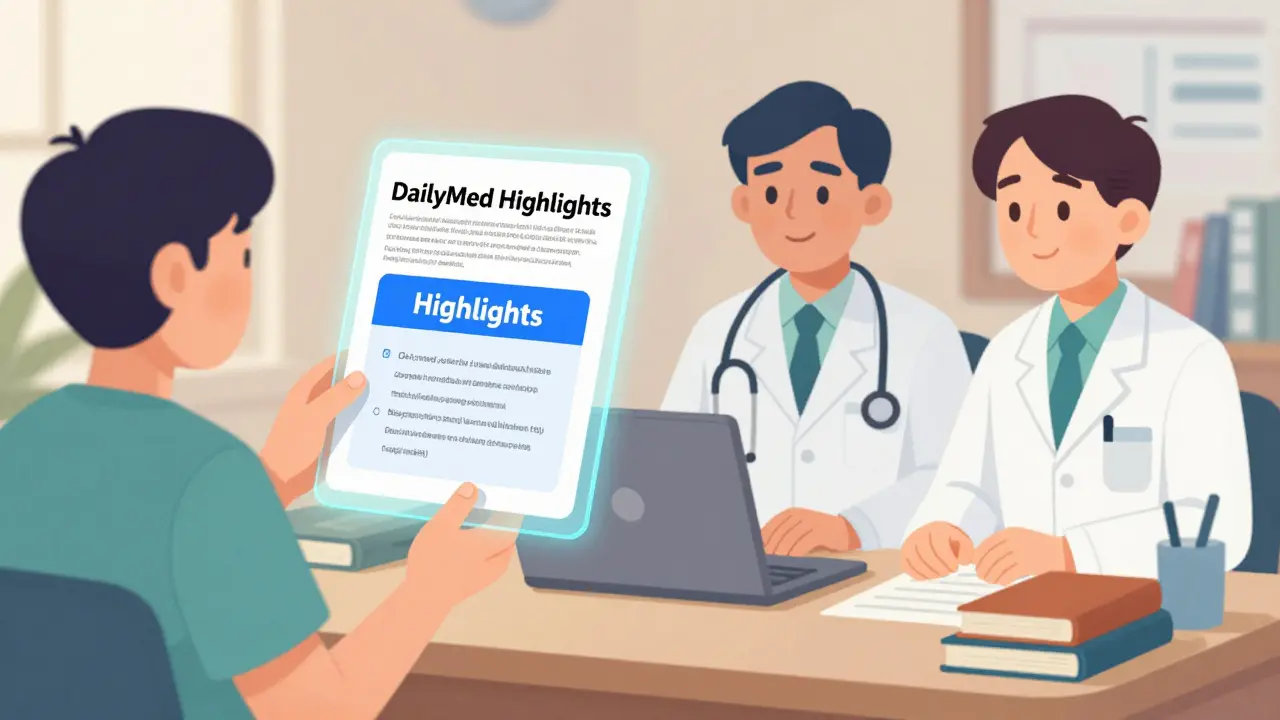
Here’s the catch: the raw labels are written for doctors, not patients. Most are at a 12th-grade reading level. That means phrases like “contraindicated in severe hepatic impairment” can feel like a foreign language. But DailyMed now includes “Highlights” sections for newer drugs, which simplify key info into plain language. Look for the blue box at the top of each label-it’s been redesigned since June 2023 to be easier to read.
You don’t need an account. Just go to dailymed.nlm.nih.gov, type in your drug name, and click the latest version. Save the PDF. Print it. Bring it to your next appointment. It’s your legal right to have this information, and it’s free.
LactMed: The Only Trusted Guide for Breastfeeding and Medications
If you’re pregnant, breastfeeding, or planning to, drug safety becomes a whole new layer of worry. Many medications pass into breast milk, and not all are safe. Commercial sites like BabyCenter or parenting blogs often give vague advice: “Check with your doctor.” But LactMed gives you hard data.
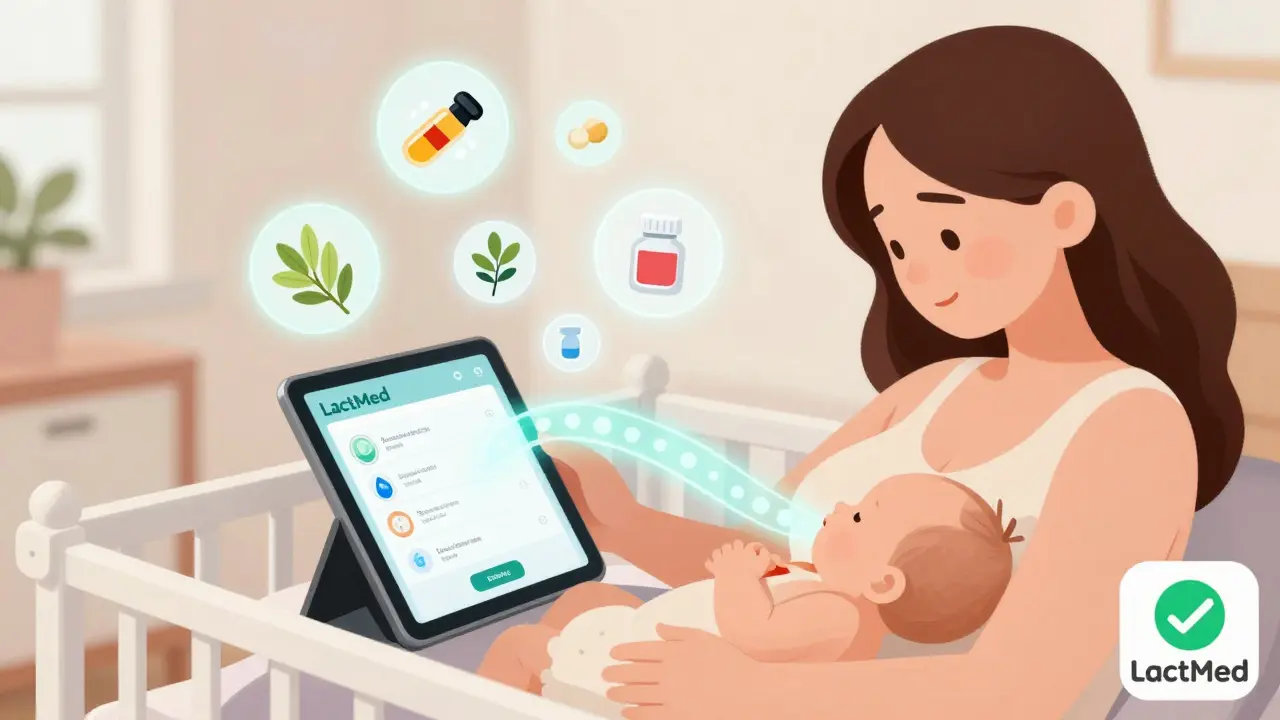
Run by the National Library of Medicine, LactMed is a database of over 4,200 substances-including prescription drugs, herbal supplements, and even recreational substances-and how they affect breastfed infants. Each entry includes:
- How much of the drug enters breast milk
- What’s known about infant absorption
- Reported side effects in babies
- Alternative medications if needed
It’s updated weekly and based on peer-reviewed studies, not opinions. A 2023 NIH survey found 92% of breastfeeding parents who used LactMed felt more confident about continuing their medication. One mother in Sydney, Australia, used LactMed to confirm it was safe to keep taking sertraline while nursing her newborn-something her OB had been unsure about.
LactMed’s interface is simple. No login. No ads. Just search by drug name. Each monograph ends with a lay summary rated at an 8th-grade reading level. It even includes Spanish translations, added in February 2024. If you’re breastfeeding, this is not a “nice to have.” It’s essential.
DrugBank: Deep Science, Made Accessible
If you’re the kind of person who wants to know how a drug actually works-not just what it does-DrugBank is your best bet. Created by researchers at the University of Alberta, DrugBank started as a tool for scientists. But since 2024, it has a new “Patient View” interface that strips away the jargon.
It has data on over 13,500 drugs, including 2,720 approved by the FDA. You can see:
- The exact chemical structure
- How it binds to receptors in your body
- How it’s broken down by your liver
- Over 1.2 million drug-drug and drug-food interactions
Unlike DailyMed and LactMed, DrugBank lets you search by drug name, gene mutation, or even metabolic pathway. A patient in Perth used it to discover that their blood thinner interacted with a common herbal supplement they’d been taking for years. That interaction wasn’t listed on their prescription label-but DrugBank flagged it.
The free tier gives you full access to interactions and mechanisms. The paid version ($499/year) adds clinical trial data, but most patients don’t need it. The big downside? The interface still feels like a research portal. The color-coded interaction risk system (green = low, red = high) is helpful, but 43% of users in a 2022 study said they needed a tutorial to understand it. If you’re comfortable with science, this is gold. If not, use it alongside DailyMed for context.
Why These Three Are Better Than WebMD, Drugs.com, or GoodRx
Commercial sites like WebMD and Drugs.com have one thing in common: they make money from ads. A 2021 study in JAMA Internal Medicine found WebMD had only a 62% accuracy rate for drug information. Why? Because pharmaceutical companies pay to promote certain drugs. You’ll see ads for brand-name pills right next to generic alternatives, even if the generic is safer or cheaper.
GoodRx is great for price checks-it’s accurate 94% of the time. But it doesn’t tell you if a drug is safe for your liver, or if it interacts with your thyroid medication. It tells you where to buy it cheap, not whether you should take it at all.
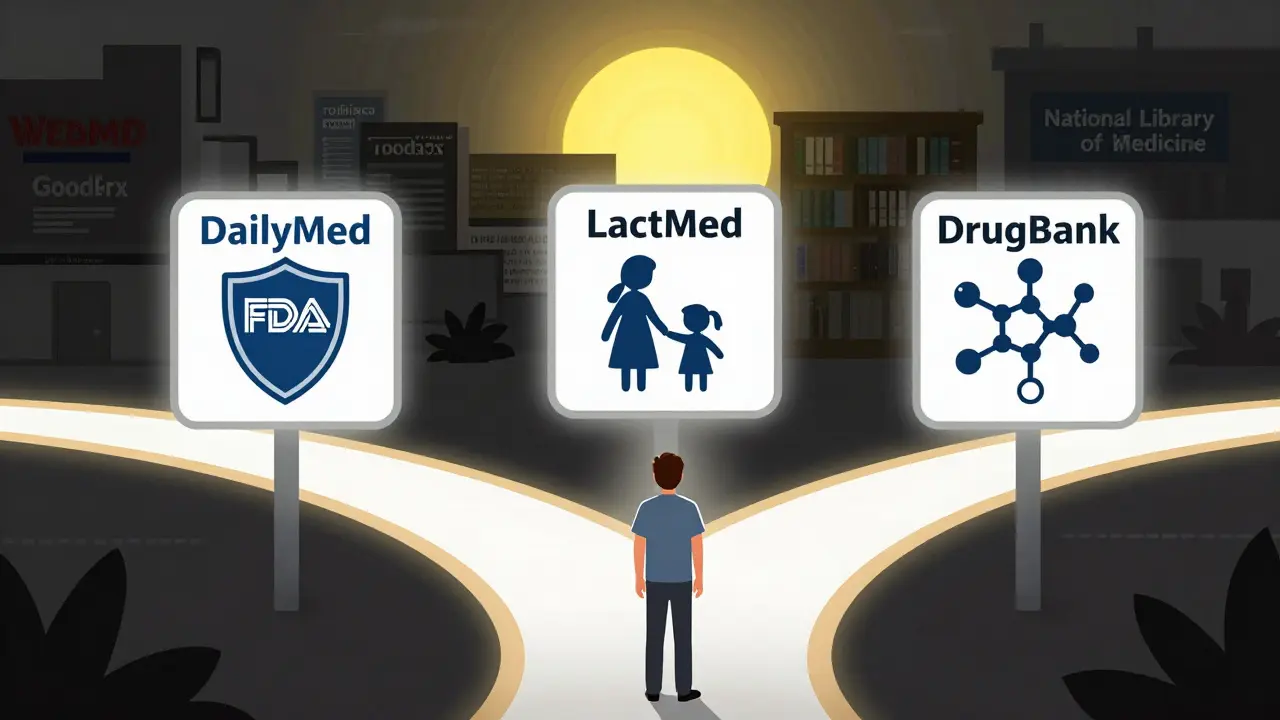
DailyMed, LactMed, and DrugBank are funded by taxpayers. They don’t take ad money. They don’t promote brands. They don’t change information to please drugmakers. That’s why the FDA, NIH, and the American Medical Association all point to these as the gold standard.
How to Use Them Together
No single tool does everything. Here’s how to combine them:
- Start with DailyMed to confirm the official dosage, warnings, and active ingredients.
- Check LactMed if you’re pregnant, breastfeeding, or planning to be.
- Use DrugBank if you’re curious about how the drug works or if you’re on multiple meds and want to check for rare interactions.
- Pair with GoodRx only when you’re ready to buy-use it for price, not safety.
For example: You’re on warfarin, a blood thinner. DailyMed tells you the standard dose and bleeding risks. LactMed tells you it’s safe to take while breastfeeding (it is). DrugBank shows you how it interacts with vitamin K-rich foods and common antibiotics. GoodRx shows you the lowest price at your local pharmacy.
What They Don’t Do
These resources are powerful-but they have limits.
- No cost info-you’ll still need GoodRx or your insurer’s formulary.
- No symptom checker-if you’re wondering if your headache is a side effect, these won’t diagnose it.
- No phone support-if you’re confused, call your pharmacist or doctor. These sites are for research, not live help.
- No app-they’re mobile-friendly websites, but don’t expect a polished app like WebMD.
And here’s a warning: don’t trust AI chatbots like ChatGPT or Google Gemini for drug advice. A 2024 Mayo Clinic study found 19% of patients confused AI-generated answers with official sources. These sites are vetted by scientists. Chatbots guess.
Getting Started: Simple Steps
Here’s how to begin using these tools today:
- Write down the names of all your medications-brand and generic.
- Go to dailymed.nlm.nih.gov and search each one. Save the “Highlights” PDF.
- If you’re breastfeeding, visit pubmed.ncbi.nlm.nih.gov/LactMed and search your meds there too.
- For deeper questions, go to drugbank.ca and click “Patient View.” Search your drugs and look at the interaction charts.
- Keep these pages bookmarked. Update them every time your prescription changes.
You don’t need to be a scientist. You just need to be curious. And in today’s world, where drug misinformation spreads faster than ever, knowing where to find the truth isn’t just helpful-it’s protective.
Frequently Asked Questions
Are DailyMed and LactMed really free?
Yes. Both are funded by the U.S. government and completely free to use. No registration, no login, no ads. They’re part of the National Library of Medicine’s public health mission.
Can I use these if I live outside the U.S.?
Absolutely. While these resources focus on U.S.-approved drugs, the science behind them is globally recognized. Many international patients, including those in Australia, Canada, and the UK, use them to cross-check information from their local pharmacies. DrugBank includes data from the EMA and Health Canada too.
Why doesn’t DailyMed have an app?
The National Library of Medicine prioritizes accessibility over convenience. Their sites work on any phone or browser, even older ones. An app would require constant updates and maintenance, which could delay critical label changes. For now, they’ve optimized the mobile website to load fast and work offline.
What if I can’t understand the language on DailyMed?
Use MedlinePlus Connect, a free tool from the same team. Type in your drug name and it links you to plain-language summaries in over 40 languages. For example, if you’re Spanish-speaking, it will show you a simplified version of the FDA label with pictures and bullet points.
Is DrugBank safe to use for rare conditions?
Yes. DrugBank includes data on over 4,000 orphan drugs used for rare diseases-many of which aren’t listed on commercial sites. Its interaction database is more comprehensive than any other public resource. That’s why specialists in genetics and rare disease clinics often recommend it to patients.
What to Do Next
Don’t wait until you’re in a crisis. Take five minutes today to look up one of your medications on DailyMed. Print the Highlights section. Keep it with your pill organizer. If you’re breastfeeding, check LactMed for every drug you’re taking-even over-the-counter ones. And if you’re curious about how your meds work, spend ten minutes on DrugBank. Knowledge isn’t just power. In medicine, it’s safety.


DailyMed is a game-changer. I print the Highlights PDF for every new prescription and keep it in my pillbox. No ads, no fluff, just the facts. Took me 3 years to find this, but now I won’t trust anything else.