

NSAID & Blood Thinner Risk Calculator
Calculate Your Risk Factor
Risk Multiplier vs. Blood Thinner Alone
| Medication | Risk Factor | Severity Level |
|---|---|---|
| Ibuprofen | 1.79x | Moderate |
| Diclofenac | 3.30x | High |
| Naproxen | 4.10x | Very High |
Medical Disclaimer
This tool is for educational purposes only and does not constitute medical advice. The risk factors shown are based on general population studies. Individual risk may vary based on age, dosage, and other medications. Always consult your healthcare provider before taking NSAIDs if you are on blood thinners.
Picture this: You’ve got a throbbing headache or stiff joints, so you grab an ibuprofen from your medicine cabinet. It’s simple, effective, and available over the counter. But if you’re also taking blood thinners, which are medications that prevent blood clots by interfering with clotting factors or platelets, that routine painkiller could turn into a medical emergency. The combination of these two common drug classes is one of the most dangerous interactions in modern medicine, yet millions of people take them together every year without realizing the severity of the risk.
The danger isn’t theoretical-it’s backed by hard data. Research shows that mixing nonsteroidal anti-inflammatory drugs (NSAIDs) with anticoagulants significantly spikes your chance of internal bleeding. We’re talking about everything from gastrointestinal hemorrhages to life-threatening brain bleeds. Understanding why this happens, how bad the risks really are, and what safe alternatives exist is critical for anyone managing chronic conditions like atrial fibrillation or arthritis while on blood-thinning therapy.
How the Double Whammy Works
To understand why this mix is so volatile, we need to look at how each drug affects your body’s ability to stop bleeding. Your body has a complex system called hemostasis that keeps blood flowing smoothly but stops it quickly when you get cut. Both blood thinners and NSAIDs disrupt this system, but they do it in different ways. When you combine them, you’re hitting your body’s defense mechanism from two angles simultaneously.
Blood thinners, medically known as anticoagulants, include warfarin, rivaroxaban, apixaban, dabigatran, and edoxaban, work by slowing down the chemical process that creates clots. They don’t actually "thin" your blood; they just make it harder for clots to form. On the other hand, NSAIDs like ibuprofen, naproxen, and diclofenac block enzymes called COX-1 and COX-2. These enzymes produce prostaglandins, which help with inflammation but also signal platelets to stick together and seal small wounds. By blocking this signal, NSAIDs impair platelet function.
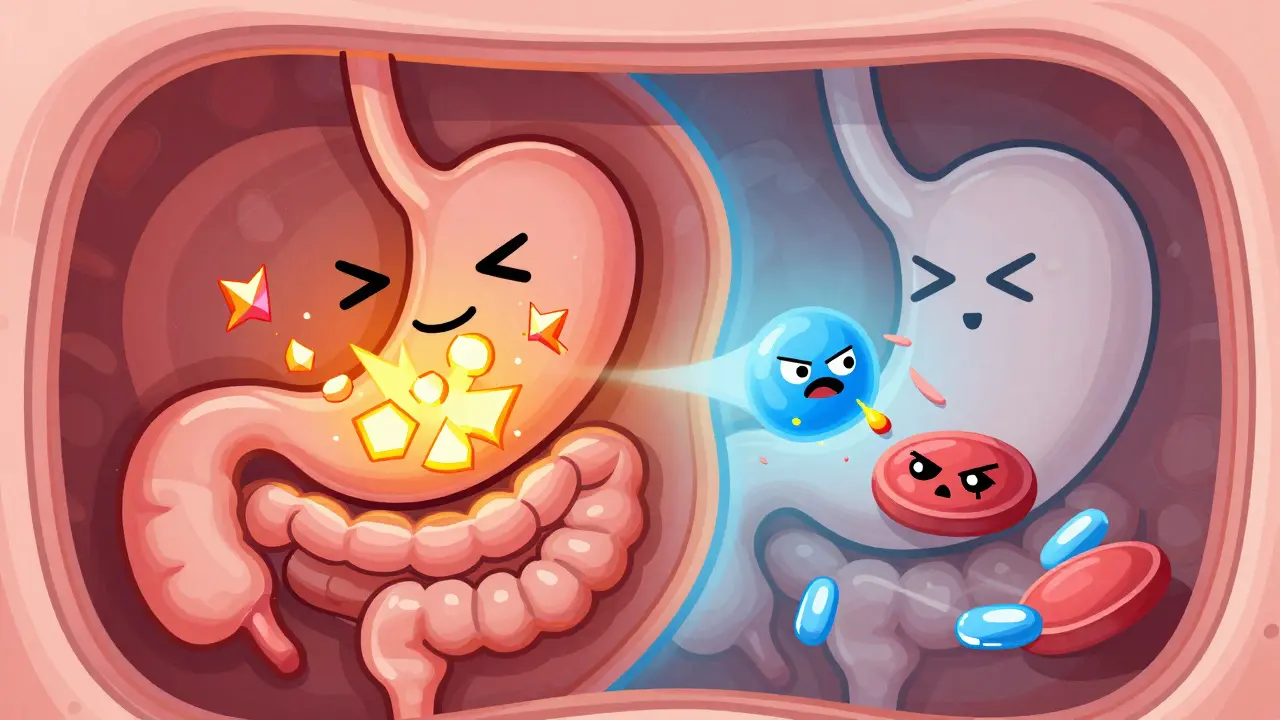
Here’s where it gets worse. NSAIDs also irritate the lining of your stomach and intestines. This damage makes the mucosal barrier more fragile and prone to erosion. So, you have a medication that prevents clotting (the blood thinner) paired with another that damages the gut lining and stops platelets from working (the NSAID). The result? A high probability of significant bleeding, often in the digestive tract, but potentially anywhere in the body.
The Real Numbers Behind the Risk
You might think that taking an occasional pill won’t hurt much, but the statistics tell a starkly different story. A major study published in the European Heart Journal in 2020, led by Dr. Søren Riis Petersen from Aarhus University Hospital, analyzed data from 200,000 patients over a decade. The findings were alarming: patients who took NSAIDs alongside blood thinners had a 2.09 times higher overall risk of internal bleeding compared to those on blood thinners alone.
| NSAID Medication | Risk Increase Factor | Notes |
|---|---|---|
| Ibuprofen | 1.79x | Common OTC option, still carries significant risk |
| Diclofenac | 3.3x | Potent anti-inflammatory, higher bleeding potential |
| Naproxen | 4.1x | Highest risk among common NSAIDs per recent studies |
The location of the bleeding matters too. The same study found that gastrointestinal bleeding risk jumped by 2.24 times. Intracranial hemorrhage-a bleed in the brain-risk increased by a terrifying 3.22 times. Even less obvious areas like the lungs (1.36x) and urinary tract (1.57x) saw elevated risks. Additionally, there was a 2.9-fold increase in anemia caused by these bleeding complications. This isn’t limited to older warfarin users either; the risk applies across all modern anticoagulants, including direct oral anticoagulants (DOACs) like Eliquis (apixaban) and Xarelto (rivaroxaban).
Who Is Most at Risk?
This interaction hits hardest in specific demographics. Approximately 12 million Americans take anticoagulants chronically, according to 2022 American Heart Association statistics. Many of these patients are older adults who also suffer from arthritis, back pain, or other inflammatory conditions. This overlap creates a perfect storm. As Dr. Deepak L. Bhatt from Harvard Medical School notes, many patients needing blood thinners are elderly and prone to joint pain, making the temptation to use NSAIDs very real.
Other factors amplify the danger:
- High Warfarin Doses: Patients requiring more than 40 mg of warfarin per week see their INR (International Normalized Ratio) spike by over 15% when adding NSAIDs.
- Multiple Medications: Taking other drugs that affect bleeding or metabolism compounds the issue.
- Poor Patient Awareness: A 2022 JAMA Internal Medicine study revealed that only 43% of patients on anticoagulants knew about the NSAID risk. Worse, 68% incorrectly believed that occasional use was safe.
The lack of awareness is deadly. Anecdotal reports from patient forums describe horrific outcomes. One user on Reddit shared a story of dropping their hemoglobin from 14.2 g/dL to 8.7 g/dL after taking ibuprofen for dental pain while on apixaban, requiring an emergency blood transfusion. These aren’t rare outliers; CDC data from 2021 indicates that about 12% of emergency room visits for anticoagulant-related bleeding involve concurrent NSAID use.
Safe Alternatives for Pain Management
If you can’t take NSAIDs, how do you manage pain? The good news is that safer options exist, though they require some strategy. The gold standard alternative is acetaminophen, commonly known as Tylenol. Unlike NSAIDs, acetaminophen does not inhibit platelet function or damage the stomach lining. However, caution is still needed. For patients on anticoagulants, the recommended maximum daily dose is typically capped at 3,000 mg to avoid liver stress and minor interactions with certain blood thinners like warfarin.
For inflammatory pain where acetaminophen falls short, doctors may consider topical treatments. Creams, gels, or patches containing diclofenac or lidocaine applied directly to the skin have minimal systemic absorption, meaning far less reaches your bloodstream to interact with your blood thinner. Physical therapy, heat/cold therapy, and gentle exercise are also powerful non-pharmacological tools.
In cases where an NSAID is absolutely unavoidable-for instance, severe acute injury-clinicians follow strict protocols. The American Academy of Family Physicians recommends:
- Using the lowest possible dose for the shortest duration.
- Adding gastroprotective agents like proton pump inhibitors (PPIs) to shield the stomach.
- Increasing monitoring frequency, especially checking INR levels for warfarin users.
What to Do If You’ve Already Taken Them Together
If you accidentally took an NSAID while on a blood thinner, don’t panic, but do act promptly. Watch for warning signs of internal bleeding:
- Black, tarry stools or bright red blood in stool
- Vomiting blood or material that looks like coffee grounds
- Unusual bruising or bleeding gums
- Sudden, severe headache or confusion
- Extreme fatigue or dizziness
If any of these symptoms appear, seek emergency care immediately. Even without symptoms, contact your healthcare provider to discuss whether additional monitoring is needed. For future reference, always inform pharmacists and doctors about all medications you take, including over-the-counter drugs and supplements.
Can I take aspirin if I’m on blood thinners?
Generally, no. Aspirin is technically an NSAID and carries similar bleeding risks. While low-dose aspirin is sometimes prescribed specifically for heart protection, combining it with other anticoagulants requires careful medical supervision. Never start aspirin on your own if you’re already on a blood thinner.
Is Advil (ibuprofen) safer than Aleve (naproxen) for people on blood thinners?
Neither is truly safe, but ibuprofen presents a slightly lower relative risk (1.79x increase) compared to naproxen (4.1x increase) based on recent large-scale studies. However, both significantly elevate bleeding dangers, and neither should be used without explicit doctor approval.
Do COX-2 inhibitors like Celebrex reduce the bleeding risk?
COX-2 selective inhibitors were designed to spare the stomach lining, but studies show they do not eliminate the bleeding risk when combined with anticoagulants. A 2020 NIH-funded study found no significant risk reduction compared to traditional NSAIDs. They remain risky for this population.
How long should I wait before taking an NSAID after stopping my blood thinner?
This depends entirely on the type of blood thinner and your individual health profile. Warfarin takes several days to clear, while DOACs like apixaban clear faster. Always consult your doctor for personalized timing advice, usually involving a period of close monitoring.
Are natural supplements like fish oil or vitamin E safe with blood thinners?
Many natural supplements also affect bleeding. High doses of fish oil, vitamin E, garlic, and ginkgo biloba can enhance the effects of blood thinners. Always check with your healthcare provider before adding any supplement to your regimen.
