

Imagine this: you’re out running errands, and your toddler finds a bottle of painkillers left on the kitchen counter. In just a few minutes, what was a harmless afternoon turns into an emergency room visit. It’s not just a hypothetical fear; it’s a daily reality for millions of families. According to recent data from the Centers for Disease Control and Prevention (CDC), roughly 60,000 young children end up in emergency departments every year because they got their hands on medicine they weren’t supposed to take. The scary part? Eighty percent of these incidents happen when a grandparent, babysitter, or another caregiver is watching the child, not the primary parents. This statistic highlights a critical gap: we often assume our homes are safe havens, but without a structured medication safety plan, they can become risky environments.
The goal isn’t to live in constant anxiety. It’s about building a system that works for everyone-parents, grandparents, caregivers, and the kids themselves. A solid routine reduces the risk of accidental poisonings, prevents overdoses, and ensures that those who need medication actually get it at the right time. Whether you have a newborn, a teenager on acne treatment, or a parent managing heart disease, the principles remain the same: organization, communication, and consistent habits. Let’s break down how to build a routine that protects your family without adding unnecessary stress to your day.
Why Most Home Routines Fail
Before we fix things, we need to understand why things go wrong. Most medication errors at home aren’t due to negligence; they’re due to chaos. AARP’s Caregiving Community survey of 1,200 family caregivers found that 73% reported medication management as their most stressful responsibility. Nearly half admitted to making at least one error in the previous year. What were these errors? Usually, it wasn’t giving the wrong drug entirely. It was giving a duplicate dose (28%), missing the timing window (35%), or confusing two pills that looked similar (22%).
These mistakes happen because we treat medication like an afterthought rather than a core part of daily life. We toss bottles in drawers, rely on memory for schedules, and forget to update lists when prescriptions change. For older adults, the stakes are higher. Dr. Steven L. Taylor from the University of Illinois at Chicago notes that 68% of older adults take five or more prescription medications daily. This is known as polypharmacy, and it significantly increases the risk of adverse interactions. If you don’t have a central place where all these drugs are listed and tracked, you are flying blind. The solution starts with acknowledging that a "good enough" system isn’t good enough. You need a deliberate, documented process.
The Foundation: Storage and Accessibility
Storage is the first line of defense, especially for households with children under five. These little ones account for 47% of all pediatric medication exposures. The old advice of "keep it high up" is no longer sufficient. Children’s Hospital Los Angeles experts emphasize that "little kids are inquisitive climbers." If a cabinet is locked, great. If it’s just high up, a determined three-year-old will find a chair. The golden rule is "Up and Away," but "Away" now means behind a lock or a latch that requires adult strength to open.
Here are specific storage guidelines to implement today:
- Lock it up: Use a dedicated locked cabinet or a box with a key combination. Don’t rely on bathroom cabinets if they are easily accessible to toddlers. Note that humidity in bathrooms can degrade certain medications, so a dry closet or bedroom drawer is often better for long-term storage.
- Original containers only: Keep meds in their original bottles with child-resistant caps. Transferring pills to unlabeled jars is a major source of confusion and error. If you must use a pill organizer, keep the original bottles nearby for reference.
- The "Purse Rule": 25% of parents report children accessing meds from purses or bags left on counters. Treat your bag like a hot zone. Never leave a bag unattended within reach of a child. Zip it, close it, and put it away.
- Opioid awareness: If anyone in the house takes opioids, know the signs of overdose: small pupils, slowed breathing, and lethargy. Consider keeping naloxone (Narcan) on hand, as recommended by pediatric specialists.
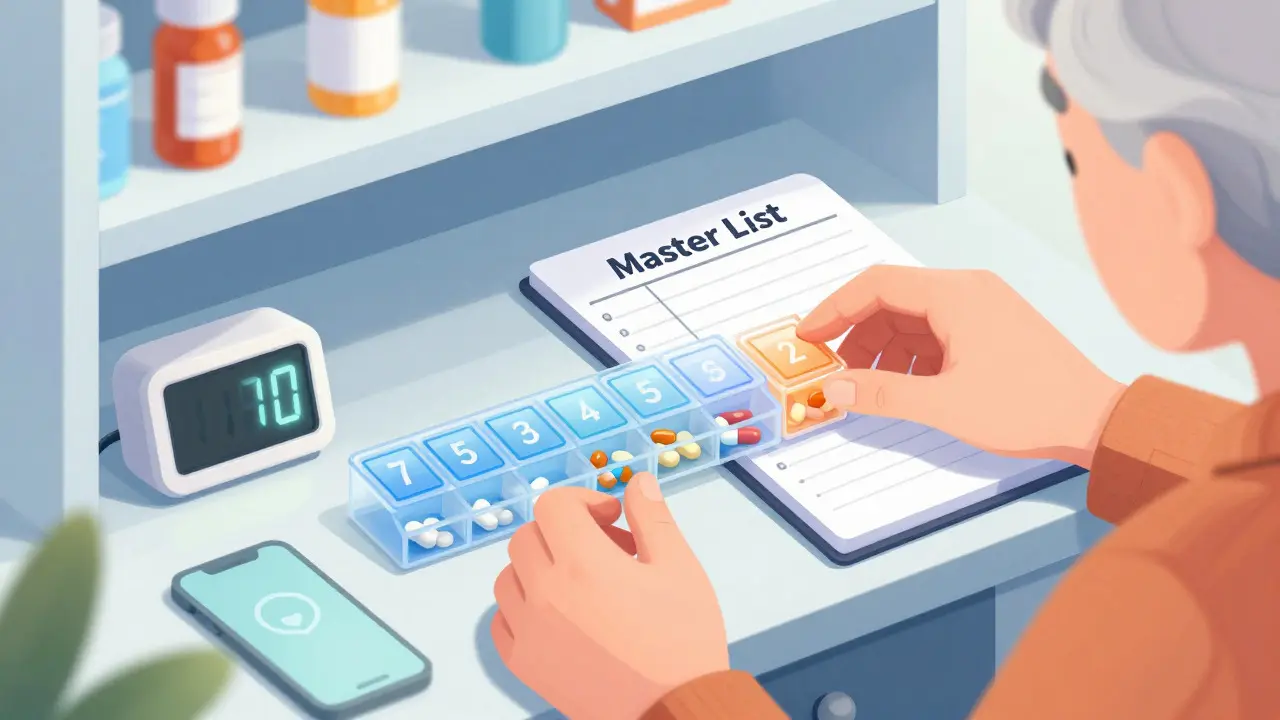
Documentation: The Master List
If storage is the physical barrier, documentation is the mental map. You need a single, authoritative source of truth for all medications in the household. This includes prescription drugs, over-the-counter (OTC) remedies, vitamins, and even herbal supplements. The Pritikin Longevity Center recommends keeping a detailed record of every substance everyone in your family is taking. Why? Because interactions often happen between prescription meds and OTC products. For example, combining certain blood thinners with ibuprofen can increase bleeding risk.
Create a simple spreadsheet or a dedicated notebook. Store it in a visible location, like the refrigerator door or next to the main phone. Each entry should include:
- Medication Name: Both the brand name and the generic name (e.g., Tylenol / Acetaminophen).
- Dosage and Frequency: How much and how often (e.g., 500mg twice daily).
- Purpose: What it treats (e.g., chronic pain, hypertension).
- Start Date: When the current prescription began.
- Side Effects/Notes: Any known reactions or special instructions (e.g., "take with food").
This list becomes invaluable during emergencies. If a child swallows something unknown, paramedics can quickly identify the risk level. It also helps when visiting multiple doctors, ensuring no one prescribes a conflicting drug.
Administration Protocols: The Five Rights
Having the meds stored safely and listed clearly is step one. Step two is giving them correctly. Healthcare professionals use a standard called the "Five Rights" to prevent errors. You can apply this at home every time you administer a dose:
- Right Person: Double-check who the med is for. If you have twins or siblings with similar conditions, mix-ups are common.
- Right Medication: Check the label against your master list. Does the color and shape match?
- Right Dose: Measure carefully. For liquids, use an oral syringe or a dosing cup provided by the pharmacy, not a kitchen spoon. Studies show syringes reduce dosing errors by 47% compared to household spoons.
- Right Route: Is it meant to be swallowed, applied to skin, or inhaled? Don’t assume.
- Right Time: Stick to the schedule. Consistency keeps blood levels stable.
To make this easier, consider using a 7-day pill organizer for adults. AARP surveys indicate that 68% of caregivers rate these as effective. Color-coding containers with painter’s tape can further reduce errors by 60% in households with multiple users. Assign a specific color to each person or each type of medication (e.g., red for morning, blue for evening).
Managing Missed Doses and Changes
Life happens. Kids run late, work meetings drag on, and you forget to check the clock. What do you do when you miss a dose? The general rule from HealthyChildren.org is straightforward: give it as soon as you remember, unless it’s almost time for the next dose. Never double up to "make up" for a missed one. This is a common mistake that leads to toxicity. If you’re unsure, call your pharmacist. They are free resources who love answering these questions.
Also, establish a protocol for changes. When a doctor adjusts a dose or adds a new drug, update your master list immediately. Set a recurring reminder on your phone to review this list every three months. The American Society of Health-System Pharmacists recommends quarterly reviews for patients on five or more meds, which has been shown to reduce adverse drug events by 27%. This isn’t just busywork; it’s a proactive health check.
Tech Tools and Modern Solutions
You don’t have to rely solely on paper and memory. Technology can be a powerful ally, though it comes with its own challenges. Digital apps like Medisafe are used by 41% of tech-savvy caregivers to track doses and set reminders. These apps can alert you when a refill is due or when a dose is overdue. However, be aware that 27% of respondents in recent surveys struggled with electronic reminders due to technology barriers, especially among older adults. If your family includes seniors who aren’t comfortable with smartphones, stick to physical tools like large-print calendars or automated dispensers.
Smart medication dispensers are growing in popularity, with an 18.7% annual growth rate projected through 2027. These devices lock compartments until the correct time, then dispense the exact dose. While expensive, they eliminate human error entirely for complex regimens. For most families, a simpler approach works: pair a traditional pill organizer with a loud, non-smartphone alarm clock or a basic digital timer. The goal is reliability, not sophistication.
Emergency Preparedness and Disposal
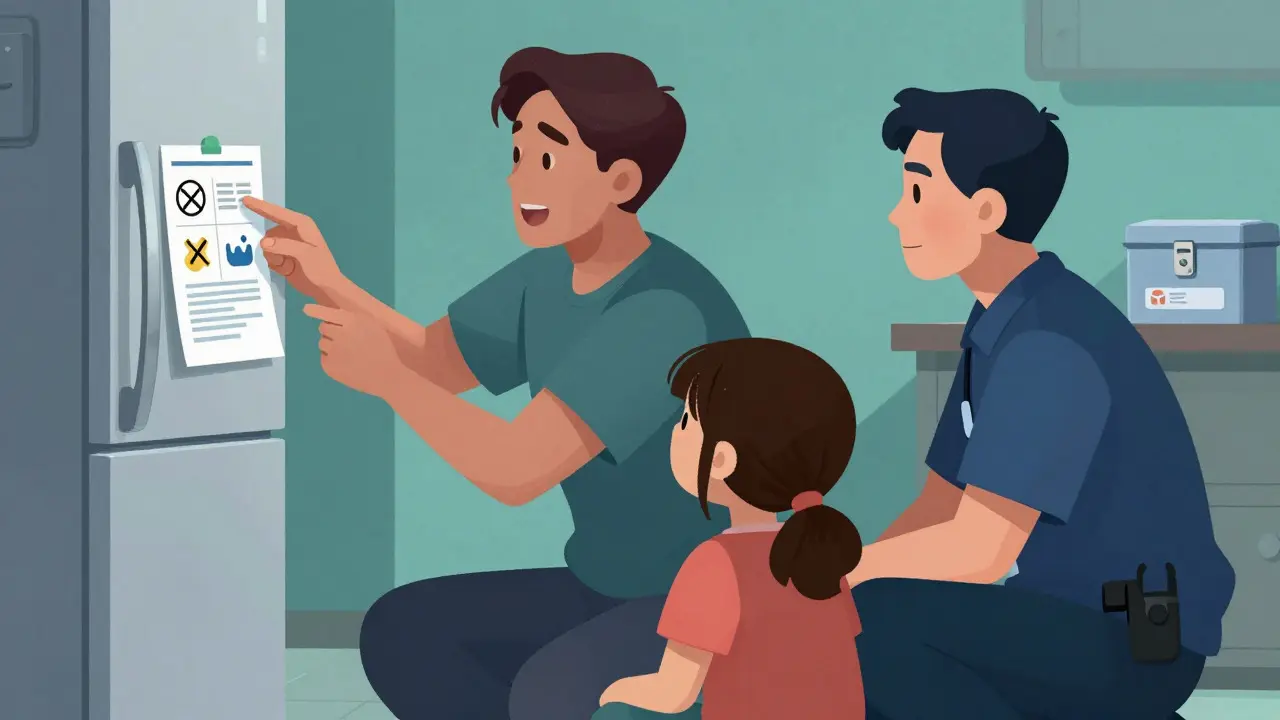
Your routine isn’t complete until you’ve planned for the worst case. Keep the Poison Control number (1-800-222-1222 in the US, or your local equivalent) posted near the phone and saved in your contacts. 60% of families don’t know this number, yet it’s the fastest way to get expert advice during a suspected ingestion. Create a laminated card with this info, along with allergies and current medications, to hang on the fridge.
Finally, don’t let expired or unused meds pile up. Old medications can lose potency or become harmful. The FDA recommends disposing of unwanted drugs at designated drop-off sites, such as pharmacies or community collection boxes. If you must throw them in the trash, crush tablets and mix them with unpleasant substances like coffee grounds or cat litter to deter curiosity. Flush only if specifically instructed (e.g., for certain opioids to prevent diversion). Regularly cleaning out your medicine cabinet every six months keeps your inventory accurate and your home safer.
Where is the safest place to store medicines at home?
The safest place is a locked cabinet or container that is out of reach of children. Avoid bathrooms due to humidity, which can degrade some medications. Ensure the storage area is dry and cool. If using a regular cabinet, add a child-proof latch or lock. Never leave medications in purses or bags accessible to toddlers.
What should I do if I miss a dose of medication?
Generally, take the missed dose as soon as you remember. However, if it is almost time for your next scheduled dose, skip the missed one and continue with your regular schedule. Do not take two doses at once to make up for the missed one, unless specifically directed by your doctor or pharmacist. When in doubt, call your healthcare provider.
How often should I review my family's medication list?
It is best to review your medication list every three to six months, or whenever a new medication is added or discontinued. Quarterly reviews are particularly important for older adults taking five or more medications to check for potential interactions and side effects. Bring the full list to your doctor or pharmacist appointments for verification.
Are pill organizers safe for all types of medication?
Pill organizers are great for solid tablets and capsules, but they may not be suitable for all medications. Some drugs require specific storage conditions (like refrigeration) or have moisture-sensitive coatings that can be damaged by pre-sorting. Always check with your pharmacist before transferring medications into a pill organizer. Keep the original bottles nearby for reference.
What is the "Brown Bag" method for medication safety?
The "Brown Bag" method involves bringing all of your current medications (prescription, OTC, vitamins, and supplements) in a brown paper bag to your pharmacist or doctor for a comprehensive review. This allows the professional to identify potential drug interactions, duplications, or outdated prescriptions. It is a highly effective tool for medication reconciliation, especially for individuals managing multiple conditions.
