
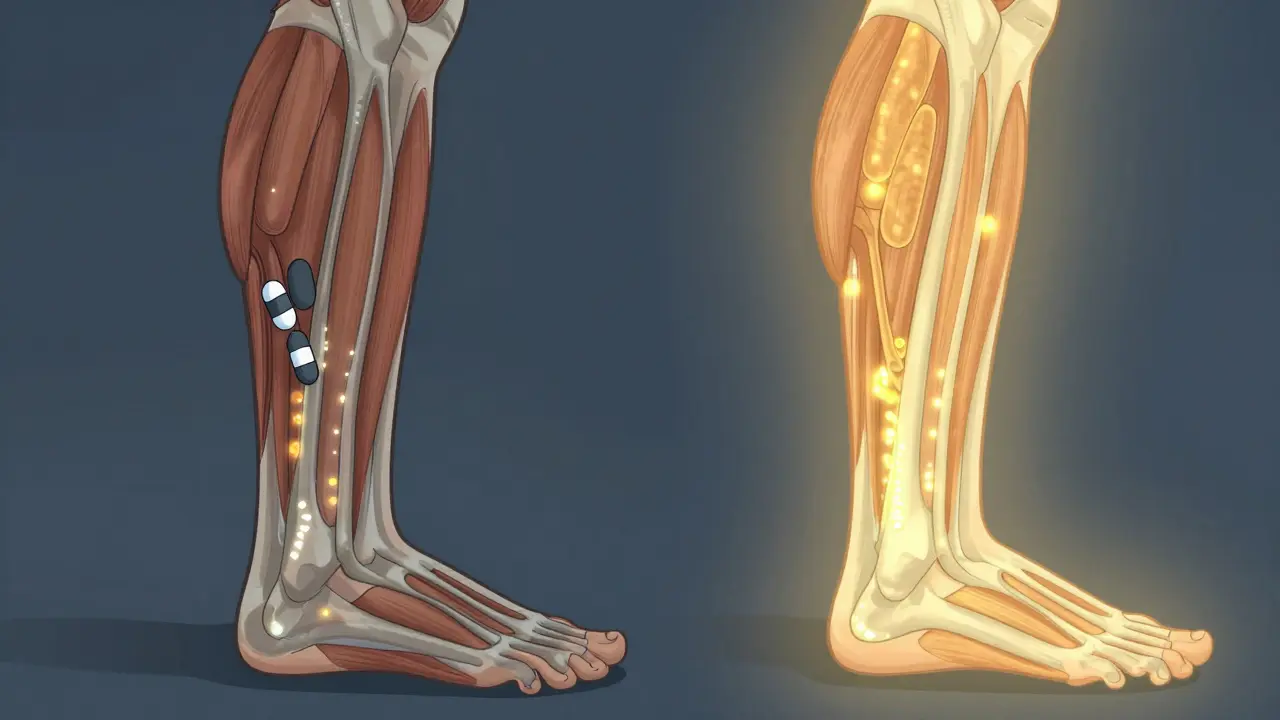
CoQ10 Symptom Tracker
How to Use This Tracker
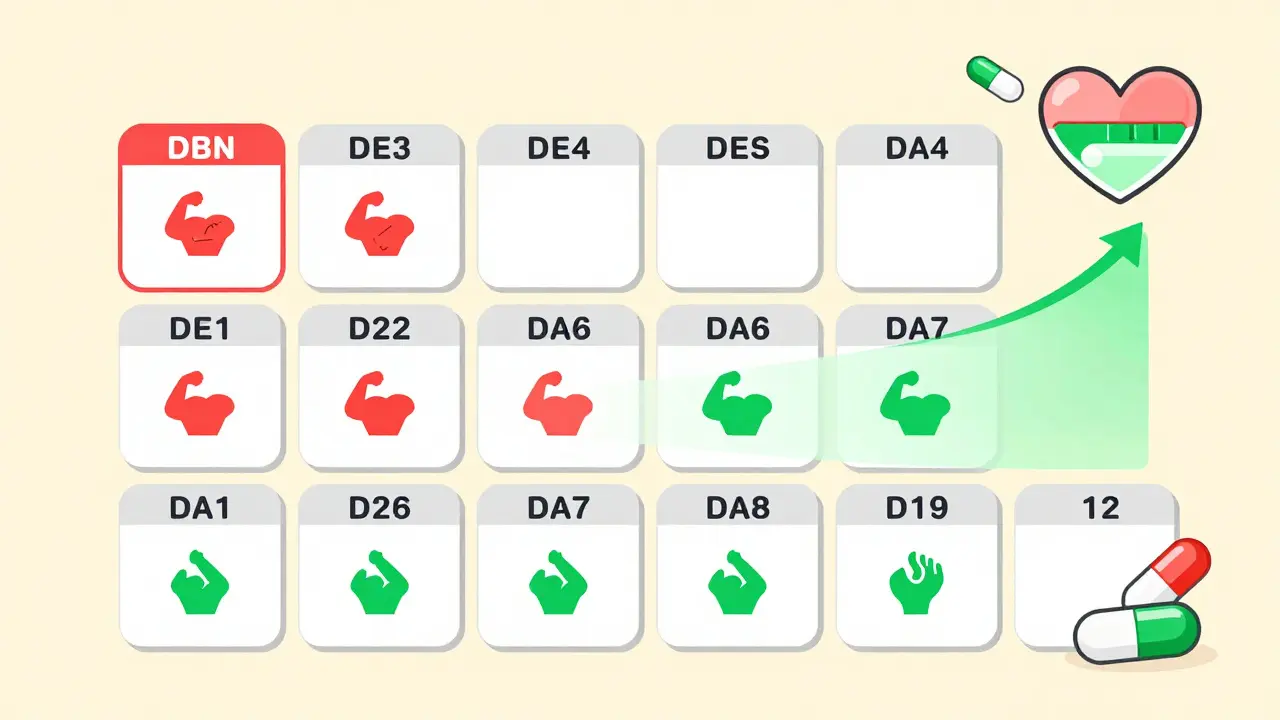
Track your symptoms before and during CoQ10 supplementation to see if it helps with statin-related muscle pain. Complete the form daily for at least 4 weeks to get meaningful results.
Before Taking CoQ10
Record your symptoms for 1 week before starting CoQ10 to establish a baseline.
During CoQ10 Supplementation
Record symptoms daily for 4-12 weeks while taking CoQ10.
Results
Results Summary
Many people on statins know the feeling: legs feel heavy, muscles ache after walking, or cramps wake you up at night. It’s not just in your head. About 5 to 20% of statin users experience muscle pain, weakness, or fatigue-symptoms so common they’re called statin-associated muscle symptoms, or SAMS. For some, it’s mild. For others, it’s enough to quit the medication entirely. And that’s dangerous. Statins save lives by lowering bad cholesterol and preventing heart attacks. But if you stop taking them because of muscle pain, you’re trading short-term discomfort for long-term risk.
Why Do Statins Cause Muscle Pain?
Statins work by blocking an enzyme called HMG-CoA reductase, which your liver uses to make cholesterol. But that same enzyme is also involved in making something else: coenzyme Q10 (CoQ10). CoQ10 is not a vitamin. It’s a compound your body naturally produces, found in every cell, especially in muscles and the heart. Its job? Help your mitochondria-your cells’ power plants-turn food into energy. When statins lower CoQ10 levels by 16% to 54%, your muscles may not get enough fuel. That’s the theory behind why muscle pain happens.
It’s not proven beyond doubt. Some studies show CoQ10 drops in the blood after statin use. Others show no change in muscle tissue. Still, the pattern is hard to ignore. People who feel better on CoQ10 supplements often describe it like turning a dim light back on. Their legs stop aching. They can climb stairs again. They sleep through the night.
What Does the Science Say?
The evidence is messy. Some studies say yes. Others say no. And the big ones? They’re mixed.
A 2018 meta-analysis in the Journal of the American Heart Association looked at 12 clinical trials with nearly 600 people. It found that those taking CoQ10 (usually 100-600 mg a day) had significantly less muscle pain, weakness, and fatigue than those on placebo. The reduction was real-about 1.6 points lower on a 10-point pain scale. That’s not a miracle, but it’s noticeable. And here’s the kicker: CoQ10 didn’t affect blood levels of creatine kinase (a marker of muscle damage), meaning it helped how people felt-not just what lab tests showed.
But then there’s the 2007 study from Young et al. that didn’t find any benefit, even with 200 mg of CoQ10 daily for 12 weeks. And the National Lipid Association still says the evidence is inconclusive. So why the contradiction?
One reason: study design. Many trials were small, short, or used different forms of CoQ10. Some used ubiquinone, the older form. Others used ubiquinol-the reduced, more absorbable version. Ubiquinol is thought to be 3 to 8 times more bioavailable, especially in older adults or those with poor metabolism. If a study uses the wrong form, it might fail even if CoQ10 works.
Another issue: who gets tested? Most trials don’t check people’s baseline CoQ10 levels. Maybe only those with low levels benefit. Dr. Beatrice Golomb from UC San Diego suggests that’s the missing piece. If you’re not deficient, supplementing might do nothing. If you are? It could be a game-changer.
What Do Real People Say?
Ask 100 people on Reddit’s r/Supplements or Amazon reviews, and you’ll hear a different story than the medical journals. In a January 2023 thread, 78% of 142 respondents said CoQ10 helped their muscle pain. One user, u/StatinSurvivor, wrote: “After 6 months of crippling leg cramps on atorvastatin, CoQ10 200mg daily eliminated my symptoms within 3 weeks.”
On Amazon, CoQ10 supplements average a 4.2 out of 5 stars. Over 63% of 5-star reviews mention muscle pain relief from statins. But flip to Drugs.com or Inspire.com, and you’ll find the other side: “Tried three brands. Nothing changed.” “Still can’t walk without pain.”
The truth? It works for some. Not all. And it’s impossible to predict who will respond. That’s why doctors don’t prescribe it outright-but they won’t stop you from trying it either.
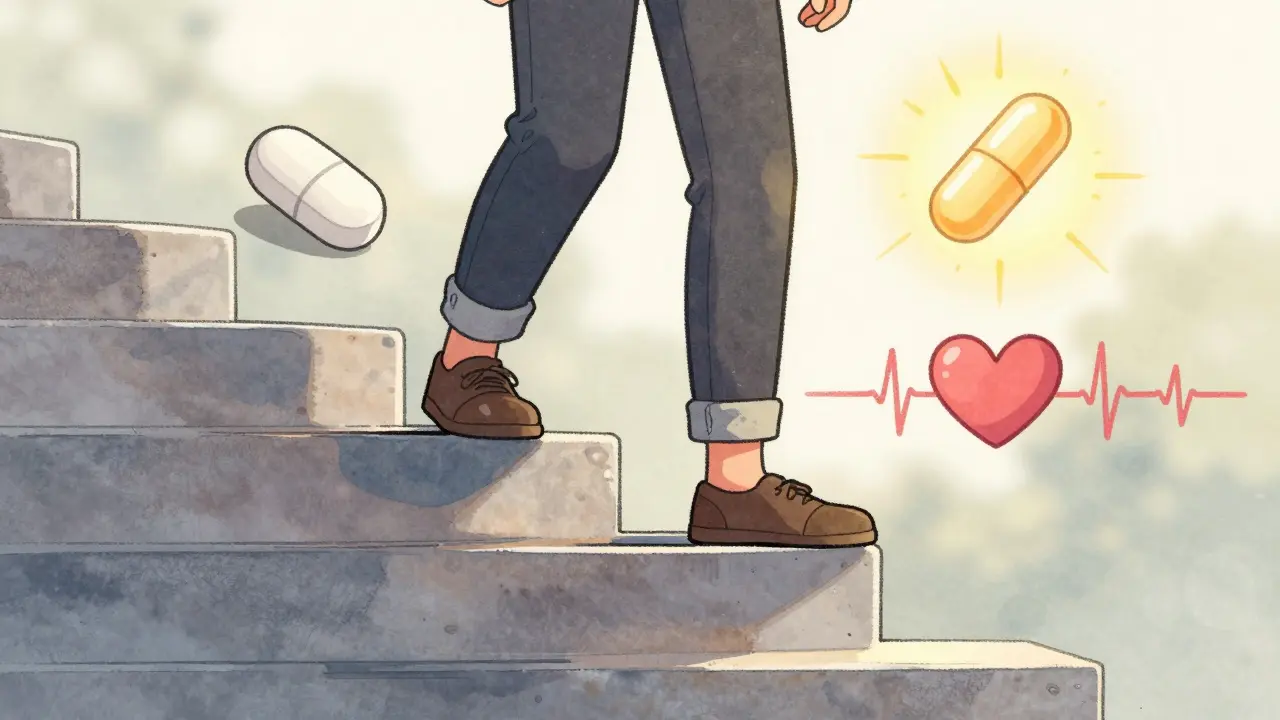
How to Try CoQ10 the Right Way
If you’re considering CoQ10, here’s how to do it without wasting time or money.
- Start with 100-200 mg per day. That’s the range most studies used successfully. Higher doses (up to 600 mg) are safe but rarely needed.
- Choose ubiquinol. It’s more expensive-maybe $30-$40 a month-but it’s absorbed better, especially if you’re over 40 or have digestive issues.
- Take it with food. CoQ10 is fat-soluble. A meal with olive oil, nuts, or avocado boosts absorption.
- Give it time. Don’t expect results in a week. Most people notice changes between 4 and 12 weeks. The 2021 trial showed steady improvement over 12 weeks.
- Keep taking your statin. CoQ10 doesn’t replace it. It just helps with side effects.
And here’s the big one: track your symptoms. Keep a simple log: rate your pain on a scale of 1-10 every morning. Note energy levels, cramps, and ability to move. After 8 weeks, compare. If you feel better, keep going. If not? Stop. No guilt. No pressure.
Cost, Safety, and Alternatives
CoQ10 costs about $15-$40 a month. Compare that to switching statins. Rosuvastatin or pravastatin might cost $300-$600 a month under some insurance plans. And even then, muscle pain can follow you to the new drug.
CoQ10 is one of the safest supplements out there. No major side effects reported in over 40 years of use. Even at 600 mg daily, studies show no liver damage, no kidney stress, no interactions with blood thinners or blood pressure meds. The FDA doesn’t approve it for muscle pain-but it doesn’t block it either.
Alternatives? Yes. Lower your statin dose. Switch to ezetimibe or PCSK9 inhibitors. But those are prescriptions, often more expensive, and come with their own side effects. CoQ10 is the lowest-risk option for mild-to-moderate pain.
Who Should Try It?
CoQ10 isn’t for everyone. But if you fit this profile, it’s worth a shot:
- You’re on a statin and have mild-to-moderate muscle aches, cramps, or fatigue.
- You’ve tried lowering your dose or switching statins and still feel bad.
- You’re not willing to quit your statin because of heart risk.
- You’re okay with trying a supplement that’s safe, affordable, and doesn’t interfere with your meds.
If you have severe muscle pain, dark urine, or weakness so bad you can’t stand, stop your statin and call your doctor immediately. That’s rhabdomyolysis-a rare but dangerous condition. CoQ10 won’t fix that.
The Bottom Line
Is CoQ10 a magic cure for statin muscle pain? No. Is it a waste of money? Not necessarily. The science isn’t settled. But the risk is near zero, the cost is low, and the potential upside? You might get your energy back, your legs back, your life back.
Doctors at Mayo Clinic, Cleveland Clinic, and the American College of Cardiology all agree: if you’re struggling with muscle pain on statins, a 3- to 6-month therapeutic trial of CoQ10 is a reasonable option. Not because it’s proven for everyone-but because for some, it works. And when it does? It’s not just about pain relief. It’s about staying on the medication that keeps your heart alive.
Try it. Track it. If it helps, keep going. If not, move on. No judgment. No hype. Just a simple, safe step that might make all the difference.
Does CoQ10 lower cholesterol?
No, CoQ10 does not lower cholesterol. It doesn’t affect LDL, HDL, or triglyceride levels. Its only known role with statins is to potentially reduce muscle side effects, not to replace the cholesterol-lowering action of the drug.
What form of CoQ10 is best for statin users?
Ubiquinol is the preferred form for statin users. It’s the reduced, active version of CoQ10 and is absorbed 3 to 8 times better than ubiquinone, especially in older adults or those with metabolic issues. While it costs more, it’s more likely to raise tissue levels where they’re needed.
How long does it take for CoQ10 to work on muscle pain?
Most people notice improvement between 4 and 12 weeks. Clinical trials showing benefit typically lasted at least 30 days, with the strongest results seen after 8-12 weeks. Don’t give up before 6 weeks.
Can CoQ10 cause muscle pain?
No, CoQ10 does not cause muscle pain. It’s been used safely for decades, even at doses up to 600 mg per day. No studies have linked it to muscle damage or worsening symptoms. If you feel worse after starting it, the issue is likely unrelated.
Should I take CoQ10 if I’m not on statins?
There’s no strong reason to take CoQ10 if you’re not on statins or don’t have a diagnosed deficiency. Your body makes enough under normal conditions. Supplementing won’t boost energy or prevent heart disease in healthy people. It’s not a general wellness pill.
Can I take CoQ10 with blood thinners like warfarin?
CoQ10 does not interfere with warfarin or other blood thinners. No significant interactions have been found in clinical studies. However, always inform your doctor before starting any new supplement, especially if you’re on multiple medications.
Is CoQ10 regulated by the FDA?
The FDA does not approve CoQ10 as a treatment for any condition, including statin-related muscle pain. It’s sold as a dietary supplement, which means it’s not held to the same standards as prescription drugs. Choose brands with third-party testing (like USP or ConsumerLab) for quality assurance.


i started taking coq10 last year after my legs turned to concrete on atorvastatin
3 weeks in i could walk to the mailbox without wheezing
no magic just science that works for some of us