
That headache won’t quit. Your stomach is churning after a questionable lunch. You’re congested and can barely breathe through your nose. It’s tempting to run to the pharmacy, grab the first box that catches your eye, and hope for the best. But here’s the thing: over-the-counter (OTC) medications are pharmaceutical products available without a prescription that help people relieve symptoms and cure simple diseases without seeing a doctor. They aren’t just harmless candy. They are powerful drugs with real side effects, strict limits, and potential dangers if you misuse them.
Think of OTC meds as tools in a toolbox. A hammer is great for nails, but it’ll wreck your drywall if you swing it wildly. The same goes for painkillers, antacids, and cold remedies. Using them correctly means understanding what they do, how much is too much, and when to put them down and call a professional. This guide cuts through the marketing noise to show you exactly how to use these medications safely.
Understanding the Landscape of OTC Medications
The world of self-care is massive. According to data from the Consumer Healthcare Products Association, there are over 300,000 marketed OTC products covering more than 80 therapeutic categories. In the United States alone, the FDA regulates approximately 100,000 distinct OTC drug products containing more than 800 different active ingredients. That’s a lot of options.
But not everything on the shelf is created equal. Some products are regulated strictly as drugs, while others walk a blurry line. For instance, fluoride toothpaste, certain antimicrobial mouthwashes, wart removers with salicylic acid, and dandruff shampoos with selenium sulfide are all classified as OTC medications by the FDA. Understanding this helps you realize that even everyday hygiene products can have medical implications.
The market is dominated by a few big players. Johnson & Johnson holds an 18.2% market share, followed by Bayer at 15.7%, GlaxoSmithKline at 12.3%, and Procter & Gamble at 9.8%. However, don’t overlook store brands. Private label products capture 24.1% of the market because they often contain the exact same active ingredients as name brands but cost significantly less. When buying OTC meds, look at the active ingredient list, not just the logo on the front.
Decoding the Drug Facts Label
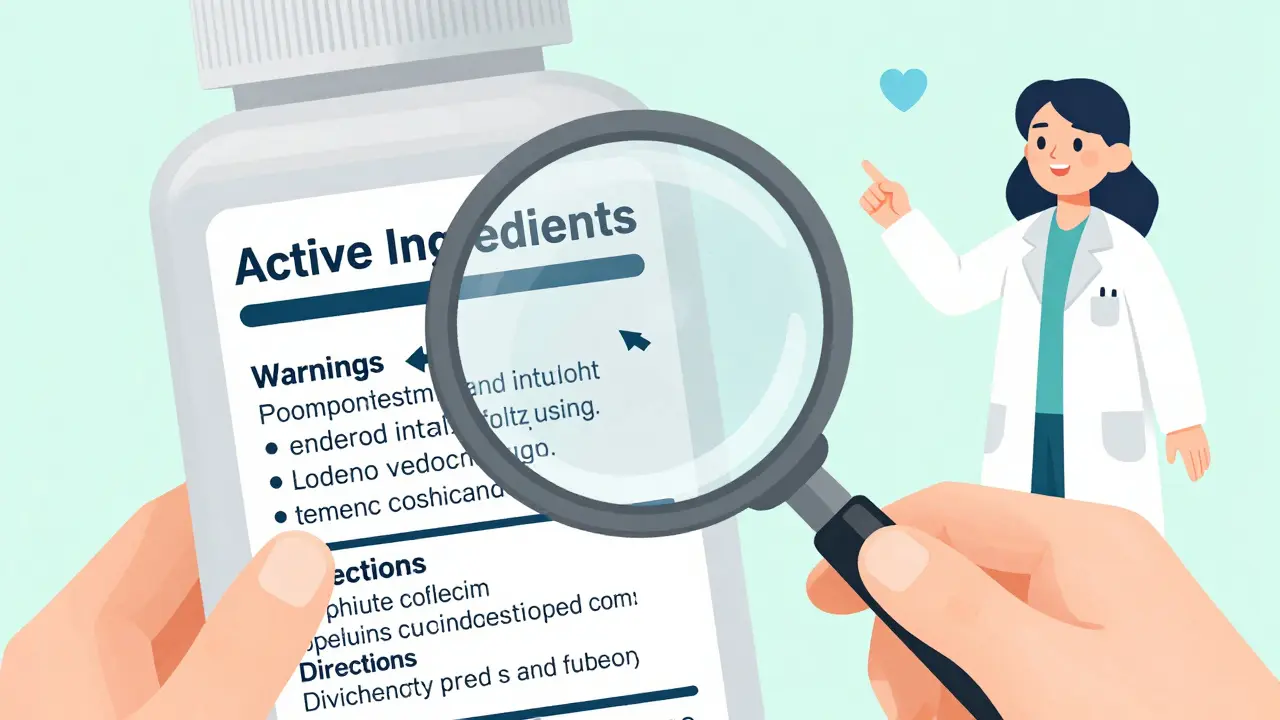
If you want to use OTC medications safely, you need to learn one skill: reading the "Drug Facts" label. The FDA mandated this standardized format in 1999, and it contains 11 specific elements designed to keep you informed. Most people skip this step, which leads to errors. In fact, only 22% of consumers consistently read the entire label as recommended.
Here is what you need to focus on:
- Active Ingredients: This is the part of the medicine that does the work. Check this first. If you are taking multiple products, ensure you aren’t doubling up on the same ingredient. For example, many multi-symptom cold medicines contain acetaminophen. If you take Tylenol separately, you could accidentally overdose.
- Purpose: What does this drug treat? Does it match your symptoms? Don’t buy a product for a headache if your main issue is heartburn.
- Warnings: This section lists who should NOT use the product. It includes allergies, conditions like high blood pressure or asthma, and pregnancy warnings. Ignoring this is where most accidents happen.
- Directions: How much to take and how often. Pay attention to the maximum daily dose. More is not better; it’s dangerous.
- Other Information: Storage instructions and expiration dates. Expired meds can lose potency or become harmful.
A startling statistic from the American Medical Association Journal of Ethics reveals that 23.1% of adults misinterpret OTC medication labels. Confusion often arises around phrases like "do not exceed 6 tablets in 24 hours." If health literacy feels like a barrier, ask a pharmacist. They are trained to translate this information into plain English.
Pain Relievers: Acetaminophen vs. NSAIDs
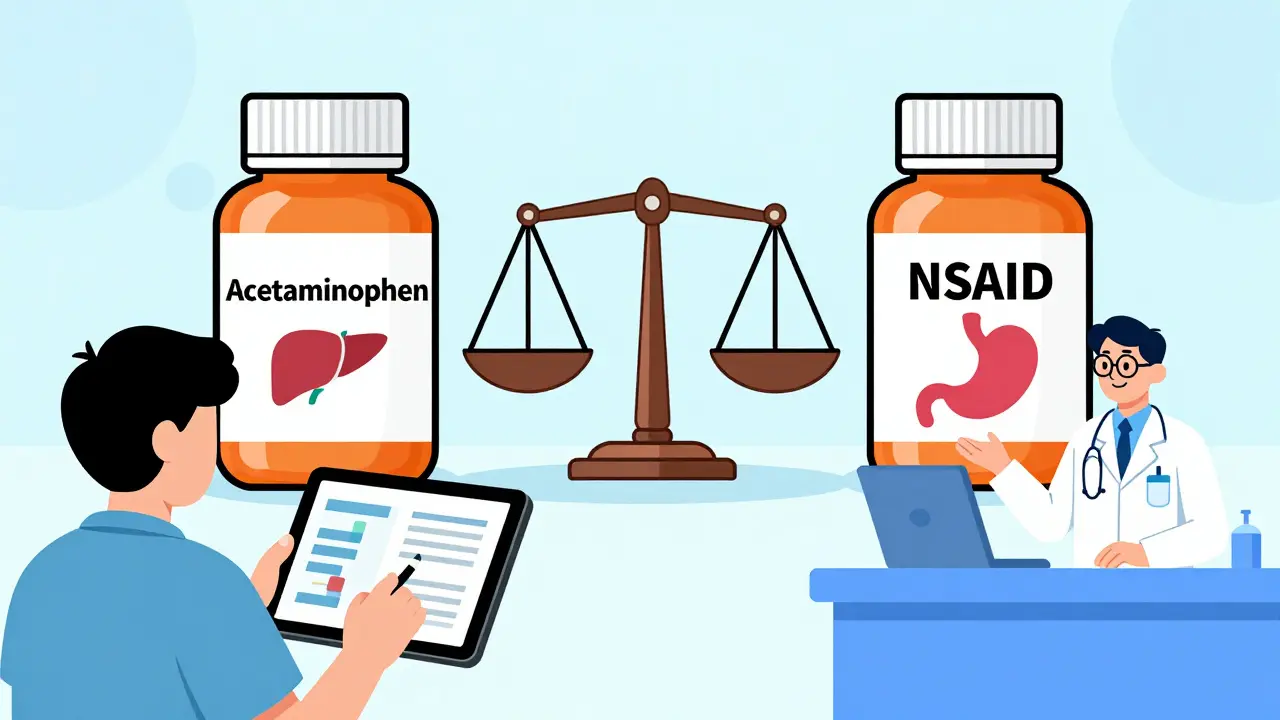
Analgesics represent the largest segment of the OTC market, accounting for 32.1% of sales. The two main contenders are acetaminophen and nonsteroidal anti-inflammatory drugs (NSAIDs). Choosing between them depends on your body and your symptoms.
| Feature | Acetaminophen (Tylenol) | Ibuprofen (Advil, Motrin) | Naproxen Sodium (Aleve) |
|---|---|---|---|
| Best For | Headaches, general body pain, fever | Inflammation, muscle aches, joint soreness | Long-lasting relief for arthritis, back pain |
| Max Daily Dose (OTC) | 3,000 mg (3 grams) | 1,200 mg | 660 mg |
| Key Risk | Liver damage | Stomach ulcers, kidney issues, heart risks | Stomach bleeding, heart risks |
| Avoid If You Have | Liver disease, heavy alcohol use | Asthma, stomach ulcers, high blood pressure | Asthma, stomach ulcers, heart disease |
Acetaminophen is generally the first-line treatment for headaches. It’s gentle on the stomach but hard on the liver. The American Liver Foundation reports that acetaminophen overdose accounts for approximately 56,000 emergency room visits annually in the US. Stick to the 3,000 mg limit. That’s about six extra-strength pills. Do not combine it with other products containing acetaminophen.
NSAIDs like ibuprofen and naproxen reduce inflammation, making them better for swollen joints or sprains. However, they carry significant risks. Ibuprofen should be avoided by people with asthma (which affects 8.3% of the US population), unstable high blood pressure, or stomach ulcers. The FDA issued warnings in April 2023 requiring all NSAID labels to include explicit warnings about potential heart attack and stroke risks with prolonged high-dose use. If you need pain relief for more than a few days, talk to a doctor.
Digestive Health and Stomach Issues
Gastrointestinal treatments make up 18.7% of the OTC market. Heartburn, indigestion, and diarrhea are common complaints, but the solutions vary widely.
For heartburn, antacids like Tums or Rolaids provide quick relief by neutralizing stomach acid. H2 blockers like famotidine (Pepcid) and proton pump inhibitors like omeprazole (Prilosec) offer longer-lasting relief by reducing acid production. Use PPIs sparingly and only for short periods unless directed by a doctor, as long-term use can affect nutrient absorption.
For diarrhea, bismuth subsalicylate (Pepto-Bismol) is a popular choice. It contains 262 mg per tablet and can coat the stomach lining. Note that it may turn your tongue or stool black-a harmless but alarming side effect. Avoid bismuth subsalicylate if you are allergic to aspirin or taking blood thinners, as it contains salicylates.
A critical rule for digestive meds: listen to your body. If heartburn persists for more than two weeks, or if you experience unexplained weight loss or difficulty swallowing, stop self-medicating and see a doctor. These could be signs of GERD or other serious conditions.
Cough, Cold, and Respiratory Care
Respiratory products account for 16.3% of OTC sales. Cough and cold medicines are notorious for confusion because many products combine multiple ingredients. A single box might contain a decongestant, an antihistamine, a cough suppressant, and a pain reliever.
This combination approach is risky. A Pharmacy Times survey found that 61% of consumers prefer single-ingredient products, yet multi-symptom formulas make up 73% of respiratory OTC sales. Why? Because people think they need everything at once. They don’t. Treat only the symptoms you have. If you have a stuffy nose but no cough, don’t buy a product with a cough suppressant. You’re exposing yourself to unnecessary side effects.
Guaifenesin (Mucinex) is an expectorant that thins mucus, making it easier to cough up. It’s generally safe but requires plenty of water to work effectively. Dextromethorphan is a cough suppressant that calms the urge to cough. Be cautious with nighttime formulas, which often contain diphenhydramine (Benadryl), an antihistamine that causes drowsiness. Reddit discussions reveal that 45% of users accidentally purchase nighttime formulas when seeking daytime relief, leading to grogginess the next day.
Pseudoephedrine (Sudafed) is a potent decongestant, but it’s restricted. Due to its use in illicit methamphetamine production, the Combat Methamphetamine Epidemic Act of 2005 requires photo ID for purchase in 37 states. It can also raise blood pressure and cause insomnia, so avoid it if you have hypertension or sleep issues.
Safety First: Dosage, Storage, and Interactions
Misusing OTC medications is a leading cause of adverse drug events. Dosage miscalculation accounts for 41% of problems reported to poison control centers. Liquid medications pose particular risks, especially for children. Children’s liquid acetaminophen overdoses increased by 7.1% in 2022. Always use the measuring device provided with the medication, not a kitchen spoon.
Storage matters too. Keep medications in a cool, dry area below 77°F (25°C). Bathrooms are bad places for meds due to humidity and temperature fluctuations. Heat can degrade the active ingredients, making them less effective or potentially harmful. Check expiration dates regularly. Most OTC meds have a shelf life of 2-3 years from manufacture. Discarding unused meds properly is important-approximately $3.1 billion worth of unused OTC medications are thrown away annually. Many pharmacies offer take-back programs.
Drug interactions are a silent threat. Even if a med is OTC, it can interact dangerously with prescription drugs. For example, NSAIDs can interfere with blood thinners like warfarin, increasing bleeding risk. Decongestants can interact with antidepressants like MAOIs, causing dangerous spikes in blood pressure. Always check for interactions before combining products.
When to See a Pharmacist or Doctor
You don’t need to navigate this alone. Pharmacists are highly accessible healthcare professionals. Ninety-two percent of Americans live within five miles of a pharmacy, and 68% consult a pharmacist about OTC medications at least once a year. They can check for drug interactions, verify appropriate dosing, and identify contraindications. In fact, 92% of pharmacists report checking for interactions as their top counseling priority.
Know when self-care isn’t enough. Seek medical attention if:
- Your symptoms last longer than the recommended time frame on the label (usually 7-10 days).
- You experience severe side effects like rash, swelling, or difficulty breathing.
- Your pain worsens or changes character.
- You have underlying health conditions like kidney disease, liver disease, or heart failure.
- You are pregnant or breastfeeding.
The perception that OTC medications are universally safe creates dangerous complacency. Dr. Robert Graham warns that this mindset leads to inappropriate self-medication, which accounts for 6.7% of adverse drug events in older adults. Respect the power of these drugs.
Future Trends and Regulatory Changes
The landscape of OTC medications is evolving. The FDA’s CARES Act provisions, finalized in December 2022, aim to modernize the OTC Monograph System. This will require manufacturers to submit safety and efficacy data for all OTC products, potentially removing 15-20% of currently marketed products that lack sufficient evidence. This means higher standards and safer shelves.
Digital integration is also growing. Sixty-three percent of consumers now use mobile apps to compare OTC products. AI-driven personalized recommendations are projected to grow by 300% through 2027. While technology helps, human judgment remains crucial. Always double-check digital advice with a healthcare professional.
Finally, be wary of "natural" labeling. Forty-one percent of consumers prefer products with natural claims, but the FDA notes regulatory ambiguity around this term. Natural doesn’t mean safe. Herbal supplements can interact with medications and lack the rigorous testing required for traditional drugs. Treat them with the same caution as synthetic OTC meds.
Can I take ibuprofen and acetaminophen together?
Yes, you can alternate or take them together for enhanced pain relief, as they work differently. However, you must track the total dosage of each separately to stay within safe limits. Consult a pharmacist if you plan to do this regularly.
Why do some OTC meds require a photo ID?
Products containing pseudoephedrine or ephedrine require ID because these ingredients can be used to manufacture methamphetamine. Laws limit how much you can buy in a day or month to prevent diversion for illegal purposes.
Are store-brand OTC medications as good as name brands?
Yes, if the active ingredient and dosage are identical. Store brands must meet the same FDA standards for safety and effectiveness. The main differences are often inactive ingredients, packaging, and price.
What should I do if I miss a dose of my OTC medication?
Generally, take it as soon as you remember unless it’s almost time for the next dose. Never double up to make up for a missed dose. Check the label for specific instructions or ask a pharmacist.
How can I tell if an OTC medication has expired?
Look for the expiration date on the package. If a pill looks discolored, crumbly, or smells odd, it may have degraded. Do not use expired medications as they may be ineffective or unsafe.
Is it safe to give adult OTC meds to children?
No. Adult formulations often contain higher doses or ingredients unsafe for children. Always use products specifically labeled for children’s age and weight, and follow dosing instructions carefully.
What are the signs of an acetaminophen overdose?
Early symptoms may include nausea, vomiting, loss of appetite, and sweating. Later stages involve pain in the upper right abdomen. Liver damage can occur without obvious early signs, so seek immediate medical help if you suspect an overdose.
Do OTC medications interact with herbal supplements?
Yes. Herbs like St. John’s Wort, ginkgo biloba, and garlic can interact with OTC drugs, affecting their effectiveness or increasing side effects. Always disclose all supplements to your pharmacist or doctor.
