
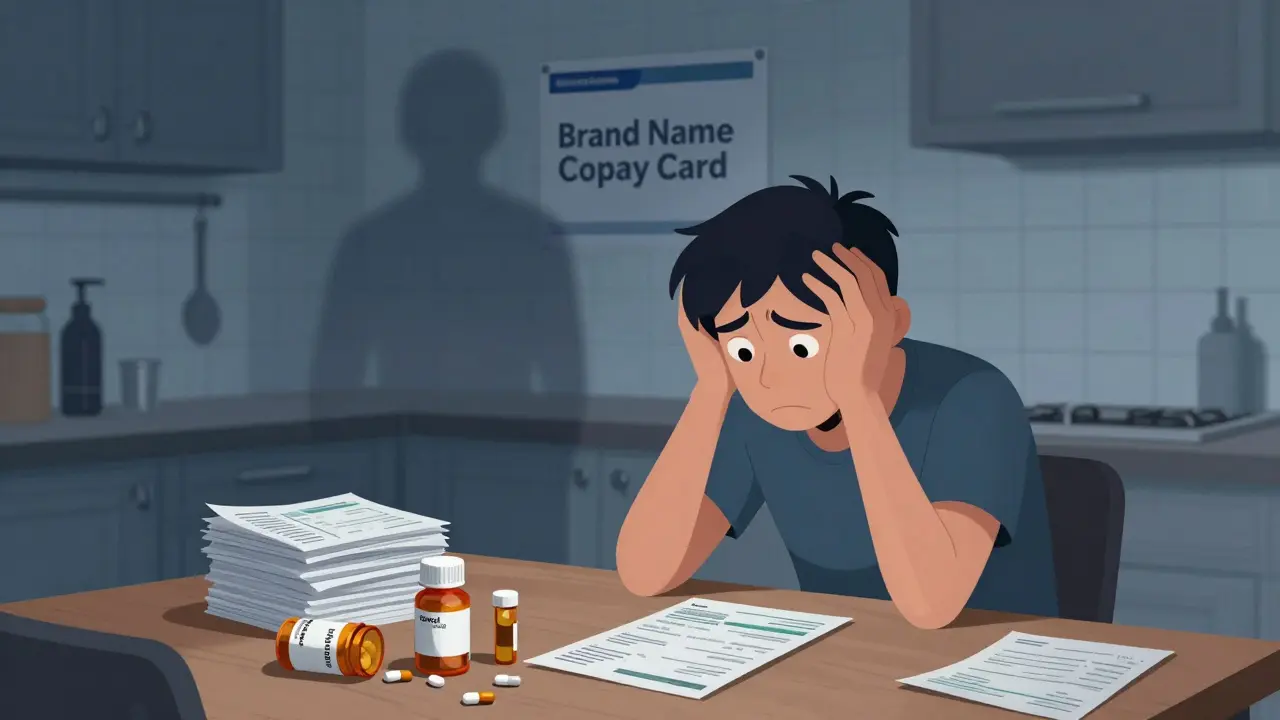
Generic drugs are supposed to be the cheap option. They usually cost 80% to 85% less than brand-name versions. But even a $10 or $15 copay can add up fast if you take multiple medications every month. For many people, that monthly bill feels impossible to manage on a tight budget. The good news is that help exists, but it looks very different from the big, flashy copay cards you see for brand-name drugs.
This guide cuts through the confusion. We will look at where generic financial help actually comes from, who qualifies, and how the new rules starting in 2025 and 2026 change the game. You will learn exactly which programs to apply for and how to avoid common pitfalls that leave patients paying more than they need to.
Why Generic Copay Help Is Different
If you have used a manufacturer copay card for a brand-name drug, you know how it works. The pharmaceutical company gives you a coupon that covers most of the cost. That model rarely works for generics. Generic drug manufacturers operate on thin profit margins because they compete fiercely on price. They simply do not have the resources to offer direct cash assistance like big pharma companies do.
Because of this, the landscape for generic assistance relies on three main pillars instead:
- Government Subsidies: Programs like Medicare’s Extra Help provide the most consistent support.
- Pharmacy Discount Networks: Independent services that negotiate lower cash prices.
- Nonprofit Foundations: Charitable organizations that fill gaps for specific conditions.
Understanding this shift is crucial. You cannot just ask your doctor for a "generic copay card" because those generally do not exist. Instead, you must navigate these alternative channels to find relief.
The Game Changer: Inflation Reduction Act Provisions
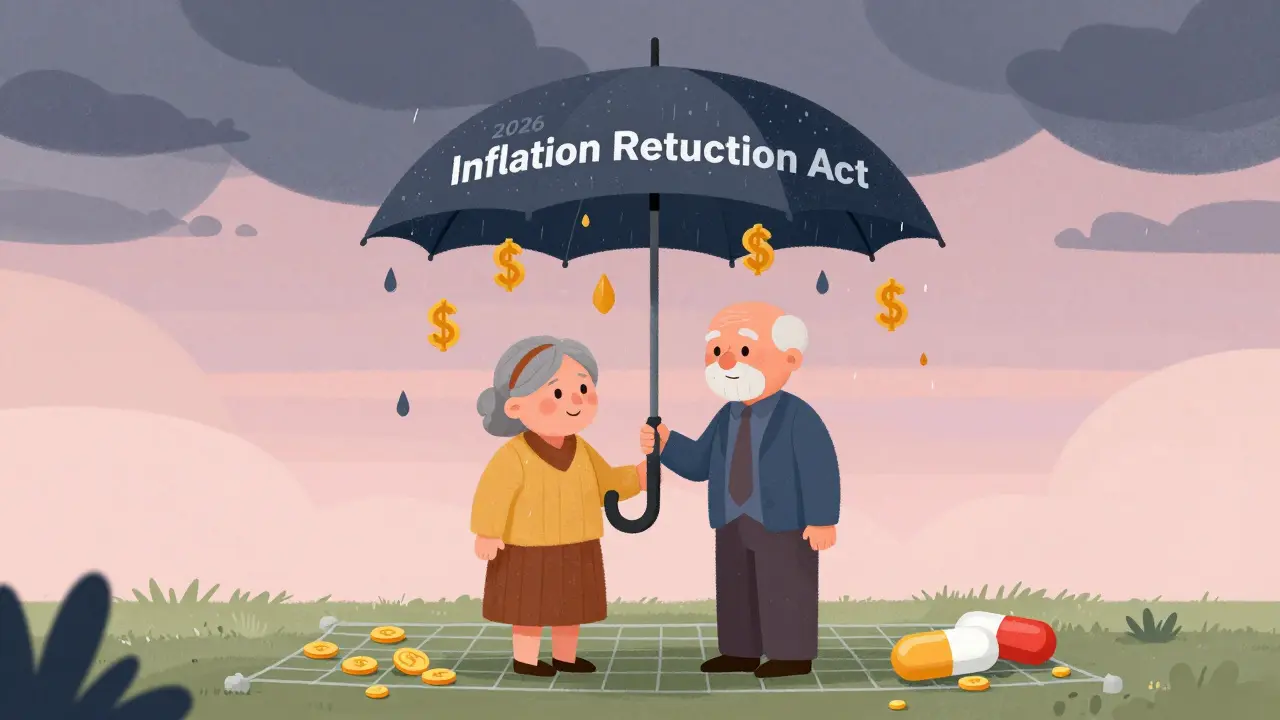
For Medicare beneficiaries, the biggest news in recent years is the implementation of the Inflation Reduction Act. This legislation introduced hard caps on out-of-pocket spending that fundamentally alter how much you pay for prescriptions.
Starting January 1, 2025, Medicare Part D beneficiaries face a hard annual out-of-pocket cap of $2,000. Before this rule, the threshold was $8,300. This means once you spend $2,000 in a year, you pay nothing more for covered drugs, including generics, for the rest of the year. This cap disproportionately helps generic users because they often need frequent refills, helping them reach catastrophic coverage faster than brand-name users might.
In 2026, these protections remain firm. Additionally, deductibles for those with Extra Help have been eliminated entirely. If you are on Medicare, this federal safety net is your primary shield against high generic costs. It removes the fear of unlimited bills, providing predictable budgeting for your healthcare expenses.
Top Resources for Generic Cost Savings
If you do not qualify for government aid, or if you want to lower costs immediately without waiting for applications, here are the most effective tools available right now.
1. Pharmacy Discount Programs
These are the easiest options to use. They require no application and no income verification. You simply present a digital or paper coupon at checkout. Major retailers and independent networks offer these:
- Walmart: Their $4/$10 list covers approximately 150 generic medications. Common drugs like lisinopril and metformin often fall into the $4 category.
- Kroger: Offers a $15 generics program for members, covering hundreds of essential prescriptions.
- SingleCare: An independent discount network with over 14 million users. It often beats insurance copays for commercially insured patients.
A critical rule here: You cannot combine these discounts with insurance. You must choose one or the other. Always check the price with the discount app before buying to see if it is cheaper than your insurance copay.
2. Medicare Extra Help (Low-Income Subsidy)
This is the gold standard for generic assistance. If you qualify, your cost-sharing drops significantly. In 2025 and 2026, the cost per generic prescription is capped at just $4.90. For brand-name drugs, it is $12.15.
Who qualifies? Generally, individuals with limited income and resources. Automatic eligibility includes those who receive Medicaid, Medicare Savings Programs, or Supplemental Security Income (SSI). If you are unsure, contact your local State Health Insurance Assistance Program (SHIP). They provide free counseling and can help you complete the application process, which requires tax returns and bank statements.
3. Nonprofit Patient Assistance
Organizations like the PAN Foundation and NeedyMeds offer grants for patients who fall through the cracks. While only about 17 of PAN’s 72 active programs focus primarily on generic treatments, they cover critical chronic conditions. NeedyMeds serves as a database to search for specific disease-based assistance. Approval rates are highest for those earning below 250% of the Federal Poverty Level (FPL), but some options exist for higher earners.
| Option | Best For | Typical Cost Savings | Eligibility Requirements |
|---|---|---|---|
| Pharmacy Discounts (e.g., SingleCare) | Commercially insured or uninsured | $5 - $30 per prescription | None (Open to all) |
| Medicare Extra Help | Low-income Medicare beneficiaries | Capped at $4.90/generic | Income & resource limits |
| Retailer Lists (Walmart/Kroger) | Patients with specific common meds | $4 - $15 flat rate | Must buy at participating store |
| Nonprofit Grants | Chronic condition patients | Varies by grant | Disease-specific & income-based |
Navigating the "Assistance Gap"
The hardest place to be is the "near-poor" bracket. These are individuals who earn slightly too much for Medicaid or Extra Help but still struggle with medical bills. For example, someone earning $2,100 a month might pay $32 a month for three generics-$16 for levothyroxine, $10 for metformin, and $6 for lisinopril. That seems manageable until rent goes up or car repairs happen.
For this group, pharmacy discount programs are often the most reliable tool. Since they do not count toward your deductible or out-of-pocket maximum, they provide immediate cash flow relief. However, be aware that payments made via discount coupons typically do not count toward your insurance's out-of-pocket maximum. This means you might hit your plan's limit later in the year, requiring careful tracking of your spending.
Another strategy is therapeutic interchange. Ask your pharmacist if there is a cheaper generic equivalent available. Sometimes, a drug has multiple generic manufacturers, and prices vary between pharmacies. Switching from one generic brand to another can save dollars without changing the medication itself.
Common Pitfalls to Avoid
Making mistakes in this area can lead to denied applications or unexpected bills. Here is what to watch out for:
- Assuming Generics Don't Need Help: Many patients skip applying for assistance because they think generics are "cheap enough." A 2023 study found that 38% of patients forego medications due to cost, even when assistance was available. Never assume; always check.
- Ignoring Documentation: Government programs like the Medicare Savings Program require thorough paperwork. SHIP counselors report that 41% of initial applications are denied due to incomplete forms. Keep your tax returns and bank statements ready.
- Mixing Insurance and Discounts: As mentioned, you cannot stack a Walmart $4 coupon with your insurance copay. Choose the lowest price for that specific transaction.
- Falling Through the Accumulator Trap: Some insurance plans use "copay accumulator" programs that prevent manufacturer assistance from counting toward your deductible. While this affects brand-name drugs more, it is important to understand your plan's specific rules regarding third-party savings.
Looking Ahead: What Changes in 2026?
The landscape continues to evolve. With the full effect of the Inflation Reduction Act now in place, the focus shifts to utilization. More patients are likely to use their benefits since the risk of high bills is reduced. However, experts warn of potential premium increases by 2027 if usage spikes significantly.
Additionally, the "assistance cliff" remains a concern. Beneficiaries earning just above income thresholds may face dramatically higher costs compared to those slightly below. This highlights the importance of regular re-evaluation of your eligibility status. Life changes-marriage, job loss, retirement-can shift your income brackets, making you eligible for programs you previously missed.
For commercially insured patients, the lack of manufacturer support for generics means advocacy is key. Contact your employer’s HR department to discuss formulary tiers. Sometimes, switching to a plan with a lower generic tier can save thousands annually, especially if you take multiple daily medications.
Do generic drugs have copay cards like brand names?
Generally, no. Generic drug manufacturers operate on thin profit margins and rarely offer direct copay assistance cards. Instead, patients rely on pharmacy discount programs, government subsidies like Medicare Extra Help, or nonprofit foundations for financial support.
How much does Medicare Extra Help reduce generic costs in 2026?
With Extra Help, the copay for generic prescriptions is capped at $4.90 per pill. This is significantly lower than standard Medicare Part D costs and provides substantial savings for patients taking multiple medications.
Can I use a pharmacy discount coupon with my insurance?
No, you cannot combine them. You must choose either your insurance copay or the discount program price. Always compare the two prices before purchasing to ensure you get the best deal. Note that discount payments usually do not count toward your insurance deductible.
What is the out-of-pocket cap for Medicare Part D in 2026?
The hard annual out-of-pocket cap is $2,000. Once you reach this amount in a calendar year, you pay $0 for covered prescriptions, including generics, for the remainder of the year.
Where can I find help if I don't qualify for government aid?
You can explore nonprofit organizations like the PAN Foundation or NeedyMeds, which offer grants for specific conditions. Additionally, retail pharmacy programs like Walmart's $4/$10 list or Kroger's $15 program provide immediate discounts without eligibility requirements.
Does using a discount program affect my insurance deductible?
Typically, no. Payments made through third-party discount programs are considered cash transactions and do not count toward your insurance plan's deductible or out-of-pocket maximum. This is an important distinction to keep in mind for end-of-year planning.
What is the "assistance gap" for near-poor seniors?
The "assistance gap" refers to individuals who earn slightly too much to qualify for Medicaid or Medicare Extra Help but still struggle with medical costs. They lack access to both government subsidies and manufacturer copay cards, leaving them reliant on limited discount programs.
How long does it take to apply for Medicare Extra Help?
The application process can take 45 to 90 days. It requires detailed documentation such as tax returns and bank statements. Working with a State Health Insurance Assistance Program (SHIP) counselor can help streamline the process and reduce denial rates due to incomplete paperwork.


You are absolutely right, Diana. This information is critical for anyone on Medicare who has been flying blind. I've seen so many seniors overpaying because they didn't know these caps existed. It's not just about saving money; it's about dignity and access to care. We have to keep pushing for better awareness of these programs because the system is deliberately confusing. Don't let the complexity scare you off; the savings are real and substantial if you do the work upfront.