

Walk into a pharmacy or sit in a doctor's office, and you might see a red pop-up on the screen before your medication is even handed over. These are pharmacy allergy alerts, digital warnings embedded in Electronic Health Record (EHR) systems designed to stop dangerous drug interactions before they happen. But here’s the catch: most of these alerts are false alarms. In fact, studies show that up to 90% of these notifications are triggered by potential cross-reactions rather than confirmed allergies, leading many patients and clinicians to ignore them entirely.
If you’ve ever wondered why a simple headache pill triggers a warning about a penicillin allergy from childhood, you’re not alone. Understanding how these alerts work can help you advocate for your health and ensure your medical records reflect reality, not just old data. This guide breaks down the mechanics behind these notifications, explains what the different severity levels actually mean, and shows you how to interpret them so you don’t miss a genuine risk or get stuck with unnecessary restrictions.
What Triggers a Pharmacy Allergy Alert?
At their core, pharmacy allergy alerts are automated checks. When a provider orders a medication, the EHR system compares it against your documented allergy list using a commercial knowledge base. The most common engine for this is First DataBank, which uses hierarchical ingredient mapping. For example, if your chart says you’re allergic to ampicillin, the system knows ampicillin belongs to the penicillin class. If a doctor then orders amoxicillin, the system flags it as a "definite" match because they share the same chemical structure.
However, the process gets trickier with "possible" alerts. These occur when the system detects a potential cross-reaction between two different drug classes. A classic example is the link between penicillins and cephalosporins. Historically, doctors assumed anyone allergic to penicillin was also allergic to cephalosporins. Modern data suggests the actual cross-reactivity rate is less than 2%, but many older EHR algorithms still treat this as a high-risk scenario. This discrepancy is why you might see an alert for a new antibiotic even though you’ve taken similar drugs safely in the past.
- Definite Allergy Alerts: Triggered by exact matches or direct class-based matches (e.g., Penicillin allergy vs. Amoxicillin order).
- Possible Allergy Alerts: Triggered by cross-reactivity concerns (e.g., Penicillin allergy vs. Cephalosporin order).
- Intolerance Alerts: Sometimes mislabeled as allergies, these flag side effects like nausea or stomach upset (e.g., Metformin causing GI distress).
Decoding Severity Levels and Color Codes
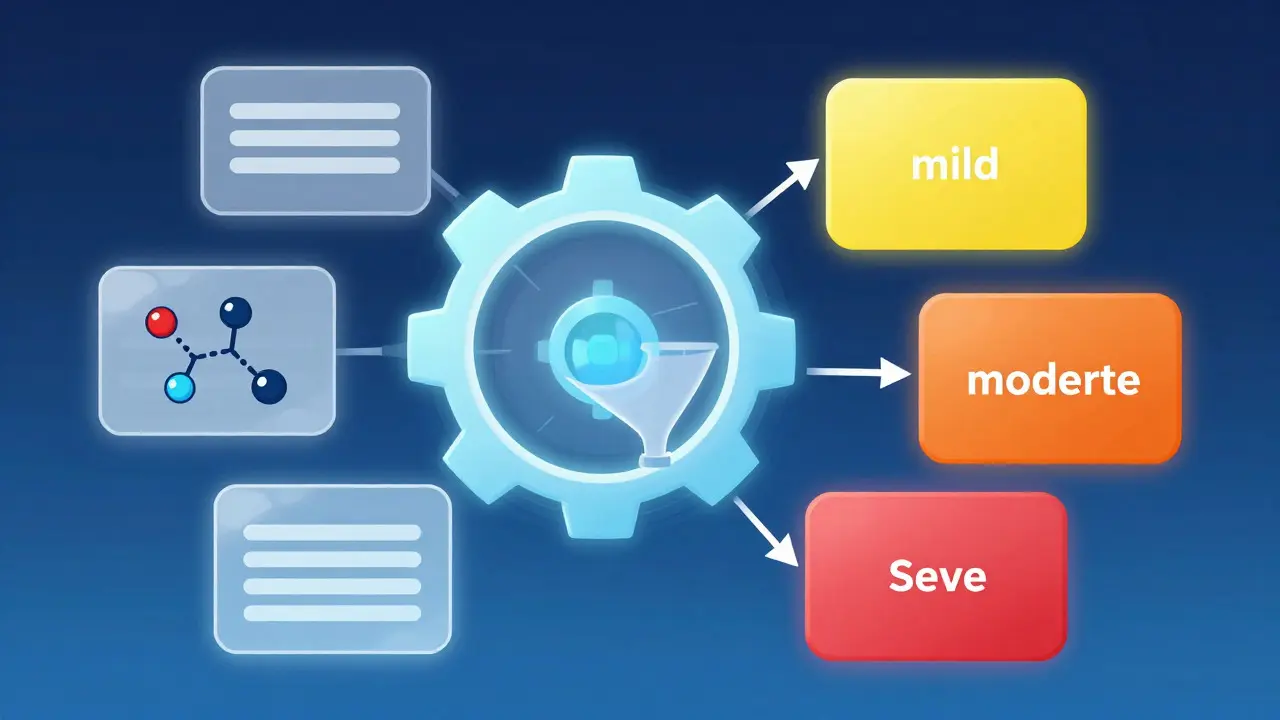
Not all alerts look the same. Different EHR platforms use different visual cues to indicate how serious the potential reaction might be. While specific interfaces vary by vendor, most systems rely on a tiered severity classification. Understanding these tiers helps you gauge whether to panic or simply wait for the pharmacist to clarify.
| Severity Tier | Typical Color Code | Clinical Meaning | Example Reaction |
|---|---|---|---|
| Mild | Yellow | Non-life-threatening; often intolerance | Nausea, mild rash |
| Moderate | Orange | Requires monitoring; may need alternative | Hives, swelling without breathing issues |
| Severe | Red | Potentially life-threatening; IgE-mediated | Anaphylaxis, airway constriction |
| Life-Threatening | Black/Dark Red | Immediate danger; mandatory review | Cardiac arrest, severe shock |
It’s important to note that color coding isn't universal. Epic systems, widely used in large hospitals, often use a four-tier system including black for life-threatening events. Cerner (now Oracle Health) typically uses a three-tier system. The key takeaway is that the color indicates the *documented* severity of your past reaction, not necessarily the current risk of the new medication. A yellow alert for a previous stomachache doesn’t mean the new drug will cause a stomachache; it means the system is being cautious based on incomplete data.
The Problem with False Positives and Alert Fatigue
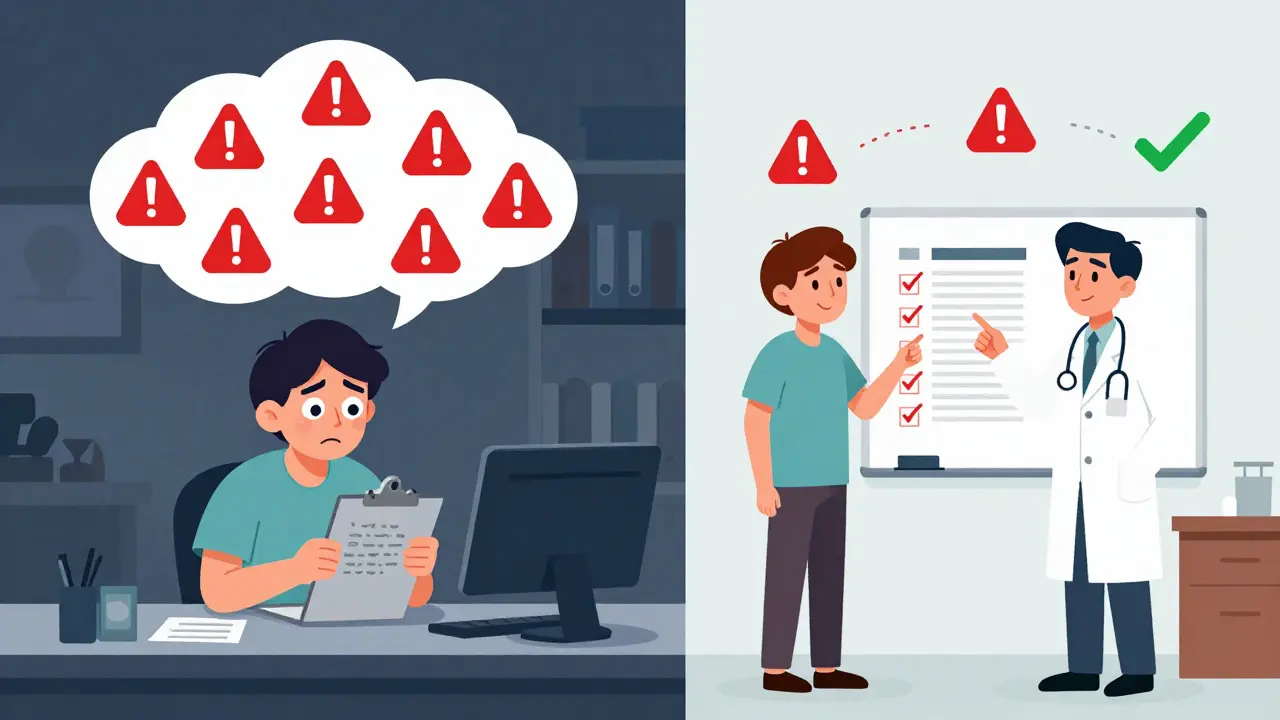
Why do we have so many alerts? Because the systems are designed to err on the side of caution. A 2017 study found that 96% of U.S. hospitals had implemented these systems by 2015, but effectiveness drops significantly when override rates exceed 95%. Clinicians often dismiss alerts because they know the patient has tolerated the drug before. This phenomenon, known as alert fatigue, is dangerous because it leads to real risks being ignored alongside false ones.
Consider the case of a patient with a documented "penicillin allergy" that was actually just a childhood stomachache. Every time they receive an antibiotic, the system fires an alert. Over years, this creates noise. Research from the Journal of Allergy and Clinical Immunology showed that only one-third of documented drug reactions are truly immune-mediated, and only one-tenth are severe. Yet, 89% of EHR systems still generate high-severity alerts for penicillin-cephalosporin combinations, despite evidence showing minimal cross-reactivity.
This mismatch creates a barrier. If you have a history of mild rashes or digestive issues labeled as "allergies," your chart might be cluttered with irrelevant data. Cleaning up this data is crucial. It ensures that when a true, severe allergy alert pops up, it gets the attention it deserves.
How to Interpret Your Specific Alert
When you or your provider see an alert, look at three specific details to determine its validity. First, check the reaction type. Does the chart say "rash," "nausea," or "anaphylaxis"? Nausea is rarely an allergy; it’s a side effect. Anaphylaxis is a true emergency. Second, look at the timing. True allergic reactions usually happen within hours to two weeks of exposure. If the reaction occurred months later, it’s likely unrelated. Third, examine the medication class. Is the alert for the exact drug you reacted to, or a related one? If it’s a related one, ask your allergist about cross-reactivity probabilities.
Here is a practical checklist to use during your next appointment:
- Verify the Drug Name: Ensure the alert is for the specific molecule, not just the brand name or a generic equivalent.
- Ask About Cross-Reactivity: If the alert is for a different class (like cephalosporins for a penicillin allergy), ask if the risk is high or low. Current guidelines suggest it’s often low.
- Clarify the Reaction: If the chart says "intolerance" instead of "allergy," explain the difference to your provider. Intolerances don’t always require avoiding the entire drug class.
- Request a De-labeling Review: If the allergy is old or unverified, ask for a formal review. Many hospitals now offer "de-labeling" programs to remove inaccurate entries.
Improving Your Medical Records for Better Accuracy
You play a vital role in making these systems work. Vague entries like "Allergic to antibiotics" are the worst kind of data. They trigger every possible alert and provide no useful information. Instead, aim for precision. Specify the drug name, the reaction, the severity, and the year it happened. For example, "Amoxicillin - Hives - Moderate - 2018" is far more useful than "Penicillin - Bad reaction."
Recent developments in healthcare technology are helping address this. Newer EHR versions, such as Epic’s 2023 release, introduce "Allergy Relevance Scoring" using machine learning to predict which alerts are clinically relevant. This reduces low-value alerts by up to 37% in initial testing. Similarly, some systems now integrate with allergist consultation records. If you’ve undergone a drug challenge test and proven you aren’t allergic, the system can automatically de-escalate future alerts.
For patients in Australia and other regions adopting similar standards, the trend is toward structured documentation. The goal is to move away from binary "allergy/no allergy" labels to nuanced profiles that distinguish between immediate IgE-mediated reactions and delayed T-cell mediated responses. By keeping your records accurate, you help reduce the global burden of alert fatigue and ensure your care is both safe and efficient.
Frequently Asked Questions
Do I need to avoid all drugs in a class if I have an allergy alert?
Not necessarily. For many drug classes, cross-reactivity is low. For instance, if you have a mild penicillin allergy, you can often take third-generation cephalosporins safely. Always consult an allergist or pharmacist before assuming you must avoid an entire class. The alert is a prompt for discussion, not a final verdict.
What is the difference between an allergy and an intolerance?
An allergy involves the immune system (like hives or anaphylaxis) and can be life-threatening. An intolerance is a non-immune side effect (like nausea or dizziness) that is usually dose-dependent and rarely dangerous. Many EHR systems conflate the two, leading to unnecessary alerts. Clarifying this distinction in your record is essential.
How long does a drug allergy stay on my record?
Permanently, unless updated. Most EHR systems do not auto-expire allergy entries. If you had a reaction 20 years ago, it will still trigger alerts today. This is why regular reviews of your medical history are important. You can request updates at any time through your primary care provider or via patient portals.
Are pharmacy allergy alerts reliable?
They are highly reliable for catching direct matches but less reliable for cross-reactivity predictions. Studies show that while they prevent many serious errors, up to 90% of alerts are for potential cross-reactions that may not pose a real risk. Their value depends heavily on the quality of the data entered into the system.
What should I do if I see an alert for a drug I've taken before?
Don't ignore it silently. Mention it to your pharmacist or doctor. Explain that you have taken the medication previously without issue. This helps them decide whether to override the alert or investigate further. It also provides data that can improve future alert accuracy for your profile.
