

Ever noticed how some babies start with dry, itchy skin, then develop a peanut allergy, and by school age, they're using an asthma inhaler? It isn't a coincidence. Doctors call this progression the atopic march is a sequential progression of allergic diseases that typically starts with eczema in infancy and evolves into food allergies, allergic rhinitis, and asthma. While it sounds like a predetermined path, the truth is more complex. Not every child with a rash is destined for asthma, but understanding why this happens can help you protect your child's long-term health.
The Reality of the Atopic March
For a long time, we thought of the atopic march as a straight line: eczema first, then food allergies, then hay fever, and finally asthma. However, recent data from the MAS cohort study shows that this classic linear path only happens in about 3.1% of children with atopic diseases. Instead, we now talk about atopic multimorbidity, where these conditions might appear at the same time or in a different order.
What we do know is that atopic dermatitis (commonly known as eczema) is often the first red flag. About 17-24% of children worldwide deal with it. The real danger isn't just the itch; it's the state of the skin. When a baby has severe eczema, their skin isn't a solid wall-it's more like a fence with missing slats. This allows environmental triggers to sneak in and alert the immune system, which then decides these harmless substances are actually threats.
Why the Skin Barrier Matters
The magic of healthy skin lies in a protein called filaggrin. Think of filaggrin as the "mortar" between the "bricks" of your skin cells. When a child has a genetic mutation in the filaggrin gene, that mortar is weak. This creates microscopic cracks in the skin barrier.
Here is where the "march" begins. If a baby with a broken skin barrier touches peanut protein or cow's milk, those allergens enter through the skin. The immune system sees this as an invasion and creates a sensitivity. This is the core of the skin barrier care philosophy: if you seal the cracks, you might stop the immune system from ever overreacting to these foods in the first place.
| Factor | Role in Atopic March | Impact/Value |
|---|---|---|
| Filaggrin Mutation | Causes skin barrier defects | High risk for initial eczema |
| Severe Eczema | Increases skin permeability | 60% higher asthma risk than mild cases |
| TSLP Gene Polymorphism | Influences immune response | Odds ratio 1.2 to 1.8 for AD and asthma |
| Gut Microbiome | Regulates T-cell differentiation | Low butyrate fermentation linked to sensitization |
The Dual-Allergen Exposure Hypothesis
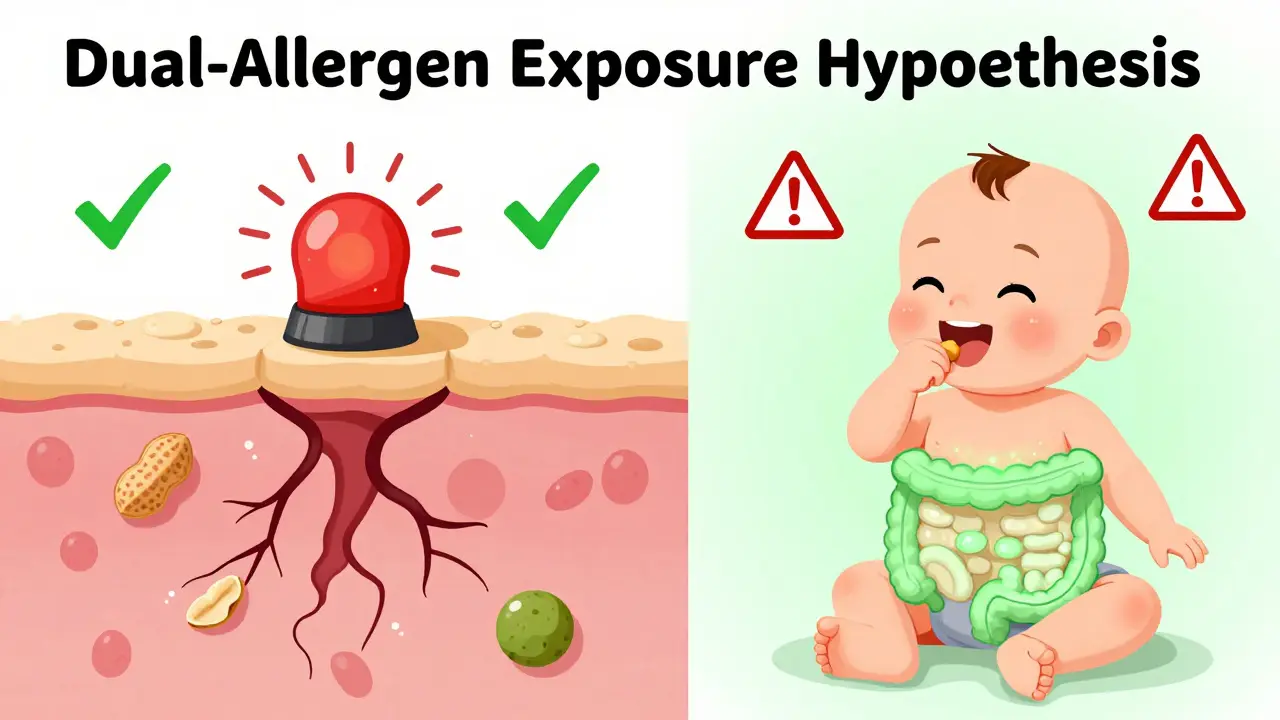
There is a fascinating paradox in how we develop allergies. The "Dual-Allergen Exposure Hypothesis" suggests that the route of exposure changes everything. If an allergen (like a peanut) enters through a broken skin barrier, it triggers an allergic response. However, if that same allergen is eaten and processed through the gut, the body is more likely to develop tolerance.
This is exactly why the LEAP (Learning Early About Peanut Allergy) study was such a game-changer. It found that introducing peanut protein early and orally reduced the risk of peanut allergy by a staggering 86% in high-risk infants with severe eczema. Essentially, by feeding the baby the allergen, they "taught" the immune system to ignore it, effectively bypassing the sensitization that had started through the skin.

Practical Steps for Skin Barrier Care
If you're managing a baby with dry skin or eczema, the goal is "aggressive protection." You aren't just treating a rash; you're trying to block the entry points for future allergies. The PreventADALL trial is currently showing that proactive emollient therapy-using moisturizing creams before the skin even cracks-can reduce eczema incidence by 20-30%.
Here is a practical approach to barrier maintenance:
- Immediate Hydration: Use fragrance-free emollients immediately after bathing to lock in moisture.
- Avoid Harsh Soaps: Ditch the bubble baths and scented soaps that strip the skin's natural oils.
- Temperature Control: Avoid overly hot baths, which can dry out the skin and create more micro-cracks.
- Consistent Application: Don't wait for the skin to look dry. Barrier care is a preventative daily habit, not a rescue treatment.
Looking Beyond the Skin: The Gut Connection
While the skin is the front door, the gut is the control center. Researchers have found that the neonatal gut microbiota-the colony of bacteria in a newborn's belly-plays a huge role in how the immune system develops. Specifically, infants who develop allergic sensitization often have a reduced genetic potential for butyrate fermentation in their gut.
Butyrate is a short-chain fatty acid that helps keep the gut lining healthy and keeps the immune system calm. This suggests that in the future, we might be able to "arrest the march" not just with creams on the skin, but with specific probiotics or dietary changes that support the gut's ability to create butyrate.
Distinguishing Sensitization from Allergy
One of the biggest sources of stress for parents is the allergy prick test. It's important to understand the difference between being "sensitized" and having a "clinical allergy." The TOACS study revealed that while 80% of children with eczema develop sensitization to food or aeroallergens, only a small fraction actually have a physical reaction when they eat those foods.
If a test shows a child is sensitized to egg, but they can eat eggs without any symptoms, they don't necessarily need to avoid them. In fact, unnecessary avoidance can sometimes prevent the body from developing the very tolerance we want. Always coordinate these tests with a specialist who understands the difference between a positive test and a real-world allergy.
Does every baby with eczema develop asthma?
No. While eczema is a risk factor, only about 25% of children with eczema progress to develop asthma. The risk is significantly higher for those with severe atopic dermatitis, but it is by no means inevitable.
What is the best way to protect a baby's skin barrier?
The most effective method is the consistent use of high-quality, fragrance-free emollients. Applying these creams daily, especially after bathing, helps seal micro-cracks in the skin and prevents environmental allergens from penetrating the epidermal layer.
How does the 'Dual-Allergen Exposure Hypothesis' work?
It suggests that exposure to allergens through a broken skin barrier leads to allergic sensitization (the body becomes primed to react), whereas early oral exposure to those same allergens promotes immune tolerance (the body learns to ignore them).
What is filaggrin and why is it important?
Filaggrin is a protein essential for the skin's barrier function. Mutations in the filaggrin gene lead to a "leaky" skin barrier, which makes it easier for allergens to enter the body and trigger the atopic march.
Can the atopic march be stopped?
While genetics play a role, research suggests we can "arrest the march" through a combination of early skin barrier protection, timely oral introduction of allergenic foods, and potentially managing the gut microbiome.
Next Steps and Troubleshooting
If your child has severe eczema, your first priority should be an aggressive moisturizing routine to close those skin gaps. If you're worried about food allergies, don't guess-consult a pediatric allergist. They can help you determine if your child is a candidate for early oral introduction of high-risk foods like peanuts, based on the severity of their skin condition.
For those whose children already have multiple symptoms (like eczema and wheezing), focus on a multidisciplinary approach. Managing the skin prevents new sensitivities, while managing the airways ensures a better quality of life. Keep a diary of triggers-not just foods, but soaps, detergents, and environmental changes-to help your doctor pinpoint the specific patterns of your child's atopic journey.


The distinction between sensitization and clinical allergy is a critical point that often leads to unnecessary dietary restrictions in pediatric care. Many parents are understandably anxious when they see a positive skin prick test, but as the TOACS study indicates, the absence of symptoms during ingestion is the primary indicator of tolerance. It is imperative that these tests are interpreted by a board-certified allergist to avoid the risk of malnutrition or the failure to develop natural tolerance through oral exposure.