
Esketamine Blood Pressure Risk Calculator
This calculator helps you understand your blood pressure risk based on FDA guidelines and clinical trial data. Your blood pressure is monitored before, during, and after esketamine treatment due to potential spikes.
Enter Your Blood Pressure Measurements
Normal: < 120 mmHg | Elevated: 120-129 | Hypertension Stage 1: 130-139 | Hypertension Stage 2: 140+
Normal: < 80 mmHg | Elevated: 80-89 | Hypertension Stage 1: 90-99 | Hypertension Stage 2: 100+
Based on the article data:
- 33% of patients had blood pressure over 140/90
- Patients with blood pressure above 160/100 are excluded
- Spikes can reach 14-23 points systolic in 5 minutes
When traditional antidepressants don’t work, people with treatment-resistant depression often feel trapped. No matter how many pills they try, the fog doesn’t lift. That’s where esketamine nasal spray comes in - a breakthrough treatment that can shift the needle in days, not weeks. But it’s not a simple prescription. It comes with intense side effects, strict rules, and a monitoring process unlike any other antidepressant. If you’re considering it, or just trying to understand why it’s so tightly controlled, you need to know what really happens when you use it.
How Esketamine Works - And Why It’s Different
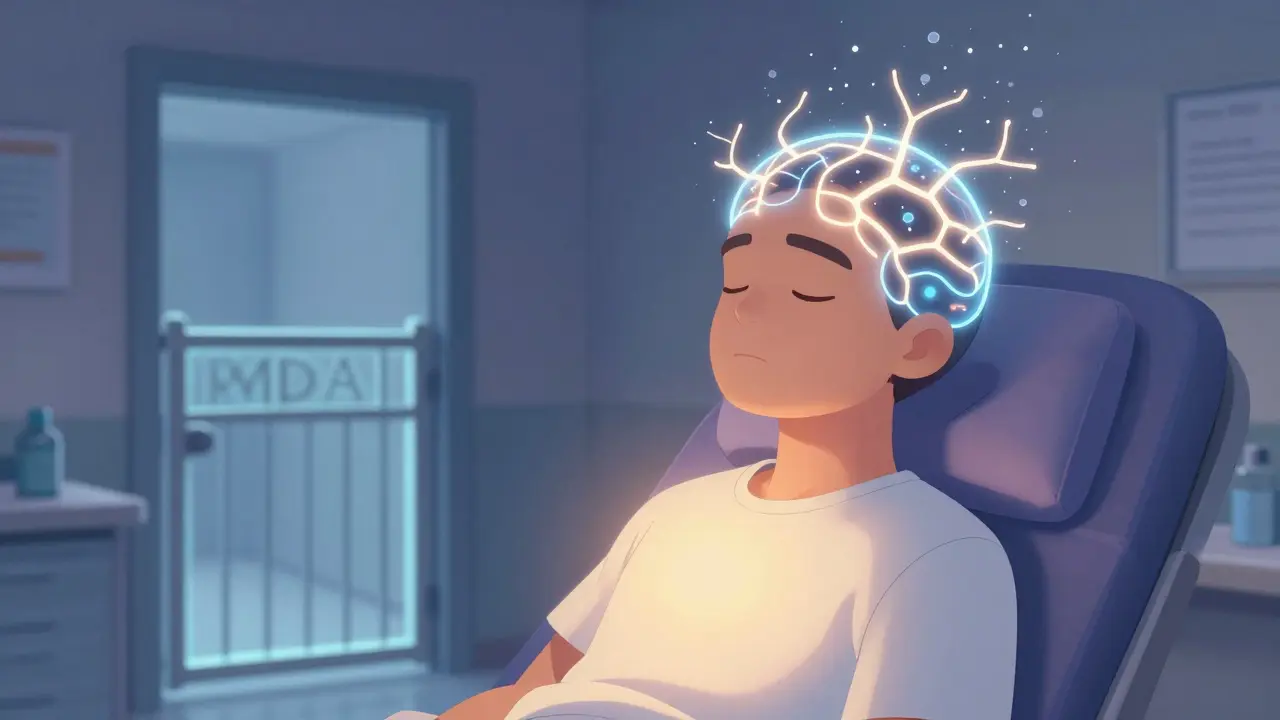
Most antidepressants target serotonin, norepinephrine, or dopamine. Esketamine doesn’t. It works on glutamate, the brain’s main excitatory chemical. Specifically, it blocks NMDA receptors, which are like gates that control how much calcium flows into brain cells. By blocking these gates on certain inhibitory neurons, esketamine actually increases activity in other parts of the brain. This sudden surge in neural communication is thought to help rebuild connections that depression has broken. It’s fast. Within hours, some people feel a shift. That’s why it’s used for severe, treatment-resistant depression - when people have tried at least two other antidepressants and still can’t get better. The FDA approved it in 2019, and since then, over 125,000 people in the U.S. have received it. But this speed comes with a cost: strong, immediate side effects that demand careful oversight.Dissociation: Feeling Unreal - And Why It’s Normal
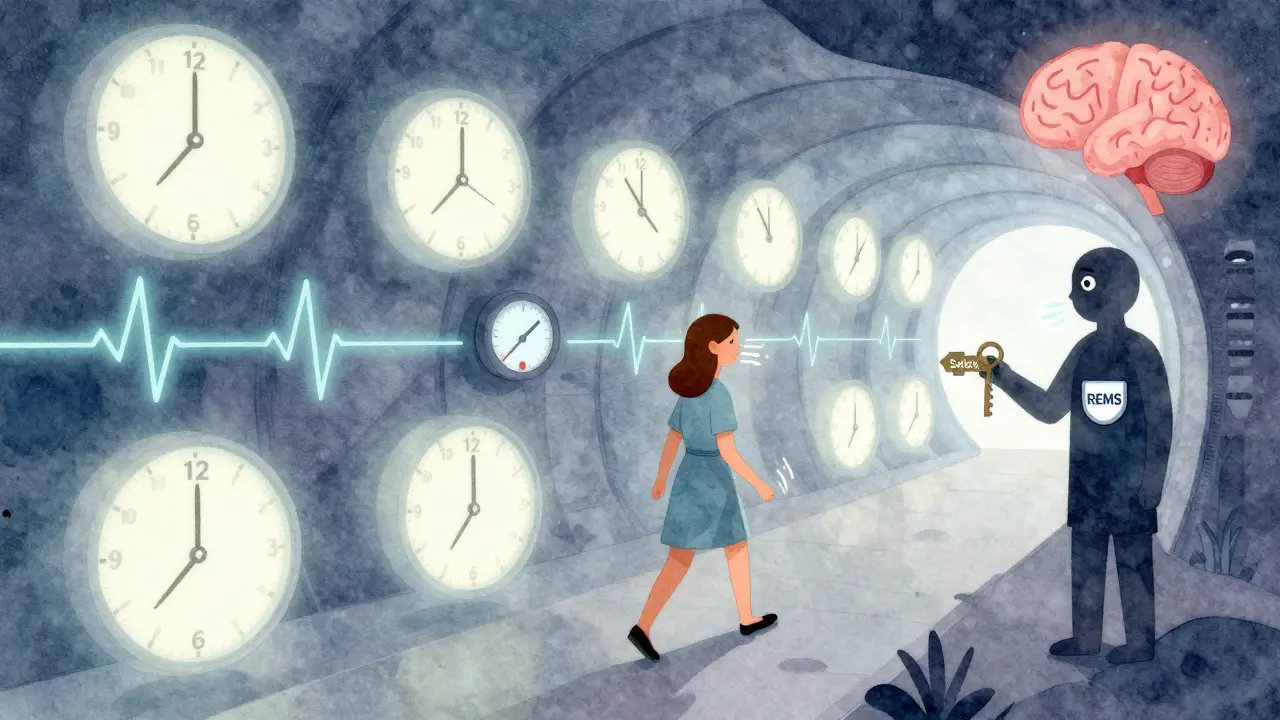
If you’ve never heard the word “dissociation,” you’re not alone. But if you’ve ever felt like you were watching yourself from outside your body - like you were in a dream - you’ve experienced it. That’s exactly what happens with esketamine. In clinical trials, more than half of patients (56%) reported dissociation after their first dose. That’s compared to just 14% in the placebo group. Symptoms include:- Feeling detached from your body or surroundings
- Time feeling slowed down or stretched out
- Blurred vision or seeing colors differently
- Feeling like you’re floating or disconnected from reality
Blood Pressure Spikes: The Silent Risk
While dissociation is obvious, the blood pressure spike is silent - and just as dangerous. Within 5 minutes of spraying, your systolic pressure (the top number) can jump 14 to 23 points. Diastolic (the bottom number) can rise 7 to 16. For most people, it’s harmless. But for someone with high blood pressure, heart disease, or a history of stroke, it’s risky. In trials, 33% of patients had a blood pressure reading over 140/90 - the clinical definition of hypertension. That’s more than double the placebo group. These spikes aren’t symptoms - you won’t feel dizzy or have a headache. That’s why checking it is non-negotiable. You can’t take esketamine if your blood pressure is above 160/100 at the time of your appointment. If you have an aneurysm, a recent heart attack, or uncontrolled hypertension, you’re excluded. Even if you’re on blood pressure meds, some people still spike too high. One patient on PatientsLikeMe stopped after two sessions when their systolic hit 170. That’s why clinics check your blood pressure before, during, and after treatment - every 5 to 10 minutes for the first half hour, then every 15 to 30 minutes after. They’re watching for anything above 180/120, which requires immediate intervention.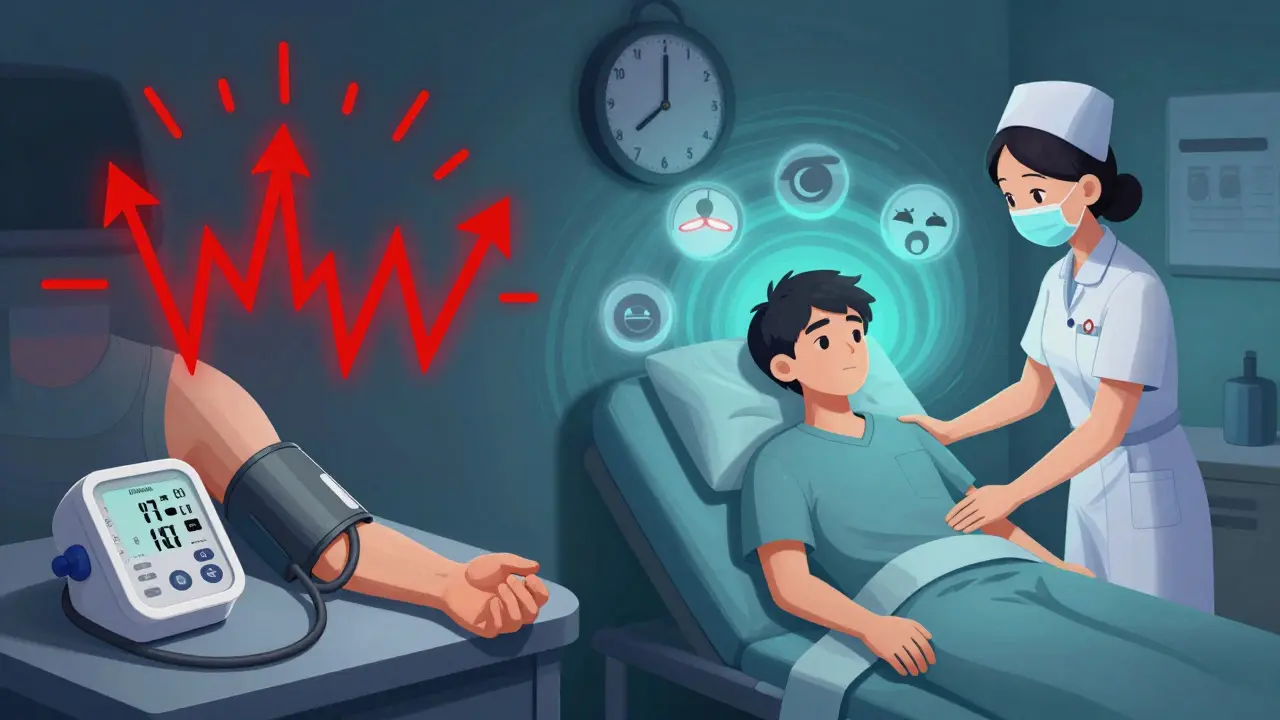
The 2-Hour Monitoring Rule: Why It’s Not Optional
You don’t just walk in, spray, and leave. Esketamine is only available through the FDA’s REMS program - a strict safety system designed to prevent misuse and manage acute risks. Here’s what happens during your visit:- You arrive 15 minutes early for a health check - blood pressure, heart rate, mental status.
- You self-administer the spray under direct supervision. The nurse watches you closely.
- You sit in a quiet, calm room. No phones, no TV, no distractions.
- Staff monitor your vitals every 5-10 minutes for the first 30-40 minutes.
- Dissociation is assessed at the 40-minute mark using a standardized scale.
- You stay for at least 2 hours - no exceptions. Even if you feel fine.
- You must have someone drive you home. You can’t drive or operate machinery for the rest of the day.
What Patients Really Say - The Good, the Bad, the Real
On Healthgrades, Spravato has a 3.7 out of 5 rating. The reviews are split, but the patterns are clear. People who say it changed their life often mention:- “I felt like myself again after two weeks - something no other drug did.”
- “The dissociation was scary at first, but the staff made me feel safe.”
- “I was suicidal. Now I’m not. That’s worth the hassle.”
- “The blood pressure spikes scared me. I couldn’t risk it.”
- “I had to take the whole day off. My job didn’t understand.”
- “I felt worse after the first dose - like I was losing my mind.”
What’s Next? Shorter Visits, Better Tools
The system isn’t perfect. But it’s changing. In September 2023, the FDA approved a new option: for patients who have stable vitals and mild dissociation after their first few treatments, the monitoring time can be cut from 2 hours to 1. This is based on data from the SUSTAIN-2 trial, which showed 63% of patients were safe to leave after 60 minutes. Companies are also working on digital tools - apps and wearables that can track dissociation and blood pressure remotely. But here’s the catch: the FDA still says you need to be in a certified center. Why? Because dissociation can turn dangerous fast. You need someone physically there to help if you panic, vomit, or have a seizure. Experts agree: the side effects aren’t going away. They’re built into how the drug works. But with better screening, smarter monitoring, and more centers opening up, access is improving.Is It Right for You?
Esketamine isn’t for everyone. But for people with severe, treatment-resistant depression who’ve run out of options, it’s a lifeline. Ask yourself:- Have I tried at least two antidepressants without lasting improvement?
- Do I have uncontrolled high blood pressure or heart disease?
- Can I take off 2.5 hours for each treatment, twice a week for the first month?
- Is there a certified clinic nearby - and can I get there safely?
Can esketamine nasal spray be used at home?
No. Esketamine nasal spray (Spravato) can only be administered in certified healthcare facilities under direct supervision. This is required by the FDA’s REMS program due to risks of dissociation and sudden blood pressure spikes. Patients cannot self-administer at home, even if they’ve used it before.
How long do dissociation and blood pressure effects last?
Dissociation usually peaks around 40 minutes after administration and resolves within 1.5 to 2 hours. Blood pressure spikes begin within 5 minutes, peak at 40 minutes, and return to normal within the same timeframe. Most patients feel back to baseline by the end of the 2-hour monitoring period.
Is esketamine addictive?
Esketamine is chemically related to ketamine, which has abuse potential. But in clinical use, under strict supervision, the risk of addiction is very low. The REMS program limits access to certified clinics, and patients are monitored closely. Studies have not shown patterns of dependence in patients using it for depression as prescribed.
Do I need to keep taking antidepressants while on esketamine?
Yes. Esketamine is always used with an oral antidepressant. It’s not a standalone treatment. The combination helps sustain the antidepressant effects over time. Stopping your oral medication can cause symptoms to return quickly.
What happens if I miss a treatment?
If you miss a scheduled treatment, contact your clinic immediately. Treatment typically starts with twice-weekly doses for the first month, then tapers to once a week or every two weeks. Missing doses may reduce effectiveness, but it won’t cause withdrawal. Your provider will adjust your schedule based on your response and stability.
Are there long-term side effects?
So far, long-term studies (up to 52 weeks) show no evidence of worsening dissociation or cumulative blood pressure damage. There’s no indication of cognitive decline or bladder issues - problems sometimes seen with long-term ketamine abuse. However, ongoing monitoring is still required, and the FDA continues to track safety data.


Okay but like… I’ve been on esketamine for 6 months now and honestly? The first time I dissociated I thought I was dying. 😵💫 Like, I swear I saw my own face floating above me and my legs were made of jelly. But the nurses? Absolute angels. They dimmed the lights, put on lo-fi beats, and just sat there like, ‘You’re safe, you’re safe.’ By session 4, I was sipping tea and zoning out like it was a spa day. 🌿 It’s not magic, but it’s the first thing that made my brain stop screaming. Worth every minute of the 2-hour wait. 🙏