
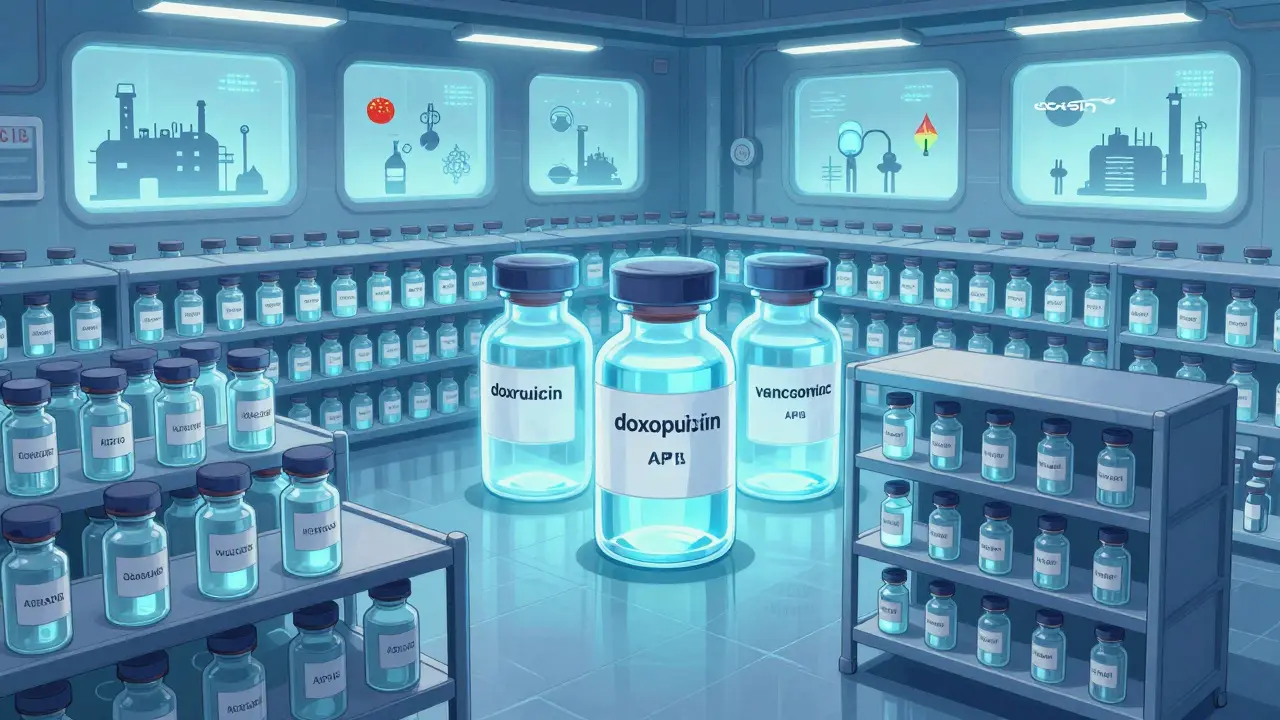
By the end of 2024, more than 277 drugs were still in short supply across the United States - a number that hasn’t dropped despite years of warnings and promises. These aren’t rare specialty drugs. They’re the ones hospitals rely on every day: antibiotics, chemotherapy agents, anesthetics, and even saline solutions. When these drugs vanish from shelves, it’s not just a logistics problem - it’s a patient safety crisis. The federal government has responded with new policies, stockpiles, and funding, but the results are mixed, and many of the root causes remain untouched.
What’s Really in the Strategic Active Pharmaceutical Ingredients Reserve?
The centerpiece of the federal response is the Strategic Active Pharmaceutical Ingredients Reserve (SAPIR), expanded by Executive Order 14178 in August 2025. This isn’t about hoarding finished pills or injections. It’s about storing the raw chemical building blocks - APIs - needed to make 26 critical medications. Why? Because APIs last 3 to 5 years longer than finished drugs and cost 40-60% less to store. The goal is to keep production running during supply chain disruptions, especially those tied to overseas manufacturing.
Eighty percent of the world’s APIs come from just two countries: China and India. A single factory fire, political tension, or regulatory delay in either place can ripple through the entire U.S. supply chain. The SAPIR targets drugs like doxorubicin (used in cancer treatment), epinephrine (for anaphylaxis), and vancomycin (a last-resort antibiotic). But here’s the catch: only 26 drugs. That’s less than 5% of all drugs that have ever been in shortage. The FDA’s own database shows over 1,200 drugs have had supply issues since 2012. Most shortages involve medications outside this narrow list.
Why Reporting Still Fails - And Who’s Ignoring the Rules
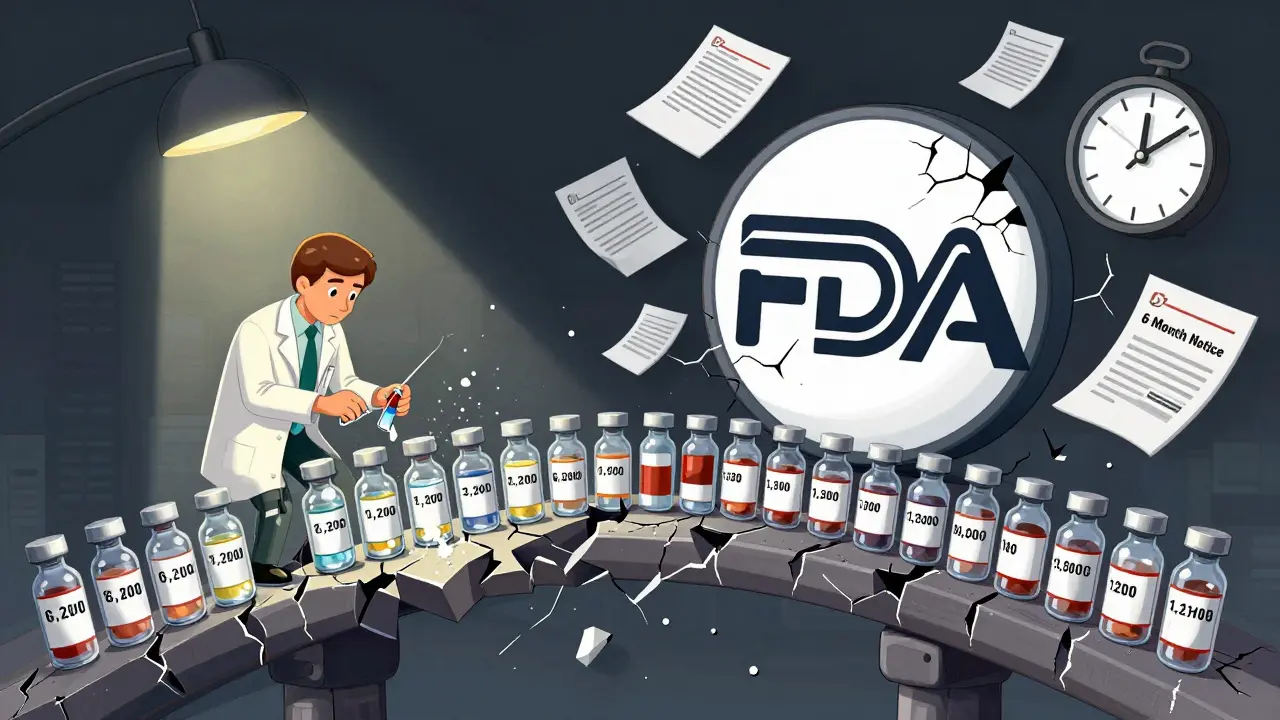
Since 2012, manufacturers have been legally required to notify the FDA six months in advance if they expect a drug shortage. But compliance? Only 58%. For small companies with fewer than 50 employees, the rate drops to 18% - meaning 82% aren’t reporting at all. Why? Because there are no real penalties. Between 2020 and 2024, the FDA issued just 17 warning letters for failure to report. In the European Union, under similar rules, they issued 142. That’s not a difference in effort - it’s a difference in enforcement.
Without early warnings, hospitals are flying blind. Pharmacists don’t know what’s coming until the shelves are empty. The FDA’s Early Notification Pilot Program showed that hospitals that did report early saw shortages last 28% less time. But the current administration has weakened mandatory reporting requirements, making the problem worse, not better.
The Real Cost of Shortages - Hospitals, Patients, and Errors
Hospitals aren’t just inconvenienced - they’re spending millions. On average, each hospital now spends $1.2 million a year just managing drug shortages. That includes overtime for pharmacists, emergency ordering fees, and training staff to use unfamiliar substitutes. The American Hospital Association found that 68% of facilities have delayed treatments because of shortages. Nearly half have seen medication errors directly tied to switching drugs.
Patients are paying the price too. A September 2025 survey by Patients for Affordable Drugs found that 29% of Americans skipped doses because a drug wasn’t available - not because they couldn’t afford it, but because it simply wasn’t there. Cancer patients were hit hardest: 68% reported changes to their treatment plans. One pharmacist on Reddit described having to compound cisplatin - a powerful chemotherapy drug - from raw powder because the pre-made vials were gone. That’s not standard practice. That’s desperation.
Domestic Production? It’s Not Happening Like They Said
The government keeps talking about bringing drug manufacturing back to the U.S. But the numbers tell a different story. Despite $285 million in new funding from the CHIPS Act and years of policy pushes, only 12% of critical API production has been successfully onshored in the last seven years. The FDA approved 56 new manufacturing facilities in 2024 - but 42% of them were in Ireland and Singapore, not Ohio or Pennsylvania.
Why? Because it takes 28 to 36 months to get FDA approval for a new domestic facility. In the EU, it’s 18 to 24 months. And even when a new plant opens, it’s not enough. Just three companies control 68% of the U.S. sterile injectable market. If one of them has a problem - say, a contamination issue or a machine breakdown - dozens of drugs vanish overnight. That’s not a supply chain. That’s a single point of failure with a national footprint.
AI and New Tools - Progress, But Not a Fix
The FDA launched its Enhanced Shortage Monitoring System in November 2025. It uses artificial intelligence to predict shortages 90 days in advance by tracking shipping data, factory output, and hospital purchasing patterns. So far, it’s 82% accurate. That’s impressive. But accuracy doesn’t matter if no one acts on it.
And the tools aren’t user-friendly. The HHS Coordination Portal, meant to connect federal agencies, hospitals, and manufacturers, got a 2.1 out of 5 usability rating from healthcare workers. Only 28 of 50 states have fully implemented the required supply chain mapping. Rural hospitals, with outdated IT systems and no dedicated staff, are still struggling to even log in.
The Bigger Problem: No One Makes Money on These Drugs
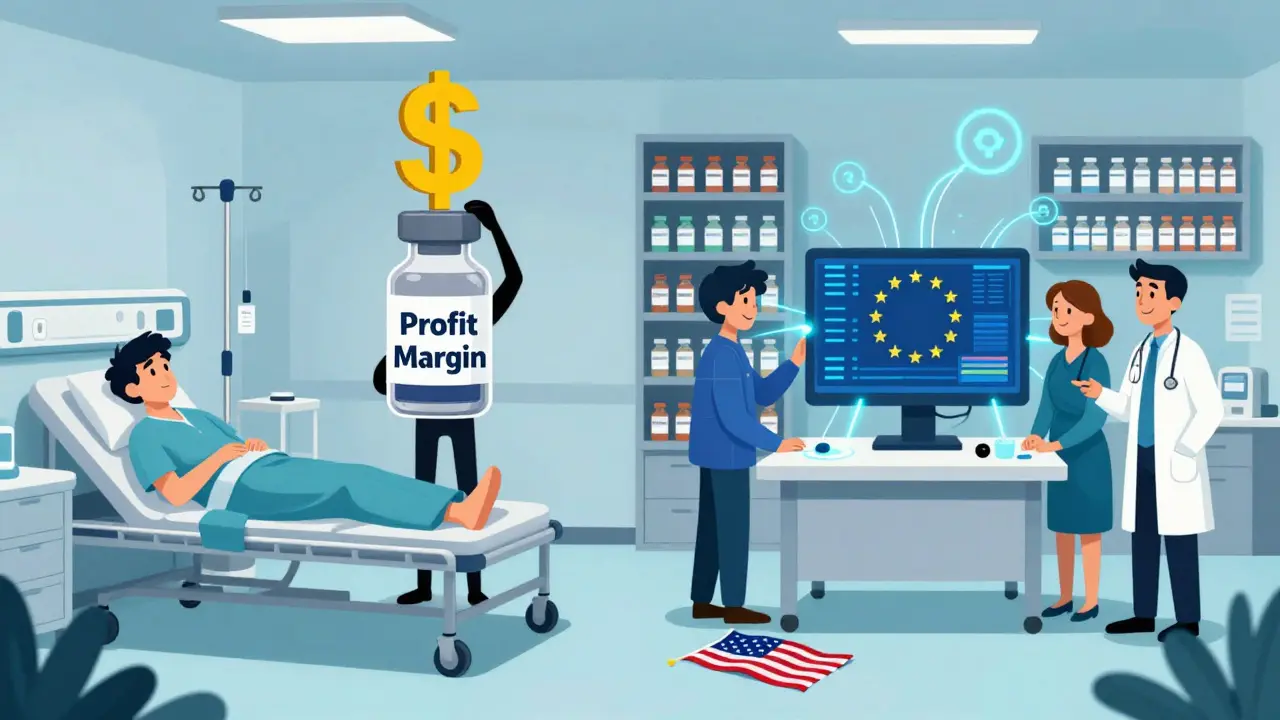
Here’s the truth no one wants to say out loud: the drugs that keep going into shortage are the cheapest ones. A vial of doxycycline costs $2. A bag of saline is $1.50. Pharmaceutical companies make pennies on these. Why would they invest in redundant factories, backup suppliers, or extra inventory when they can make far more profit selling a $1,000 cancer drug with no competition?
That’s why the FDA’s push for second-source manufacturers is the most promising development in years. Fourteen applications are already in the pipeline for alternative producers of eight high-risk drugs. If approved, they could add critical redundancy by mid-2026. But without financial incentives - like guaranteed minimum purchases or price floors - companies won’t take the risk.
Medicare could help. The American Hospital Association proposed paying hospitals extra for maintaining backup supply chains. But Congress hasn’t acted. The Drug Shortage Act (H.R.5316) could make that happen - but it’s still stuck in committee. The Congressional Budget Office estimates it would cost $740 million over five years. That’s less than 0.1% of total U.S. drug spending. For that price, we could prevent thousands of treatment delays and hundreds of preventable errors.
What’s Working - And What’s Not
Let’s be clear: some things are moving in the right direction. The SAPIR reserve gives us a buffer. The AI monitoring system gives us early warnings. The push for second-source manufacturers could add real resilience.
But the big picture? Still broken. Stockpiling raw materials doesn’t fix a broken market. Predictive software doesn’t fix a lack of enforcement. Training pharmacists to handle substitutions doesn’t fix the fact that we’re still depending on one factory in India to make half the antibiotics in the country.
The European Union reduced shortages by 37% between 2022 and 2024 by mandating stockpiles for member states and creating a centralized tracking system. The U.S. has no such system. We have 17 different agencies involved, no standardized metrics, and no accountability.
What Comes Next
If nothing changes, the number of drug shortages will keep rising. The NIH’s drug development budget dropped 18% in 2025. Without investment in next-generation manufacturing - like continuous production that can switch between drugs in hours instead of months - we’re stuck in the past.
For now, the best protection is awareness. Hospitals and pharmacies need to join the National Drug Shortage Response Network. Pharmacists need to report every shortage, even if it’s not required. Patients need to speak up when they can’t get their meds.
The government can build stockpiles and run AI models. But unless they fix the economic incentives that make low-cost drugs unprofitable, the shortages will keep coming. And someone - a patient, a nurse, a family member - will always be the one who pays the price.
Why are drug shortages getting worse despite government action?
Government actions like the Strategic API Reserve and AI monitoring help, but they don’t fix the core problem: low-profit drugs aren’t profitable to make. Manufacturers avoid investing in backup supply chains because there’s no financial reward. Meanwhile, reporting rules are weakly enforced, and most critical drugs aren’t even covered by current policies. The result? The same bottlenecks keep happening.
How does the Strategic Active Pharmaceutical Ingredients Reserve (SAPIR) work?
SAPIR stores the raw chemical ingredients (APIs) needed to make 26 essential drugs - like antibiotics and cancer treatments - rather than the finished products. APIs last longer and cost less to store. The idea is that if a manufacturer can’t produce a drug due to a supply disruption, the government can quickly send them the API so they can finish production. It’s a buffer, not a solution.
Are drug shortages only happening in the U.S.?
No. But the U.S. has far more shortages than other high-income countries. The European Union reduced shortages by 37% between 2022 and 2024 by requiring member states to stockpile key drugs and using a centralized tracking system. The U.S. has no national stockpile requirement and no unified monitoring system, which makes response slower and less coordinated.
Can I find out if my medication is in short supply?
Yes. The FDA maintains a public Drug Shortage Database that lists all active and resolved shortages. You can search by drug name or manufacturer. However, the database doesn’t always reflect real-time availability - hospitals often run out before it’s updated. If you’re concerned, talk to your pharmacist. They have access to real-time inventory systems and can often suggest alternatives.
What can I do if my drug is unavailable?
Don’t stop taking your medication without talking to your doctor. Ask your pharmacist if there’s a therapeutically equivalent alternative. If not, your doctor may be able to request an emergency import or use a compounded version. Some hospitals also have shortage response teams that coordinate with other facilities to share supplies. Always report the shortage to your pharmacy - more reports mean better data for federal agencies.


Okay but have you seen the classified docs leaked by that whistleblower in the Pentagon? The real reason they're not fixing this is because Big Pharma owns half the FDA and they want the shortages so they can jack up prices on the few drugs they still make. SAPIR? That's just a smokescreen. They're stockpiling APIs so they can control the market like a cartel. I saw a guy on Telegram say the Chinese factories are being told to slow down on purpose. They're in cahoots.