
Statin-Grapefruit Interaction Checker
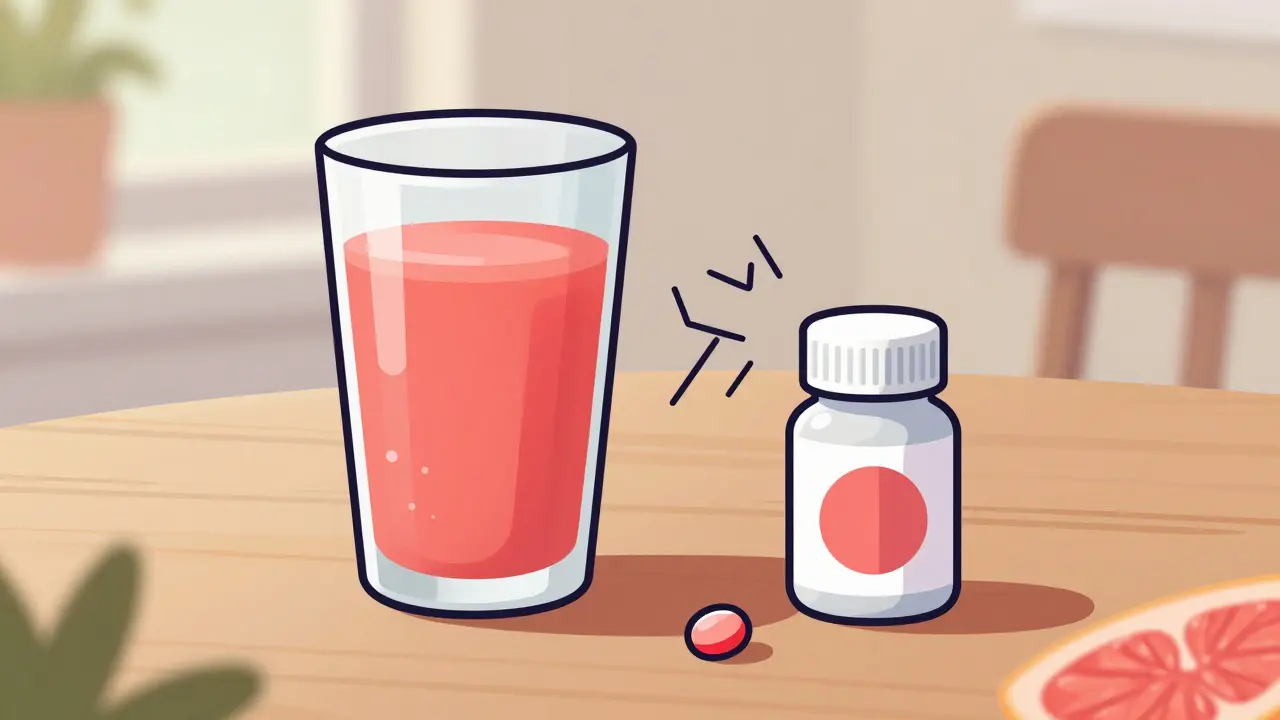
You reach for that morning glass of grapefruit juice, thinking it’s a healthy start to your day. You pop your cholesterol pill, maybe simvastatin, and head out the door. It sounds like a routine, harmless habit. But inside your body, a chemical collision is taking place that could turn that daily dose into an accidental overdose.
This isn’t just old wives’ tale or a minor side note in a pamphlet. The interaction between grapefruit and certain statins is a well-documented pharmacokinetic phenomenon that can spike drug levels in your blood by up to 16 times. That means you’re not just getting your prescribed dose; you’re potentially flooding your system with amounts that can damage muscles and kidneys. Understanding this link isn’t about fear-mongering-it’s about knowing exactly which pills play nice with citrus and which ones don’t.
The Chemistry Behind the Clash
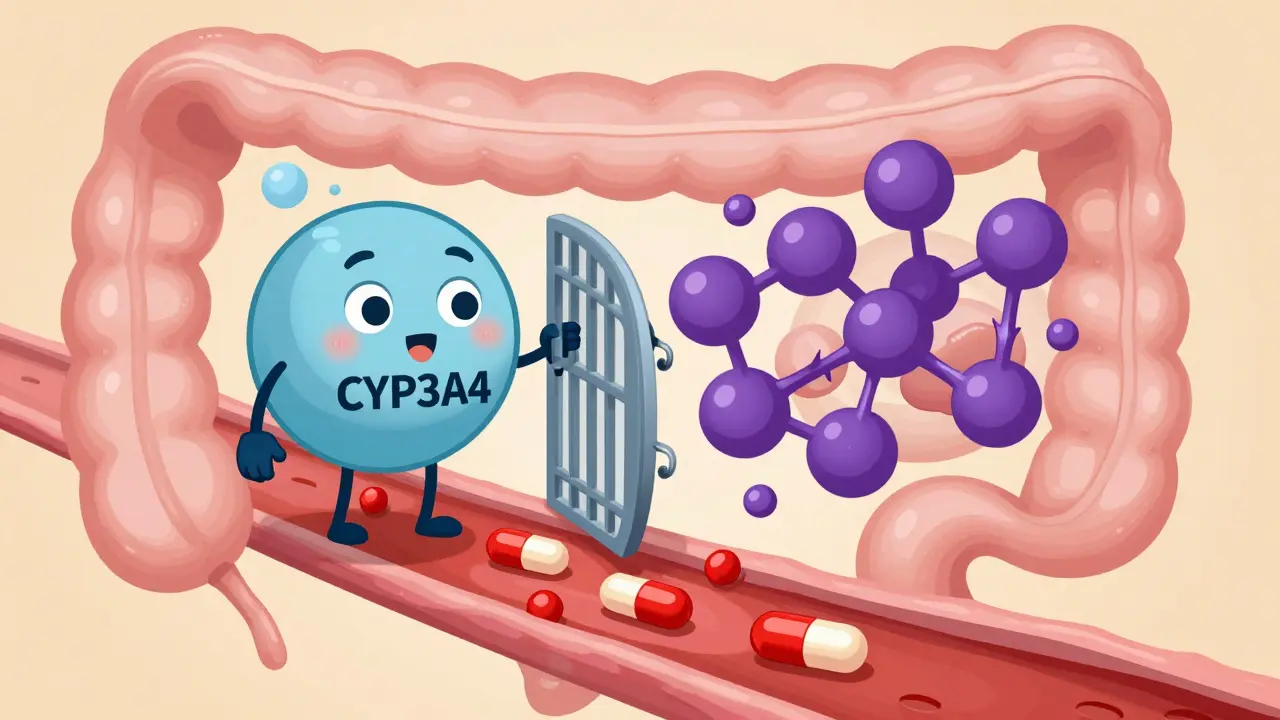
To understand why grapefruit is such a troublemaker, we have to look at how your body processes medication. When you swallow a pill, it doesn’t go straight into your bloodstream unchanged. Your digestive system, specifically the small intestine, acts as a filter. An enzyme called cytochrome P450 3A4 (CYP3A4) breaks down many drugs before they enter circulation. This process, known as first-pass metabolism, ensures that only the right amount of medication reaches your heart and liver.
Grapefruit contains natural chemicals called furanocoumarins. These compounds are potent inhibitors of CYP3A4. Unlike other foods that might temporarily slow down an enzyme, furanocoumarins bind covalently to the enzyme’s active site. This causes irreversible inactivation, often referred to as mechanism-based inhibition. Think of it like locking the gatekeeper out of the control room. Once the enzyme is disabled, it can’t break down the statin. As a result, significantly more of the drug is absorbed into your bloodstream than intended.
A pivotal study published in Clinical Pharmacology & Therapeutics in 1998 highlighted the severity of this issue. Researchers found that consuming double-strength grapefruit juice increased the peak serum concentration of simvastatin by approximately nine-fold. The area under the curve (AUC), which measures total exposure to the drug over time, jumped by 16-fold. This wasn’t a marginal increase; it was a massive surge in bioavailability that effectively turned a standard dose into a high-risk one.
Which Statins Are Off-Limits?
Not all cholesterol medications are created equal when it comes to fruit interactions. The risk depends entirely on how your specific statin is metabolized. If your drug relies heavily on the CYP3A4 pathway, grapefruit is a major hazard. If it uses different pathways, you’re likely safe to enjoy your breakfast fruit.
| Statin Name | Brand Example | Interaction Risk | Metabolism Pathway |
|---|---|---|---|
| Simvastatin | Zocor | High / Contraindicated | CYP3A4 |
| Lovastatin | Mevacor | High / Contraindicated | CYP3A4 |
| Atorvastatin | Lipitor | Moderate | CYP3A4 |
| Pravastatin | Pravachol | Low / None | Non-CYP3A4 |
| Rosuvastatin | Crestor | Low / None | Minimal CYP3A4 |
| Pitavastatin | Livalo | Low / None | Non-CYP3A4 |
According to the U.S. Food and Drug Administration (FDA), simvastatin and lovastatin carry strict warnings against grapefruit consumption. For these two, the advice is clear: avoid it completely. Atorvastatin falls into a moderate category. While not strictly contraindicated in all cases, large quantities of grapefruit can still elevate its levels dangerously. On the flip side, pravastatin, rosuvastatin, and pitavastatin are generally considered safe because they bypass the CYP3A4 enzyme mostly or entirely.
The Real Danger: Rhabdomyolysis
Why does this matter? Because higher statin levels mean higher toxicity. The most common side effect you might notice is muscle pain, medically known as myalgia. About 5-10% of patients experiencing this interaction report mild to moderate aches. But there is a far more severe, albeit rare, complication called rhabdomyolysis.
Rhabdomyolysis occurs when muscle tissue breaks down rapidly. This releases a protein called myoglobin into your bloodstream. Myoglobin is toxic to your kidneys and can cause acute kidney failure if not treated immediately. Symptoms include severe muscle weakness, intense pain, and urine that looks like tea or cola due to the presence of myoglobin. While this condition affects less than 1 in 10,000 statin users annually, the risk skyrockets when grapefruit amplifies the drug’s potency.
Case studies document instances where patients developed rhabdomyolysis after combining daily grapefruit consumption with simvastatin. One documented case involved a 40-year-old woman who drank grapefruit juice daily for ten days while on simvastatin, leading to severe muscle breakdown. This underscores that even short-term, consistent consumption can trigger a medical emergency.
Timing Doesn't Save You
A common misconception is that you can avoid the interaction by spacing out your medication and your fruit. You might think, "If I take my pill in the morning and eat grapefruit at dinner, I’m fine." Unfortunately, that logic doesn’t hold up here.
The inhibition caused by furanocoumarins is long-lasting. Because the enzyme damage is irreversible, your body has to synthesize new CYP3A4 enzymes to restore normal function. Research indicates that enzyme activity takes approximately 72 hours to return to baseline after consuming grapefruit. This means that even intermittent consumption-like eating a grapefruit once or twice a week-can maintain elevated statin levels in your system for days. Separating the ingestion time by a few hours offers zero protection.
What About Other Citrus Fruits?
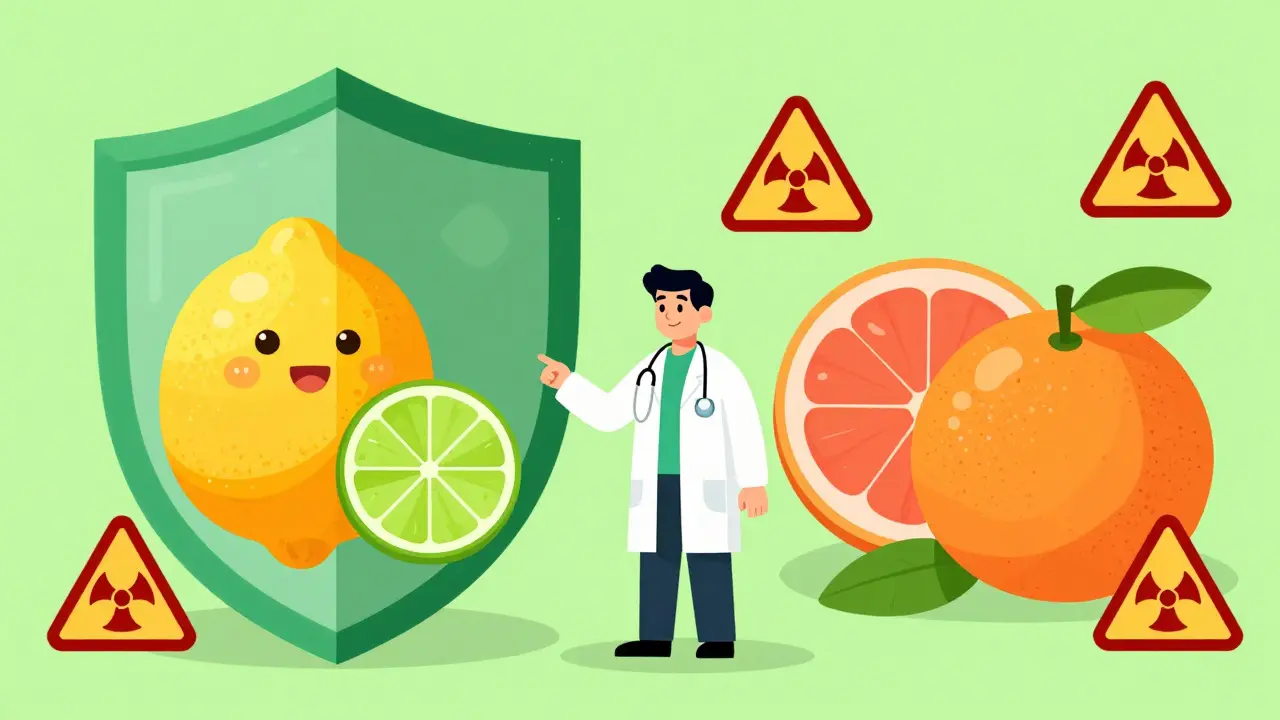
If you love citrus but are worried about your meds, you don’t need to give up the entire family. The danger is specific to fruits containing significant concentrations of furanocoumarins. Regular oranges, lemons, and limes are generally safe. They do not contain enough of these inhibitory compounds to affect CYP3A4 significantly.
However, be cautious with Seville oranges. These bitter oranges are commonly used in marmalades and jams. Like grapefruit, they contain furanocoumarins and can interact with statins. Pomelos also pose a similar risk to grapefruit. So, while your fresh-squeezed orange juice is likely fine, that jar of artisanal marmalade might be hiding a risk.
Practical Steps for Patients
If you are currently taking a statin, what should you do? First, check your prescription label. The FDA requires warnings for simvastatin, lovastatin, and atorvastatin. If you see a warning about grapefruit, take it seriously. Second, talk to your doctor or pharmacist. Do not stop taking your medication on your own. Stopping statins abruptly increases your risk of heart attack and stroke.
If you are a regular grapefruit consumer, ask your provider if switching to a non-interacting statin like pravastatin or rosuvastatin is appropriate for you. These alternatives offer effective cholesterol management without the dietary restrictions. According to data from the Centers for Disease Control and Prevention, nearly 40 million Americans take statins. With 12-15% of them consuming grapefruit regularly, this is a widespread public health issue that requires proactive management.
Pharmacists play a critical role here. A 2021 study showed that pharmacist-led interventions reduced inappropriate grapefruit-statin combinations by 78%. Don’t hesitate to ask your local pharmacist to review your medication list for potential food interactions. It’s a simple question that could prevent a hospital visit.
Future Solutions
Science is working on a permanent fix. Researchers at the University of Florida have been breeding grapefruit varieties with significantly reduced furanocoumarin content. Preliminary studies from 2023 show promising results in creating a "safe" grapefruit that retains its nutritional benefits and flavor without the dangerous enzyme-inhibiting properties. While this may not be widely available for another decade, it offers hope for those who want to keep both their heart health and their favorite fruit.
Until then, knowledge is your best defense. Understand your medication, know your triggers, and communicate openly with your healthcare team. A small change in diet can make a huge difference in safety.
Can I drink grapefruit juice if I take Rosuvastatin?
Yes, generally speaking. Rosuvastatin (Crestor) is not primarily metabolized by the CYP3A4 enzyme, so it does not have a significant interaction with grapefruit. However, always consult your doctor for personalized advice.
How much grapefruit is too much?
For high-risk statins like simvastatin and lovastatin, any amount is considered risky. For atorvastatin, the American College of Cardiology suggests limiting intake to no more than one small grapefruit or 8 ounces of juice per week. However, complete avoidance is the safest approach for those on CYP3A4-metabolized drugs.
Does separating the time I take my statin and eat grapefruit help?
No. The enzyme inhibition caused by grapefruit is irreversible and lasts for about 72 hours. Timing your doses apart will not prevent the interaction because the enzyme remains inactive for several days after consumption.
Are Seville oranges safe with statins?
No. Seville oranges, often used in marmalades, contain furanocoumarins similar to grapefruit. They can inhibit CYP3A4 and increase statin levels, posing the same risks as grapefruit.
What are the symptoms of statin toxicity?
Common symptoms include muscle pain (myalgia) and weakness. Severe toxicity can lead to rhabdomyolysis, characterized by severe muscle pain, weakness, and dark, tea-colored urine. If you experience these symptoms, seek medical attention immediately.
