
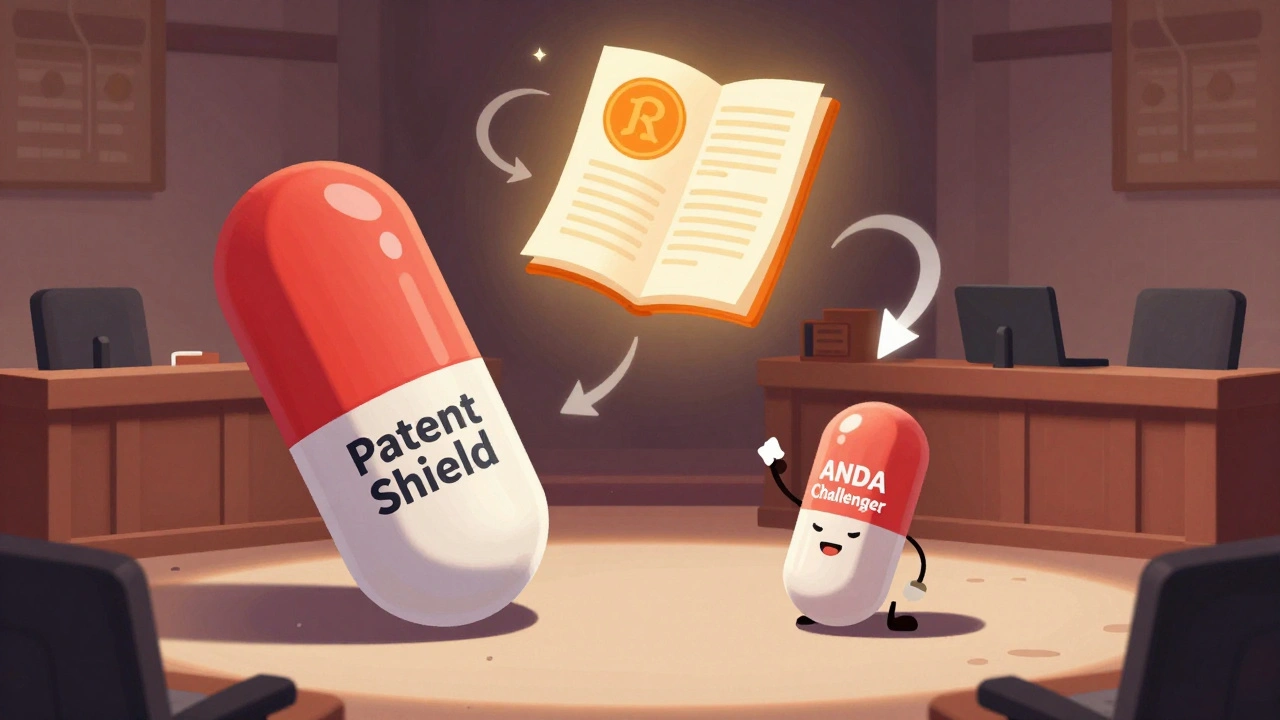
The Hatch-Waxman Act didn’t just change how drugs are approved in the U.S.-it rewrote the rules for who gets to sell them, when, and at what price. Before 1984, bringing a generic version of a brand-name drug to market was nearly impossible. Generic manufacturers had to run their own full clinical trials, even though the original drug had already been proven safe and effective. That meant costs soared, timelines stretched for years, and competition stayed locked out. The Hatch-Waxman Act changed all that. It created a legal and regulatory pathway so efficient that today, over 90% of prescriptions in the U.S. are filled with generics-drugs that cost 80 to 90% less than their brand-name counterparts.
How the Hatch-Waxman Act Broke the Generic Drug Logjam
The core of the Hatch-Waxman Act is the Abbreviated New Drug Application, or ANDA. Before this law, companies had to submit a full New Drug Application (NDA)-the same massive packet of data required for brand-name drugs. That included animal studies, human clinical trials, manufacturing details, and more. It wasn’t just expensive; it was redundant. Why test the same active ingredient again if it’s already been approved?
The ANDA process cut that burden dramatically. Generic manufacturers now only need to prove two things: their drug is pharmaceutically equivalent to the brand-name version (same active ingredient, strength, dosage form, and route of administration), and it’s bioequivalent-meaning it delivers the same amount of medicine into the bloodstream at the same rate. The FDA requires bioequivalence to be shown within a 80% to 125% confidence interval for two key measurements: Cmax (peak concentration) and AUC (total exposure). That’s it. No new clinical trials. No repeating years of testing. Just science-based proof that the generic works the same way.
The Orange Book: The Rulebook for Generic Competition
One of the most overlooked but critical parts of the Hatch-Waxman Act is the Orange Book. Officially called Approved Drug Products with Therapeutic Equivalence Evaluations, this public database lists every FDA-approved drug and the patents tied to it. Brand-name companies must list every patent they believe protects their drug-whether it’s for the chemical compound, a specific use, or even the pill’s coating.
When a generic company files an ANDA, they must check each patent in the Orange Book and make one of four legal statements, called a “paragraph certification.” Paragraph I means no patents are listed. Paragraph II says the patents have expired. Paragraph III says the generic won’t launch until the patent expires. But Paragraph IV is the game-changer: it says the patent is invalid or won’t be infringed. That’s the trigger for a legal showdown.
Why the First Generic Company Gets 180 Days of Exclusivity
The Hatch-Waxman Act doesn’t just make it easier to get generics approved-it gives a financial incentive to be the first to challenge a patent. The first company to file an ANDA with a Paragraph IV certification gets 180 days of market exclusivity. During that time, no other generic can enter the market, even if they’ve filed their own application.
This rule was designed to reward risk. Filing a Paragraph IV certification means you’re legally challenging a patent, which almost always leads to a lawsuit from the brand-name company. That’s expensive, uncertain, and risky. But if you win, you get six months of being the only generic on the market. That’s enough time to capture a huge share of sales before other generics flood in and prices drop even further.
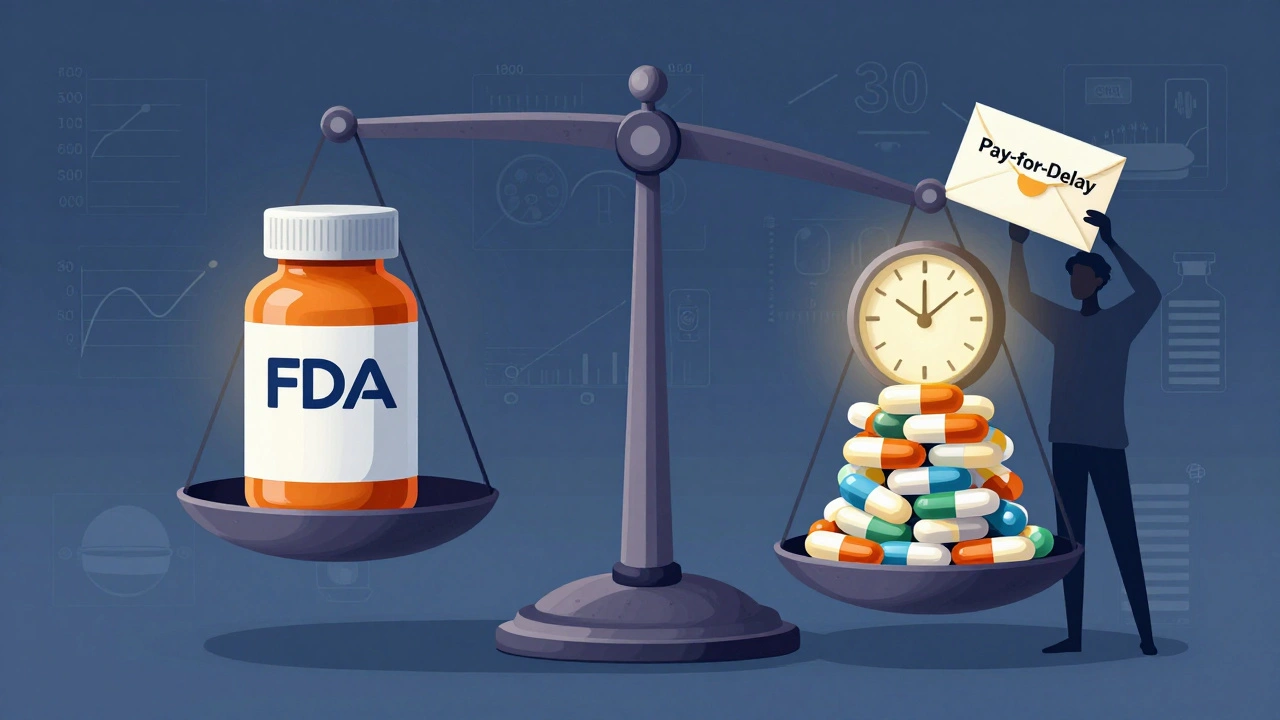
But the system isn’t perfect. Sometimes, the first filer delays launching their drug-either because they strike a deal with the brand company to wait, or because they’re waiting for legal clarity. That’s called a “pay-for-delay” settlement, and it’s been a major point of criticism. In 2023, the FDA cracked down harder on these deals, especially when brand companies refuse to provide generic manufacturers with the drug samples they need to test bioequivalence. The CREATES Act of 2019 made that refusal illegal.
How Patent Litigation Slows Down Generic Entry
When a Paragraph IV certification is filed, the brand-name company has 45 days to sue for patent infringement. If they do, the FDA is automatically blocked from approving the generic for 30 months-or until the court rules, whichever comes first. That’s called a 30-month stay.
On paper, it’s meant to protect patent rights. In practice, it’s often used to extend monopoly pricing. The average patent lawsuit under Hatch-Waxman takes 31 months to resolve-just long enough to push past the 30-month mark. That means even if the generic wins the case, they’ve already lost months of potential sales. Some brand companies file multiple patents on minor changes-like a new pill shape or a different release mechanism-to keep triggering new 30-month stays. This tactic, called “patent thickets,” has become a common way to delay competition.
According to FDA data, 90% of ANDAs with Paragraph IV certifications lead to lawsuits. That’s not a bug-it’s a feature of the system. The law expects legal battles. But it also means that for many drugs, generic entry doesn’t happen on the day the patent expires. It happens months or even years later.
Who Wins? Who Loses? The Real Impact of Hatch-Waxman
The numbers tell a clear story. Since 1984, the U.S. has saved an estimated $1.7 trillion in healthcare costs thanks to generic drugs. In 2023 alone, generic drugs saved the system $158 billion. Medicare Part D beneficiaries saved an average of $3,200 per person that year because they filled 78% of their prescriptions with generics.
But the winners aren’t just patients. Generic manufacturers like Teva, Mylan (now Viatris), and Sandoz built billion-dollar businesses on this law. The generic drug market in the U.S. is now worth $70 billion, with over 11,000 approved products. The FDA approved 746 ANDAs in 2023, up from just a handful in the 1980s.
Still, challenges remain. Some drugs-especially complex injectables, inhalers, and topical creams-are still hard to copy. Bioequivalence testing for these isn’t as straightforward as for pills. That’s why the FDA has been working on new guidance documents every year to help generic companies navigate these tougher products.
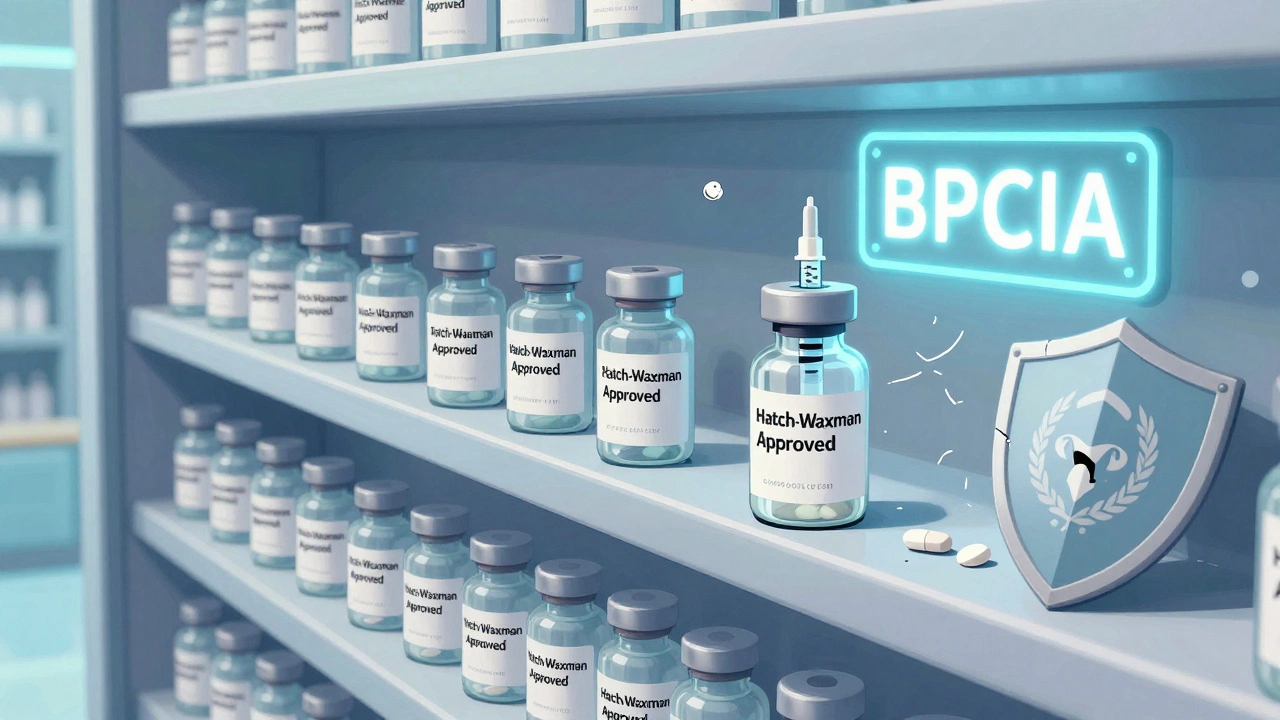
And while the system works well for small-molecule drugs, it doesn’t cover biologics-large, complex proteins made from living cells. That’s why Congress passed the Biologics Price Competition and Innovation Act (BPCIA) in 2010 to create a separate pathway for biosimilars. But even that system has its own delays and legal hurdles.
What’s Next for Generic Drug Approval?
The Hatch-Waxman Act is 40 years old, and the pharmaceutical landscape has changed dramatically. More drugs are now biologics. More patents are being layered on top of each other. More settlements are being scrutinized by the FTC and Congress.
The FDA’s Generic Drug User Fee Amendments (GDUFA) III, launched in 2023, aims to speed up review times. Since 2012, the average ANDA review time has dropped from 36 months to 18 months. That’s progress. But the real bottleneck isn’t the FDA-it’s the courts and the legal games played by brand companies.
Lawmakers are now debating whether to limit patent thickets, ban pay-for-delay deals outright, or force brand companies to share drug samples without delay. The Congressional Research Service has flagged “bottlenecking” as a growing problem, where the first generic applicant holds up others even after their exclusivity period ends.
One thing is clear: the Hatch-Waxman Act still works-but it’s being stretched thin. The system was built for simple pills. Today, we’re asking it to handle complex injectables, combination therapies, and even gene therapies. The law didn’t break. But it’s time to update it.
What is the Hatch-Waxman Act and why does it matter?
The Hatch-Waxman Act is a 1984 U.S. federal law that created the Abbreviated New Drug Application (ANDA) process, allowing generic drug manufacturers to bring lower-cost versions of brand-name drugs to market without repeating costly clinical trials. It balances innovation incentives for brand companies with faster access to affordable generics, saving the U.S. healthcare system over $1.7 trillion since its passage.
How does a generic drug get approved under Hatch-Waxman?
A generic manufacturer files an ANDA with the FDA, proving the drug is pharmaceutically and bioequivalent to the brand-name Reference Listed Drug (RLD). They don’t need new clinical data-just proof that their version delivers the same amount of medicine into the bloodstream at the same rate. The FDA reviews the application and, if approved, lists the drug in the Orange Book with a therapeutic equivalence rating.
What is the Orange Book and how does it affect generics?
The Orange Book is the FDA’s public database that lists all approved drug products and the patents associated with them. Generic companies must review these patents when filing an ANDA and make a legal certification about each one. This determines whether they can launch immediately or face a patent lawsuit. It’s the legal roadmap for when generics can enter the market.
Why does the first generic company get 180 days of exclusivity?
The 180-day exclusivity period rewards the first generic company to file an ANDA with a Paragraph IV certification-meaning they challenged a patent. It’s meant to offset the high cost and risk of litigation. During those 180 days, no other generic can enter the market, giving the first filer a chance to capture most of the sales before prices drop further.
What are pay-for-delay deals and why are they controversial?
Pay-for-delay deals happen when a brand-name drug company pays a generic manufacturer to delay launching its cheaper version. Instead of competing, they agree to wait. These deals keep prices high and block patient access. The FTC and courts have challenged them as anti-competitive, and recent FDA actions and the CREATES Act aim to stop brand companies from withholding drug samples to delay generic testing.
Can the Hatch-Waxman Act handle new types of drugs like biologics?
No. The Hatch-Waxman Act was designed for small-molecule drugs like pills and tablets. Biologics-complex proteins made from living cells-require a different approval pathway created by the BPCIA in 2010. Even then, biosimilar approval is slower and more complex than traditional generics, and patent disputes still delay market entry.
What to Watch for in the Coming Years
The future of generic drugs won’t be decided in Congress alone. It’s being shaped in FDA labs, in courtrooms, and in the boardrooms of companies like Teva and Pfizer. As more complex drugs come off patent-like combination inhalers, long-acting injectables, and even some gene therapies-the FDA will need to update its bioequivalence standards. Right now, there’s no clear way to prove two versions of a complex inhaler work the same way.
Meanwhile, the pressure to lower drug costs is growing. States are experimenting with bulk purchasing of generics. Medicare is pushing for even steeper discounts. And patients are asking why some generics still cost hundreds of dollars when the active ingredient is decades old.
The Hatch-Waxman Act gave us the tools to make drugs affordable. But keeping those tools sharp-and making sure they work for the next generation of medicine-is the real challenge ahead.


Man, I remember when my grandma had to pay $400 for her blood pressure med. Now she gets the generic for $4 at Walmart. Hatch-Waxman didn’t just save money-it saved lives. No hype, just facts.