
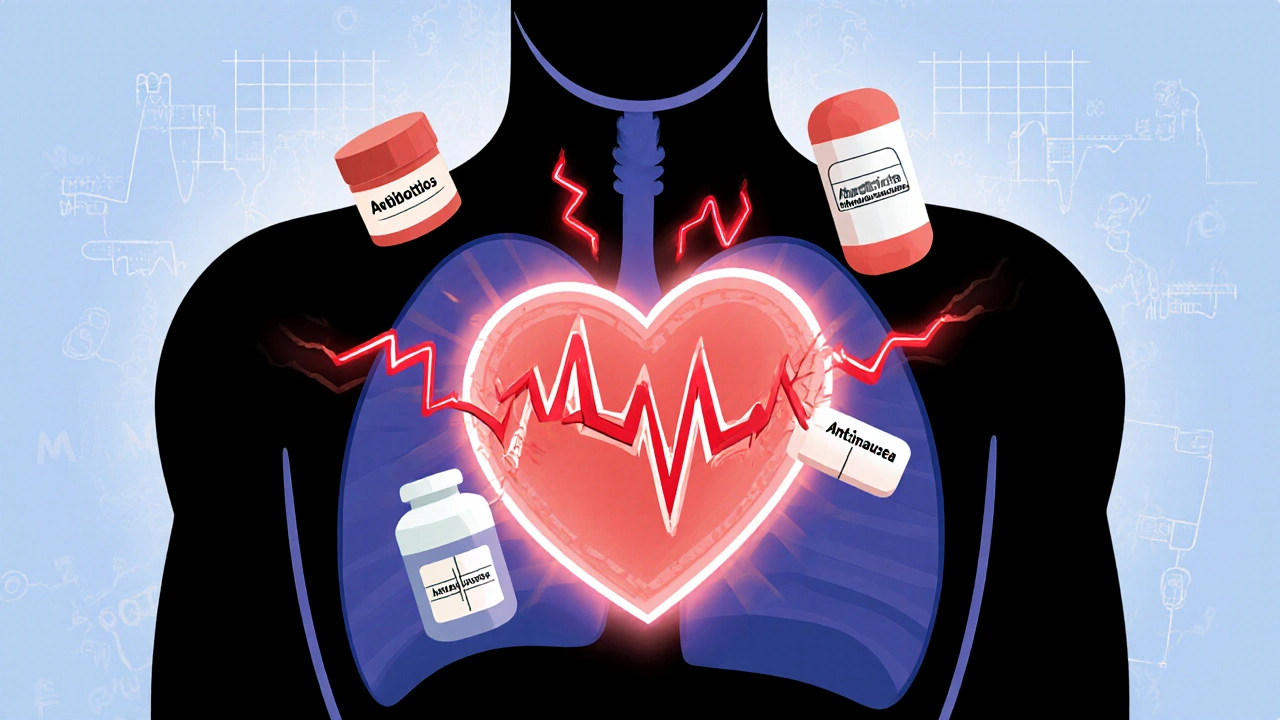
Medication Arrhythmia Risk Checker
This tool helps you identify if your medications may increase risk of heart rhythm problems. It checks for medications known to prolong QT interval or cause arrhythmias, and assesses combined risk when taking multiple medications together.
Add Your Medications
Enter medications you're currently taking. Click 'Add Medication' after each entry.
Medication Risk Assessment
Your medications and their risk levels will appear here. The tool identifies QT prolongation risks and other arrhythmia concerns.
Warning Signs to Watch For
- Palpitations (heart fluttering, pounding, or skipping beats)
- Dizziness or lightheadedness
- Unusual fatigue
- Chest discomfort (pressure or tightness)
- Fainting or near-fainting episodes
If you experience any of these symptoms after starting a new medication, contact your doctor immediately.
When you take a pill to feel better, you don’t expect it to make your heart race, skip beats, or suddenly slow down. But medication-induced arrhythmias are more common than most people realize. Over 400 widely used drugs - from antibiotics to antidepressants - can trigger dangerous heart rhythm changes. These aren’t rare side effects. They’re a leading cause of hospitalizations and drug withdrawals, responsible for up to 10% of all serious adverse reactions reported to the FDA. The good news? Most of these events are preventable if you know what to watch for and what to do.
What Causes Medication-Induced Arrhythmias?
Not all arrhythmias are the same. Some make your heart beat too fast. Others make it beat too slow. Some cause irregular fluttering. The most dangerous ones, like torsades de pointes, can lead to sudden cardiac arrest. These problems often come from drugs that interfere with the heart’s electrical system - specifically, the ion channels that control how charged particles like potassium, sodium, and calcium move in and out of heart cells. One of the most well-documented triggers is QT interval prolongation. This is a measurable delay on an ECG that means the heart takes longer than normal to recharge between beats. When this happens, the risk of life-threatening ventricular arrhythmias spikes. Medications known to cause this include certain antibiotics like azithromycin and moxifloxacin, antipsychotics like haloperidol, anti-nausea drugs like ondansetron, and even some older antidepressants. But it’s not just about one drug. The real danger often comes from combinations. If you’re taking three or more medications that each slightly prolong the QT interval, your risk doesn’t just add up - it multiplies. Studies show that using multiple QT-prolonging drugs together can increase arrhythmia risk by 300% to 500% compared to taking just one. This is especially true in older adults, who are more likely to be on multiple prescriptions.Who’s Most at Risk?
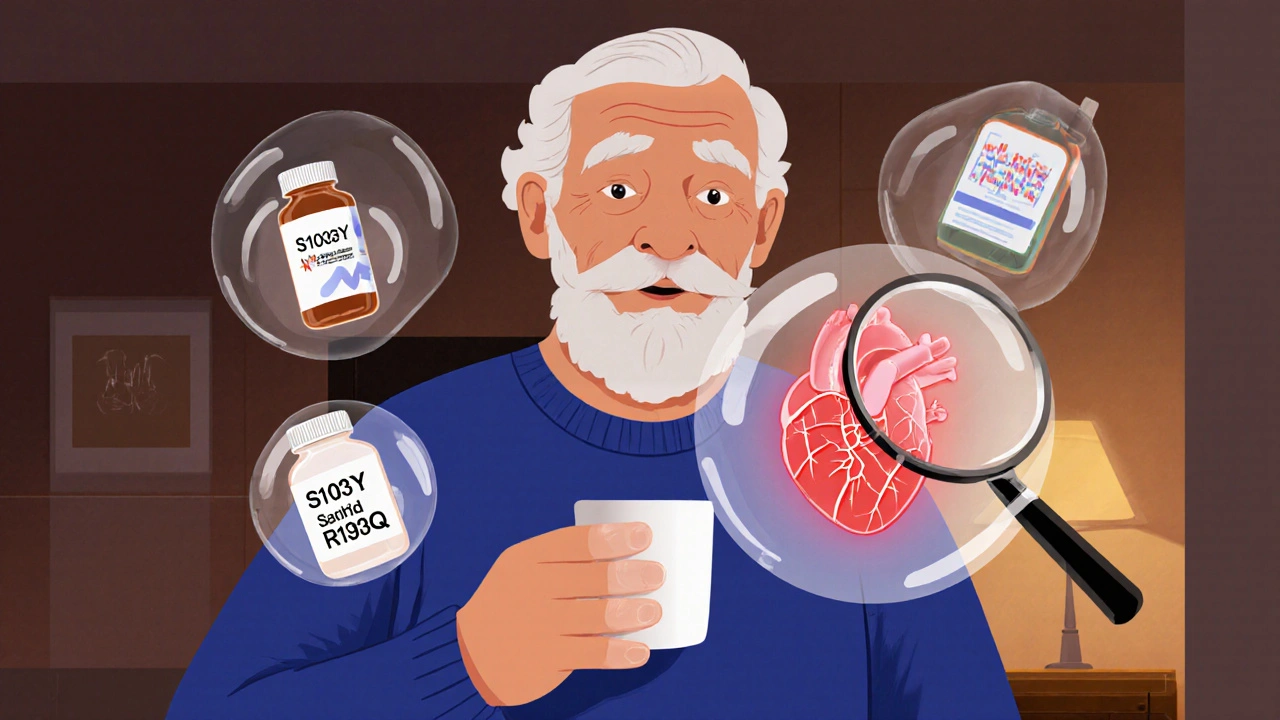
Some people are genetically wired to be more vulnerable. About 15% of people of African ancestry carry the S1103Y gene variant, and 12% of East Asians carry the R1193Q variant. Both make heart cells far more sensitive to drugs that disrupt ion flow. These variants don’t cause problems on their own - but when paired with a QT-prolonging medication, they can turn a routine prescription into a medical emergency. Age is another major factor. Over 60% of severe cases occur in people 65 and older. Why? Because kidneys and liver don’t clear drugs as efficiently with age. This means medications build up in the system longer, increasing the chance of toxicity. Elderly patients are also more likely to have low potassium or magnesium - two minerals critical for stable heart rhythms. About 20% of hospitalized patients have low potassium, and 10-15% have low magnesium, both of which make arrhythmias much more likely. Alcohol is another silent player. Drinking more than three drinks a day triples your risk. It doesn’t just damage the heart muscle over time - it directly interferes with the electrical signals. And don’t underestimate caffeine. While serious arrhythmias from coffee alone are rare, about 25-30% of people with heart palpitations report a clear link to caffeine intake. For someone already on a risky medication, even one extra cup of coffee might be the tipping point.Warning Signs You Can’t Ignore
The early signs of a drug-induced arrhythmia are often subtle - and easily dismissed as stress, fatigue, or aging. But they’re your body’s alarm system. Pay attention if you notice:- Palpitations - a feeling that your heart is fluttering, pounding, or skipping beats (reported by 70-80% of affected patients)
- Dizziness or lightheadedness - especially when standing up or during light activity (40-50% of cases)
- Fatigue - feeling unusually tired, even after rest (30-40% of cases)
- Chest discomfort - not always sharp pain; sometimes just pressure, tightness, or fullness (15-20% of cases)
- Fainting or near-fainting - this is a red flag. If you’ve passed out, even briefly, get checked immediately (5-10% of cases)
What to Do If You Suspect a Problem
If you’re on a medication known to affect heart rhythm - or if you’ve started a new drug and are feeling off - don’t wait. Don’t assume it’s "just anxiety" or "getting older." Contact your doctor right away. Bring a list of every medication you take, including over-the-counter pills, supplements, and herbal products. Many people don’t realize that even common antihistamines like diphenhydramine (Benadryl) can prolong the QT interval. Your doctor should check your electrolytes - especially potassium and magnesium - and order an ECG. Baseline ECGs are recommended before starting high-risk drugs, and a repeat test within 72 hours of starting therapy can catch early changes. Target levels? Potassium above 4.0 mEq/L and magnesium above 2.0 mg/dL. If levels are low, correcting them often stops the arrhythmia before it gets worse. For some drugs, like beta-blockers used to control atrial fibrillation, the problem isn’t a fast heart rate - it’s one that’s too slow. If you’re on metoprolol or similar drugs and feel dizzy, weak, or like you might pass out, your heart rate may have dropped below 50 bpm. In 60-70% of cases, lowering the dose fixes this. But if symptoms persist, a pacemaker may be needed to safely keep the medication going.How Common Is This, Really?
It’s not a small issue. About 3-5% of all arrhythmia cases seen in emergency rooms are linked to medications. In the U.S. alone, an estimated 100,000 to 150,000 people are hospitalized each year because of drug-induced rhythm problems. The cost? More than $1.2 billion annually, with each hospital stay adding $8,000 to $12,000 in extra expenses. The most common culprits? Antibiotics (15-20% of cases), antidepressants (12-18%), antipsychotics (10-15%), and anti-nausea drugs (5-8%). Even drugs meant to treat arrhythmias - like flecainide, propafenone, and amiodarone - can cause them. In fact, up to 10% of patients on antiarrhythmic drugs develop new or worse rhythm problems because of the very medication they’re taking.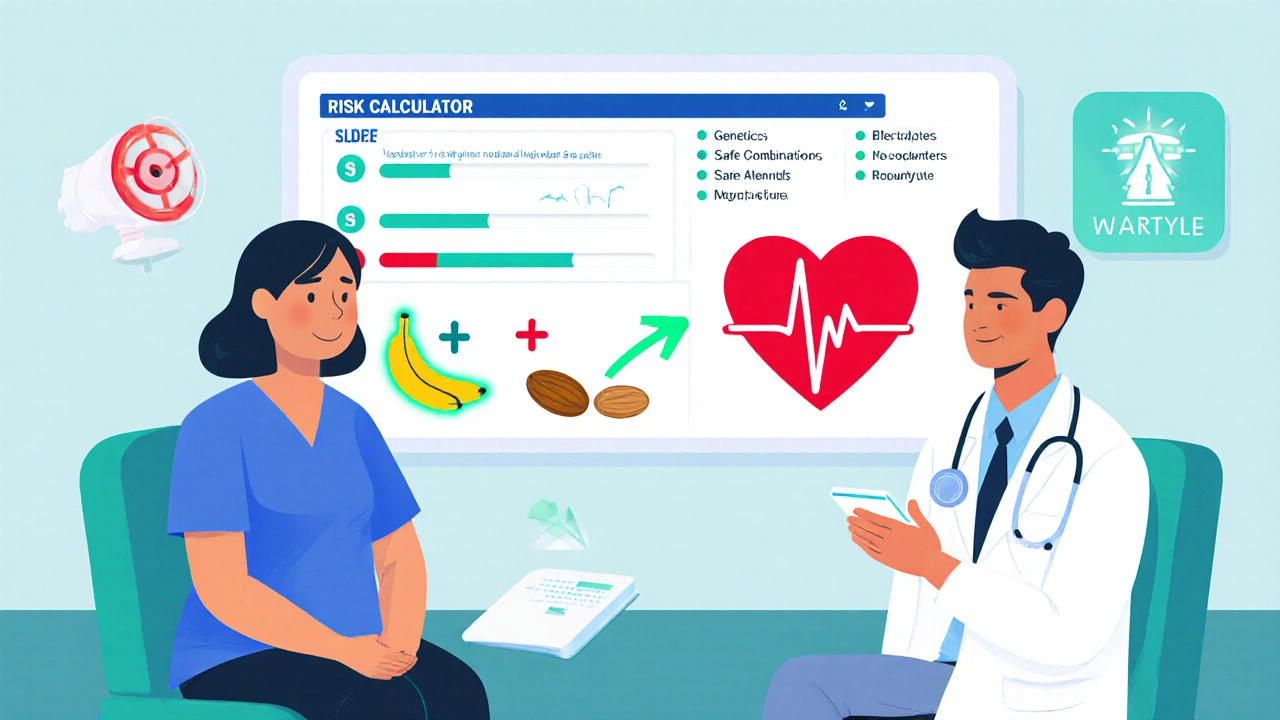
What’s Changing in Treatment and Prevention?
The field is shifting from one-size-fits-all prescribing to personalized risk assessment. Since 2010, the FDA has added black box warnings - the strongest safety alert - to 25 medications for QT prolongation. Eight of those were added in 2022 alone, showing how seriously regulators are taking this now. New tools are coming. Researchers at Vanderbilt have shown that stem cells edited with CRISPR to carry high-risk gene variants react dramatically to QT-prolonging drugs in the lab. This suggests that genetic testing before prescribing could prevent many cases. A clinical decision support tool, expected to launch in early 2024, will help doctors calculate individual risk based on age, genetics, kidney function, current medications, and electrolyte levels. Experts predict that if these tools are widely adopted, severe drug-induced arrhythmias could drop by 30-40% in the next five years. But until then, the best defense is awareness. Know your meds. Know your body. And never brush off a new or unusual heartbeat sensation.Can You Still Take Your Medication?
Yes - in most cases. The goal isn’t to stop all medications. It’s to use them safely. In 75-85% of cases, simply adjusting the dose, switching to a safer alternative, or correcting electrolyte levels resolves the issue. Only 5-10% of patients need a procedure like catheter ablation. Less than 2% require surgery. If you’re on a drug with known arrhythmia risks, work with your doctor to monitor your heart. Don’t stop cold turkey - some medications need to be tapered. But don’t stay silent either. Your symptoms matter. Your history matters. And your life depends on speaking up.Can over-the-counter medications cause heart arrhythmias?
Yes. Common OTC drugs like antihistamines (Benadryl, Dramamine), decongestants (pseudoephedrine), and even some herbal supplements (like ephedra or licorice root) can affect heart rhythm. Some of these drugs prolong the QT interval or stimulate the heart, increasing the risk of palpitations or more serious arrhythmias - especially when taken with prescription medications or in people with existing heart conditions.
Is it safe to drink coffee if I’m on a heart medication?
For most people, moderate caffeine (1-2 cups of coffee per day) is safe. But if you’re on a medication known to cause arrhythmias - like certain antibiotics, antidepressants, or antiarrhythmics - caffeine can lower your threshold for triggering symptoms. About 25-30% of patients report palpitations linked to caffeine. If you notice your heart racing after coffee, cut back and talk to your doctor.
Do I need genetic testing before taking heart-related medications?
Not routinely - yet. But if you’ve had a drug-induced arrhythmia before, or if you’re taking multiple high-risk medications and have a family history of sudden cardiac events, genetic screening may be helpful. Testing for variants like S1103Y and R1193Q is becoming more accessible and may soon be recommended before prescribing certain QT-prolonging drugs, especially in high-risk groups.
Can electrolyte imbalances be fixed with diet alone?
Sometimes, but not always. Foods rich in potassium (bananas, spinach, potatoes) and magnesium (nuts, seeds, whole grains) help - but if your levels are dangerously low due to diuretics, vomiting, or kidney issues, diet alone won’t be enough. Oral or IV supplements are often needed to restore balance quickly and safely. Always check with your doctor before taking supplements, as too much potassium can also be dangerous.
How often should I get an ECG if I’m on a high-risk medication?
Guidelines recommend a baseline ECG before starting the medication, then a repeat ECG within 72 hours to catch early changes. After that, follow-up depends on your risk level. For high-risk patients - older adults, those with kidney disease, or on multiple QT-prolonging drugs - monthly ECGs for the first few months are common. If your levels stay stable and you have no symptoms, testing may be reduced to every 3-6 months.


This article read like a soap opera written by a cardiologist who’s seen too many ERs. I took azithromycin for a sinus infection last year and woke up feeling like my heart was trying to escape through my ribs. Thought I was having a panic attack-turns out my QT interval was doing the cha-cha. My doctor just shrugged and said, 'It’s rare.' Rare? I’ve met three people in my gym who’ve had the same thing. We should be getting warning labels on these pills like they’re nuclear waste.
And don’t even get me started on Benadryl. My grandma takes it like candy to sleep. She’s 78, on five meds, and drinks two cups of coffee before bed. She’s one skipped beat away from becoming a cautionary TikTok video.
Someone needs to sue the pharmaceutical industry for selling us heart grenades disguised as solutions.