
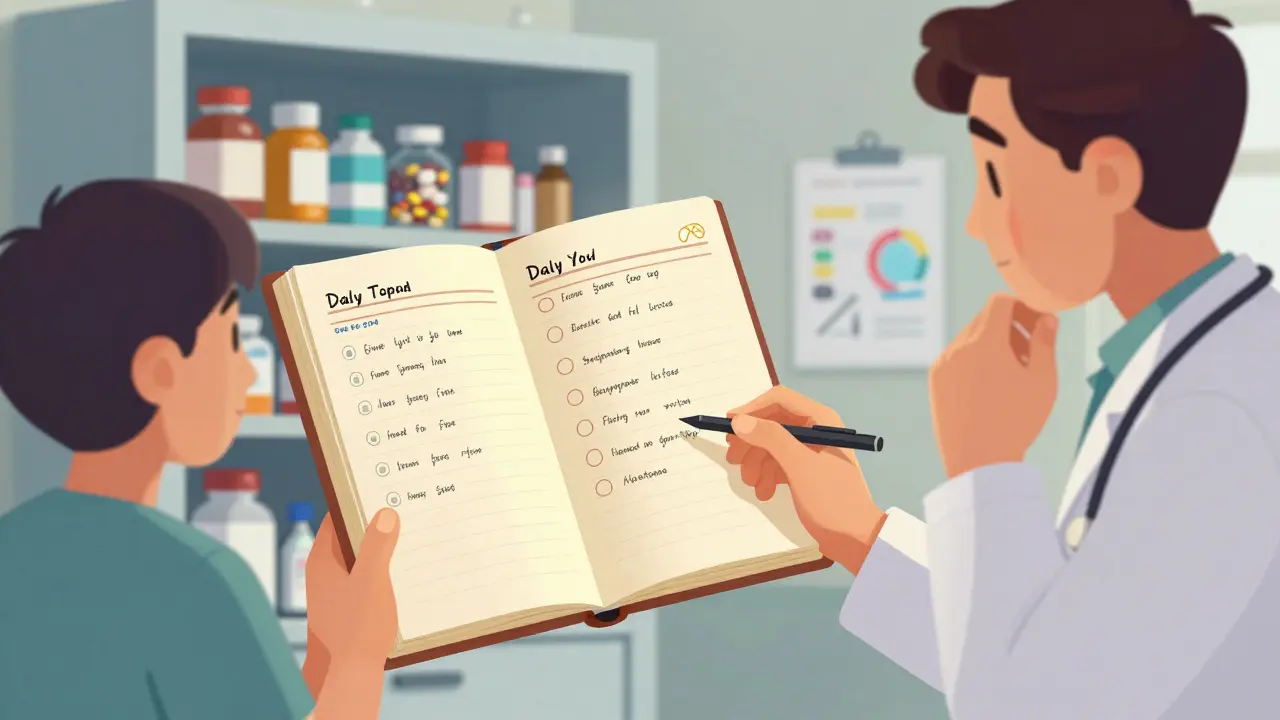
If a medication isn’t doing what it’s supposed to, you’re not alone. About half of people don’t take their meds as prescribed, and a quarter of them stop because they feel it’s not helping. That’s not non-compliance-it’s a signal. Your body might be telling you it’s time for a different approach. But asking for alternatives isn’t always easy. Doctors are busy. You might feel dismissed. Or you might not even know where to start. Here’s how to do it right-so you get the care you need, not just the script you were given.
Start with the facts, not frustration
Don’t walk into your appointment saying, “This drug isn’t working.” That’s vague. And vague doesn’t move the needle. Instead, bring data. Write down exactly what’s happening. Did your pain spike on day three? Did you feel dizzy every afternoon after taking the pill? Did your sleep get worse instead of better? Track it for at least a week. Note the time you took the medication, what you ate, how you felt two hours later, and whether symptoms improved or got worse. A 2022 University Health study found that 68% of successful medication conversations included this kind of detailed timeline. Your doctor isn’t mind-reading. They need specifics to make a change.Bring your whole medicine cabinet
Don’t rely on memory. Bring every pill, capsule, patch, and bottle you’re taking-prescription, over-the-counter, vitamins, herbal supplements. Even the ones you only take “when needed.” Why? Because interactions are silent killers. A 2022 study showed that bringing actual bottles to appointments reduces medication errors by 22%. Your doctor might not realize you’re taking ibuprofen daily, or that you’re using melatonin with your sleep med. That combo could be why you’re foggy in the morning. Don’t assume they know what’s in your medicine cabinet. Show them.Ask the right questions-out loud
You’re not being difficult. You’re being smart. Use these exact phrases. They’re backed by research and used by patient advocates nationwide:- “Why am I taking this medication?”
- “What are the benefits versus the risks?”
- “Are there other treatment options?”
- “Can I stop or lower the dose?”
- “Could this affect my memory, balance, or energy?”
- “Is there a generic version or cheaper alternative?”
Know what alternatives actually exist
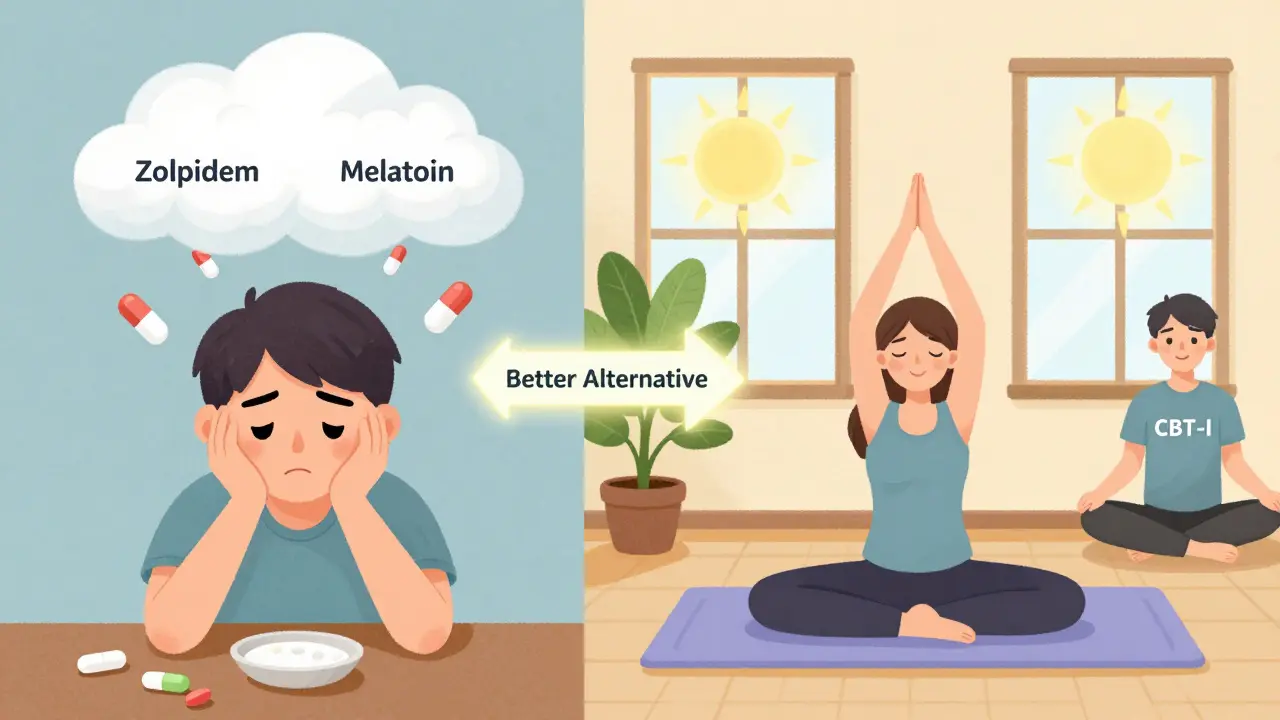
Alternatives aren’t just other pills. They’re often better. For example:- For sleep issues: Instead of zolpidem, try cognitive behavioral therapy for insomnia (CBT-I). A 2021 JAMA study showed it works just as well after eight weeks-with no risk of dependency.
- For type 2 diabetes: Metformin isn’t the only option. A 2022 Diabetes Care study found that regular walking, portion control, and losing 5-7% of body weight lowered A1C levels just as much in 68% of patients.
- For acid reflux: Proton pump inhibitors (PPIs) aren’t harmless long-term. A 2023 American Journal of Gastroenterology study found that changing eating habits, losing weight, and using antacids like Tums® relieved symptoms in 55% of users.
- For anxiety: SSRIs help, but so does CBT. A 2022 Lancet Psychiatry meta-analysis showed therapy alone matched medication effectiveness for mild to moderate anxiety.
- For back pain: The American College of Physicians now recommends exercise, acupuncture, and physical therapy as first-line treatments-before NSAIDs.
Speak up about side effects-especially the weird ones
Feeling off-balance? Memory lapses? Mood swings? These aren’t “just part of aging.” The American Geriatrics Society’s 2023 Beers Criteria lists 34 medications with high risks for older adults-especially those that affect thinking or balance. If you’re on one, ask: “Could this be causing my falls or confusion?” A 2021 commentary in JAMA Internal Medicine by Dr. Barbara Farrell found that patients who asked these questions were 3.2 times more likely to have unnecessary meds safely stopped. Don’t downplay symptoms. Say: “I’ve been stumbling more. I’m worried this med is making me unsafe.” That’s not complaining. That’s preventing a hospital visit.Ask for a dedicated medication review appointment
Don’t squeeze this into a 10-minute checkup. Schedule a separate 30-minute visit labeled “Medication Review.” Most insurance plans now cover this. Medicare even pays providers $52 for a 30-minute session under new CPT codes (99487-99489). Tell the front desk: “I need a full review of all my medications because some aren’t working or are causing side effects.” That’s a valid reason. And it’s becoming standard. In 2023, 78% of U.S. hospitals added digital tools to help patients flag medication concerns before their visit. Use them. Epic’s “MyMedList” lets you type in your issues ahead of time so your doctor sees them before you walk in.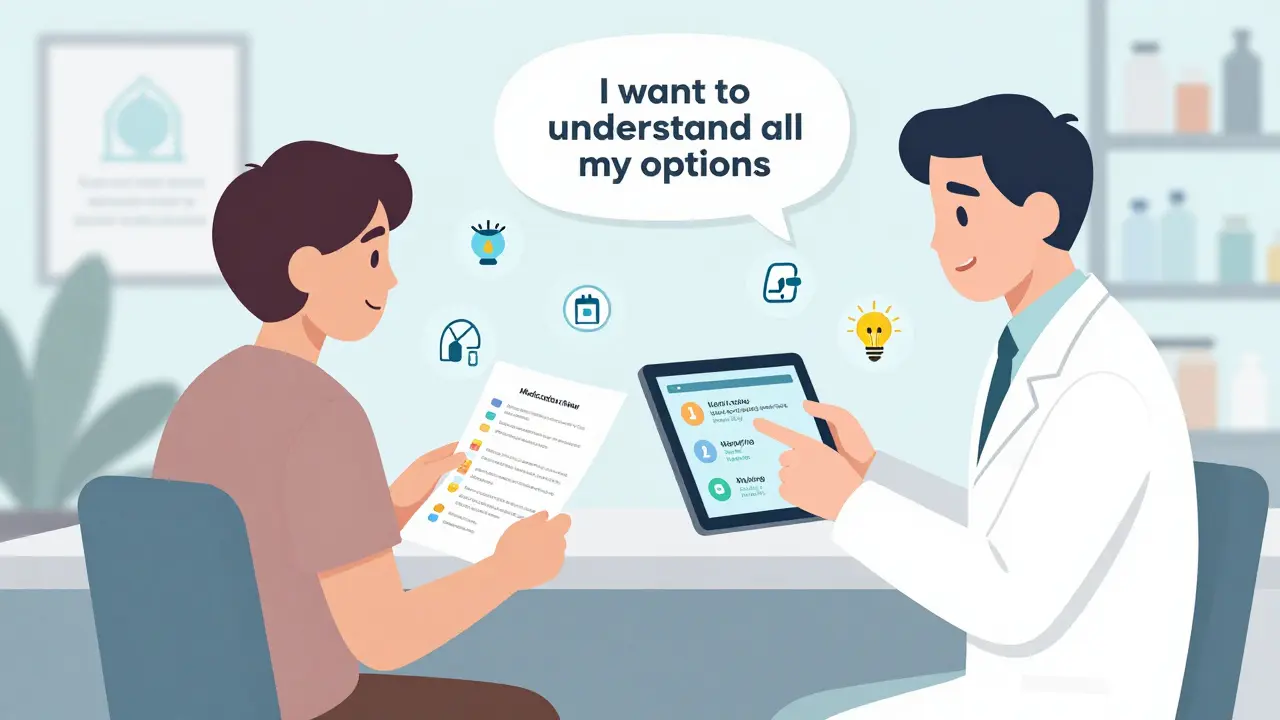


Track symptoms. Bring bottles. Ask the five questions. Done.
Simple. Effective. No drama.