
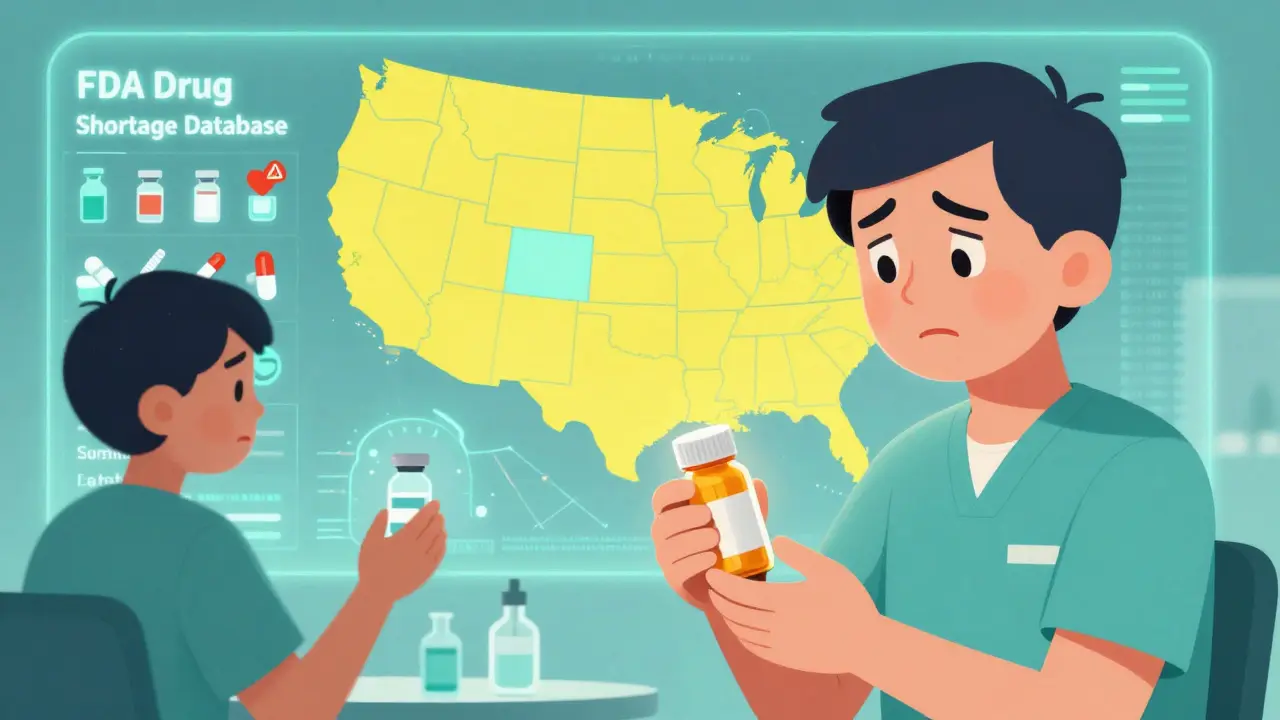
When a medication you or a loved one depends on suddenly isn’t available at the pharmacy, it’s not just inconvenient-it can be dangerous. That’s why the FDA drug shortage database exists. It’s the most trusted, official source in the U.S. for knowing exactly which drugs are running low, why, and when they might come back. Whether you’re a patient, caregiver, or healthcare provider, knowing how to use this tool can help you avoid treatment delays and make smarter decisions during a shortage.
What the FDA Drug Shortage Database Actually Shows
The FDA’s database doesn’t just list drugs that are hard to find. It tracks only those with a national supply issue-meaning demand is outpacing supply across the entire country. This isn’t a list of local stockouts or temporary delays at one pharmacy. It’s about real, systemic problems.
Each entry includes:
- The generic name and active ingredient
- The manufacturer’s name and the exact National Drug Code (NDC) number
- Why the shortage is happening (e.g., manufacturing delays, quality control failures, raw material shortages)
- Whether the shortage is current, resolved, or discontinued
- An estimated timeline for when the drug might be back in stock
As of mid-2024, there were around 300 active shortages at any given time. The majority-nearly 60%-are generic injectable drugs like antibiotics, painkillers, and heart medications. These are often the most critical because they’re used in hospitals and can’t be easily swapped out.
How to Access the FDA Drug Shortage Database
You don’t need special access or a login to use it. There are three ways to check:
- Website: Go to www.accessdata.fda.gov/scripts/drugshortages/default.cfm. This is the main hub. It’s updated daily.
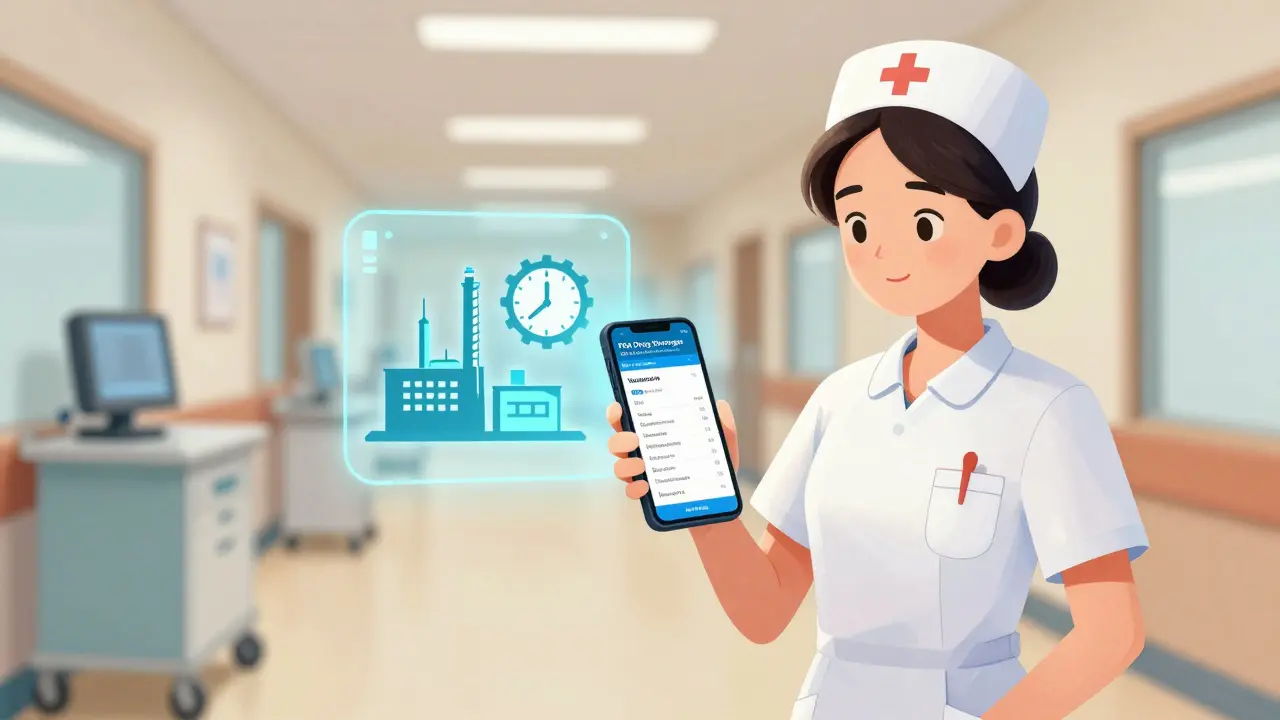
- Mobile App: Search for “FDA Drug Shortages” in the Apple App Store or Google Play. The app, released in 2022, lets you search by drug name, active ingredient, or category. It also sends push alerts if a drug you’re tracking goes into shortage.
- Data Feed: For tech-savvy users or institutions, the FDA offers a downloadable dataset on data.gov. It’s updated weekly and can be used to build custom alerts or integrate into hospital systems.
The app is especially useful for busy pharmacists or nurses who need quick access during rounds. It’s free, doesn’t require registration for basic searches, and works on iOS 12+ and Android 8+ devices.
How to Search Effectively
Just typing in “insulin” or “vancomycin” won’t always give you the full picture. Here’s how to get accurate results:
- Use the generic name. Brand names like “Lantus” aren’t always listed. Search for “insulin glargine” instead.
- Check the NDC. A drug might be in shortage in one form but not another. For example, a 500mg tablet might be unavailable, but the 250mg version is fine. The NDC number tells you exactly which version is affected.
- Filter by manufacturer. Since July 2024, you can filter results by the company that makes the drug. This helps if you know your pharmacy sources from a specific supplier.
- Look at the reason. If the shortage is due to a manufacturing defect, other drugs made on the same line might be at risk too. If it’s a raw material issue, it could affect multiple similar drugs.
For example, in April 2024, a shortage was reported for insulin glargine with NDC 0002-8745-01. Because the FDA database listed the exact NDC, hospitals were able to switch to a different manufacturer’s version before patients were impacted.
FDA vs. ASHP: Which One Should You Trust?
You might also see drug shortage info on the American Society of Health-System Pharmacists (ASHP) website. So which one do you use?
Here’s the difference:
| Feature | FDA Database | ASHP Drug Shortages |
|---|---|---|
| Scope | National-level shortages only | Includes regional and temporary issues |
| NDC Coverage | 100% of listed drugs | 82% of listed drugs |
| Update Frequency | Daily | Daily |
| Clinical Guidance | Minimal-focuses on facts | Detailed-alternatives, dosing tips, management strategies |
| Authority | Legally mandated reporting by manufacturers | Voluntary reporting from hospitals and pharmacists |
Best practice? Use both. Check the FDA database first to confirm if a shortage is real and official. Then go to ASHP to find out what you can use instead, how to adjust doses, or what alternatives are safe.
Common Mistakes and How to Avoid Them
Even experienced professionals get tripped up. Here are the most common errors:
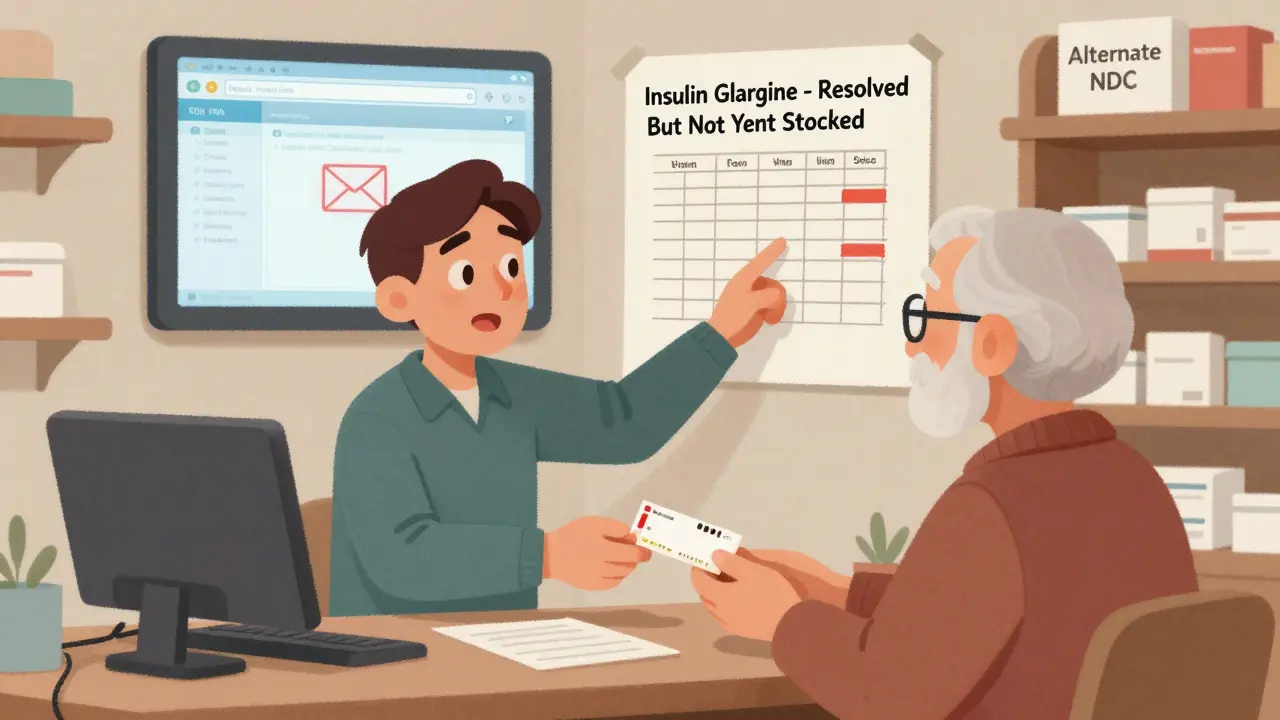
- Assuming “resolved” means the drug is back in full supply. “Resolved” just means supply meets demand. It doesn’t mean shelves are full again. Stock might still be low at your local pharmacy.
- Ignoring the NDC. A drug like metformin has dozens of NDCs. One might be short, others aren’t. Always check the exact code your pharmacy uses.
- Not checking extended use dates. Some drugs have FDA-approved extended expiration dates during shortages. You can search for these separately on the FDA’s “Search List of Extended Use Dates” page.
- Waiting too long to check. Shortages can escalate quickly. Don’t wait until your prescription runs out. Check weekly if you rely on a drug that’s historically been in short supply.
What to Do If You Spot a Shortage Not Listed
If you believe a drug is in short supply but it’s not on the FDA list, you can report it. This is especially important for community pharmacists or patients who notice widespread unavailability.
Send an email to [email protected] with:
- Drug name and strength
- Manufacturer name
- NDC number
- How long you’ve seen the shortage
- How many pharmacies you’ve checked
The FDA reviews all reports and adds verified shortages to the database within 5-7 business days. This helps other providers and patients nationwide.
Limitations and Real-World Gaps
Even the best system has flaws. The FDA database has a 7-10 day lag in reporting. Manufacturers often wait to notify the FDA until they’re sure the shortage won’t be fixed quickly. That means by the time it shows up online, the problem is already affecting patients.
Also, the “estimated duration” field is only about 79% accurate-especially for shortages reported through regular channels. Those reported directly through the FDA’s NextGen portal are more reliable.
Another gap: compounded medications. These are custom-made drugs, often used when commercial versions aren’t available. But only 22% of compounding pharmacies report these to the FDA, so they rarely appear in the database.
And while the FDA database tells you what’s short, it doesn’t predict what’s coming next. That’s why analysts say it’s reactive, not preventive. The FDA is testing AI tools to forecast shortages, but those aren’t live yet.
How to Stay Updated Without Constantly Checking
You don’t have to log in every day. Here’s how to automate it:
- Subscribe to FDA email alerts. Go to the FDA website and sign up for updates sent every Tuesday and Friday. You can choose to get alerts for all shortages or only specific drugs.
- Use the mobile app’s push notifications. Add your critical medications to your watchlist. You’ll get a notification the moment a shortage is confirmed.
- Set up a weekly reminder. If you’re managing care for someone on a high-risk drug, put a calendar alert to check the database every Monday.
Pro tip: Print or save a screenshot of the drug’s status page if you’re going to be away from your phone or computer for a while. That way, you have a reference if the pharmacy calls.
What’s Next for the FDA Drug Shortage Database
The FDA is working on improvements. By early 2025, it plans to link with the National Association of Boards of Pharmacy’s distributor database to track where shortages are happening geographically. That could eventually help you know if a drug is short in your state or just your county.
They’re also testing barcode scanning in the mobile app. In the future, you might be able to scan the label on your pill bottle and instantly see if it’s affected.
Funding is secure for now-the database got $12.7 million in 2024, up 15% from the year before. That means it’s here to stay, and it’s getting better.
Is the FDA drug shortage database free to use?
Yes, the FDA Drug Shortage Database is completely free to access through their website, mobile app, or data feed. No registration, subscription, or payment is required for basic use. Advanced features like reporting a shortage require a verified email, but that’s also free.
Can I trust the FDA database over my pharmacy’s information?
Yes. Pharmacies may not know about a shortage until it hits their inventory, and they might not have access to official NDC-level details. The FDA database is the only source that gets direct, legally required reports from manufacturers. If the FDA says a drug is in shortage, it’s confirmed at the national level.
Why is my drug listed as resolved but still not available?
“Resolved” means the manufacturer is now producing enough to meet national demand. But distribution takes time. Your pharmacy might still be waiting for their shipment, or the drug may be prioritized for hospitals first. Check back in a week or call your pharmacy to ask when they expect restock.
Do I need to report a shortage if I notice one?
Yes, if you’re a pharmacist, nurse, or patient and you see a drug that’s widely unavailable but not listed, report it to [email protected]. Your report helps the FDA identify emerging issues faster. Even one report from a community pharmacy can trigger an investigation.
Are brand-name drugs included in the database?
Only if they’re affected by a shortage. The database lists drugs by their generic name and active ingredient. Brand names may appear in the manufacturer field, but you should search by the generic name for accurate results. For example, search for “metformin,” not “Glucophage.”
How often is the database updated?
The FDA updates the database daily, typically by 5:00 PM Eastern Time. New shortages, resolved statuses, and manufacturer updates are added as soon as they’re verified. The mobile app syncs with this daily update schedule.
What if I can’t find the drug I’m looking for?
Try searching by the active ingredient instead of the brand or generic name. For example, if you’re looking for “Xanax,” search for “alprazolam.” If it still doesn’t show up, the drug may not be in a national shortage. Check with your pharmacy or ASHP’s site for local or temporary issues.


The FDA database is useless if you're not a PhD in pharmacology. Who the hell has time to memorize NDC codes? I just want my insulin and you're making me play detective with a government spreadsheet. This is why healthcare is broken.