
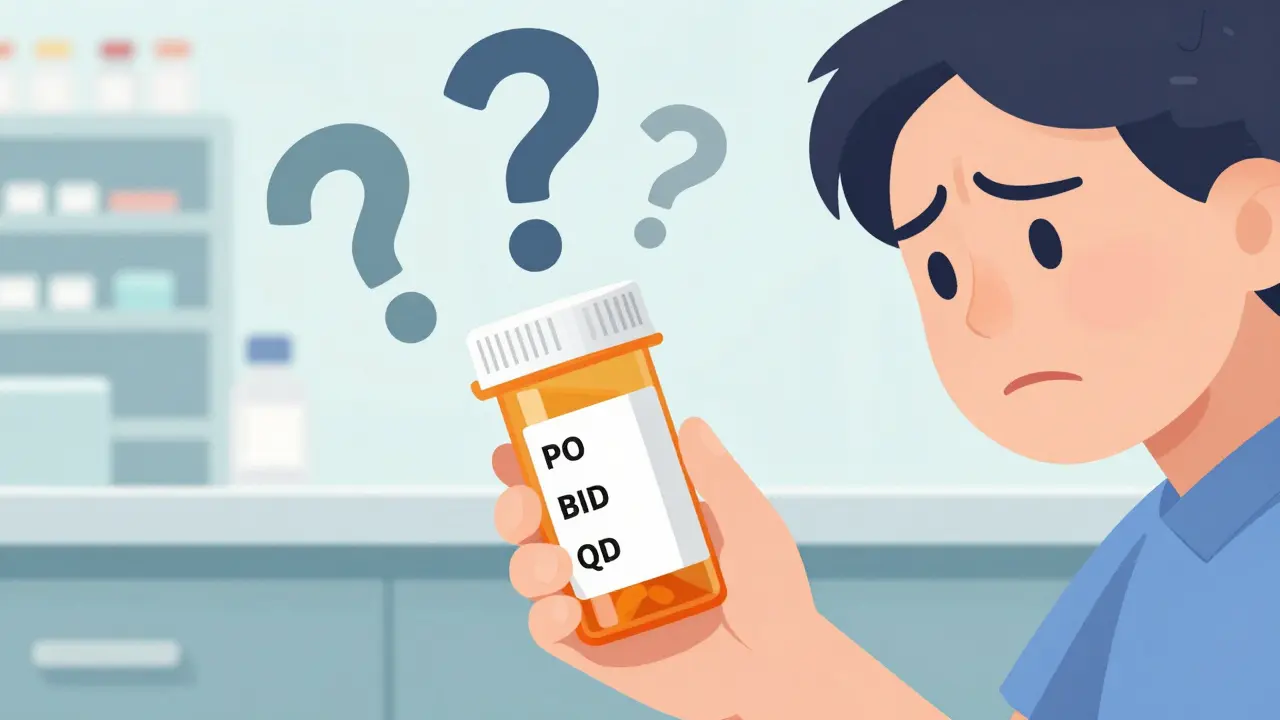
You pick up your new prescription. The label says "Take 1 tab po q am for 1 week, then BID." You stare at it. What does that even mean? Do you take it with food? At night? Every morning? If this scenario sounds familiar, you are not alone. Confusing medication instructions are a massive patient safety issue. In fact, unclear directions contribute to approximately 1.5 million medication-related injuries annually in the United States. Getting clarification on confusing medication instructions is a critical step in preventing preventable adverse drug events and ensuring you stay healthy.
The U.S. Food and Drug Administration (FDA) knows how dangerous ambiguity can be. That’s why they established formal requirements for Medication Guides back in 1998. These guides are mandatory for over 200 high-risk drugs, including isotretinoin (Accutane), oral contraceptives, and opioids. But here is the catch: these guides only cover specific high-risk medications. For everything else, the clarity of your instruction relies heavily on communication between you, your doctor, and your pharmacist. This article breaks down exactly how to decode those cryptic labels, when to ask for help, and how to ensure you are taking your medicine safely.
Why Medication Instructions Are Often Confusing
It isn’t just bad handwriting anymore. While illegible scripts were a problem in the past, today’s confusion often stems from standardized abbreviations that look similar but mean very different things. The Institute for Safe Medication Practices (ISMP) identifies ambiguous language as a leading cause of errors. For example, the abbreviation "IN" is supposed to stand for "intranasal" (through the nose). However, it looks almost identical to "IV" (intravenous) or "IM" (intramuscular). Imagine the difference between sniffing a medication and injecting it into a vein. That is the kind of error safety guidelines try to prevent.
Another common culprit is the letter "d." In medical shorthand, "d" can mean "day" or "dose." If a formula says "mg/kg/d," does it mean milligrams per kilogram per day, or per dose? The ISMP’s 2019 Electronic Guidelines explicitly prohibit using "d" in parameter-based dosing formulas to avoid this exact confusion. Instead, they mandate writing out "daily" or "dose" fully. Despite these rules, inconsistencies slip through, especially when different manufacturers produce the same generic drug with slightly different labeling standards.
Decoding Common Medical Abbreviations
To feel confident about your prescriptions, you need to know what the letters on your bottle actually mean. Here is a quick cheat sheet for the most common terms you might see:
- PO: By mouth (from the Latin *per os*). This means swallow it; do not apply it to your skin or inhale it.
- BID: Twice a day. Note that this usually means spacing doses roughly 12 hours apart, such as 8 AM and 8 PM, not just "morning and night." MD Anderson Cancer Center specifies that twice-daily meds should be taken as close to 12 hours apart as possible for consistent blood levels.
- TID: Three times a day. Similarly, aim for spacing these evenly throughout your waking hours.
- QD vs. Daily: You might see "QD" for once daily. However, the ISMP advises against this because "QD" can look like "QOD" (every other day) or "QH" (every hour). Always prefer the word "daily."
- PRN: As needed. This is where things get tricky. "As needed" doesn't mean "whenever you feel like it." It requires knowing the maximum dose allowed in 24 hours and the minimum time between doses.
If you see Roman numerals like "V" for 5, be cautious. The ISMP mandates using Arabic numerals (1, 2, 3, 5) instead. A smudged "V" could easily be mistaken for a "4" or a "U" (unit), leading to a dangerous overdose or underdose.

When to Ask Your Pharmacist for Help
Your pharmacist is your best resource. They are legally required to provide FDA-approved Medication Guides for certain high-risk drugs each time they dispense them. But their expertise goes far beyond just handing you a pamphlet. Joanne Doyle Petrongolo, a pharmacist at Harvard-affiliated Massachusetts General Hospital, emphasizes that "take as needed" instructions require extra guidance. She explains, "It's not safe to take a medication anytime you feel you need it... You need to know the intent of the drug, what it does, and the maximum amount you can have in a day."
Here is what you should ask if anything feels vague:
- What is the goal? Is this medication for pain relief, inflammation, or prevention? Knowing the intent helps you decide when to take it.
- What is the maximum limit? If it’s PRN (as needed), ask: "Can I take three doses in one day? Or is it capped at two?"
- How far apart should doses be? If you take something every 4-6 hours, confirm if that includes sleeping hours or just while awake.
- Does timing matter? Some drugs, like cholesterol-lowering statins, work best at bedtime because your body produces more cholesterol overnight. Others must be taken with food to avoid stomach upset.
Don’t assume the pharmacist will notice if you’re confused. They are busy. Be proactive. Say, "I want to make sure I understand this correctly. Can we walk through it together?"
Navigating Manufacturer Differences
Have you ever switched pharmacies and noticed your pill looks different? Or perhaps your doctor prescribed a brand name, but you got a generic? This is where things can get complicated. The National Institutes of Health (NIH) published guidelines in August 2021 highlighting a specific challenge: inconsistent drug instructions between different manufacturers of the same medication.
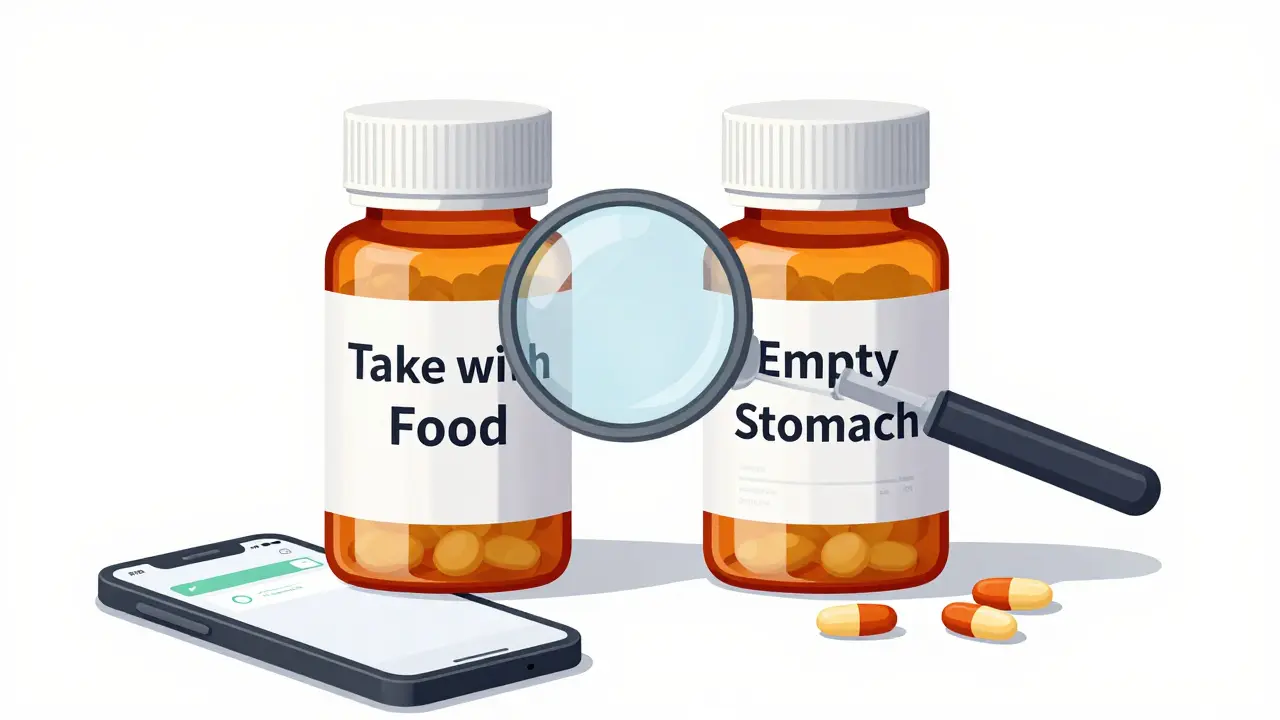
For example, Manufacturer A might say "take on an empty stomach," while Manufacturer B says "take with food." The NIH recommends that clinicians review instructions from all manufacturers to determine prescription appropriateness. If you switch brands or generics, always check the new label. If the instructions differ significantly from what you were doing before, call your provider. The NIH notes that while many differences are minor, some can impact therapeutic effects. Your prescription comment system should ideally collect instructions from all manufacturers to give you comprehensive info, but in practice, you often have to advocate for yourself.
| Setting | Guidance Provided | Patient Action Required |
|---|---|---|
| Outpatient Pharmacy | FDA Medication Guides (for high-risk drugs); verbal counseling | Ask questions immediately upon pickup |
| Hospital / Inpatient | No automatic paper guides; nurse/pharmacist counseling required | Verify understanding before discharge |
| Telehealth / Online | Electronic Medication Guides (if requested) | Confirm receipt of digital instructions |
Practical Steps to Avoid Errors
Clarity starts with you. The CDC reports that 4 out of 5 American adults take at least one medication, and 1 in 4 takes three or more. With that volume, memory lapses happen. Here is how to build a safety net:
- Use Technology: Set timers or reminders on your phone. The CDC specifically recommends this to help remember doses, especially for medications tied to meals or bedtime.
- Check the MAR (Medication Administration Record): If you are in a care facility, providers must compare the physical medication to the prescription copy before giving it to you. You have the right to ask, "Is this the same as what was prescribed?"
- Write It Down: Keep a simple log. Write the drug name, dose, and time taken. This helps you spot patterns or missed doses.
- Clarify "With Food": Does "with food" mean a full meal, or a cracker? Ask for specifics. Some drugs need fat to absorb properly; others just need something to cushion the stomach.
Dr. Anthony L. Komaroff, Editor in Chief of Harvard Health Letter, puts it simply: "If you're unsure exactly how to take a medication, even if it was already explained to you, ask for clarification." There is no penalty for asking. There is, however, a significant risk in guessing.
Regulatory Safeguards and Your Rights
You might wonder who is responsible for making these instructions clear. The landscape involves several agencies. The FDA governs the content of Medication Guides under the Federal Food, Drug, and Cosmetic Act. The ISMP, an independent nonprofit founded in 1975, develops the safety guidelines that many hospitals adopt voluntarily. The National Coordinating Council for Medication Error Prevention and Reporting (NCC MERP) provides the standard terminology used to track and prevent errors.
In outpatient settings, pharmacists must provide Medication Guides for designated high-risk drugs. In hospitals, they don’t hand out paper guides, but they must counsel you on appropriate use, side effects, and follow-up. If you feel this counseling was skipped, speak up. You are entitled to understand what you are putting into your body. The FDA has also been exploring electronic delivery options for these guides since 2022, meaning you might soon receive detailed instructions via email or app, which can be easier to reference than a small paper insert.
What should I do if my medication label is unreadable?
Do not guess. Return to the pharmacy where you picked it up. Pharmacists can reprint the label instantly. If the original prescriber used ambiguous abbreviations like "q.d." or "IN," ask the pharmacist to write out "daily" or "intranasal" clearly on the label or provide a written note.
Is it safe to switch between generic and brand-name medications?
Generally, yes, but always check the instructions. The NIH notes that manufacturer instructions can vary. If the generic label says "take with food" and the brand said "empty stomach," contact your doctor or pharmacist to clarify which instruction to follow for your specific health needs.
What does "PRN" really mean?
PRN stands for "pro re nata," meaning "as needed." However, it is not free-for-all usage. You must know the maximum daily dose and the minimum interval between doses. For example, you might be allowed one dose every 4 hours, but no more than 4 doses in 24 hours. Always confirm these limits with your pharmacist.
Why are some medications taken at bedtime?
Timing affects how well a drug works. Statins (cholesterol drugs) are often taken at bedtime because the liver produces the most cholesterol at night. Other medications might be scheduled at night to minimize side effects like drowsiness during the day. Follow the specific timing advice given by your provider.
Who is responsible for explaining my medication?
Both your prescriber and your pharmacist share this responsibility. The NCC MERP requires that the name, purpose, and intended effects be discussed with the patient. In outpatient settings, pharmacists must provide Medication Guides for high-risk drugs. In hospitals, nurses and pharmacists must counsel you before administration. You have the right to ask for clarification from either party.
