
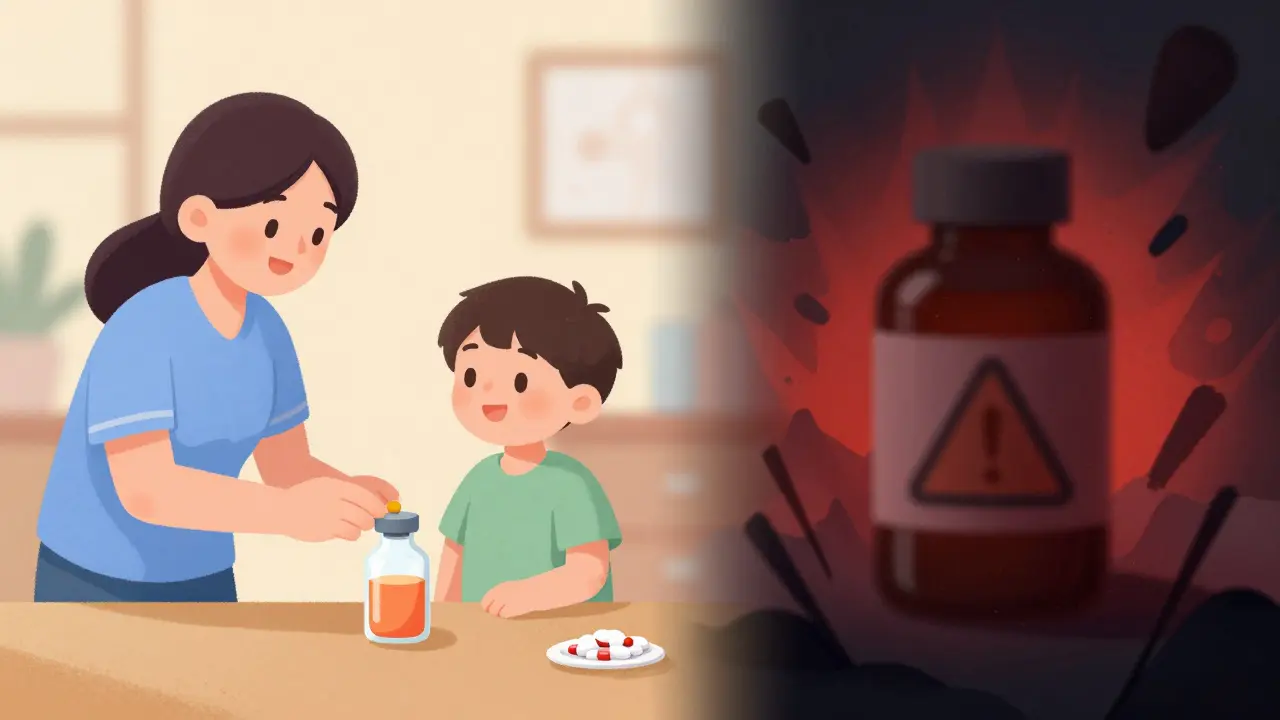
Imagine picking up a prescription that was made just for you. Maybe it’s a liquid version of a pill your child can’t swallow, or a cream without the dye that triggers your allergies. It feels like a perfect solution. But what if that custom medicine has the wrong strength? What if it’s contaminated? These aren’t just hypothetical fears. Compounding errors are mistakes made during the preparation of customized medications that can lead to incorrect dosages, contamination, or patient harm. They happen when the strict rules of mass manufacturing don’t apply, and human error slips through the cracks. Customized medications fill a vital gap in healthcare. When commercial drugs run out, or when a patient needs a specific dose that doesn’t exist on the shelf, compounding pharmacists step in. But this flexibility comes with risk. Without the same level of oversight as big pharmaceutical companies, the burden of safety falls entirely on the pharmacy. Understanding how these errors happen-and how to stop them-is crucial for anyone relying on these specialized treatments.
The High Stakes of Custom Medicine
To understand why preventing errors is so hard, you have to look at the history. The modern compounding industry changed forever after the 2012 meningitis outbreak. The New England Compounding Center (NECC) produced contaminated steroid injections that sickened over 14,000 people and killed more than 60. That tragedy exposed a massive loophole: many compounding pharmacies operated under state laws that were far less strict than federal drug regulations. In response, Congress passed the Drug Quality and Security Act (DQSA) in 2013. This law created two distinct categories for pharmacies:
- Section 503A Pharmacies: Traditional community pharmacies that compound small batches for individual patients based on a valid prescription. They are regulated by state boards of pharmacy.
- Section 503B Outsourcing Facilities: Large-scale facilities that produce compounded drugs without individual prescriptions. They register with the FDA and must follow Current Good Manufacturing Practices (CGMPs).
Understanding the Root Causes of Errors
Errors in compounding rarely happen because someone is careless. More often, they stem from systemic gaps. Dr. Robert Smith from Harvard Medical School warned that the lack of standardized national oversight for 503A pharmacies creates dangerous variability. Error rates can range from 2% in accredited facilities to 25% in non-accredited ones. Here are the most common ways things go wrong:
- Calculation Mistakes: Compounding involves complex math. Converting milligrams to milliliters, adjusting for patient weight, or calculating dilutions requires precision. A single decimal point error can turn a therapeutic dose into a toxic one.
- Ingredient Confusion: Active Pharmaceutical Ingredients (APIs) can look identical. Sodium chloride looks like sodium bicarbonate. Without proper verification, a pharmacist might grab the wrong bottle.
- Labeling Ambiguity: This is a silent killer. Between 2018 and 2022, the FDA reported 27 fentanyl overdose incidents linked to mislabeled compounded products. Often, the label said "10 mcg" but didn’t specify if that was per mL or per total container. Patients and nurses assumed the former, leading to massive overdoses.
- Contamination: Sterile compounds, like eye drops or injectables, must be free of bacteria. If the environment isn’t clean enough, or if aseptic technique fails, the medicine becomes a vector for infection.
Core Safety Protocols: The USP Standards
If you want to prevent errors, you need a framework. In the United States, that framework is set by the United States Pharmacopeia (USP). These aren’t suggestions; they are enforceable standards. As of December 2023, revised versions of these chapters took effect, tightening the rules further.
| Standard | Focus Area | Key Requirement |
|---|---|---|
| USP <795> | Non-Sterile Compounding | Requires ISO Class 8 air quality or better in dedicated areas. Mandates beyond-use dates (BUDs) based on stability data. |
| USP <797> | Sterile Compounding | Requires ISO Class 5 primary engineering controls (like laminar flow hoods). Mandates media fill testing twice annually for staff. |
| USP <800> | Hazardous Drugs | Protects staff and patients from exposure to cytotoxic agents. Requires containment ventilation systems. |
Verification Strategies That Actually Work
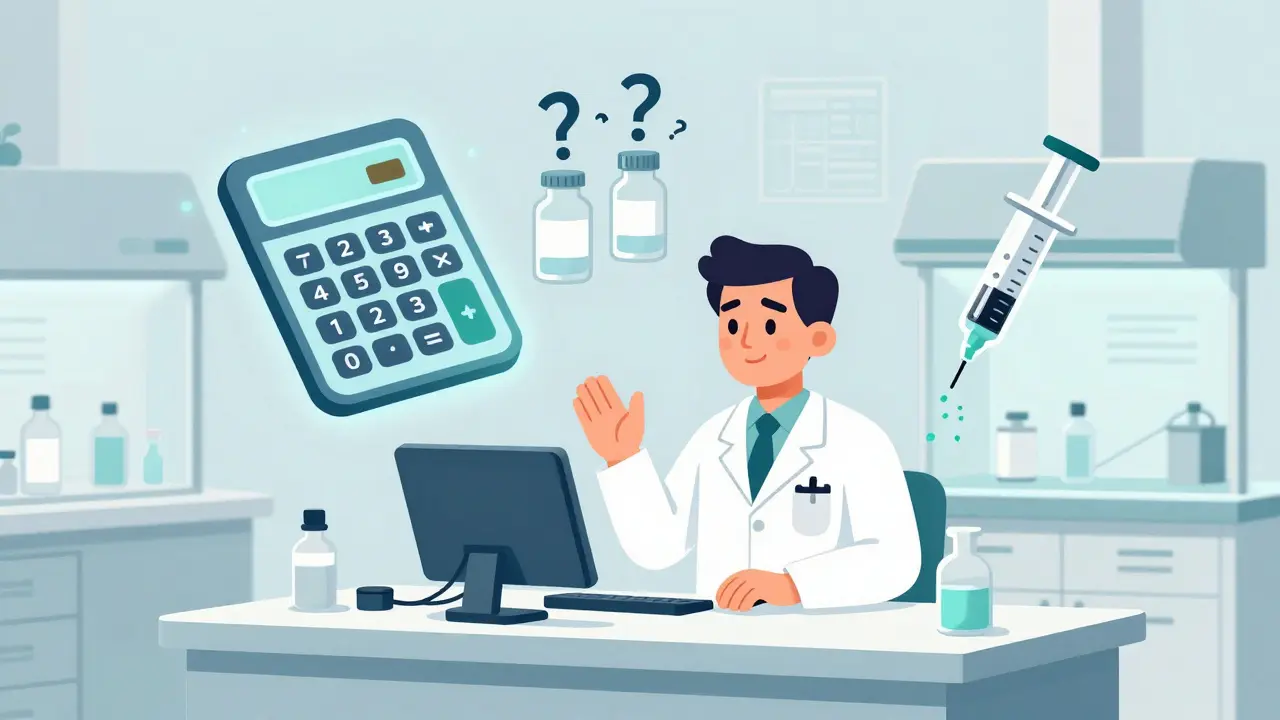
Technology alone won’t save you, but it helps. The best pharmacies use a layered approach to verification. Think of it like an airplane cockpit: multiple pilots, multiple checks, multiple systems. Dual Independent Checks The American Society of Health-System Pharmacists (ASHP) recommends that every calculation be verified by a second qualified professional. Not just a glance, but an independent recalculation. Studies show this simple step catches the majority of math errors. Barcode Verification At the University of Tennessee Health Science Center, implementing barcode scanners for all ingredients reduced identification errors by 92% in six months. Scanning the API bottle against the digital formula ensures you’re using the right substance at the right concentration. Advanced Analytics Newer software platforms like Compounding.io and PharmScript integrate automated formula verification. A 2022 study in the Journal of the American Pharmacists Association found these tools reduced human error by approximately 40%. Even more impressive, AI-powered systems like CompoundingGuard AI cut calculation errors by 87% in pilot studies by flagging unusual doses before they are prepared.
The Human Factor: Training and Culture
You can buy the best hood and the best software, but if your staff isn’t trained, you’re still at risk. Dr. Henry Cohen, past president of the International Academy of Compounding Pharmacists (IACP), argues that rigorous staff training is the single most effective strategy. What does good training look like?
- Initial Education: At least 40 hours of compounding-specific education before touching any product.
- Competency Assessments: Quarterly tests on calculations, aseptic technique, and equipment operation. If you fail, you retrain. No exceptions.
- Continuing Education: 8-12 hours annually to stay updated on new USP guidelines and safety alerts.

Patient and Prescriber Responsibilities
Safety isn’t just on the pharmacy. Patients and doctors play a huge part in preventing compounding errors. For Prescribers: Be specific. Don’t write "make up something for pain." Write the exact ingredient, strength, quantity, and route of administration. Specify the concentration unit clearly (e.g., mg/mL). Ambiguity invites error. For Patients: Ask questions. Who made this? Is the pharmacy PCAB accredited? What is the beyond-use date? Does the label match what you discussed with your doctor? Real-world feedback shows the value of vigilance. On PharmacyTimes.com forums, a parent shared how switching to a properly compounded liquid levothyroxine stabilized their child’s thyroid levels, whereas crushed tablets caused dangerous fluctuations. Conversely, a nurse on Reddit described a patient who ended up in the ICU due to serotonin syndrome from a mislabeled tramadol solution. The difference? One pharmacy followed strict labeling protocols; the other did not.
Choosing a Safe Compounding Pharmacy
Not all compounding pharmacies are created equal. With roughly 7,000 operating in the US, how do you pick a safe one? Look for these markers:
- PCAB Accreditation: The Pharmacy Compounding Accreditation Board audits pharmacies rigorously. Only about 18% of compounding pharmacies hold this accreditation. It’s a strong signal of quality.
- Transparency: Will they tell you where they source their APIs? Do they provide Certificates of Analysis (CoAs) upon request?
- Clear Labeling: Labels should include the name of each active ingredient, the strength, the total quantity, the beyond-use date, and storage instructions. Avoid vague terms like "natural" or "custom blend" without specifics.
Future Trends in Compounding Safety
The industry is evolving. The FDA’s 2023 Strategic Plan aims to reduce compounding-related adverse events by 50% over five years. Proposed legislation like the Compounding Quality Act of 2024 seeks to establish national minimum standards for all pharmacies, closing the gap between 503A and 503B oversight. Technology will continue to play a bigger role. Expect more integration of AI for real-time error detection and blockchain for tracking API provenance. As personalized medicine grows, so does the demand for compounding. But with that growth comes greater responsibility. By understanding these risks and demanding high standards, we can ensure that customized medications remain a benefit, not a danger.
What is the biggest risk in compounding medications?
The biggest risks are dosage errors and contamination. Dosage errors occur when calculations are wrong or labels are ambiguous, leading to under- or overdosing. Contamination happens when sterile techniques fail, introducing bacteria or fungi into the medication, which can cause severe infections.
How can I tell if a compounding pharmacy is safe?
Look for PCAB (Pharmacy Compounding Accreditation Board) accreditation. Ask if they follow USP <795>, <797>, and <800> standards. Check if they provide clear labeling with specific concentrations and beyond-use dates. Transparent pharmacies will gladly share their sourcing and quality control practices.
What is the difference between 503A and 503B pharmacies?
503A pharmacies are traditional compounding pharmacies regulated by state boards, making meds for individual patients. 503B outsourcing facilities are larger, registered with the FDA, and follow stricter Current Good Manufacturing Practices (CGMPs). 503Bs generally have lower error rates due to higher regulatory oversight.
Why are labeling errors so dangerous in compounding?
Labeling errors can lead to fatal overdoses. For example, if a label says "10 mcg" but doesn't specify if that's per mL or per entire vial, a patient might take 10 times the intended dose. Clear units (mg/mL) are essential for safe administration.
Do compounded medications require FDA approval?
No, individual compounded medications do not undergo FDA clinical trials for safety and efficacy. However, 503B outsourcing facilities must register with the FDA and adhere to manufacturing standards. 503A pharmacies are regulated by state boards. This lack of pre-market approval is why rigorous internal quality control is vital.
