
Throwing away old pills might seem like a simple chore, but if you’re not careful, you’re leaving your personal health information wide open to thieves. Prescription bottles don’t just hold medicine-they hold your name, address, doctor’s name, diagnosis, and even your insurance details. All it takes is someone digging through your trash to steal your identity or even get prescription drugs in your name. In 2021, a study found that 42% of discarded pill bottles still had readable labels. That’s not just sloppy-it’s risky.
Why Your Prescription Bottle Is a Goldmine for Identity Thieves
Your empty pill bottle isn’t just trash. It’s a document with Protected Health Information (PHI), and under HIPAA rules, that information must be safeguarded-even after you’re done with the medicine. The label includes your full name, date of birth, prescription number, pharmacy name, and often the condition being treated-like "for anxiety" or "for diabetes." That’s more than enough for someone to impersonate you, file false insurance claims, or even get opioid prescriptions under your name. In 2024, a woman in Ohio discovered $1,200 in fraudulent charges after someone used her discarded oxycodone bottle to obtain more pills and then billed her insurance. That’s not rare. The FDA and HHS both warn that improper disposal of prescription containers is one of the top 10 privacy risks in healthcare today. And it’s not just about money-it’s about your safety. If someone gets your name and diagnosis, they can target you with scams, fake medical calls, or even blackmail.What the FDA Says About Safe Disposal
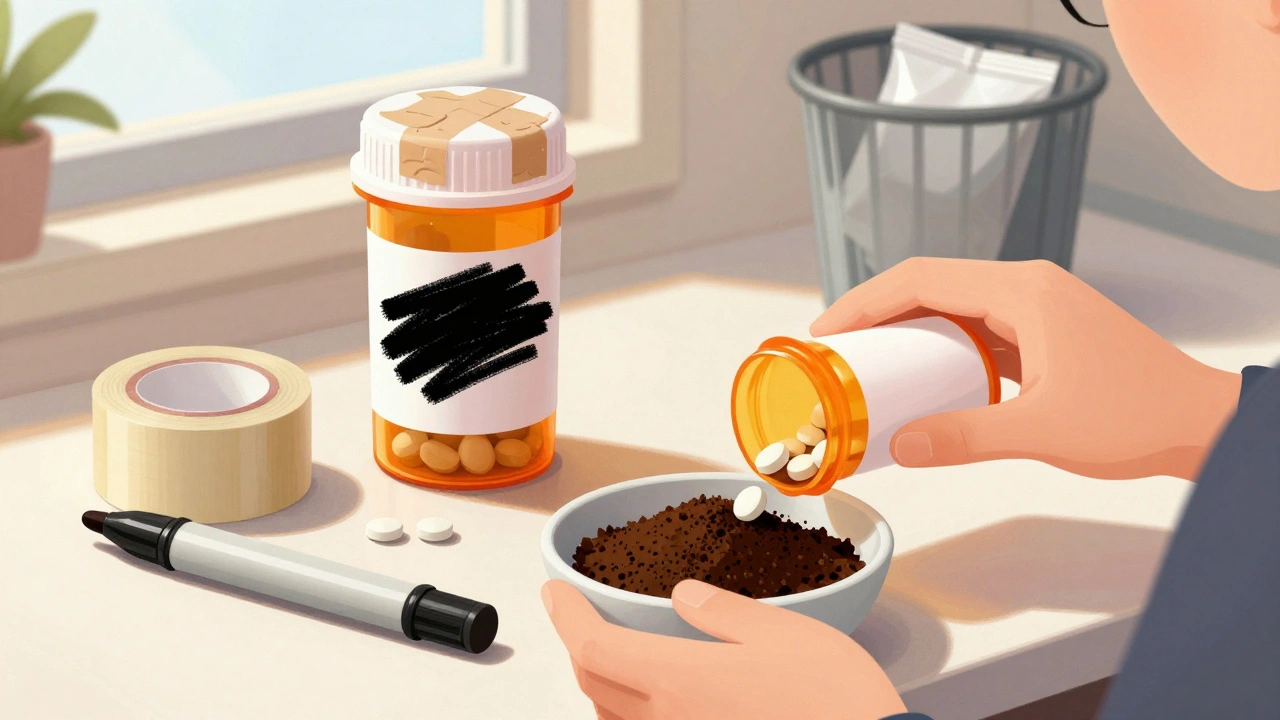
The FDA has clear, step-by-step guidance for disposing of medications at home. It’s not complicated, but skipping steps puts your privacy at risk. Here’s what they recommend for non-flush medications:- Take the pills out of the original bottle.
- Mix them with something unappealing-used coffee grounds, cat litter, or dirt.
- Pour the mixture into a sealed container like a jar or plastic bag.
- Scratch out or cover every bit of personal info on the empty bottle with a permanent marker or duct tape.
- Throw the sealed container and the blanked-out bottle in the trash.
The Best Option: Drug Take-Back Programs
If you want the highest level of privacy protection, use a drug take-back program. These are run by law enforcement, pharmacies, or hospitals and are completely secure. Your medications are collected, logged, and destroyed in a way that never exposes your personal data. The DEA runs National Prescription Drug Take Back Days twice a year-most recently in April 2024, when over 820,000 pounds of drugs were collected across the U.S. But you don’t have to wait for those days. Most chain pharmacies like Walgreens, CVS, and Rite Aid have permanent drop-off bins in-store. In 2024, 87% of chain pharmacies offered them, up from just 62% in 2019. These bins are locked, monitored, and managed by trained staff. You don’t need to remove labels. You don’t need to mix anything. You just drop in the bottle-labels and all-and walk away. According to a 2024 Pharmacy Times poll, 89% of people who used these programs felt "very confident" their privacy was protected. That’s the gold standard.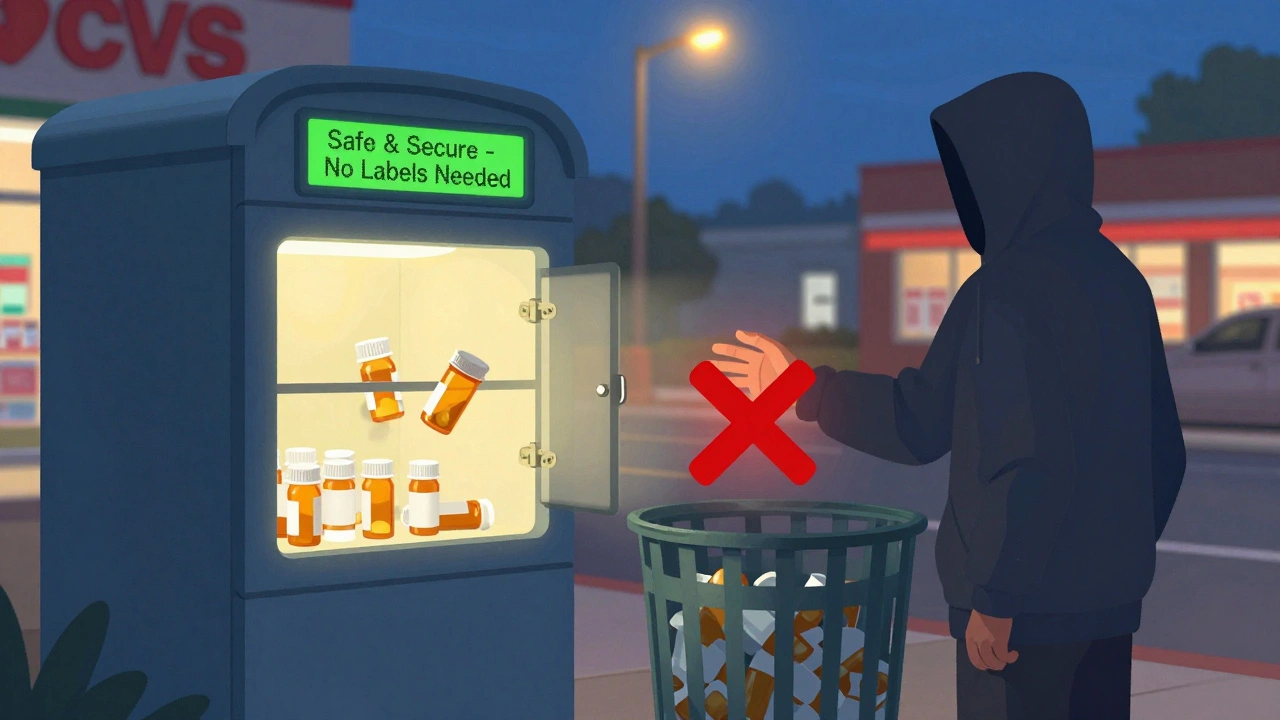
Mail-Back Envelopes: A Private, Convenient Alternative
Not everyone lives near a pharmacy with a drop-off bin. Mail-back envelopes are a great middle ground. Companies like Walgreens and DisposeRx sell prepaid envelopes for $2.99 to $6.99. You put your meds inside (labels still on), seal it, and drop it in the mailbox. The envelope goes directly to a licensed disposal facility where everything is destroyed under strict protocols. These envelopes are designed with privacy in mind. The packaging has no return address, no personal info printed on it, and the disposal facility never sees your name or address. It’s like sending a letter to a secure vault. The EPA calls this method one of the most effective for both privacy and environmental safety.Deactivation Pouches: One-Step Privacy Protection
If you want to avoid the mess of mixing pills with coffee grounds, consider a deactivation pouch. Brands like DisposeRx, which have been around since 2014, contain activated carbon that neutralizes the drugs when you add water. You drop your pills in, add water, shake it, and the medicine becomes inactive. The best part? Many of these pouches are designed so you can put the entire bottle-labels and all-inside before sealing. The pouch destroys the medication and the plastic container together. No need to scratch labels. No need to worry about someone pulling your bottle out of the trash. Pfizer’s 2023 analysis found these pouches cost about $1.50 to $3.00 each, making them affordable for regular use. A 2024 Yelp review from a user in Texas said: "The pouch lets me destroy both the medication AND the personal information in one step-finally a simple privacy solution." That’s exactly what it does.What NOT to Do: Common Mistakes That Put You at Risk
Don’t flush medications unless they’re on the FDA’s Flush List. Only 15 drugs qualify-mostly highly addictive or dangerous ones like fentanyl patches or certain opioids. Flushing the wrong meds harms the environment and doesn’t solve privacy issues. Don’t just throw the bottle in the recycling. Recycling centers don’t remove labels. Someone could still read your name and diagnosis. Don’t assume "scratching it off" is enough. A 2023 University of Michigan study found that 47% of people struggle to remove labels from plastic bottles. Permanent markers fade. Tape peels. Use both-mark over the info, then cover it with duct tape. Don’t rely on memory. Keep a small notebook or use a free app like DisposeRx’s tool to check if your meds are on the Flush List. Only 28% of patients correctly identify which drugs need flushing, according to FDA testing.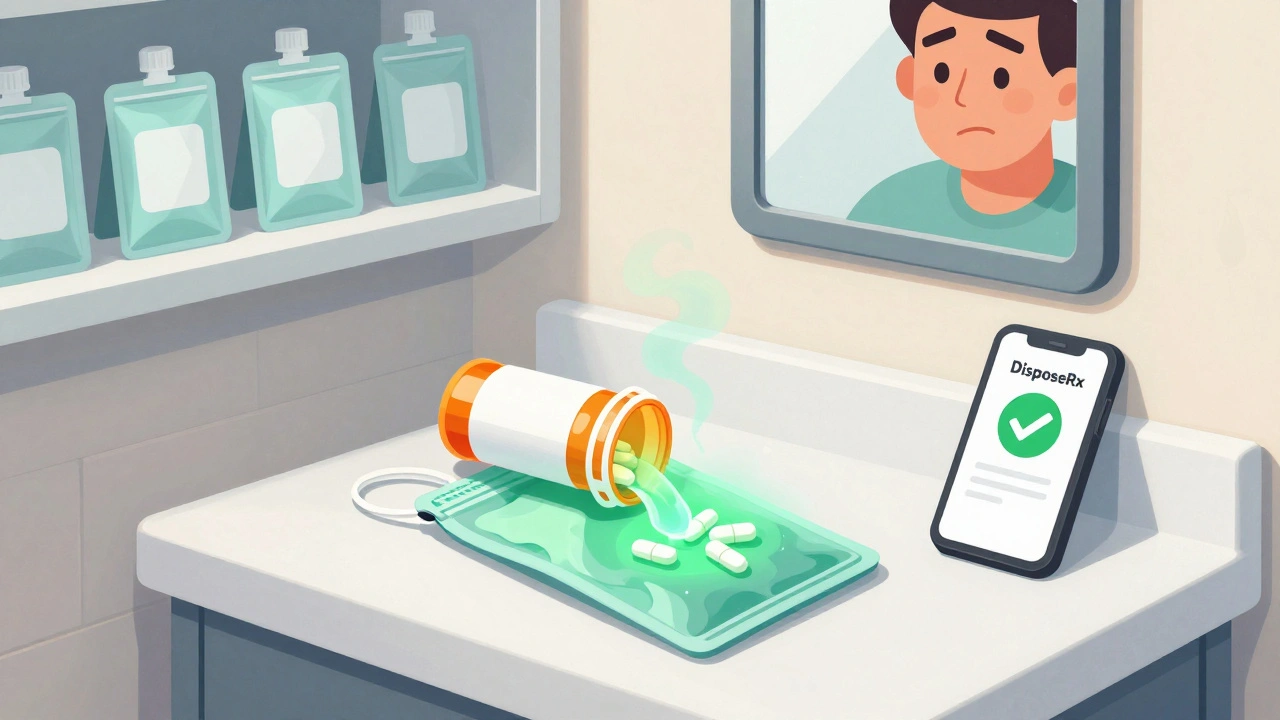
Special Considerations for Seniors and Caregivers
Older adults are the most likely to have multiple prescriptions-and the most vulnerable to identity theft. A Kaiser Family Foundation survey in late 2022 found that 37% of adults over 65 were confused about how to safely dispose of meds. That’s a problem. If you’re helping a parent or loved one, don’t just assume they know what to do. Sit down with them once and walk through the steps. Use a Sharpie Industrial marker-it’s designed for thick, hard-to-remove ink on plastic. Buy a pack of deactivation pouches and keep them next to the medicine cabinet. Make it part of the routine, like taking out the trash. Some pharmacies now offer free disposal kits to seniors. Ask at your local CVS or Walgreens. Many also have staff who can help you use the drop-off bins.What’s Changing in 2025 and Beyond
The government is taking privacy in medication disposal more seriously. In March 2024, the HHS Office for Civil Rights announced 17 new settlements totaling $4.2 million for healthcare facilities that improperly disposed of PHI-including pill bottles. That’s a warning: this isn’t just a personal issue anymore. It’s a legal one. The Safe Drug Disposal Act of 2024, currently in Congress, would fund $50 million a year for community take-back programs with built-in privacy protections. By 2027, experts predict 40% of major pharmacies will have smart kiosks that automatically erase labels and destroy bottles in one step. The message is clear: privacy protection in medication disposal is no longer optional. It’s becoming standard.Your Action Plan: 5 Simple Steps to Stay Safe
Here’s what you can do today:- Check your medicine cabinet. Find every empty or expired bottle.
- Use a take-back bin. Find one near you at takebackyourmeds.org or ask your pharmacy.
- If you must toss meds at home, remove pills, mix with coffee grounds, seal in a bag, and scrub and tape over every word on the bottle.
- Buy a deactivation pouch for $2.50-it’s worth it for peace of mind.
- Make it a habit. Do this every time you finish a prescription. Don’t wait until the cabinet is full.
It takes five minutes. But those five minutes could stop someone from stealing your identity, your insurance, or even your life.
Can I just throw my pill bottle in the recycling?
No. Recycling centers don’t remove labels, and your personal health information remains visible. Always remove or cover your name, address, and prescription details before recycling the bottle. Better yet, use a take-back program or deactivation pouch to avoid the issue entirely.
What if I can’t find a drug take-back location near me?
Mail-back envelopes are your best alternative. Companies like Walgreens and DisposeRx sell prepaid envelopes for under $7. Just put your meds (labels still on) inside, seal it, and drop it in the mail. The facility receives it directly and destroys everything securely. It’s private, simple, and FDA-approved.
Do I need to remove the label from the bottle?
You don’t have to remove it physically-but you must make the information unreadable. Use a permanent marker to black out your name, address, prescription number, and diagnosis. Then cover it with duct tape. This is the minimum standard recommended by the FDA and HHS. Don’t rely on scratching alone-it often doesn’t work on plastic.
Are there any medications I should flush down the toilet?
Only if they’re on the FDA’s Flush List. As of May 2024, this includes 15 specific drugs, mostly powerful opioids like fentanyl patches and certain painkillers that pose a high risk of accidental overdose if found by children or pets. Check the FDA’s website or use a free app like DisposeRx to confirm. For all other meds, don’t flush-use take-back or trash disposal with privacy steps.
Why is this such a big deal? Can’t someone just use my name to steal my identity?
Yes. Your prescription bottle contains more than your name-it has your doctor’s name, pharmacy, diagnosis, and insurance info. Criminals use this to file fake claims, get controlled substances, or even sell your medical records. In 2023, IBM found healthcare data breaches cost $498 per record-far higher than other industries. Protecting your pill bottles isn’t just about privacy-it’s about preventing real financial and medical harm.


Just threw out an old bottle yesterday-didn’t even think about the label. Thanks for the wake-up call. I’m buying a Sharpie and duct tape tonight. 🙏