
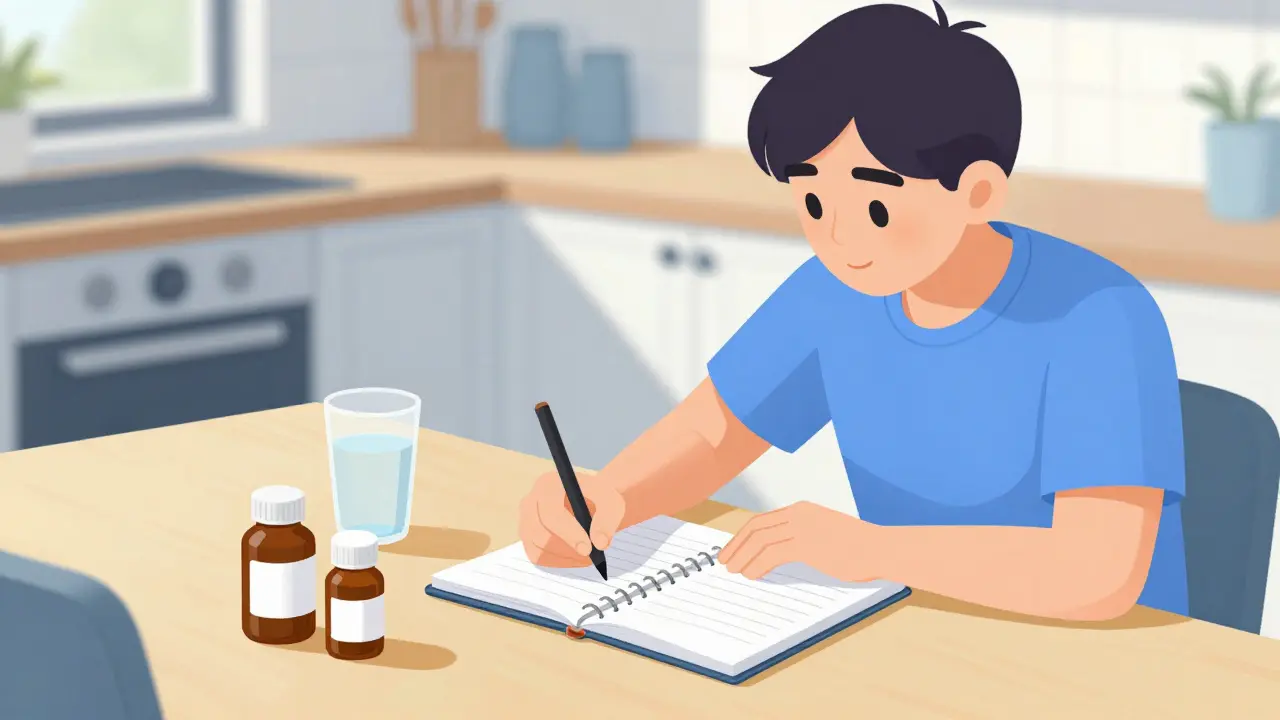
Mistakes with medication happen fast. Whether it's forgetting a dose and taking two, or accidentally mixing two drugs that shouldn't be together, the results can be life-threatening. A simple piece of paper or a digital note can be the difference between a safe recovery and a trip to the ER. Using a medication log is one of the most effective ways to take control of your health and stop accidental overdose errors before they happen.
Why tracking your doses actually works
When you're dealing with chronic pain or complex health issues, it's easy to lose track of when you last took a pill, especially if you're feeling foggy or tired. This is where a medication log is a personal record used to document the timing, dosage, and administration of medications to ensure safety and adherence. Unlike professional systems that only show what a pharmacy sold you, a personal log shows what you actually swallowed or injected.
The risk of overdose often spikes when people "start low and go slow" but forget exactly where they started. By writing down every single dose, you remove the guesswork. You aren't relying on your memory-which can be unreliable during a health crisis-but on a physical record. If you're using high-risk substances like opioids, this level of precision isn't just helpful; it's a necessity for survival.
What to include in your safety log
A log that only says "took pill at 9 AM" isn't enough. To truly prevent errors, you need specific data points. If you're building your own, make sure you have columns for the following:
- Medication Name: Use the exact name on the bottle, not a nickname.
- Exact Dose: Record the milligrams (mg) or milliliters (ml). Avoid vague terms like "one pill."
- Timestamp: The exact time you took the medication.
- Method of Administration: How did you take it? Route of Administration is the path by which a drug is taken into the body, such as oral, intravenous, or transdermal. This matters because injecting or smoking a drug often increases the risk of overdose compared to swallowing it.
- Concurrent Substances: Did you have a glass of wine? Did you take a sleep aid? Recording Benzodiazepines or alcohol is critical because these depressants multiply the sedative effects of opioids, drastically increasing the chance of respiratory failure.
- Physical Response: Note any side effects or how the dose felt. This helps you identify if a dose is too high before you reach a dangerous level.
| Date/Time | Medication | Dose (mg) | Route | Other Substances | Notes/Effects |
|---|---|---|---|---|---|
| Oct 12, 8:00 AM | Oxycodone | 5mg | Oral | None | Pain reduced; felt sleepy |
| Oct 12, 2:00 PM | Alprazolam | 0.25mg | Oral | 1 glass of wine | Very dizzy; skipped next dose |
Managing high-risk medication and dose titration
If you are adjusting your dose-a process called titration-the margin for error is slim. One of the biggest risks is the "cumulative effect," where a drug builds up in your system because you took the next dose too soon. A log prevents this by showing you exactly how long it's been since your last entry.
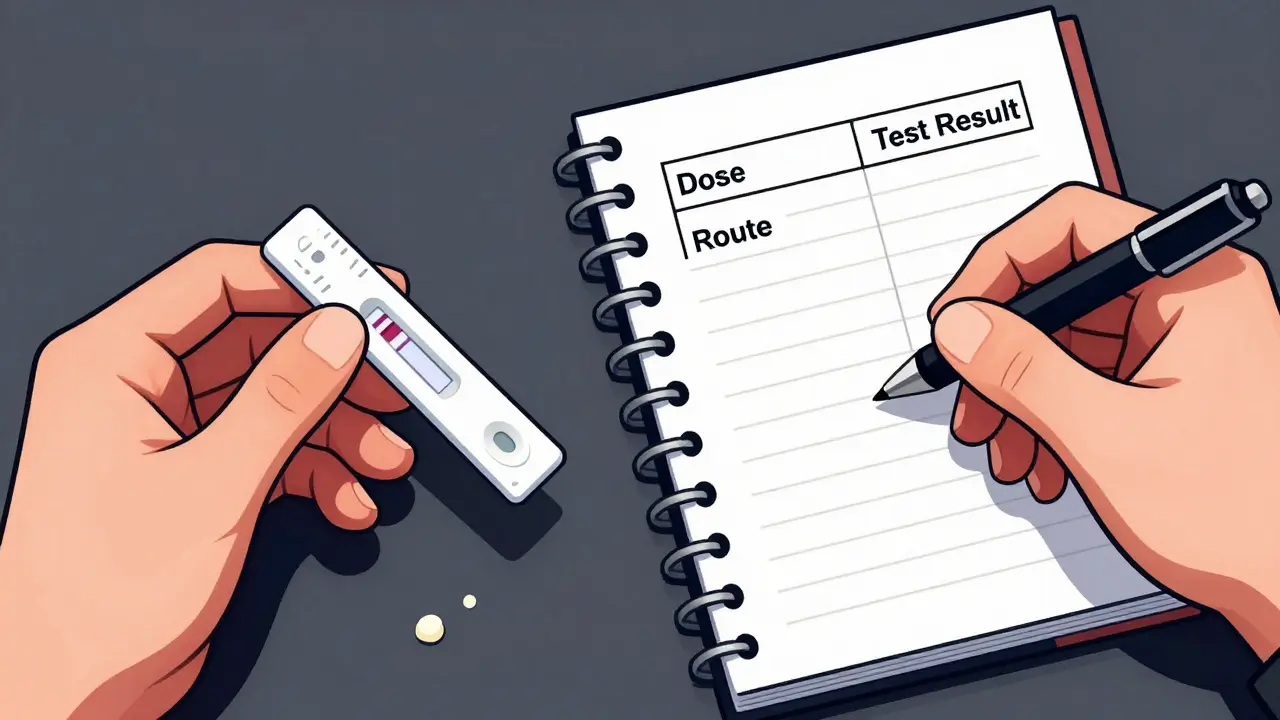
For those using medications that may be contaminated, such as street-sourced opioids, your log should also include a "Testing" column. Using Fentanyl Test Strips is a harm reduction tool used to detect the presence of fentanyl in other substances to prevent accidental overdose. Recording a "Positive" or "Negative" result next to your dose provides a historical record of the potency of your supply, which is vital information if you ever need to tell emergency responders what you took.
Personal logs vs. professional monitoring
You might wonder why you need a log if your doctor uses a Prescription Drug Monitoring Program (or PDMP). PDMPs are electronic databases that track controlled substance prescriptions across a state or region. While these are great for doctors to spot "doctor shopping" or dangerous prescriptions, they have a major blind spot: they only track what was prescribed, not what was actually consumed.
A PDMP won't know if you skipped three days and then took four doses at once to "catch up." It won't know if you crushed a pill to make it work faster, which makes the dose unpredictable and dangerous. Your personal log fills this gap by providing real-time, honest data about your actual behavior, not just your pharmacy records.
Turning your log into a safety net
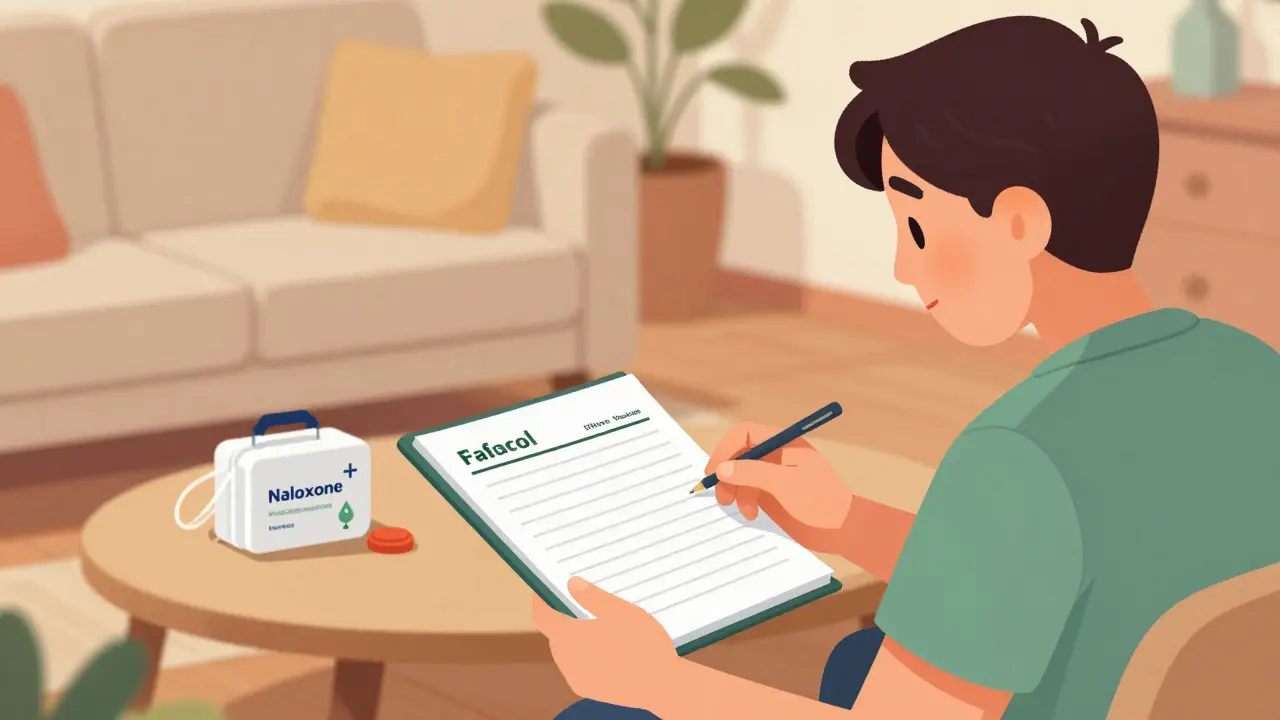
A medication log shouldn't just be a secret diary; it's a communication tool. In the world of harm reduction, the rule is "never use alone." If you do use, sharing your log with a trusted friend or a support person can save your life. If you become unresponsive, a first responder or a friend can look at your log and immediately see exactly what you took and when. This allows them to administer the correct treatment, such as Naloxone, which is an opioid antagonist used to rapidly reverse opioid overdose, with a better understanding of the situation.
Keep your log in a visible, consistent place. Whether it's a notebook on the nightstand or a pinned note on your smartphone, the goal is to make documentation an automatic habit. The moment the drug touches your lips or skin, the pen should hit the paper.
What is the best way to keep a medication log if I struggle with memory?
Use a digital app with reminders or a physical checklist taped to your medication bottle. Setting a phone alarm for each dose and checking it off the list immediately after taking the medication prevents the "did I already take that?" confusion that often leads to double-dosing.
Should I record supplements and vitamins in my overdose prevention log?
Yes. Some supplements, like St. John's Wort, can interact with prescription medications by changing how your liver processes them. This can either make a drug less effective or cause it to build up to toxic levels in your bloodstream.
How does a medication log help during a medical emergency?
In an overdose situation, the patient is often unconscious. A log provides paramedics with a precise timeline of substances, dosages, and potential drug-drug interactions, allowing them to bypass the guessing game and provide the most effective life-saving intervention.
Can I use a medication log for non-prescription drugs?
Absolutely. In fact, it's even more critical for non-prescription substances because they lack standardized dosing. Tracking the amount used and the effect it has on your body is the best way to avoid an accidental overdose when the purity of the substance is unknown.
What should I do if I realize I've missed a dose while looking at my log?
Do not automatically double the next dose to make up for it, as this can lead to a spike in blood concentration and an overdose. Instead, consult your pharmacist or doctor's specific instructions for "missed doses" and record the gap in your log to track how it affects your symptoms.


Oh wow, a piece of paper. Truly revolutionary technology. I'm sure the geniuses in the ER will be thrilled to read your handwritten diary while you're unconscious. Absolute game changer.