

Picture this: you are three weeks into a backpacking trip through Southeast Asia. You wake up with severe cramps and dehydration. You reach for your bag, hoping for that emergency antibiotic your doctor mentioned, but it’s not there. Or worse, you realize the anti-malarial pill you started taking was the wrong dosage for your weight. These aren’t just bad stories; they are preventable mistakes that happen because travelers skip proper pre-trip medication planning.
Travel health clinics exist to stop these scenarios before you even pack your bags. They are specialized medical centers designed to bridge the gap between your general practitioner and the specific health risks of your destination. According to the CDC Yellow Book 2024, these consultations represent the 'best opportunity to educate the traveler about health risks at the destination and how to mitigate them.' But knowing *that* you need one is different from knowing *how* to use one effectively.
Why General Practitioners Aren't Enough
You might think your regular doctor can handle your travel prep. For a quick weekend trip to a neighboring country, maybe. But for international travel involving remote areas or tropical climates, general practitioners often lack the specific data needed for accurate risk assessment.
The numbers tell a stark story. A 2023 study in the Journal of Travel Medicine found that specialized travel clinics correctly prescribed malaria prophylaxis 92% of the time for travelers heading to sub-Saharan Africa. In contrast, general practitioners got it right only 68% of the time. That 24% gap isn’t just a statistic; it represents thousands of travelers who were either over-medicated with unnecessary side effects or under-protected against serious disease.
Travel medicine specialists identify 37% more destination-specific health risks than primary care physicians during pre-travel consultations (CDC Yellow Book, 2024). They don’t just look at where you are going; they analyze what you will be doing. Are you hiking in high-altitude regions? Do you plan to swim in freshwater lakes? Are you visiting rural villages or staying in urban hotels? Each activity changes your medication profile completely.
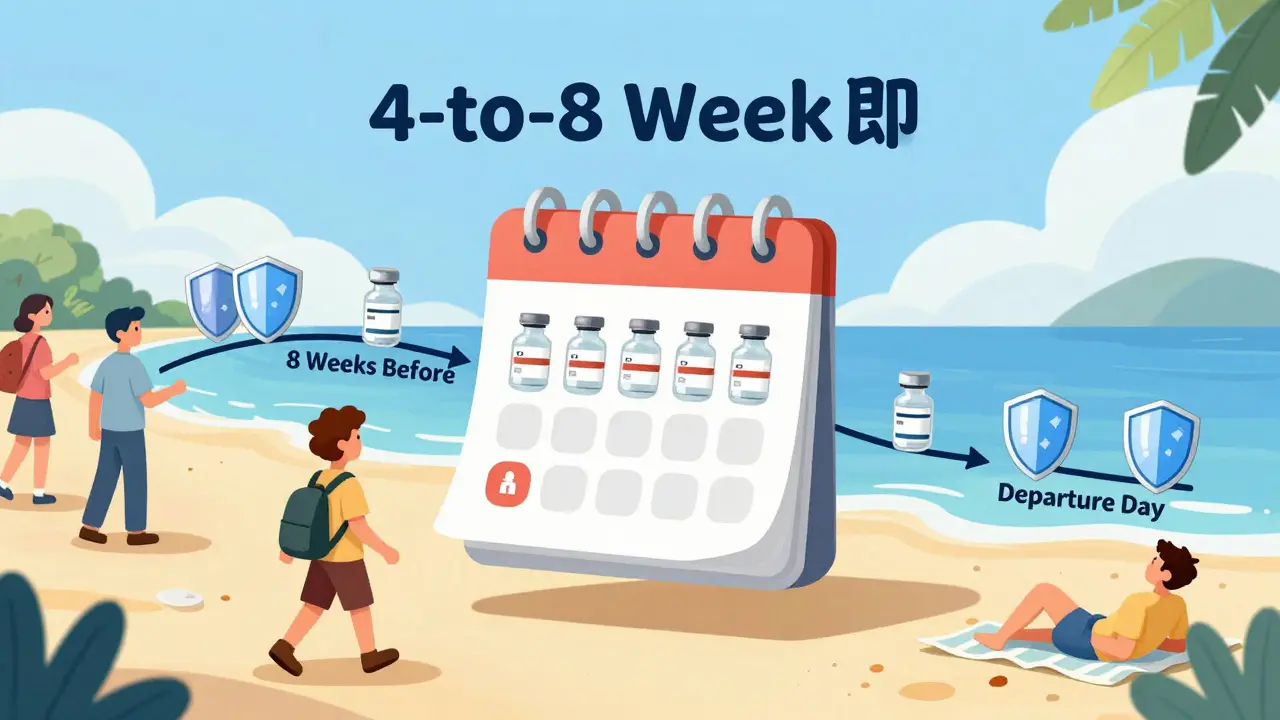
Timing Is Everything: The 4-to-8 Week Rule
If you take nothing else from this guide, remember this: schedule your appointment 4 to 8 weeks before departure. This isn’t arbitrary bureaucracy; it’s biological necessity.
Many vaccines require multiple doses spread over weeks to build full immunity. The yellow fever vaccine, for instance, requires administration at least 10 days before travel to allow immunity development, according to UCLA Health’s Travel Clinic. More critically, some medications have long lead times. Mefloquine, an anti-malarial drug, needs weekly dosing starting 2 to 3 weeks before travel to ensure therapeutic levels in your blood and to monitor for potential neuropsychiatric side effects.
Dr. Brian Blackburn of Stanford Health Care states definitively that 'the window for effective medication planning closes 2 weeks before departure for many vaccines and prophylactic regimens.' If you wait until the last minute, you lose options. You may end up with a shorter course of medication that offers less protection, or no medication at all.
- 8 Weeks Before: Ideal for complex itineraries, multiple vaccines, and chronic condition management.
- 4-6 Weeks Before: Standard recommendation for most international trips (CDC guideline).
- 2 Weeks Before: Minimum viable window for single-dose vaccines and short-course medications.
- Last Minute: Limited to basic advice and immediate-start medications like atovaquone-proguanil (Malarone), which can start 1-2 days before travel.
What Happens During the Consultation
A travel clinic visit typically lasts 30 to 45 minutes. It is not a quick shot-and-go experience. The provider conducts a comprehensive itinerary review. They ask for specific details: destination countries, trip duration, purpose of travel, planned activities, and your complete medical history.
Based on this data, they create a personalized prevention plan. This includes vaccines, medications, supplies, and behavioral counseling. For example, if you are traveling to a region with dengue fever, they won’t just prescribe pills; they will counsel you on avoiding mosquito bites since there is no standard prophylactic medication for dengue.
For medication planning specifically, expect to discuss:
- Prophylactic Medications: Drugs taken to prevent illness, such as anti-malarials (atovaquone-proguanil, doxycycline, mefloquine) or altitude sickness prevention (acetazolamide/Diamox).
- Treatment Medications: Antibiotics like azithromycin for self-treating traveler’s diarrhea when symptoms appear. UT Health Services recommends a regimen of 500 mg daily for 3 days.
- Emergency Supplies: Oral rehydration salts, antihistamines, pain relievers, and wound care kits tailored to your activities.

Navigating Costs and Insurance
One common barrier is cost. University-affiliated clinics like UCLA and UC Davis typically charge $150 to $250 for initial consultations without insurance coverage. Retail clinics like CVS MinuteClinic list pre-travel consultations at around $129, sometimes with potential insurance coverage.
| Clinic Type | Average Cost | Insurance Coverage | Best For |
|---|---|---|---|
| University-Affiliated | $150 - $250 | Rarely | Complex itineraries, chronic conditions |
| Specialized Private | $100 - $200 | Sometimes | Expert advice, hard-to-reach destinations |
| Retail (e.g., CVS) | ~$129 | Possible | Simple trips, routine vaccines |
| Hospital Systems | Varies | Often (for members) | Integrated care, existing patients |
While the upfront cost seems high, consider the alternative. Treating severe malaria or typhoid fever abroad can cost thousands of dollars and result in significant health complications. The American Society of Tropical Medicine and Hygiene reports that travelers who utilize specialized travel clinics experience 63% fewer travel-related health incidents compared to those who receive only general medical advice.
Common Pitfalls to Avoid
Even with a clinic visit, travelers make mistakes. Here are the most frequent errors:
- Ignoring Side Effects: Anti-malarials can cause nausea or vivid dreams. Discuss these with your provider so you know what to expect and have mitigation strategies.
- Incorrect Timing: Starting anti-malarials too late or stopping them too soon after returning home. Most require continuing for 4 weeks post-travel.
- Overprescribing Antibiotics: Dr. Jane Chen of Johns Hopkins notes that 'many travel clinics overprescribe antibiotics for traveler's diarrhea without adequate counseling on appropriate use.' Ensure you understand when to take them and when to seek local care instead.
- Failing to Coordinate Care: If you have chronic conditions like diabetes or immunosuppression, ensure your primary care physician coordinates with the travel clinic. Stanford Health Care reports that 42% of their complex cases require such coordination.
Documentation and Legal Requirements
Some medications and vaccines come with legal documentation requirements. The International Certificate of Vaccination for yellow fever is mandatory for entry into certain countries. This certificate must be issued by a CDC-registered yellow fever vaccination clinic. As of January 2024, there are 256 authorized clinics operating across the United States.
This document remains valid for life per WHO regulations effective July 2016. Keep it with your passport. Losing it can mean quarantine or denial of entry upon return or transit through affected countries.
Next Steps for Your Trip
Start by identifying a certified travel health clinic near you. The CDC maintains a searchable database of providers. Call ahead to confirm they offer comprehensive consultation services, not just vaccinations. Prepare your itinerary details in writing. Bring a list of current medications and allergies. Ask specific questions about your activities. And most importantly, book early. Your future self will thank you when you’re relaxing on a beach, knowing you’re protected.
How much does a travel health clinic consultation cost?
Costs vary by clinic type. University-affiliated clinics typically charge $150-$250. Retail clinics like CVS MinuteClinic may charge around $129. Some insurance plans cover part of the cost, especially if linked to a hospital system. Always check with your insurer beforehand.
Can I get travel vaccines at my regular doctor?
Yes, for common vaccines like Hepatitis A or Typhoid. However, specialized travel clinics provide better risk assessment and access to niche vaccines like Yellow Fever (which requires a registered clinic) and Chikungunya. They also offer tailored medication plans that general practitioners often miss.
What if I’m traveling in less than two weeks?
You can still get value from a consultation. While some vaccines and medications require longer lead times, providers can offer immediate-start anti-malarials like atovaquone-proguanil, basic hygiene advice, and emergency treatment prescriptions. It’s not ideal, but it’s better than nothing.
Do I really need anti-malarial medication?
It depends on your destination and activities. Malaria is prevalent in many tropical regions. Specialized clinics assess resistance patterns in specific areas to recommend the correct drug (e.g., doxycycline vs. mefloquine). Skipping prophylaxis in high-risk zones significantly increases your chance of infection.
How do I find a certified travel clinic?
Use the CDC’s online tool to locate accredited providers. Look for clinics affiliated with universities, hospitals, or recognized organizations like the International Society of Travel Medicine. Verify they offer comprehensive consultations, not just walk-in vaccinations.
