
Hydroxyzine Cardiac Risk Assessment Tool
Assess Your Hydroxyzine Safety
This tool helps you understand your individual risk of QT prolongation while taking hydroxyzine based on important factors like age, medications, and health conditions. Remember: This is not a medical diagnosis. Always discuss your results with your doctor.
Hydroxyzine has been used for over 60 years to treat anxiety, itching, and nausea. It’s cheap, widely available, and often prescribed because it works fast - usually within 30 minutes. But here’s the problem: what doctors once thought was a safe, sleepy antihistamine is now known to carry a real, sometimes deadly, risk to the heart. The issue isn’t common, but when it happens, it can be fatal. If you’ve been prescribed hydroxyzine, especially if you’re over 65, taking other meds, or have a history of heart rhythm problems, you need to understand this risk - and how to stay safe.
How Hydroxyzine Affects Your Heart
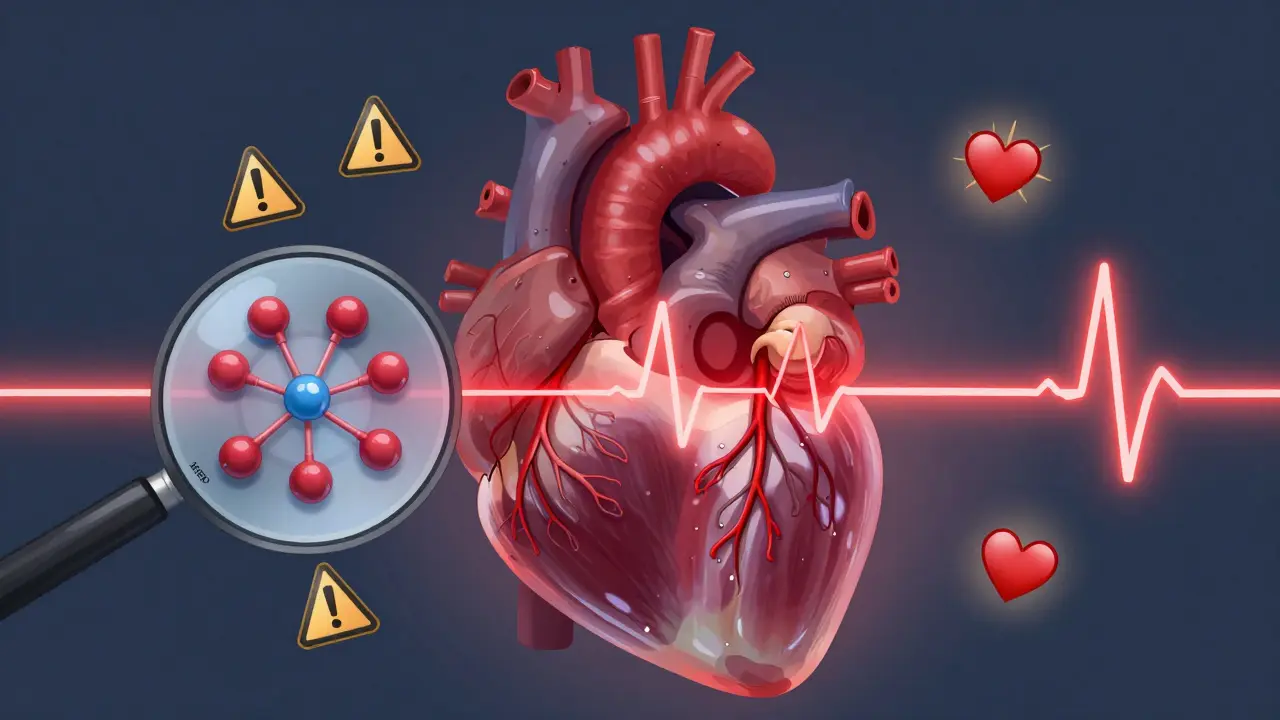
Hydroxyzine blocks histamine receptors, which is why it calms allergies and reduces anxiety. But it also blocks something else: potassium channels in your heart muscle. Specifically, it inhibits the hERG channel, which controls the flow of potassium out of heart cells during the repolarization phase of the heartbeat. When that channel gets blocked, your heart takes longer to reset between beats. That delay shows up on an ECG as a prolonged QT interval.
A prolonged QT interval might sound technical, but here’s what it means in real terms: your heart’s electrical system gets unstable. In rare cases, this can trigger a dangerous rhythm called Torsade de Pointes - a type of ventricular tachycardia that can lead to fainting, seizures, or sudden cardiac arrest. The first documented cases of this happening with hydroxyzine were rare, scattered reports. But by 2015, the European Medicines Agency reviewed over 50 cases worldwide and confirmed the link. Since then, the FDA and other agencies have updated their warnings.
The Dose Makes the Poison
Hydroxyzine’s cardiac risk isn’t about whether you take it - it’s about how much and who you are. The maximum daily dose used to be as high as 400 mg. Now, the European Medicines Agency and U.S. guidelines cap it at 100 mg for adults and 50 mg for people over 65. Why the drop? Because studies show the risk climbs sharply above 50 mg per day. One 2023 case report described a patient who developed Torsade de Pointes after taking just 25 mg - but they had undiagnosed long QT syndrome. Another patient, 68, took 50 mg for anxiety and went into cardiac arrest. Both had other risk factors.
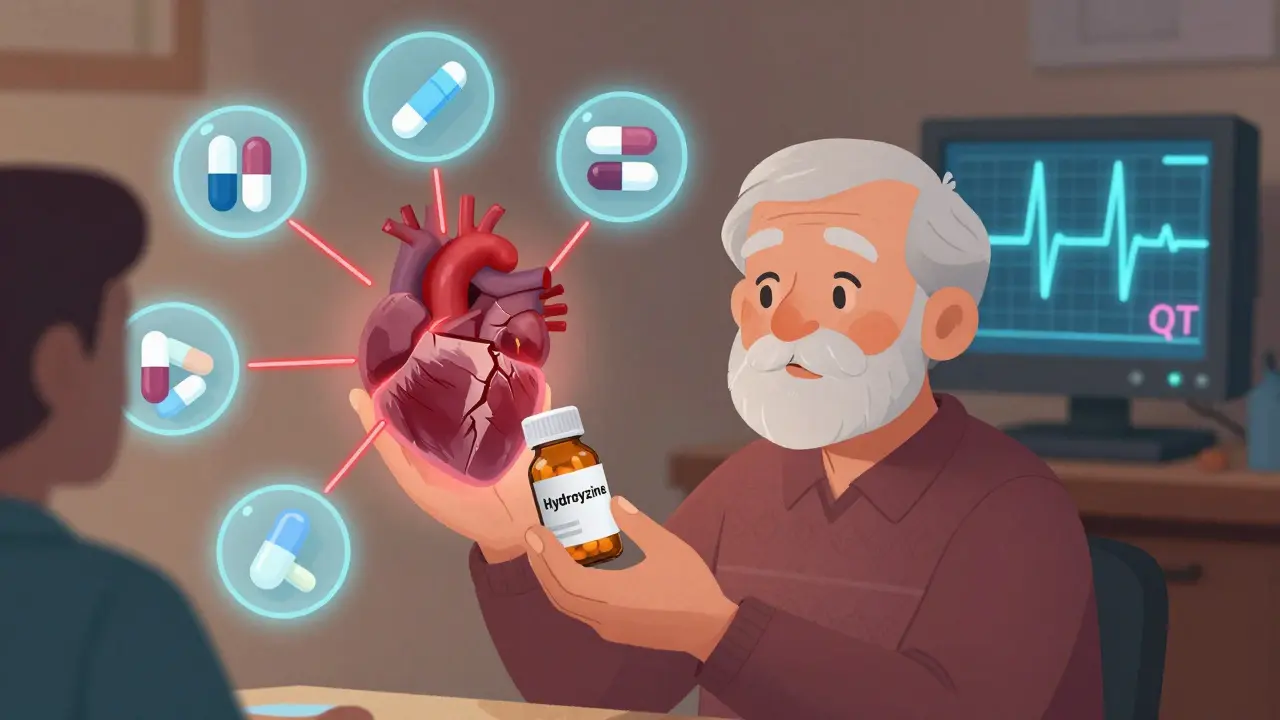
It’s not just the dose. It’s how long the drug stays in your body. Hydroxyzine has a half-life of 14 to 25 hours. That means if you take it daily, it builds up. For older adults or people with liver problems, that buildup happens faster. And when you combine it with other drugs that also prolong the QT interval - like certain antibiotics, antidepressants, or heart meds - the risk multiplies. That’s why doctors now check your medication list before prescribing hydroxyzine.
Who’s Most at Risk?
Not everyone who takes hydroxyzine is in danger. But certain people are at much higher risk:
- People over 65 - their bodies clear drugs slower, and their hearts are more sensitive.
- Those with low potassium or magnesium - common in people on diuretics, with kidney disease, or eating poorly.
- People with existing heart conditions - especially long QT syndrome, heart failure, or bradycardia.
- Anyone taking other QT-prolonging drugs - like amiodarone, citalopram, azithromycin, or fluoxetine.
- Patients with liver disease - hydroxyzine is broken down in the liver, so poor function leads to higher blood levels.
- People with CYP2D6 poor metabolizer genetics - about 7% of the population. Their bodies can’t break down hydroxyzine efficiently, so levels rise dangerously high.
A 2021 survey of 127 hospital pharmacists found that 63% had seen hydroxyzine prescribed to patients with two or more of these risk factors - even though institutional rules banned it. That’s not negligence. It’s ignorance. Many prescribers still think of hydroxyzine as a harmless sedative.
What Doctors Should Do Before Prescribing
Good prescribing isn’t just about writing a script. It’s about checking. Here’s what’s now expected:
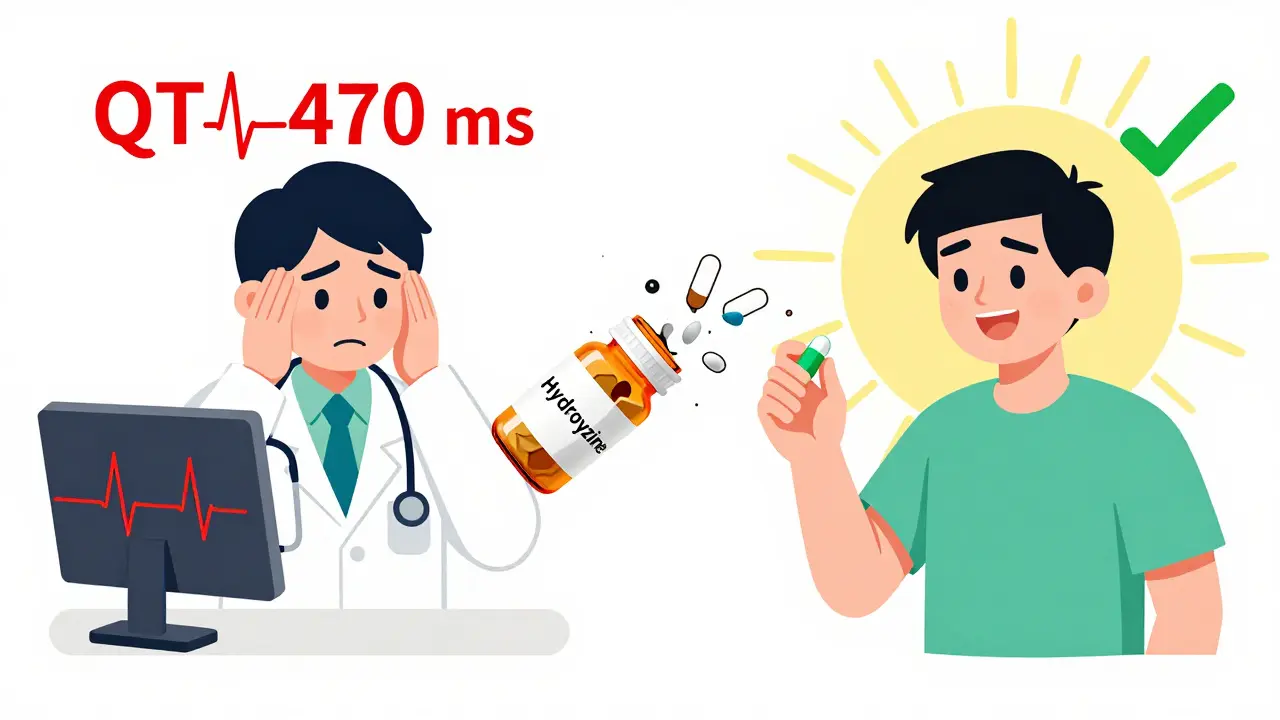
- Get a 12-lead ECG before starting hydroxyzine. QTc should be under 450 ms for men and 470 ms for women. If it’s higher, don’t use hydroxyzine.
- Check for electrolyte imbalances. Potassium below 4.0 mmol/L or magnesium below 1.8 mg/dL increases risk.
- Review all other medications using CredibleMeds.org - hydroxyzine is listed as a "Known Risk" for Torsade de Pointes.
- Ask about family history of sudden cardiac death or unexplained fainting - signs of inherited long QT syndrome.
- For patients with one risk factor, reduce the dose to 25 mg daily and monitor with a repeat ECG in 3-5 days.
- If there are two or more risk factors, avoid hydroxyzine entirely. There are safer alternatives.
Many electronic health records now block hydroxyzine orders if the patient’s QTc is over 500 ms or if they’re on another high-risk drug. That’s a good thing. But it’s not foolproof. Some patients get hydroxyzine in urgent care, ERs, or from specialists who don’t check their full med list.
What You Should Do If You’re Taking Hydroxyzine
If you’re on hydroxyzine, here’s what to ask yourself:
- Are you over 65? If yes, ask your doctor if the dose is still appropriate.
- Are you taking any other meds? Check them against the CredibleMeds list. Don’t assume your pharmacist caught everything.
- Have you ever had unexplained dizziness, palpitations, or fainting? Tell your doctor - even if it happened years ago.
- Have you had an ECG recently? If not, ask for one.
- Are you dehydrated or on a low-salt diet? That can lower potassium and magnesium - ask your doctor about blood tests.
If you start feeling your heart race, flutter, or skip beats - especially within hours of taking hydroxyzine - stop the drug and get medical help immediately. Don’t wait. Torsade de Pointes can turn fatal in minutes.
Alternatives to Hydroxyzine
You don’t have to live with anxiety or itching if hydroxyzine isn’t safe for you. There are better options:
- For anxiety: Buspirone, low-dose SSRIs like sertraline, or short-term benzodiazepines (with caution) are safer for the heart. Cognitive behavioral therapy (CBT) is also highly effective.
- For itching: Cetirizine or loratadine (second-gen antihistamines) have almost no QT effect. Gabapentin is now commonly used for chronic pruritus, especially in kidney disease. Topical steroids or moisturizers can help too.
- For sleep: Melatonin, doxylamine (in low doses), or mirtazapine (if depression is also present) are safer than hydroxyzine for elderly patients.
Hydroxyzine was once the go-to for anxiety and itching because it worked fast and cost little. But now, we know better. The cost of a cardiac arrest is far higher than the cost of a slightly more expensive, safer alternative.
The Bigger Picture: Why This Matters
Hydroxyzine isn’t the only drug with hidden cardiac risks. But it’s a perfect example of how a widely used, seemingly harmless medication can slip through the cracks. For decades, it was considered safe because it wasn’t a heart drug. But the heart doesn’t care what class a drug is labeled as - it only cares about what it does to ion channels.
Prescribing habits are changing. U.S. prescriptions for hydroxyzine dropped from 18.3 million in 2014 to 12.7 million in 2022. That’s a 30% decline - not because it stopped working, but because doctors are finally paying attention. In nursing homes and dialysis centers, where hydroxyzine was once routinely given for itching, use is falling fast. New guidelines from the American Geriatrics Society now list it as a "Potentially Inappropriate Medication" for older adults.
And it’s not just about older people. A 2024 clinical trial is testing whether routine ECG monitoring can prevent events in patients with one risk factor. Early results suggest it can. Meanwhile, researchers are developing new versions of hydroxyzine with less hERG binding - one called VH-01 is already in early trials and shows 87% less cardiac risk at the same antihistamine dose.
Hydroxyzine isn’t going away. But its role is shrinking. It’s no longer a first-line option. It’s becoming a last-resort option - and only when the benefits clearly outweigh the risks, and only when safety steps are followed.
What’s Next for Hydroxyzine?
The 2025 European Society of Cardiology guidelines are expected to go even further: they may restrict hydroxyzine to single-dose use only - like for pre-op anxiety - and remove all chronic use indications. That’s a big shift. It means doctors won’t be able to prescribe it daily for anxiety or itching anymore.
For patients, this means more questions. More testing. More conversations with your doctor. But it also means safer care. The era of assuming antihistamines are harmless is over. Hydroxyzine isn’t evil - it’s just not as safe as we thought. And now that we know better, we have to act better.
Can hydroxyzine cause sudden cardiac arrest?
Yes, in rare cases. Hydroxyzine can cause QT prolongation, which may lead to Torsade de Pointes, a life-threatening heart rhythm. This can result in fainting, seizures, or sudden cardiac arrest - especially in people with risk factors like older age, low potassium, or other QT-prolonging drugs. While the overall risk is low, the consequences are severe.
Is hydroxyzine safe if I’m healthy and under 65?
For healthy adults under 65 with no heart conditions, no electrolyte imbalances, and no other QT-prolonging drugs, hydroxyzine at standard doses (25-50 mg) is generally considered low risk. But even then, it’s not risk-free. An ECG before starting is still recommended, especially if you have a family history of sudden cardiac death or unexplained fainting.
What’s the safest antihistamine for anxiety or itching?
Cetirizine and loratadine are second-generation antihistamines with minimal cardiac risk and are safer alternatives for itching. For anxiety, buspirone, SSRIs like sertraline, or non-drug therapies like CBT are preferred. Avoid first-gen antihistamines like diphenhydramine and hydroxyzine if you have any heart or electrolyte concerns.
How long does it take for hydroxyzine to affect the QT interval?
QT prolongation can happen as quickly as 10 minutes after taking hydroxyzine, or it may take up to 20 days - especially with daily use and accumulation. That’s why monitoring is important even if you’ve been taking it for weeks without issues. The risk builds over time.
Should I get an ECG before taking hydroxyzine?
Yes - if you’re over 65, have heart disease, take other medications, or have a history of fainting or irregular heartbeat. Even if you’re young and healthy, getting a baseline ECG before starting hydroxyzine is a smart precaution. Many clinics now require it before prescribing.


Interesting breakdown. I work in pharmacy in Mumbai and we’ve seen a sharp drop in hydroxyzine scripts since last year. Mostly because of ECG requirements now enforced by hospital guidelines. Still, some GPs prescribe it like it’s Advil.