
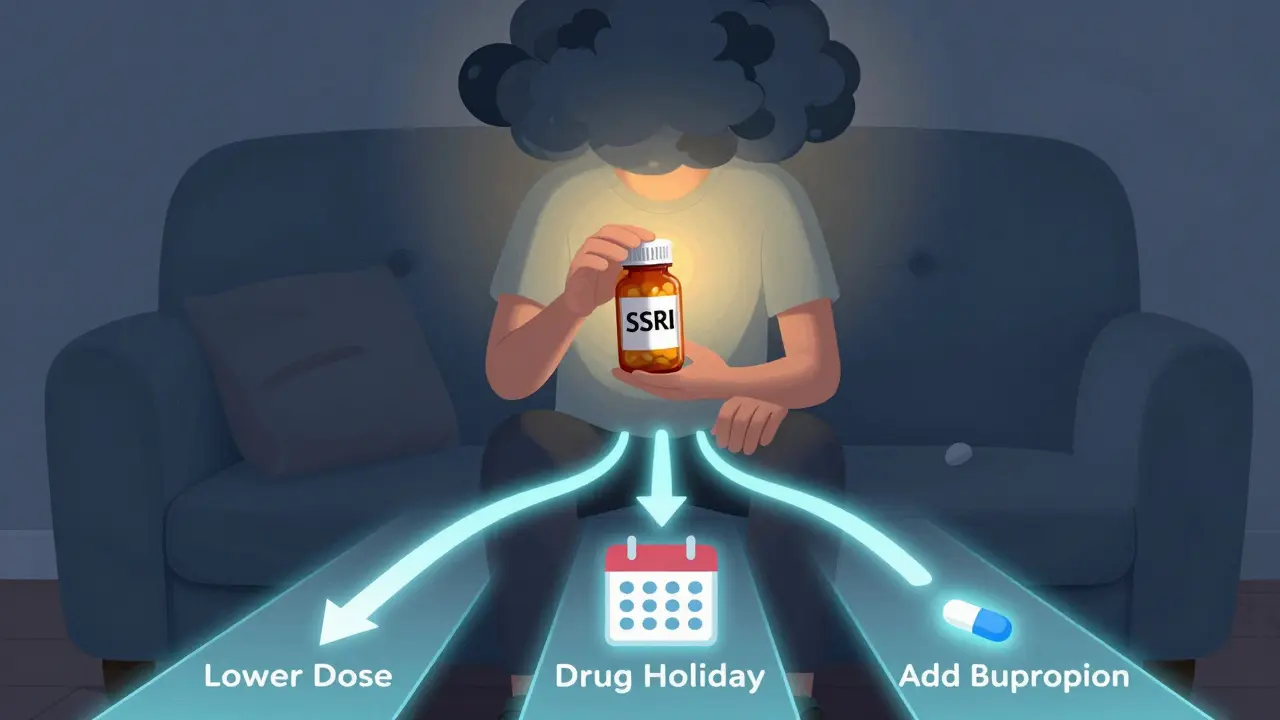
SSRI Sexual Dysfunction Management Strategy Calculator
Based on evidence from the article, this calculator recommends the most appropriate management strategy for your SSRI sexual dysfunction. Select your current medication, symptoms, and other factors to see personalized recommendations.
Sexual side effects from SSRIs are not rare - they’re common. If you’re taking an SSRI for depression and notice your libido has dropped, orgasm feels out of reach, or arousal has become harder to achieve, you’re not alone. Studies show 35-70% of people on SSRIs experience some form of sexual dysfunction. For many, this isn’t just an inconvenience - it’s a reason to stop taking a medication that’s helping their mood. The good news? There are clear, evidence-backed ways to manage it without giving up on depression treatment.
Why SSRIs Cause Sexual Problems
SSRIs work by increasing serotonin in the brain, which helps lift mood. But serotonin also plays a role in sexual response. Too much of it can shut down desire, delay orgasm, and make arousal harder. This isn’t a flaw in the drug - it’s a known effect. Sexual side effects usually show up within the first 2-4 weeks of starting treatment. The most common issues are:- Reduced libido (40-50% of users)
- Delayed or absent orgasm (60-70%)
- Erectile dysfunction (20-30%)
- Difficulty with arousal or lubrication (40-50%)
Here’s the tricky part: about 35-50% of people with depression already have sexual problems before starting SSRIs. That means it’s not always clear if the issue is from the depression itself or the medication. That’s why tracking symptoms over time matters.
Dose Changes: Less Can Be More
Many patients assume they need to stay on the full prescribed dose. But sometimes, lowering the dose helps. Studies show that reducing the SSRI dose by 25-50% improves sexual function in 40-60% of people - without making depression worse, especially if the depression is mild to moderate.This works best with SSRIs that have shorter half-lives, like sertraline, citalopram, or escitalopram. Fluoxetine (Prozac) is an exception. Its half-life is over 14 days, so cutting the dose won’t help much because the drug stays in your system too long.
A practical approach: if you’re on 20mg of sertraline and having trouble, ask your provider about trying 10mg daily. Monitor your mood and sexual function for 2-4 weeks. If your depression stays stable and your sex life improves, you’ve found a better balance.
Drug Holidays: Timing Matters
A “drug holiday” means skipping your SSRI for 48-72 hours before planned sexual activity. This works because serotonin levels drop during the break, temporarily lifting the sexual side effects.This strategy is effective for 60-70% of people using SSRIs with short half-lives - like sertraline or citalopram. But it’s risky if you’re on fluoxetine. Because fluoxetine sticks around so long, skipping a dose won’t make a difference. Worse, stopping suddenly can cause withdrawal symptoms like dizziness, nausea, or anxiety in 15-20% of cases.
An alternative: take half your dose on two days each week, spaced apart. For example, take your full dose Monday and Thursday, skip Tuesday and Wednesday, then resume Friday. This gives your body a built-in break without full discontinuation. But this method lacks strong evidence - it’s mostly based on patient reports.
Switching Antidepressants: A Strategic Move
Not all antidepressants affect sex the same way. If your current SSRI is causing major issues, switching might be the best option.Among SSRIs, paroxetine has the highest rate of sexual side effects. Sertraline and fluoxetine are better - they’re less likely to cause problems. But the real game-changer is switching to a non-SSRI antidepressant:
- Bupropion (Wellbutrin): This one doesn’t boost serotonin. It targets dopamine and norepinephrine. Studies show 60-70% of people see major improvement in sexual function after switching. But it takes 2-4 weeks to work, and it can raise anxiety or trigger panic attacks in some, especially if combined with fluoxetine.
- Mirtazapine (Remeron): This one blocks certain serotonin receptors. It helps sexual function in 50-60% of cases. But it causes drowsiness in 30-40% of users - not ideal if you need to stay alert during the day.
- Nefazodone: Similar to mirtazapine. It’s less commonly used now due to rare liver risks, but it’s still an option in some cases.
Important: switching antidepressants isn’t a quick fix. You need a careful transition plan. Stopping one SSRI cold turkey can cause withdrawal. Starting a new one too fast can worsen mood. Always work with a provider who understands this process.
Adding an Adjunct: The Most Proven Strategy
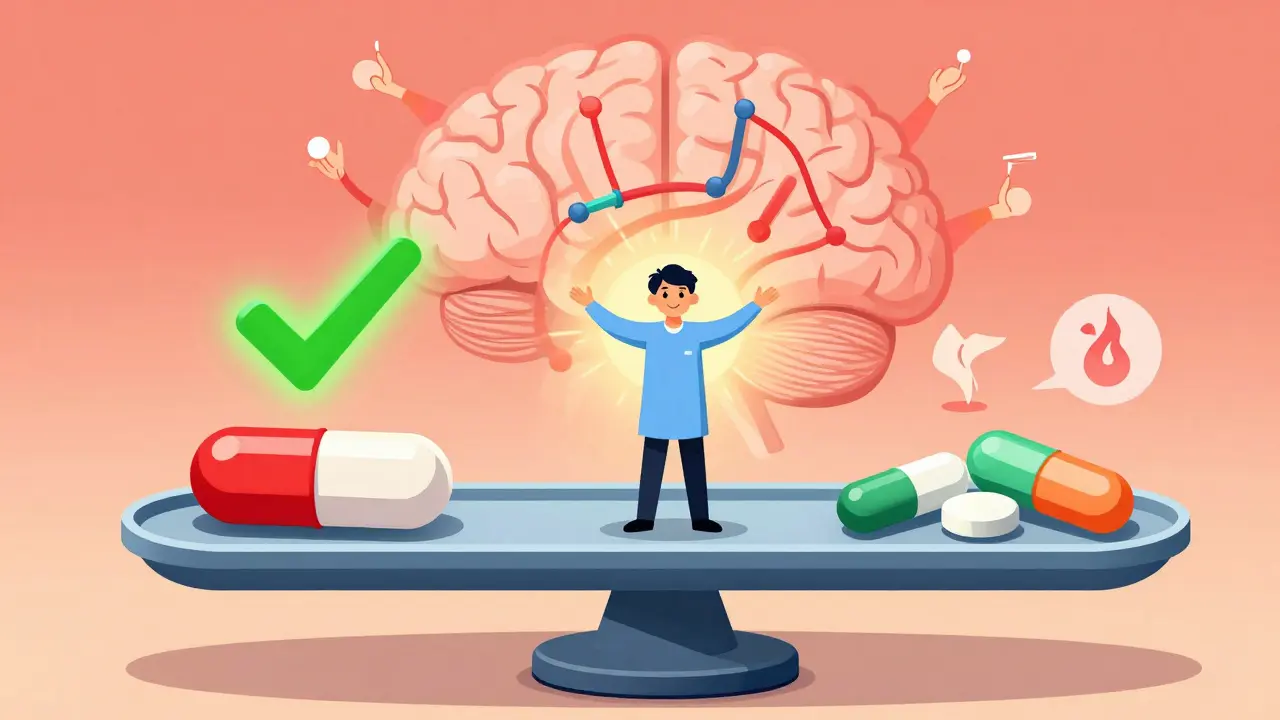
Instead of switching or lowering your SSRI, you can add another medication to counteract the sexual side effects. This is the most studied and effective approach.Bupropion (as an add-on): This is the gold standard. In a double-blind trial of 55 people on SSRIs, daily bupropion (150mg twice a day) improved sexual desire and frequency in 66% of users. Even as-needed (75mg taken 1-2 hours before sex) helped 38%. But be warned - combining bupropion with fluoxetine can spike anxiety in 20-25% of cases.
Dopaminergic agents: Ropinirole (0.25-1mg daily) and amantadine (100mg daily) can help, especially if you’re struggling with low desire. They work fast - often within 48-72 hours. But they can cause tremors or increased anxiety. Not ideal if you already have panic attacks.
Serotonergic modulators: These target serotonin differently to undo the blockage:
- Buspirone (5-15mg daily): A partial serotonin agonist. Helps 45-55% of users. Takes 2-3 weeks to work. Side effects are mild - mostly dizziness or nausea. Only 5-10% stop because of them.
- Cyproheptadine (2-4mg as needed): Blocks serotonin receptors. Works in about 50% of cases. But it causes drowsiness in 35-40% of users. Best for nighttime use or if you can afford to be sleepy.
The biggest advantage of adjuncts? You keep your SSRI. You don’t risk a depression relapse. And you don’t have to stop the medication that’s helping your mood.
What Doesn’t Work - And Why
There’s a lot of misinformation out there. Let’s clear it up:- Viagra or Cialis? These help with erections, but they don’t fix low desire or delayed orgasm. If your issue is arousal, they might help a little. If your problem is “I just don’t feel like it,” they won’t touch it.
- Herbal supplements? Nothing proven. Ginseng, maca, or horny goat weed? No solid data. Some people swear by them, but no study confirms they work with SSRIs.
- Just waiting it out? Sexual side effects rarely go away on their own. If you’ve been on an SSRI for 3 months and it’s still a problem, it’s not going to fix itself.
Behavioral Strategies: More Than Just Pills
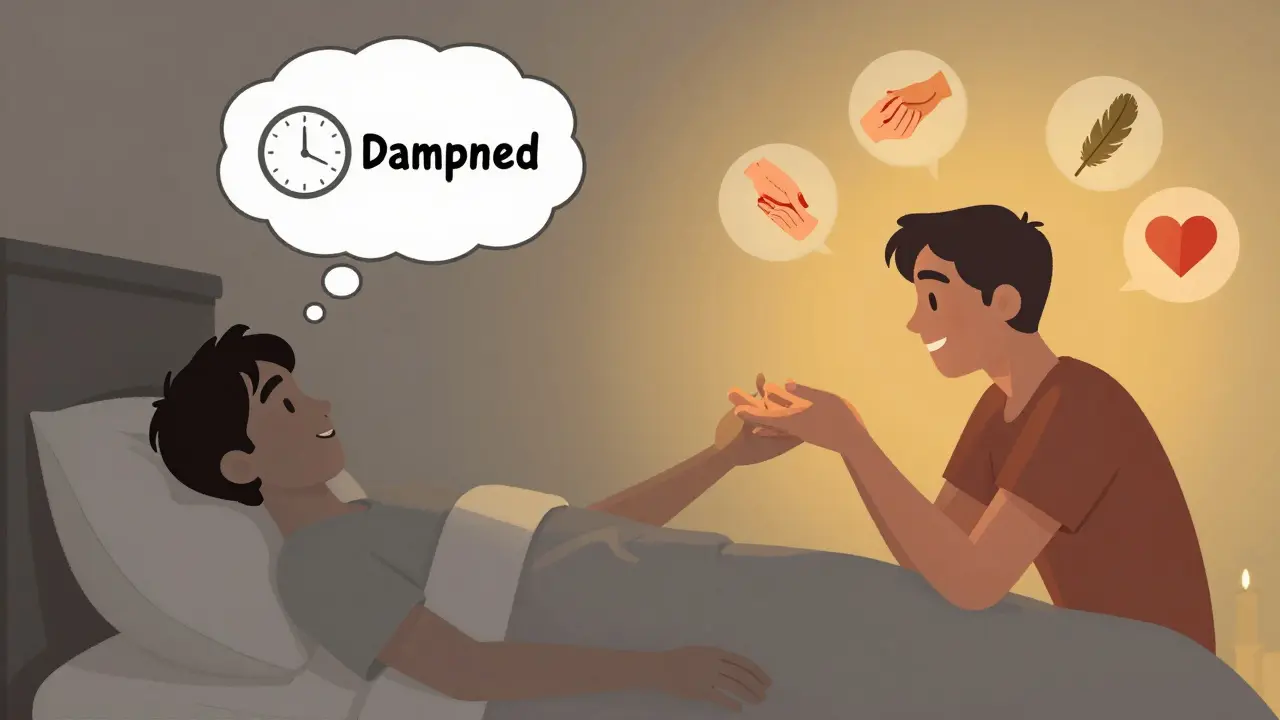
Medication isn’t the only tool. Behavior matters too.Dr. Levine, a psychiatrist cited in Psychiatry Advisor, says many patients under 60 aren’t completely unable to orgasm - they just feel “dampened.” The solution? Increase stimulation. Try new activities, focus on sensation, or use toys. The goal isn’t to “fix” the drug effect - it’s to work around it.
One couple on Reddit reported success with “sensate focus” exercises: scheduled, non-goal-oriented touching that rebuilds intimacy without pressure. They saw 50% improvement in satisfaction - even while still on SSRIs.
Also, don’t underestimate the power of timing. If you take your SSRI in the morning, try scheduling sex for late evening, when serotonin levels naturally dip. Or take your dose after sex, not before.
What to Ask Your Doctor
Most doctors don’t bring up sexual side effects - 73% of patients say they were never warned. Don’t wait for them to ask. Be direct:- “I’ve noticed my sex drive has dropped since starting this medication. What can we do?”
- “Is there a way to reduce this side effect without making my depression worse?”
- “Can we try a lower dose or add bupropion?”
Ask about using a tool like the Arizona Sexual Experience Scale or Antidepressant Sexual Dysfunction Inventory. These help quantify the problem so you and your doctor can track progress.
Long-Term Risks and New Developments
In June 2023, Australia’s TGA warned about persistent sexual dysfunction - symptoms that linger for weeks, months, or even years after stopping SSRIs. While rare, it’s real. The FDA is reviewing whether all SSRIs need stronger warnings.But don’t panic. Most people who stop SSRIs don’t have long-term issues. And for those who do, treatment options are emerging. A new drug called MK-0941 (a 5-HT2C antagonist) showed 70% improvement in sexual function in a 2023 trial - without hurting antidepressant effects. It’s still in phase II, but it’s a sign that better options are coming.
Meanwhile, newer antidepressants like vortioxetine (Trintellix) and vilazodone (Viibryd) have 25-30% lower rates of sexual side effects than older SSRIs. But they cost 40 times more. For most people, sticking with generics and using proven management strategies is still the best path.
Final Takeaways
- SSRI sexual dysfunction is common, treatable, and often reversible.
- Dose reduction works for many - especially with short-half-life SSRIs.
- Drug holidays help, but only if you’re not on fluoxetine.
- Switching to bupropion, mirtazapine, or nefazodone can be very effective.
- Adding bupropion as an adjunct has the strongest evidence - daily dosing is better than as-needed.
- Behavioral changes, like increased stimulation or scheduled intimacy, can make a big difference.
- Always track your symptoms. Use a scale. Talk to your provider. You deserve to feel better - in every way.


So let me get this straight - we’re paying doctors to make us feel better emotionally so we can then spend our weekends crying in bed because we can’t even get hard? Classic. I’m just glad my therapist didn’t mention this until I brought it up. Like, congrats, SSRIs, you fixed my panic attacks but turned my love life into a PowerPoint presentation titled ‘Why Am I Here?’