
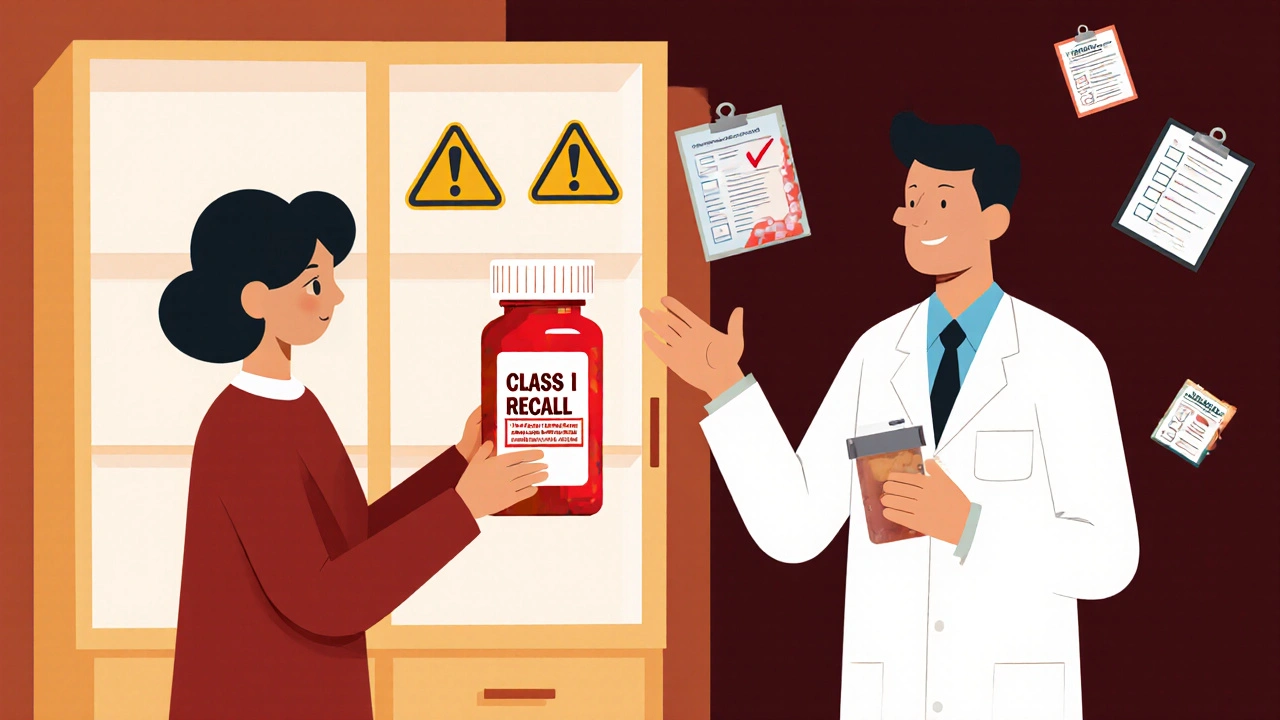
When you open your medicine cabinet and see a recall notice for your blood pressure pill, your first thought might be to toss it out-or worse, stop taking it right away. But that’s exactly what you shouldn’t do. Medication recalls happen more often than most people realize. In 2022 alone, nearly 5,000 drugs were pulled from shelves in the U.S. Most aren’t life-threatening. But if you don’t act correctly, you could put your health at risk.
Understand the Recall Level
Not all recalls are the same. The FDA classifies them into three levels, and knowing which one applies to your medicine changes what you do next.- Class I recalls are the most serious. These involve drugs that could cause serious harm or death. About 15% of all recalls fall into this category. Examples include blood pressure medications contaminated with carcinogens, or insulin with incorrect dosing.
- Class II recalls mean the drug might cause temporary or reversible health problems. This could be a label that says 10mg but actually contains 20mg. Not ideal, but usually not dangerous if caught quickly.
- Class III recalls are the least risky. These are often about labeling errors, missing instructions, or packaging flaws that don’t affect how the drug works. You might not even need to stop taking it.
The key? Don’t guess. Check the recall notice. It will tell you the class. If it’s Class I, act fast-but still don’t quit your medicine cold turkey.
Don’t Stop Taking Your Medicine
This is the biggest mistake people make. In a 2022 FDA survey, 22% of patients stopped taking recalled medication without talking to a doctor or pharmacist. That’s dangerous.Imagine you take lisinopril for high blood pressure. Your bottle is recalled because of a labeling mix-up. You panic and skip your next dose. Your blood pressure spikes. You end up in the ER. The recall wasn’t about the drug being toxic-it was about a misprinted label. But stopping the medicine caused the real harm.
The FDA’s official advice is clear: continue taking your medicine until your doctor or pharmacist gives you a replacement or alternative. For chronic conditions like diabetes, heart disease, or seizures, stopping abruptly can be life-threatening. The recalled drug may be unsafe, but going without it is often worse.
Check Your Lot Number and Expiration Date
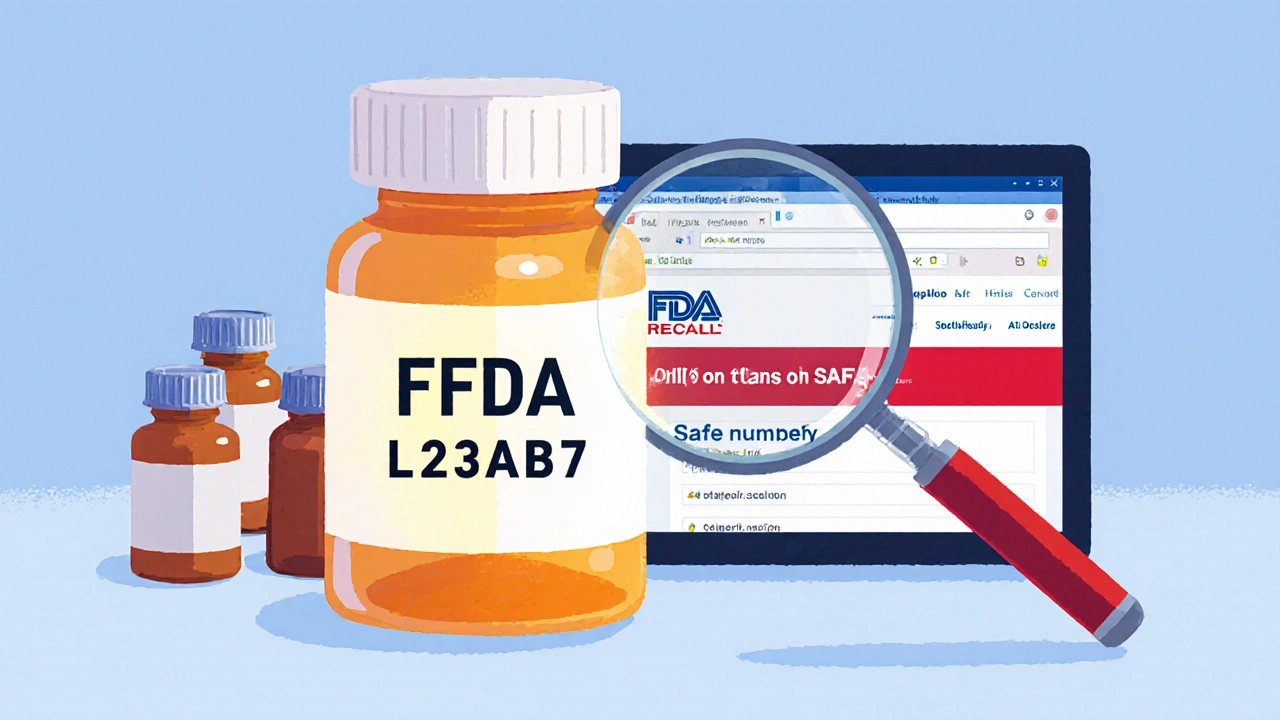
Recalls don’t apply to every bottle of a drug. Only specific batches-called lots-are affected. That’s why you need to check the lot number on your bottle or box.Look at the packaging. You’ll see a code like “L23AB7” or “123456.” Compare it to the lot numbers listed in the recall notice on the FDA website. If your lot isn’t listed, your medicine is safe. Don’t throw it out.
According to FDA data, 45% of patients assume all versions of a recalled drug are unsafe. That’s wrong. Only 5-10% of recalled medications are from the exact batch you have. If you don’t check, you’re wasting medicine-and risking your health by switching unnecessarily.
Call Your Pharmacy Right Away
Your pharmacist is your best ally in a recall. They have access to real-time recall databases and can confirm whether your specific bottle is affected.Most pharmacies in the U.S. have a recall response system. According to the American Pharmacists Association, 92% can replace a recalled medication within 24 to 48 hours. They’ll either give you a new bottle from an unaffected lot or switch you to a similar drug from another manufacturer.
Don’t wait for a letter or email. Call them. Say: “I have [drug name], lot number [X], expiration [date]. Is this part of the current recall?” They’ll check their system and tell you exactly what to do.
Dispose of Recalled Medicine Safely
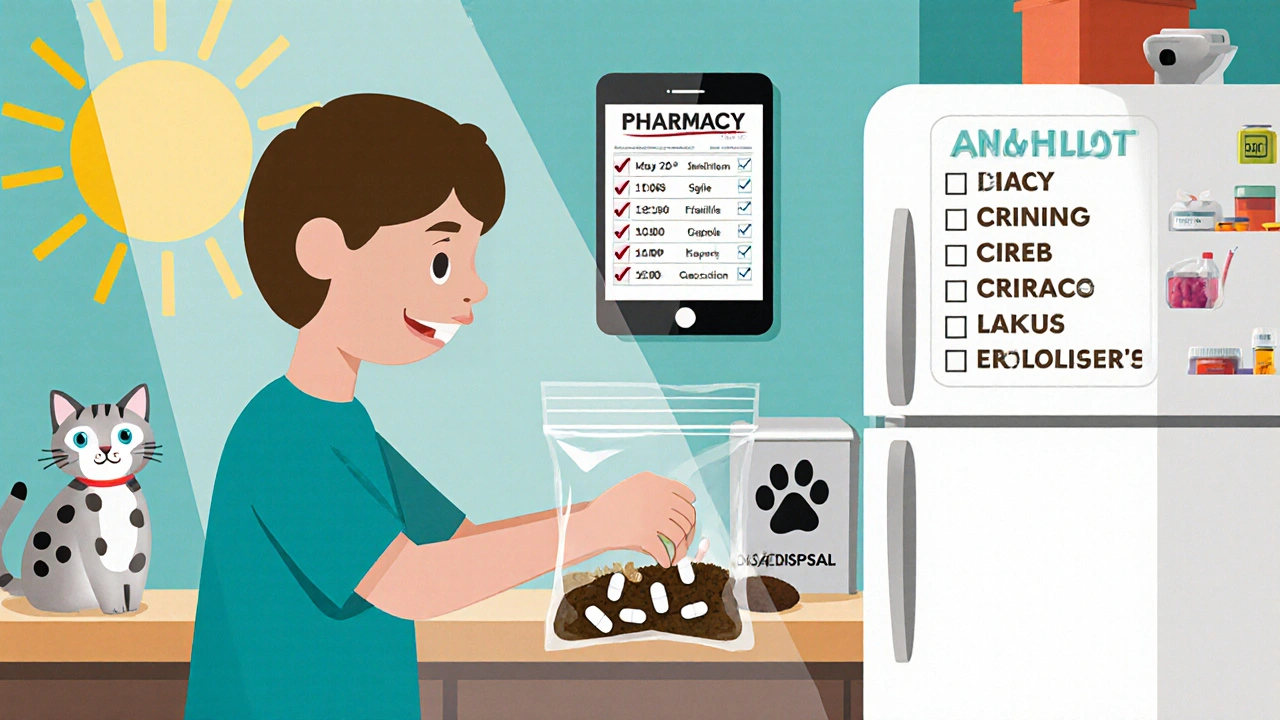
If your pharmacist tells you to throw the medicine away, don’t just toss it in the trash or flush it down the toilet. That’s unsafe for people, pets, and the environment.The FDA recommends mixing the pills or liquid with something unappetizing-like used coffee grounds, cat litter, or dirt. Put the mixture in a sealed plastic bag or container, then throw it in the trash. This keeps kids and animals from digging it out.
Some pharmacies offer take-back programs. Ask yours. In some states, you can drop off old or recalled meds at designated collection bins. If you’re unsure, call your pharmacist. They’ll tell you the safest way to dispose of it.
Watch for Symptoms and Report Them
Even if you’ve taken a recalled drug for weeks, you might not know it’s harmed you. Some side effects show up slowly. Others are sudden.Keep track of anything unusual: dizziness, nausea, rash, chest pain, confusion, or extreme fatigue. Write down when it happened and what medicine you took that day. If you notice something off, contact your doctor immediately.
The FDA’s Adverse Event Reporting System (FAERS) got over 1.2 million reports in 2022. About 8% of those were linked to recalled drugs. But only 27% of those reports came from patients themselves. The rest came from doctors or hospitals. You can help. Report your symptoms through the MedWatch program. It helps the FDA catch problems faster.
Keep a Medication Log
The fastest way to handle a recall is to be prepared. Keep a simple log of all your prescriptions. Include:- Drug name (brand and generic)
- Dosage
- Prescribing doctor
- Pharmacy name
- Lot number
- Expiration date
Write it in a notebook, use your phone notes, or print a template. Only 18% of patients do this, according to the National Community Pharmacists Association. But those who do? They resolve recall issues 60% faster. When a recall hits, you don’t waste time hunting down bottles. You check your list, call your pharmacy, and move on.
How to Check for Recalls
The FDA updates its recall list daily. Here’s how to check if your medicine is affected:- Go to fda.gov/recalls
- Use the search bar. Type your drug’s brand name or generic name.
- Filter by “Drug” under Product Type.
- Click on the recall notice. Read the lot numbers and expiration dates carefully.
You can also sign up for the FDA’s free RSS feed or email alerts. About 45% of healthcare workers use these to stay updated. It’s free, fast, and only sends you alerts about drugs you care about.
Common Mistakes to Avoid
Here’s what not to do:- Don’t stop your medicine without talking to a professional.
- Don’t assume all bottles are recalled-only specific lots are affected.
- Don’t flush or trash meds without mixing them first.
- Don’t wait for a letter or phone call. Check yourself.
- Don’t ignore symptoms after taking a recalled drug.
Most recalls are precautionary. Only 5% involve life-threatening risks. But that doesn’t mean you can be careless. Your actions matter.
What’s Changing in 2025
The FDA is getting better at reaching patients directly. In 2024, they launched pilot programs that send recall alerts through pharmacy benefit managers-so if you fill your script at CVS or Walgreens, you might get a text or email right away.They’re also pushing for better digital lot tracking. In the next year, more pharmacies will scan your prescription and automatically flag recalled lots when you pick up your meds. That’s coming soon. But for now, you still need to check.
Medication recalls are part of modern healthcare. They’re not failures-they’re safeguards. The system works when you know how to respond. Stay calm. Check your lot number. Call your pharmacy. Keep taking your medicine. And never assume the worst until you have the facts.
What should I do if my medication is recalled?
First, don’t stop taking it. Check the lot number on your bottle against the recall notice. Call your pharmacy-they can confirm if your specific batch is affected and give you a replacement within 24 to 48 hours. If you’re told to dispose of it, mix the pills with coffee grounds or cat litter, seal them in a plastic bag, and throw them in the trash.
Are all batches of a recalled drug unsafe?
No. Only specific lots are recalled, usually due to manufacturing errors like contamination or mislabeling. Most patients have unaffected bottles. Always check the lot number before assuming your medicine is unsafe.
Can I return a recalled medication to the pharmacy?
Yes. Most pharmacies will take back recalled medication and replace it with a safe version at no cost. Some may even offer a refund if you’ve already paid. Don’t throw it away unless instructed-your pharmacist needs it for documentation and proper disposal.
Why do drug recalls happen?
Most recalls-about 65%-are due to manufacturing issues like contamination or incorrect dosing. Another 20% are labeling errors, like wrong dosage instructions. Only 5% are because of unexpected side effects. Recalls are a safety net, not a sign the drug is always dangerous.
How do I know if a recall is serious?
The FDA labels recalls as Class I (most serious), Class II (moderate), or Class III (least serious). Class I recalls involve a risk of serious harm or death. Class III are usually labeling mistakes. The recall notice will state the class. If you’re unsure, ask your pharmacist.
Should I report side effects after taking a recalled drug?
Yes. If you experience unusual symptoms after taking a recalled medication, report them to the FDA’s MedWatch program. Even if you’re not sure it’s related, your report helps identify patterns. In 2022, 27% of recall investigations started with patient reports.
Can I get a new prescription if my drug is recalled?
Yes. Your pharmacist can often switch you to the same drug from a different manufacturer or a similar alternative. Your doctor may need to approve the change, but pharmacies usually handle this quickly. Don’t go without your medicine-ask for help.
How often do medication recalls happen?
About 4,800 drug recalls occur each year in the U.S., with a 12% increase since 2021. Most are Class II or III. Only 15% are Class I. While the number is rising, most recalls are caught early and don’t cause harm if patients respond correctly.
Medication recalls are stressful, but they don’t have to be dangerous. The system is designed to protect you-if you know how to use it. Stay informed. Stay calm. And always talk to your pharmacist before making a change.


Recalls aren't failures. They're the system working as designed. The real failure is assuming the worst without checking the lot number. Most people panic and stop their meds. That's the actual health risk.