

Imagine handing your loved one a pill that is supposed to help their heart, but instead causes a dangerous drop in blood pressure. It sounds like a nightmare scenario, yet it happens more often than you might think. As a caregiver, you are the last line of defense between your family member and potential harm. You are not just filling cups with water; you are managing a complex medical regimen that requires precision, vigilance, and knowledge.
The stakes are incredibly high. Research shows that medication errors harm at least 1.5 million people annually in the United States alone. For older adults, who often take five or more medications daily, the risk is even higher. In fact, adverse drug events account for 30% of hospital readmissions within 30 days. But here is the good news: proper medication management can triple the likelihood of positive health outcomes. This guide will walk you through practical, evidence-based strategies to keep your loved one safe, from understanding the basics of polypharmacythe concurrent use of multiple medications by a single patient to mastering the art of communication with healthcare providers.
Understanding the Risks: Why Medication Safety Matters
To protect someone, you first need to understand what you are protecting them from. The term "medication error" covers a wide range of mistakes, from taking the wrong dose to missing a dose entirely. One of the biggest culprits is polypharmacytaking five or more medications simultaneously. According to the Agency for Healthcare Research and Quality, polypharmacy increases the risk of adverse drug events by 88% in adults over 65. Why? Because drugs interact with each other. A blood thinner might react dangerously with an anti-inflammatory painkiller. A heart medication might clash with a common cold remedy.
Another major risk factor is the complexity of modern prescriptions. Many medications have look-alike or sound-alike names. For example, hydroXYZINE (an antihistamine) and hydroCORTISONE (a steroid) sound similar but treat completely different conditions. Confusing these two can lead to serious health issues. Additionally, 48% of older adults take at least one medication that poses more risks than benefits, such as certain proton pump inhibitors or benzodiazepines. Your job is to be the advocate who questions whether every single pill is still necessary.
Building Your Foundation: The Master Medication List
If you only do one thing from this article, make it this: create a master medication list. This is not just a casual note on the fridge. It is a comprehensive document that serves as the single source of truth for everyone involved in your loved one’s care, including doctors, pharmacists, and emergency responders.
Your list should include:
- Brand and Generic Names: Some doctors prescribe by brand, others by generic. List both to avoid confusion.
- Exact Dosages: Write "500mg tablet" or "10mL liquid," not just "one pill."
- Precise Schedules: Specify times like "8:00 AM and 8:00 PM daily" rather than "twice a day," which can be interpreted differently.
- Purpose: Note why each medication is being taken (e.g., "for high blood pressure").
- Known Side Effects: Document any reactions your loved one has experienced.
Creatng this list initially takes about 60-90 minutes, but studies show it reduces medication errors by 52%. Keep this list updated every time a prescription changes. Carry a copy to every doctor's appointment. This simple habit ensures that no new medication conflicts with existing ones.
Daily Management: Storage, Measurement, and Timing
How you store and administer medications matters just as much as which medications you give. Improper storage can render drugs ineffective or even harmful. Most medications should be stored at room temperature (68-77°F or 20-25°C), away from humidity and direct sunlight. Never store medications in the bathroom cabinet, where steam from showers can degrade the pills. Also, check expiration dates weekly. Ninety percent of caregivers fail to monitor these properly, leading to the use of expired drugs that may have lost potency or become toxic.
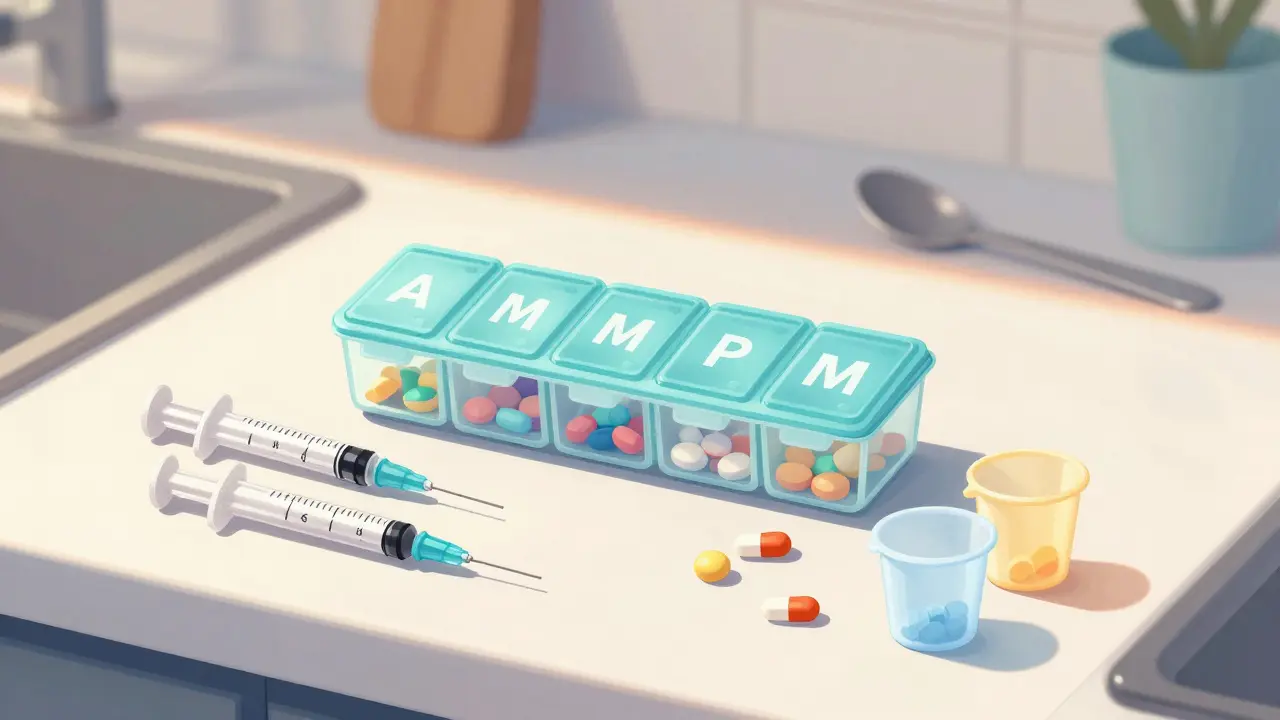
When it comes to timing, consistency is key. For individuals with dementia or cognitive impairments, the Alzheimer's Association recommends using seven-day pill organizers with AM/PM compartments. This visual aid helps ensure doses are not skipped or doubled. If your loved one is on liquid medications, never use household spoons. Kitchen spoons vary by 20-40% in volume. Instead, always use calibrated oral syringes or dosing cups provided by the pharmacy. This small change can prevent significant overdosing or underdosing.
| Mistake | Risk | Better Practice |
|---|---|---|
| Storing meds in the bathroom | Humidity degrades pills | Store in a cool, dry drawer or bedroom closet |
| Using kitchen spoons for liquids | Inaccurate dosing (20-40% variance) | Use calibrated oral syringes or dosing cups |
| Ignoring expiration dates | Reduced efficacy or toxicity | Check and discard expired meds monthly |
| Handwritten schedules | Illegible instructions cause errors | Print clear schedules or use digital apps |
Navigating Care Transitions: The Danger Zone
One of the most critical times for medication safety is during transitions of care, such as moving from the hospital to home. Dr. Joanne Lynn’s research indicates that 62% of medication errors occur during these handoffs. When your loved one is discharged, they may come home with new prescriptions, discontinued old ones, and changed dosages. It is easy to get overwhelmed.
To mitigate this risk, request a medication reconciliationa process of creating the most accurate list possible of all medications a patient is taking before leaving the hospital. Ask the discharge nurse or pharmacist to explain every change clearly. Do not assume you understand if you are unsure. Take notes. Within 48 hours of returning home, schedule a follow-up call with your primary care physician or pharmacist to review the new regimen. This proactive step can catch discrepancies before they cause harm.

Leveraging Technology and Professional Support
You do not have to do this alone. Technology and healthcare professionals are powerful allies. Digital medication tracking apps like Medisafe or CareZone can send reminders for both caregivers and patients. Surveys show that caregivers using these apps report 32% fewer missed doses compared to those relying solely on paper logs. However, technology is not a silver bullet. Ensure your loved one is comfortable with the device, and always have a backup plan, like a physical pill organizer.
Pharmacists are often the most accessible healthcare experts. Schedule bi-annual consultations (every six months) to review all medications. These sessions typically take 45 minutes and have been shown to reduce adverse drug events by 28%. During these visits, ask about potential interactions, side effects, and whether any medications can be deprescribed (safely stopped). Many pharmacies now offer free medication synchronization programs, aligning all refills to a single weekly pickup day. This convenience reduces missed doses by 39% and simplifies your routine.
Communication: Your Most Powerful Tool
Clear communication with your loved one and their healthcare team is essential. Encourage your loved one to voice any concerns about how they feel after taking medications. Sometimes, side effects are dismissed as "just part of aging," but they may signal a problem. For instance, confusion or falls could be side effects of sedatives or painkillers.
When talking to doctors, be specific. Instead of saying, "They seem tired," say, "They slept for 14 hours after starting the new blood pressure medication." Specific details help clinicians make better decisions. Remember, you are the eyes and ears for your loved one. Your observations are valuable data points that can prevent serious complications.
What is the most common cause of medication errors in home care?
The most common causes include illegible handwritten prescriptions, confusion over look-alike/sound-alike drug names, and incorrect dosing due to unit conversion mistakes. Polypharmacy also significantly increases the risk of interactions.
How often should I review my loved one's medications with a professional?
It is recommended to conduct a comprehensive medication review with a pharmacist or doctor every six months. Additionally, review medications immediately after any hospital discharge or when new symptoms arise.
Can I crush pills for my loved one if they have trouble swallowing?
Not all pills can be crushed. Extended-release or enteric-coated tablets must not be crushed as it can release too much medication at once or damage the stomach lining. Always consult a pharmacist before altering the form of any medication.
What is medication reconciliation and why is it important?
Medication reconciliation is the process of verifying a patient's complete medication list against new orders. It is crucial during care transitions (like hospital discharge) to prevent omissions, duplications, or dosing errors.
Are there tools available to help manage complex medication schedules?
Yes, seven-day pill organizers with AM/PM compartments are highly effective. Digital apps like Medisafe provide reminders and tracking. For liquid medications, always use calibrated oral syringes instead of household spoons.
