
Opioid Overdose Response Simulator
Use this tool to practice the standard response protocol. Click through each step to simulate an emergency scenario.
Recognize Signs
You approach a loved one and they seem unresponsive. Check for these specific signs:
• Unresponsiveness (cannot wake them up)
• Slow or irregular breathing
• Pinpoint pupils
• Blue or gray lips/fingernails
Protocol Complete
You have successfully simulated the response. Remember: Panic is the enemy. If real, stay on the line with 911 dispatchers.
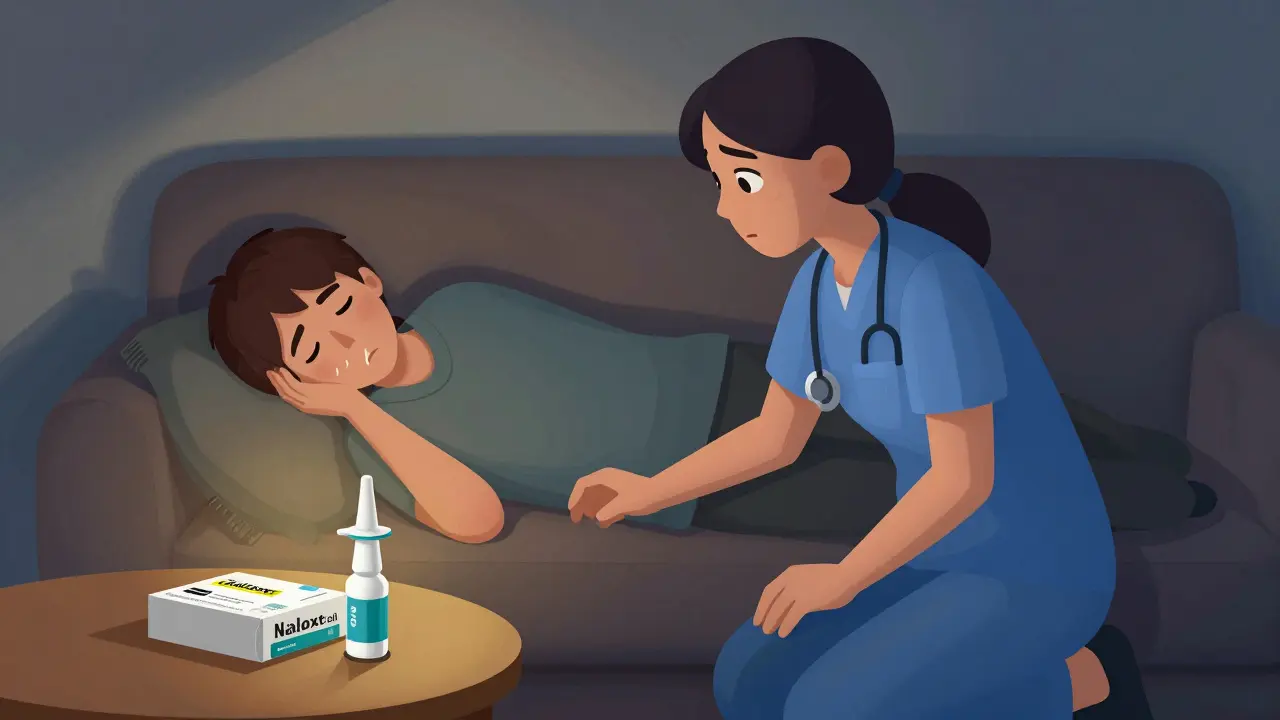
Imagine you are sitting with a loved one who takes prescription opioids for chronic pain. They seem drowsy after taking their evening dose. You notice their breathing has slowed to just a few breaths per minute. In that critical window of minutes, the difference between life and death often comes down to whether you have a naloxone readiness plan in place. This isn't just about having a bottle of medicine on the shelf; it is about knowing exactly what to do, how to do it, and understanding the limitations of the drug when seconds count.
Naloxone is not a cure for addiction, nor is it a long-term treatment for pain. It is an emergency rescue medication designed to rapidly reverse the effects of an opioid overdose. For patients prescribed opioids-and their families, caregivers, or coworkers-understanding this tool is no longer optional. With opioid-related deaths continuing to rise due to potent synthetic drugs like fentanyl, a proactive safety strategy is essential. This guide breaks down how to build a robust readiness plan that goes beyond simple possession to actual preparedness.
Understanding How Naloxone Works
To use naloxone effectively, you need to understand its mechanism. Developed in 1961 by chemist Mozes J. Lewenstein and approved by the FDA in 1971, naloxone is an opioid antagonist. Think of opioid receptors in the brain as locks and opioid molecules as keys that fit perfectly, causing sedation and respiratory depression. Naloxone acts like a master key that kicks the original key out of the lock. It binds to these mu-opioid receptors with 50 to 100 times greater affinity than morphine, displacing the opioid and restoring normal breathing within 2 to 3 minutes.
Crucially, naloxone has no effect on non-opioid overdoses. If someone is unconscious due to alcohol or benzodiazepines, naloxone will do nothing. However, it also cannot cause harm if administered to someone who is not experiencing an opioid overdose. This safety profile makes it ideal for layperson use. The challenge lies in recognizing the signs of an opioid overdose quickly enough to intervene before brain damage occurs from lack of oxygen.
Choosing the Right Formulation
Not all naloxone products are created equal. Your readiness plan should start with selecting the right formulation for your specific situation. There are three main types available today, each with distinct advantages and costs.
- Intranasal Spray (e.g., Narcan): This is currently the gold standard for community use. It requires no needles, no mixing, and minimal training. A single spray delivers 4mg of naloxone. As of 2023, the FDA approved the first over-the-counter version, making it accessible without a prescription. Retail prices typically range from $130 to $150 without insurance.
- Intramuscular Injection (Pre-filled Syringes): These deliver 0.4mg per dose. While cheaper (approximately $25-$40 per dose), they require more skill to administer correctly. You must inject into the outer thigh at a 90-degree angle. Most protocols recommend using two vials (0.8mg total) for an adult overdose, which complicates the process during an emergency.
- Auto-injectors (e.g., Evzio): These devices provide audio prompts and automatic injection. However, they are significantly more expensive (reduced to approximately $3,200 after congressional scrutiny) and often unnecessary given the ease of nasal sprays.
For most households and workplaces, the intranasal spray is the superior choice. It reduces anxiety for the rescuer and eliminates the risk of needle-stick injuries. When building your kit, ensure you have at least two doses. Why two? Because the duration of action for naloxone is only 30 to 90 minutes, while many opioids, especially fentanyl and methadone, last much longer. If the naloxone wears off before the opioid does, the person can slip back into respiratory depression-a phenomenon known as renarcotization.
Building Your Emergency Kit
A readiness plan is useless if the medication is locked in a cabinet across the house. Accessibility is the first rule. According to the Wisconsin Department of Health Services' 'Dose of Reality' program, effective plans require naloxone to be immediately accessible, ideally within 30 seconds of recognizing an overdose.
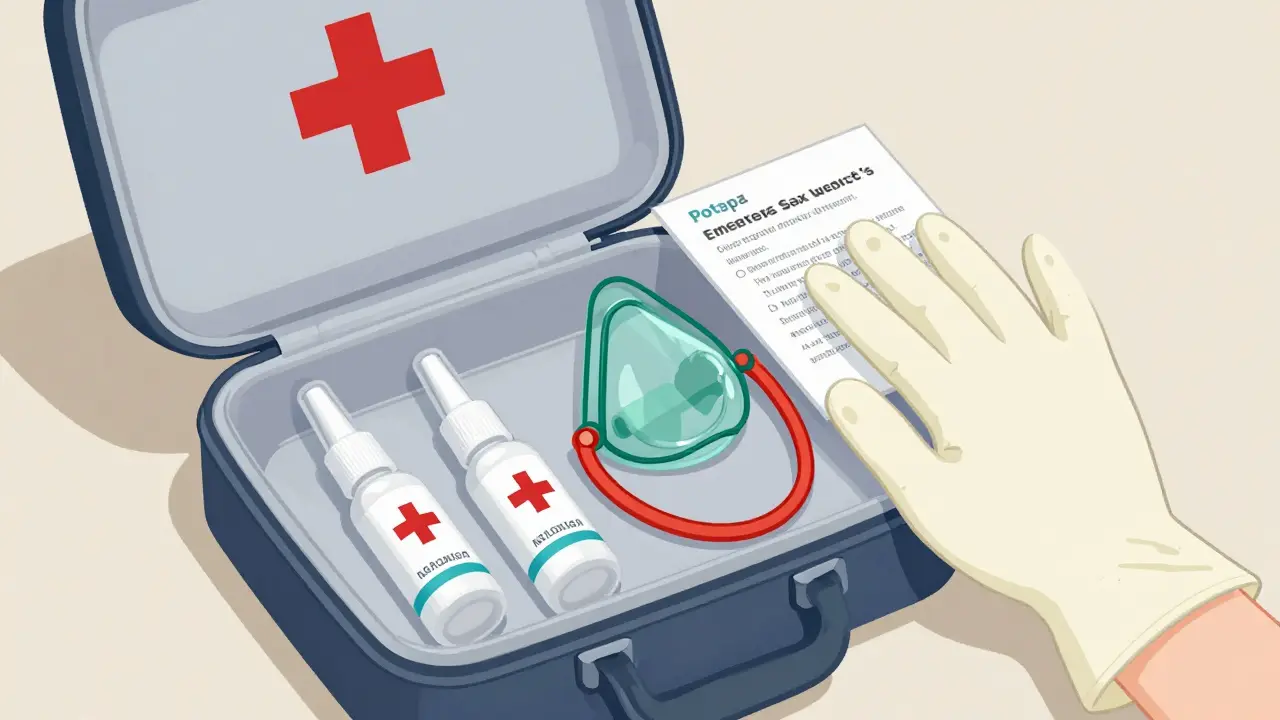
Your kit should contain more than just the medication. Consider the following components:
- Two doses of Naloxone: Preferably intranasal sprays. Store them at room temperature, away from direct sunlight and extreme heat. Check expiration dates every six months and replace kits every 18-24 months.
- Rescue Breathing Bag (Pocket Mask): This is critical. Naloxone reverses the chemical blockade, but it does not restart breathing instantly. Rescue breathing provides the oxygen needed to prevent brain damage while the drug takes effect. The American Heart Association specifies that rescue breathing must begin within 1 minute of recognition.
- Gloves: Disposable nitrile gloves protect you from bodily fluids during administration and rescue breathing.
- Emergency Contact List: Keep numbers for local EMS, poison control, and trusted family members taped inside the kit box.
- Instructions Card: Print clear, step-by-step instructions on how to administer the spray and perform rescue breathing. Include diagrams if possible.
If you live in a rural area, where emergency response times average 23.4 minutes compared to 8.7 minutes in urban areas, consider adding a third dose to your kit. The National Safety Council recommends that workplaces maintain kits within 100 feet of high-risk areas, emphasizing that proximity saves lives.
Step-by-Step Response Protocol
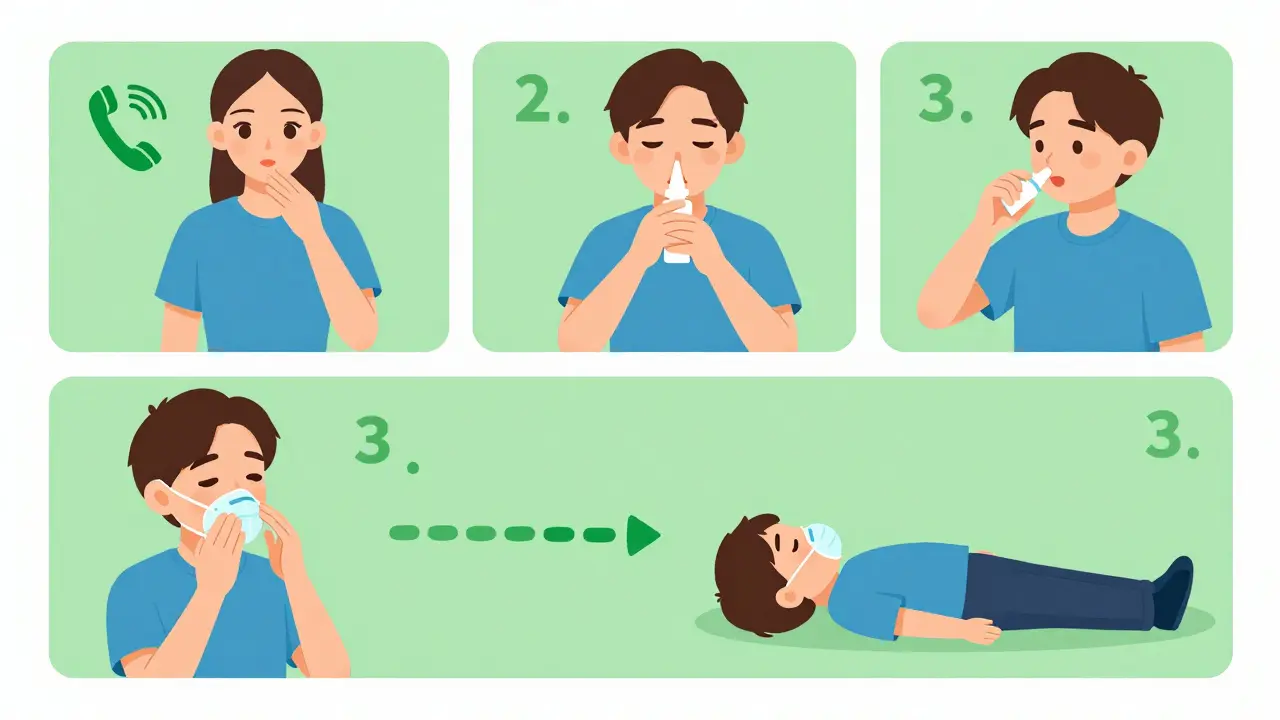
Panic is the enemy of effective rescue. Having a memorized protocol allows you to act instinctively. Here is the sequence of actions recommended by major health organizations:
| Step | Action | Key Details |
|---|---|---|
| 1 | Recognize Signs | Unresponsiveness, slow/irregular breathing, pinpoint pupils, blue/gray lips or fingernails. |
| 2 | Call 911 | Do this immediately. Stay on the line if possible. Good Samaritan laws in many states protect callers from prosecution. |
| 3 | Administer Naloxone | Tilt head back, insert nozzle fully into one nostril, and press plunger firmly. Do not remove until empty. |
| 4 | Rescue Breathing | If not breathing normally, give 1 breath every 5 seconds. Use head tilt-chin lift maneuver. |
| 5 | Monitor & Repeat | If no response after 2-3 minutes, administer second dose. Continue rescue breathing until help arrives. |
| 6 | Recovery Position | If breathing resumes, roll person onto their side to prevent aspiration. Monitor for 2-3 hours. |
Note that recent data suggests synthetic opioids like carfentanil may require higher doses, up to 10mg, to reverse. This means you might need to administer multiple sprays. Do not hesitate to use additional doses if there is no improvement after the initial attempt. The priority is maintaining oxygen flow to the brain.
Training and Proficiency
Owning naloxone is only half the battle. Knowing how to use it under pressure is the other. The National Safety Council’s Respond Ready program indicates that just 20 minutes of hands-on training achieves 92.4% correct administration technique in post-training assessments. Without practice, muscle memory fails when adrenaline spikes.
You should seek out local training opportunities offered by:
- Community health centers
- Harm reduction organizations
- Local pharmacies (many offer free brief demonstrations)
- Online certification courses from recognized bodies like the American Red Cross
Focus specifically on rescue breathing techniques. Studies show that 78% of successful home reversal narratives mention rescue breathing as a critical factor. Many people assume naloxone alone is sufficient, but if the airway is blocked or breathing has stopped completely, oxygen deprivation causes irreversible brain damage within minutes. Practice the head-tilt chin-lift maneuver and learn how to create a seal with a pocket mask.
Addressing Stigma and Legal Concerns
Despite medical consensus, stigma remains a significant barrier. Dr. Anna Lembke of Stanford University noted that only 32.4% of primary care physicians routinely discuss naloxone with high-risk patients due to persistent stigma. Many patients fear that carrying naloxone admits to addiction or invites police scrutiny.
It is vital to understand the legal landscape. As of 2023, 47 states have enacted naloxone access laws. Thirty-three states have implemented standing orders, allowing pharmacies to dispense naloxone without an individual prescription. Furthermore, federal and state Good Samaritan laws generally protect bystanders who call 911 and administer naloxone in good faith from criminal prosecution related to minor drug possession charges. Knowledge of these protections can empower individuals to act without fear.
Distribution must be decoupled from substance use status. As emphasized by FDA officials, naloxone is a public health tool, similar to an EpiPen for allergies. Anyone exposed to opioids-whether through prescription pain management, accidental ingestion by children, or workplace exposure-benefits from having it nearby.
Maintenance and Updates
A readiness plan is not a set-it-and-forget-it task. Medications expire. Contacts change. Protocols evolve. Schedule a quarterly check-up for your naloxone kit:
- Check Expiration Dates: Replace any expired medications immediately. Heat and humidity can degrade efficacy faster than listed dates, so store kits in cool, dry places.
- Test Equipment: Ensure rescue masks are clean and intact. Replace gloves if packaging is compromised.
- Review Training: Watch a refresher video annually. Share updates with all household members or employees who might need to respond.
- Update Contacts: Verify that emergency numbers are current and that designated contacts know their role.
Additionally, stay informed about changes in the opioid supply. The Johns Hopkins Bloomberg School of Public Health analysis highlights that 87.2% of overdose deaths in 2022 involved fentanyl or its analogs. This shifting landscape means that dosing requirements may increase over time, reinforcing the need for multiple doses in your kit.
Workplace and Community Integration
The scope of naloxone readiness extends beyond the home. Workplace overdose deaths have increased by 619% since 2011, now accounting for 9.6% of all occupational fatalities. OSHA’s 2023 guidance recommends naloxone availability in all workplaces with more than 15 employees, particularly in industries like construction, manufacturing, and healthcare where workers may take prescription opioids for pain management.
Employers should integrate naloxone into broader safety protocols. This includes:
- Providing training for first aid responders
- Posting clear signage indicating kit locations
- Establishing policies that encourage reporting without fear of job loss
- Partnering with local health departments for bulk purchasing and distribution support
Community-wide efforts amplify impact. Programs like South Carolina’s free naloxone kits distributed 12,457 kits in Q1 2023, resulting in 1,869 reported reversals. Advocating for local distribution programs helps create a safety net that protects everyone, regardless of personal risk factors.
How long does naloxone last in the body?
Naloxone typically lasts between 30 to 90 minutes. This is significantly shorter than many opioids, especially long-acting ones like methadone or potent synthetics like fentanyl. This discrepancy means that after administering naloxone, the person must be monitored for at least 2-3 hours. If they stop breathing again, additional doses of naloxone may be required until emergency medical services arrive.
Can I buy naloxone without a prescription?
Yes. In March 2023, the FDA approved the first over-the-counter naloxone nasal spray (NARCAN®). This means you can purchase it directly from pharmacy shelves without a doctor's prescription. Additionally, 33 states have standing orders that allow pharmacists to dispense naloxone without an individual prescription, even for prescription-only formulations.
What if the person doesn't wake up after using naloxone?
If there is no response after 2-3 minutes, administer a second dose. Wait another 2-3 minutes. If still unresponsive, administer a third dose if available. Simultaneously, continue rescue breathing. Lack of response could indicate a non-opioid overdose, severe respiratory compromise, or the presence of extremely potent synthetic opioids requiring higher doses. Always keep calling 911 for further instruction.
Is naloxone safe for pregnant women?
Yes. Saving the mother's life is the priority, which indirectly saves the fetus. Naloxone does not cross the placenta in significant amounts to cause harm to the baby. Reversing maternal respiratory depression restores oxygen supply to both the mother and the fetus, preventing hypoxic injury.
Does naloxone trigger withdrawal symptoms?
Yes, if the person is physically dependent on opioids, naloxone will precipitate acute withdrawal. Symptoms include nausea, vomiting, agitation, sweating, and rapid heart rate. While uncomfortable and distressing, these symptoms are not life-threatening. The immediate danger of respiratory arrest outweighs the discomfort of withdrawal. Comfort the person and monitor them closely until emergency help arrives.
