
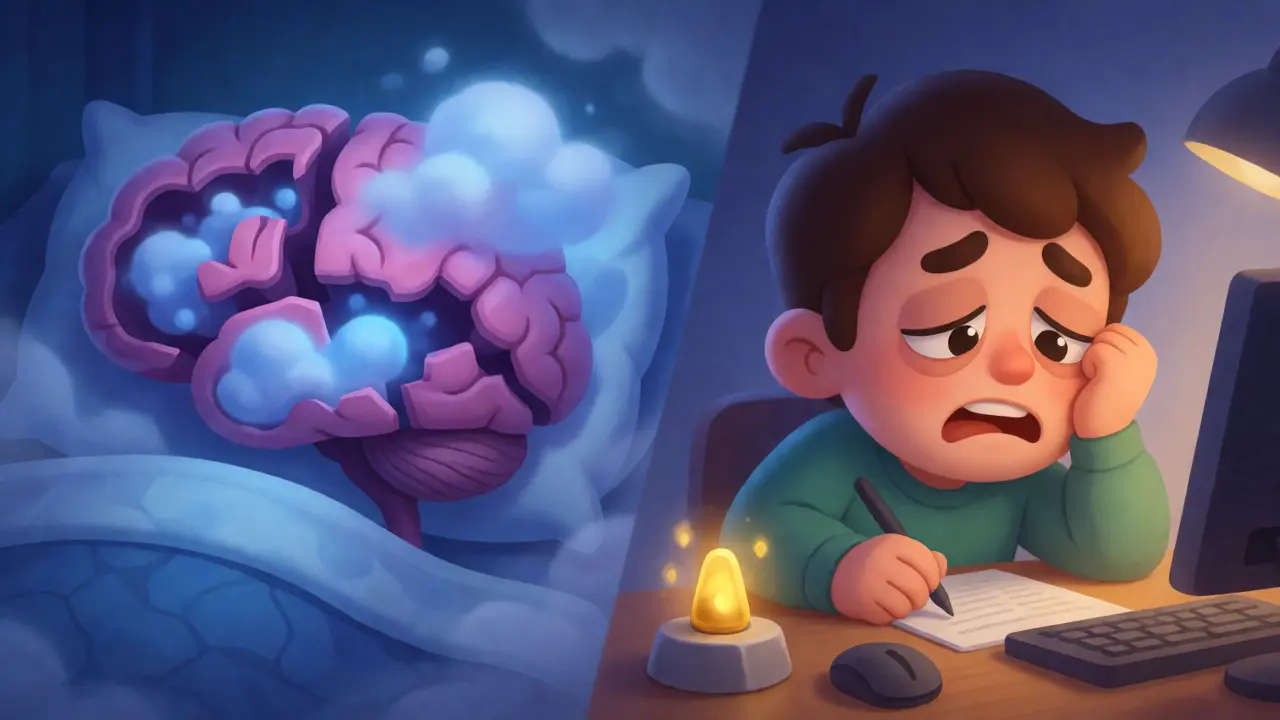
Imagine trying to grade a stack of papers while your eyelids feel like they’re made of lead. You fight it for ten minutes, maybe twenty, but eventually, you just... stop. You wake up five minutes later feeling slightly better, only for the fog to roll back in an hour later. If this sounds familiar, you might be dealing with Narcolepsy, a chronic neurological disorder that breaks the brain’s ability to regulate sleep-wake cycles properly. It’s not just about being tired; it’s about an irresistible urge to sleep that hits during meetings, drives, or conversations, regardless of how well you slept the night before.
The core issue isn’t laziness-it’s biology. In most cases, specifically Narcolepsy Type 1, the brain lacks hypocretin (also known as orexin), a neurotransmitter produced in the hypothalamus that acts as the switch keeping you awake. Without enough of it, your brain can’t hold the "awake" state steady. According to the American Academy of Sleep Medicine, this affects roughly 1 in 2,000 people globally. While onset often happens between ages 10 and 30, a quarter of cases don’t show up until after 40, meaning many adults are misdiagnosed for years. The good news? We have effective tools to manage the primary symptom: excessive daytime sleepiness (EDS).
Why Your Brain Can’t Stay Awake
To fix the problem, you need to understand what’s broken. Normal sleep involves a smooth transition between stages. In narcolepsy, those boundaries blur. You might drop straight into REM sleep-the dreaming stage-within minutes of falling asleep. This intrusion of dream states into waking life causes the classic symptoms beyond just drowsiness:
- Cataplexy: Sudden muscle weakness triggered by strong emotions like laughter or surprise. This is exclusive to Type 1 narcolepsy and affects about 70% of patients.
- Sleep Paralysis: Being conscious but unable to move when falling asleep or waking up. It lasts seconds to minutes and feels terrifying, though it’s harmless.
- Hallucinations: Vivid, often scary images or sensations occurring at sleep transitions. About 75% of patients experience these hypnagogic hallucinations.
Diagnosis requires more than a self-report. Doctors use a Multiple Sleep Latency Test (MSLT) to measure how quickly you fall asleep during the day. A mean sleep latency of ≤8 minutes plus two instances of entering REM sleep early (SOREMPs) confirms the diagnosis. Alternatively, a lumbar puncture showing low hypocretin-1 levels (≤110 pg/mL) in spinal fluid provides definitive proof for Type 1.
The First Line of Defense: Modafinil and Armodafinil
When treating EDS, doctors usually start with wakefulness-promoting agents rather than traditional stimulants. Why? Because they offer a cleaner profile with fewer side effects. Modafinil (brand name Provigil) has been the gold standard since its FDA approval in 1998. Unlike amphetamines, it doesn’t flood your system with dopamine all at once. Instead, it gently inhibits dopamine reuptake and interacts with histamine systems to keep you alert.
In clinical trials, about 70% of patients on modafinil saw significant improvements in their Epworth Sleepiness Scale (ESS) scores-a standard metric where higher numbers mean sleepier. Typical dosing starts at 200 mg upon waking, potentially increasing to 400 mg if needed. Its successor, Armodafinil (Nuvigil), is essentially the R-enantiomer of modafinil. It stays in your system longer (15-hour half-life vs. 12 hours), allowing for once-daily dosing which helps avoid the "crash" some people feel in the afternoon.
Patient reviews from platforms like MyNarcolepsyTeam highlight why these drugs remain popular. Users frequently describe the effect as "clean energy without jitters." However, tolerance can develop. Some long-term users report diminishing efficacy after 18 months, requiring dose adjustments or switching medications.
Traditional Stimulants: Potent but Tricky
If modafinil doesn’t cut it, or if you have severe EDS (ESS score >16), doctors might reach for traditional CNS stimulants. These include methylphenidate (Ritalin) and mixed amphetamine salts (Adderall). They work by directly boosting dopamine and norepinephrine levels, providing a stronger wakefulness punch.
| Medication Class | Examples | Efficacy (ESS Reduction) | Side Effect Profile | Abuse Potential |
|---|---|---|---|---|
| Wakefulness Agents | Modafinil, Armodafinil | Moderate (~5 points) | Headaches, nausea; low cardiac risk | Low |
| Traditional Stimulants | Methylphenidate, Amphetamines | High (~7.8 points) | Anxiety, appetite loss, increased BP/HR | High (Schedule II) |
| Newer Agents | Solriamfetol, Pitolisant | High/Moderate | Hypertension (Solriamfetol); Insomnia (Pitolisant) | Low/Moderate |
The trade-off here is real. While traditional stimulants boast an 80% efficacy rate for severe cases, they come with baggage. Up to 45% of patients discontinue them within a year due to side effects like anxiety, emotional blunting, or cardiovascular strain. A 2020 study noted average blood pressure increases of 2-3 mmHg and heart rate jumps of 5-8 bpm. For someone with pre-existing heart conditions, this requires careful monitoring via quarterly ECGs.

Newer Options: Beyond the Classics
Pharmacology hasn’t stood still. Two newer classes have entered the arena, offering alternatives for those who can’t tolerate older drugs.
Solriamfetol (Sunosi) is a dopamine and norepinephrine reuptake inhibitor approved in 2019. It offers dose-dependent efficacy, reducing ESS scores by up to 9.8 points at higher doses. Crucially, it has minimal abuse potential compared to amphetamines. However, it carries a warning for hypertension; about 7% of patients see their blood pressure exceed 140/90 mmHg, so regular checks are mandatory.
Pitolisant (Wakix) works differently. As a histamine H3 receptor inverse agonist, it boosts natural histamine production in the brain, which promotes wakefulness. Approved in 2019, it shows efficacy comparable to modafinil but with a different side-effect profile-less headache, but potentially more insomnia if taken too late in the day. It’s also non-scheduled, making prescriptions easier to manage without DEA hurdles.
Tackling Cataplexy and Nighttime Issues
Stimulants help you stay awake, but they don’t fix everything. If you suffer from cataplexy (the sudden muscle collapse), sodium oxybate (Xyrem/Xywav) remains the top choice. Taken at night, it consolidates fragmented sleep and dramatically reduces cataplexy episodes-by up to 85% in some trials. It’s not a stimulant, but by fixing nighttime sleep architecture, it indirectly improves daytime alertness.
Behavioral strategies are just as critical as pills. Scheduled short naps (15-20 minutes) every few hours can reset your alertness clock. Consistent sleep hygiene matters, too. Despite having EDS, narcoleptics often have disrupted nighttime sleep, waking up multiple times. Treating this fragmentation with sodium oxybate or behavioral changes helps reduce the overall sleep debt driving daytime crashes.

Real-World Challenges and Monitoring
Starting treatment is rarely straightforward. Insurance prior authorization is a major hurdle; nearly 78% of patients face delays averaging two weeks just to get modafinil approved. Once you’re on medication, monitoring is key. Monthly assessments of your ESS score help track progress. If you’re on traditional stimulants, annual cardiovascular evaluations are non-negotiable.
Be aware of therapeutic inertia. Studies show 42% of patients stay on suboptimal doses for over six months because neither they nor their doctor push for adjustment. If you’re still nodding off during lectures or meetings, speak up. Dose escalation or switching to a second-line agent like solriamfetol might be necessary.
Also, consider the workplace. Under the Americans with Disabilities Act, many employers must provide accommodations, such as flexible break times for scheduled naps. Documenting your condition and discussing needs proactively can prevent job-related stress, which itself triggers cataplexy.
The Future: Targeting the Root Cause
Current treatments manage symptoms, not the disease. Researchers are actively pursuing therapies that address the underlying autoimmune destruction of hypocretin cells in Type 1 narcolepsy. Early trials of orexin receptor agonists, like TAK-994, showed promise but faced setbacks due to liver toxicity concerns. Meanwhile, lower-sodium formulations of oxybate are rolling out to improve tolerability.
For now, the goal is quality of life. With the right mix of medication, napping, and lifestyle tweaks, most people with narcolepsy maintain full-time careers and active social lives. It’s a marathon, not a sprint, but the toolkit available today is far more robust than it was even a decade ago.
Does modafinil cause addiction?
Modafinil has a much lower potential for abuse compared to traditional stimulants like Adderall or Ritalin. It is classified as a Schedule IV controlled substance in the US, indicating a low risk of dependence. Most patients do not experience withdrawal symptoms when stopping the medication abruptly, unlike amphetamines.
Can I drive if I take narcolepsy medication?
Yes, provided your excessive daytime sleepiness is well-controlled. Laws vary by region, but generally, you must demonstrate that your medication prevents unexpected sleep attacks. Regular check-ups with your sleep specialist and documenting stable ESS scores are often required to maintain your license.
What is the difference between Type 1 and Type 2 narcolepsy?
The main difference is cataplexy. Type 1 includes cataplexy (sudden muscle weakness triggered by emotion) and/or low hypocretin levels. Type 2 presents with excessive daytime sleepiness and other symptoms but lacks cataplexy and typically has normal hypocretin levels. Treatment for sleepiness is similar, but Type 1 may require additional meds for cataplexy.
How long does it take for modafinil to work?
Effects are usually felt within 1-2 hours of taking the first dose. However, finding the optimal dose and assessing long-term efficacy can take several weeks. Doctors typically evaluate response after 2-4 weeks before adjusting dosage or switching medications.
Are there natural alternatives to stimulants?
While no supplement replaces prescription medication for moderate-to-severe narcolepsy, strategic napping, regular exercise, and strict sleep hygiene significantly help. Some patients try caffeine strategically, but relying solely on supplements often leads to inadequate control of sleep attacks.


Modafinil changed my life but the insurance battle was brutal