
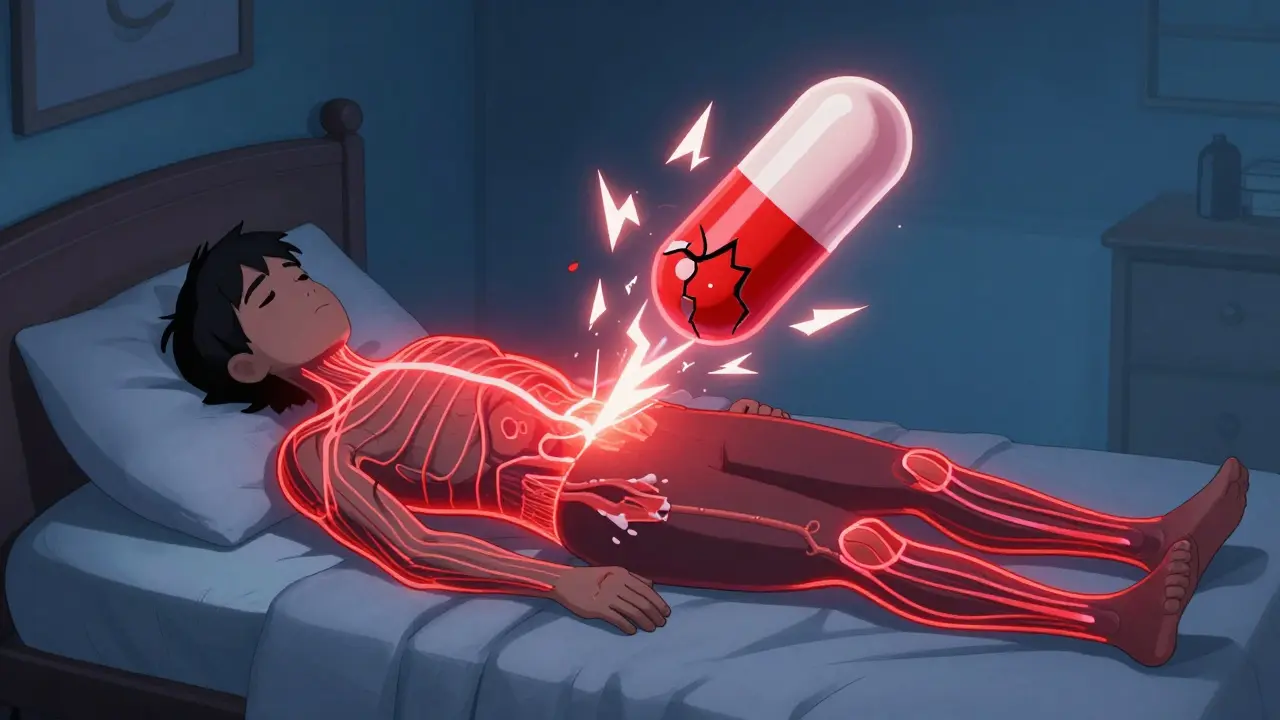
Imagine you’re on opioids for chronic back pain. At first, they help. But over time, the pain spreads. It starts hurting more than before. Even light touches feel unbearable. You ask your doctor for a higher dose - and they agree. But instead of getting relief, your pain gets worse. This isn’t tolerance. It’s not your condition progressing. It’s something else: opioid-induced hyperalgesia.
What Exactly Is Opioid-Induced Hyperalgesia?
Opioid-induced hyperalgesia, or OIH, is a strange twist in how the body responds to opioids. Instead of reducing pain, long-term opioid use can make you more sensitive to it. It’s not a myth. It’s been documented since 1971, when researchers found that rats given repeated morphine injections became more sensitive to pain. Since then, human studies have confirmed it. About 2% to 15% of people on long-term opioids develop OIH. In some clinics, up to 30% of cases once labeled as "tolerance" were actually OIH.
Here’s the key difference: With tolerance, you need more opioid to get the same pain relief. With OIH, more opioid makes your pain worse. You might notice:
- Pain spreading beyond the original area
- Pain that feels sharper, more burning, or electric
- Allodynia - pain from things that shouldn’t hurt, like a light breeze or clothes brushing your skin
- Pain getting worse when you increase your dose
This isn’t addiction. It’s a neurobiological change. Your nervous system gets stuck in overdrive. The more opioids you take, the more your brain and spinal cord amplify pain signals instead of calming them.
Why Does This Happen?
The science behind OIH is complex, but here’s what we know for sure:
- NMDA receptor activation: Opioids trigger NMDA receptors in the spinal cord. These are normally involved in learning and memory - but when overstimulated, they make pain signals louder. This is why ketamine, an NMDA blocker, helps treat OIH.
- Toxic metabolites: Some opioids, like morphine and hydromorphone, break down into substances that build up in the body, especially in people with kidney problems. These metabolites can directly irritate nerve cells.
- Dynorphin surge: Your body releases dynorphin, a natural pain chemical, in response to opioids. But dynorphin doesn’t calm pain - it makes it worse.
- Genetic factors: People with certain variations in the COMT gene (which affects how your body processes pain signals) are more likely to develop OIH.
- Descending facilitation: Your brain starts sending "go ahead, feel more pain" signals down the spinal cord instead of "stop, ease up" ones.
These mechanisms don’t just happen in labs. They show up in real patients - especially those on high doses of morphine (>300 mg/day), hydromorphone, or those with kidney disease.
How Do You Know It’s OIH and Not Something Else?
This is where things get tricky. OIH looks a lot like:
- Tolerance: Needing more for the same effect
- Disease progression: Cancer spreading, arthritis worsening
- Withdrawal: Pain returning when the drug wears off
So how do you tell them apart?
Look for these red flags:
- Pain worsens after a dose increase - not improves
- Pain becomes diffuse, not localized
- Allodynia appears out of nowhere
- No signs of disease progression on imaging or exams
- Pain improves after reducing the opioid dose
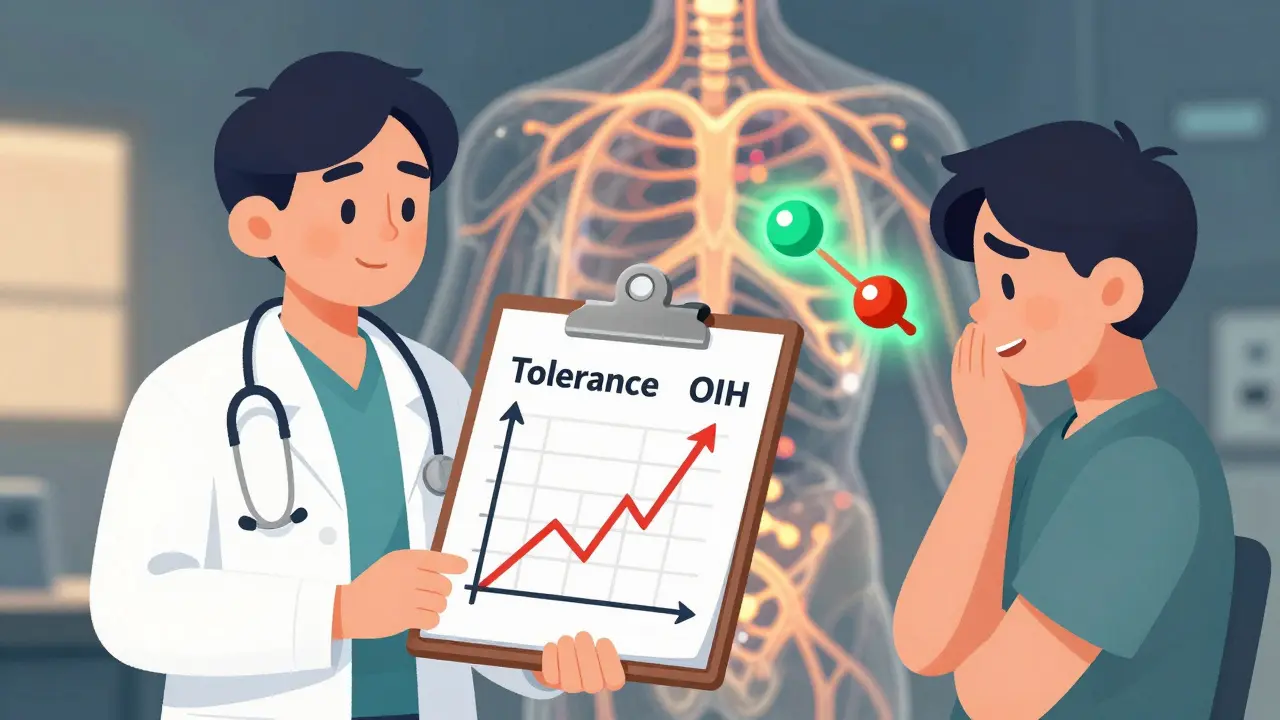
There’s no single blood test. Diagnosis is mostly clinical. But tools like the Opioid-Induced Hyperalgesia Questionnaire (OIHQ) - validated in 2017 - can help. It has 85% sensitivity and 78% specificity. In practice, doctors use a mix of history, physical exam, and response to dose changes.
What Happens If You Keep Increasing the Dose?
It gets worse.
Many patients get caught in a vicious cycle: pain increases → doctor increases dose → pain gets even worse → dose goes up again. This can lead to dangerous side effects: constipation, respiratory depression, addiction risk, and more. Some patients end up on 1000 mg of morphine a day - not because it works, but because no one recognized OIH.
That’s why early recognition matters. The longer OIH goes untreated, the harder it is to reverse. Studies show it can take 4 to 8 weeks for pain levels to drop after stopping the escalation.
How Do You Treat It?
The good news? OIH is treatable - and often reversible.
1. Reduce the opioid dose
This is the first step. Don’t stop cold turkey. Cut the dose by 10% to 25% every 2 to 3 days. Many patients feel better within a week. Pain may spike briefly at first - that’s normal. It’s your nervous system adjusting.
2. Switch opioids
Not all opioids are the same. Methadone is often a smart choice. It blocks NMDA receptors, just like ketamine. Buprenorphine is another option - it has a ceiling effect, which reduces the risk of overstimulating pain pathways. Avoid morphine, hydromorphone, and oxymorphone if OIH is suspected. Their metabolites are more likely to trigger it.
3. Add NMDA blockers
Ketamine infusions (0.1-0.5 mg/kg/hour) have been shown in clinical trials to reverse OIH within hours. It’s not a cure, but it breaks the cycle. Some clinics use low-dose oral ketamine, though evidence is still emerging.
4. Use non-opioid pain relievers
Gabapentin (300-1800 mg three times daily) and pregabalin calm overactive nerves. Clonidine (0.1-0.3 mg twice daily) reduces sympathetic overdrive. These aren’t just add-ons - they’re core treatments.
5. Add non-drug therapies
Physical therapy helps retrain movement patterns. Cognitive behavioral therapy (CBT) helps patients cope with pain without relying on opioids. Mindfulness and graded activity reduce fear of movement - a big driver of chronic pain.
What Do Experts Say?
Dr. Stephan Schug from the University of Sydney warns: "OIH should not be the first diagnosis." He’s right. You must rule out infection, tumor growth, nerve damage, or other causes first. But if all else checks out - and pain worsens with more opioids - OIH is likely.
Dr. J. David Clark from Stanford says OIH forces clinicians to rethink the old rule: "More opioid = more relief." That rule fails here. In fact, less opioid can mean more relief.
Some skeptics, like Dr. Perry Fine, argue OIH is overdiagnosed. He points out that most proof comes from lab studies using electric shocks on healthy volunteers - not real chronic pain patients. But real-world data from cancer clinics and pain centers tells a different story. When doses are lowered, pain improves. That’s not placebo.
What’s Changing in 2026?
Things are moving fast:
- The FDA now requires opioid labels to mention OIH as a possible side effect.
- 78% of pain management fellowships now teach OIH recognition.
- Two genetic tests for COMT variants (which predict OIH risk) are launching in Q2 2025.
- Three new drugs targeting NMDA or dynorphin pathways are in Phase II/III trials.
- 10.1 million Americans still take long-term opioids - meaning OIH isn’t going away.
Pain specialists are finally catching up. In 2010, only 30% of clinics checked for OIH. By 2024, that number jumped to 65%. And with opioid prescriptions down 44% since 2016, the focus is shifting from "how much" to "how wisely."
What Should You Do If You Suspect OIH?
If you’re on opioids and your pain is getting worse:
- Don’t increase your dose. Talk to your doctor first.
- Track your pain: Use a journal. Note when it worsens, what triggers it, and how your dose changes.
- Ask: "Could this be OIH?" Bring up the OIHQ tool if your clinic uses it.
- Request a taper plan. Don’t rush, but don’t delay.
- Ask about alternatives: gabapentin, clonidine, ketamine, physical therapy.
Patients who stick with a slow, guided reduction often see pain levels drop by 40% to 60% within two months. Many stop opioids entirely and feel better than they did before they started.
Final Thought
Opioid-induced hyperalgesia isn’t rare. It’s misunderstood. It’s not a failure of treatment - it’s a sign that the treatment itself is causing harm. Recognizing it isn’t about stopping opioids. It’s about using them smarter. When pain gets worse with more drugs, the answer isn’t more drugs. It’s a different strategy. And that strategy can bring real relief - without the next dose.
Can opioid-induced hyperalgesia happen with low doses of opioids?
Yes, though it’s less common. OIH is most often seen with high doses - especially above 300 mg of morphine daily - but it can occur at lower doses, particularly in people with kidney problems, genetic risks (like COMT mutations), or those on long-term therapy (more than 8 weeks). Even low-dose patches or daily oral opioids can trigger it in susceptible individuals.
Is OIH the same as opioid tolerance?
No. Tolerance means you need more of the drug to get the same pain relief. With OIH, more drug makes your pain worse. Tolerance doesn’t cause allodynia or diffuse pain. Both can happen at the same time, which makes diagnosis harder. But the key clue: if increasing the dose makes pain worse, it’s likely OIH.
Can I stop opioids cold turkey if I have OIH?
No. Stopping suddenly can cause severe withdrawal, including increased pain, anxiety, nausea, and even seizures. OIH is treated by slowly reducing the dose - not stopping abruptly. A typical plan lowers the dose by 10% to 25% every 2 to 3 days. This gives your nervous system time to reset.
Does ketamine really help with OIH?
Yes. Ketamine blocks NMDA receptors, which are overactive in OIH. Studies show that low-dose IV ketamine (0.1-0.5 mg/kg/hour) can reduce pain within hours. Some patients get relief after just one infusion. Oral ketamine is being studied, but IV is still the gold standard for acute reversal. It’s not a long-term fix, but it breaks the cycle so other treatments can work.
Why do some doctors still miss OIH?
Because it’s counterintuitive. Doctors are trained to give more opioid when pain increases. OIH flips that logic. Many weren’t taught it in medical school. Also, patients often don’t report allodynia or diffuse pain clearly. Without a high index of suspicion, OIH gets mistaken for disease progression or tolerance. But awareness is rising - 65% of pain clinics now screen for it.
Are there any tests to confirm OIH?
There’s no single blood test, but quantitative sensory testing (QST) can help. It measures how sensitive you are to heat, cold, pressure, or touch before and after an opioid dose. In OIH, pain thresholds drop - meaning you feel pain more easily after taking the drug. The OIHQ questionnaire is also widely used in clinics. It’s not perfect, but it’s practical.
Can OIH come back after treatment?
Yes, if you restart high-dose opioids. Once your nervous system has been sensitized, it’s more vulnerable. Many patients who recover from OIH avoid opioids entirely. If opioids are needed again, doctors use lower doses, switch to safer options like buprenorphine, or combine them with NMDA blockers. Prevention is better than cure.
Is OIH more common in certain types of pain?
It’s most common in neuropathic pain (like diabetic nerve pain or post-surgical nerve damage) and cancer pain. But it can occur in any chronic pain condition - back pain, fibromyalgia, arthritis - if opioids are used long-term. The risk goes up with higher doses, longer duration, and kidney impairment.
How long does it take to recover from OIH?
Improvement usually starts in 1 to 2 weeks after reducing the opioid dose. Full recovery often takes 4 to 8 weeks. Some patients need up to 12 weeks if they’ve been on high doses for years. Patience is key. Pain may fluctuate during this time, but the trend should be downward.
What’s the best opioid to switch to if I have OIH?
Methadone and buprenorphine are top choices. Methadone blocks NMDA receptors and has a long half-life, making it ideal for stable pain control. Buprenorphine has a ceiling effect - meaning it doesn’t keep increasing pain sensitivity beyond a certain dose. Avoid morphine, hydromorphone, and oxymorphone - they’re more likely to trigger OIH due to their toxic metabolites.


bro i was on oxycodone for 2 years and my back started hurting worse than before. i thought i was just getting worse. turned out it was oih. doc cut my dose by 30% and boom. pain dropped like a rock. no more burning legs. just chill. 🤯