
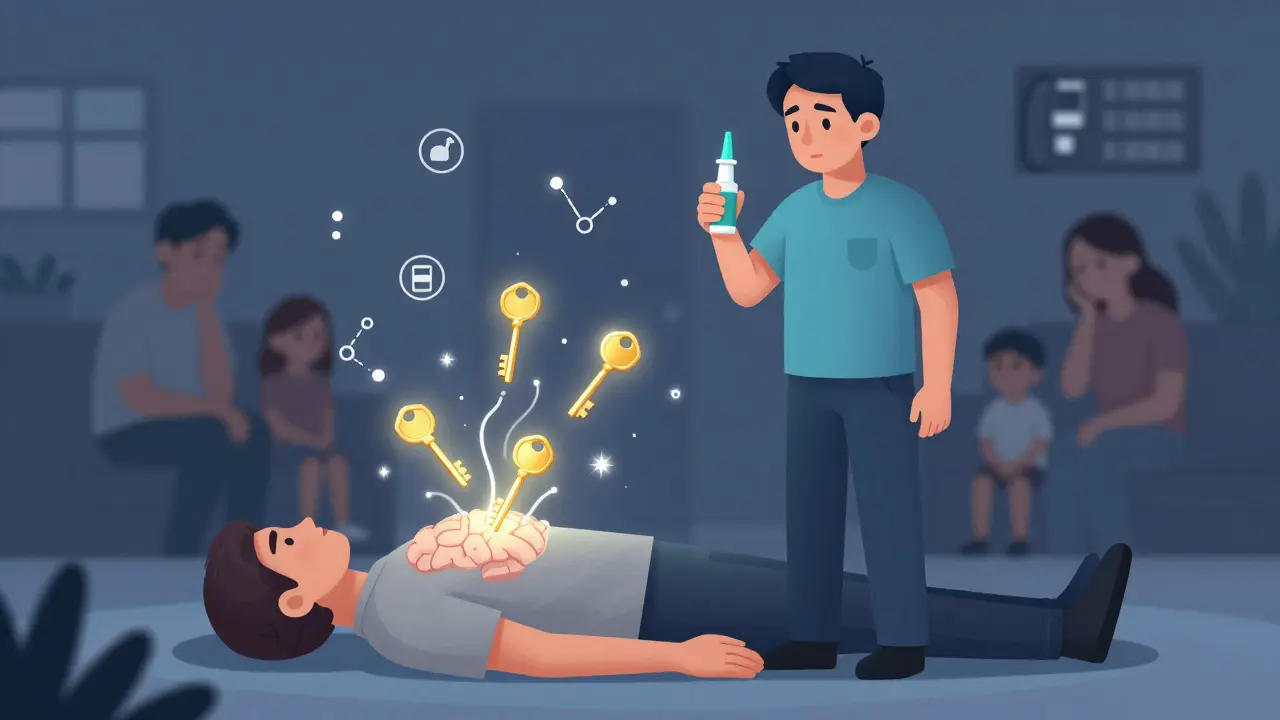
Every year, more than 100,000 people in the U.S. die from opioid overdoses. Most of these deaths happen because someone doesn’t get help in time. But here’s the truth: naloxone can bring someone back from the brink-often in under five minutes. It’s not magic. It’s science. And it’s available to anyone who needs it.
How Naloxone Stops an Overdose
Naloxone works like a key that fits perfectly into the same lock as opioids. When someone overdoses, drugs like heroin, fentanyl, or oxycodone bind tightly to opioid receptors in the brain and shut down breathing. Naloxone rushes in, kicks those drugs out, and unlocks the receptors again. Within minutes, the person starts breathing on their own.
It doesn’t matter if the person is addicted or just took a single pill. Naloxone doesn’t care. It only reacts when opioids are present. If there’s no opioid in the system, it does nothing. That’s why it’s so safe-even someone with no medical training can use it.
The most common form today is the nasal spray, like Narcan. You just tilt the head back, insert the nozzle into one nostril, and press the plunger. No needles. No training required. A 2021 study in the Journal of Addiction Medicine found that nasal spray reversed overdoses successfully in 85% of cases when used by bystanders. That’s better than injection, which works in about 78% of cases. Why? Because in a panic, most people can’t find a vein-but they can hold a spray.
Why One Dose Isn’t Always Enough
Here’s where things get tricky. Naloxone wears off in about 30 to 90 minutes. Many opioids, especially fentanyl and its analogs, last much longer. That means someone can wake up after naloxone is given… and then slip back into overdose once the naloxone leaves their system.
The CDC reports that in 2022, 40% of fentanyl overdoses required more than one dose of naloxone. That’s not rare. It’s expected. That’s why emergency services always tell you: after giving naloxone, stay with the person. Watch them. If they don’t wake up within 3 minutes, give another dose. And keep giving doses every 2 to 3 minutes until help arrives.
Some people worry that giving too much naloxone will hurt the person. It won’t. But it can make them sick. Naloxone doesn’t just reverse the overdose-it also triggers sudden opioid withdrawal. That means the person might vomit, shake, feel angry, or try to run away. That’s not the naloxone being dangerous. That’s their body screaming because the opioids are gone. Still, it’s better than being dead.
What Naloxone Can’t Do
Naloxone only works on opioids. Nothing else. If someone overdoses on alcohol, benzodiazepines like Xanax, or stimulants like cocaine or meth, naloxone won’t help. That’s a common misunderstanding. People think it’s a universal antidote. It’s not.
If you’re unsure what someone took, give naloxone anyway. If they’re overdosing on opioids, it could save their life. If they’re not, it won’t hurt them. The worst-case scenario is a few minutes of confusion. The best-case? A person goes home.
And naloxone doesn’t replace calling 911. Never. Even if they wake up, they still need medical care. Withdrawal can cause seizures. Rebound overdose can happen hours later. Hospitals can monitor oxygen levels, give fluids, and provide longer-term treatment. Naloxone is a bridge-not the finish line.
Who Should Have Naloxone?
You don’t have to be a drug user to need naloxone. You don’t have to be a doctor, nurse, or first responder. If you know someone who takes prescription opioids-even if it’s for back pain or after surgery-you should have naloxone on hand.
So should anyone who lives with or cares for someone with a history of substance use. Parents, partners, friends, coworkers. Anyone who might be the first person on the scene. In 2023, over 87% of naloxone reversals were performed by friends or family-not paramedics.
And it’s not just for people with addiction. People who take high-dose painkillers after surgery or for chronic conditions are at risk too. A single accidental dose, or mixing pills with alcohol or sleep meds, can be deadly. Naloxone is insurance. Cheap, simple, life-saving insurance.
Where to Get It and How Much It Costs
As of 2023, naloxone nasal spray is available over the counter at pharmacies across all 50 states. You don’t need a prescription. Walk in, ask for Narcan, and pay at the register.
Price? Around $130 to $150 for a two-dose kit. That sounds steep. But many community health centers, harm reduction programs, and even libraries give it out for free. Call your local public health department. Check with needle exchange programs. Some states even mail free kits to anyone who requests one.
Reddit users on r/OpiatesRecovery regularly share stories of people who reversed overdoses but couldn’t afford the kit. One person wrote: “I reversed three overdoses. Almost couldn’t afford the $140 spray.” That shouldn’t happen. If you can’t pay, ask for help. There are programs. You just have to look.
How to Store Naloxone So It Works When You Need It
Naloxone doesn’t need refrigeration. But it does need to be ready.
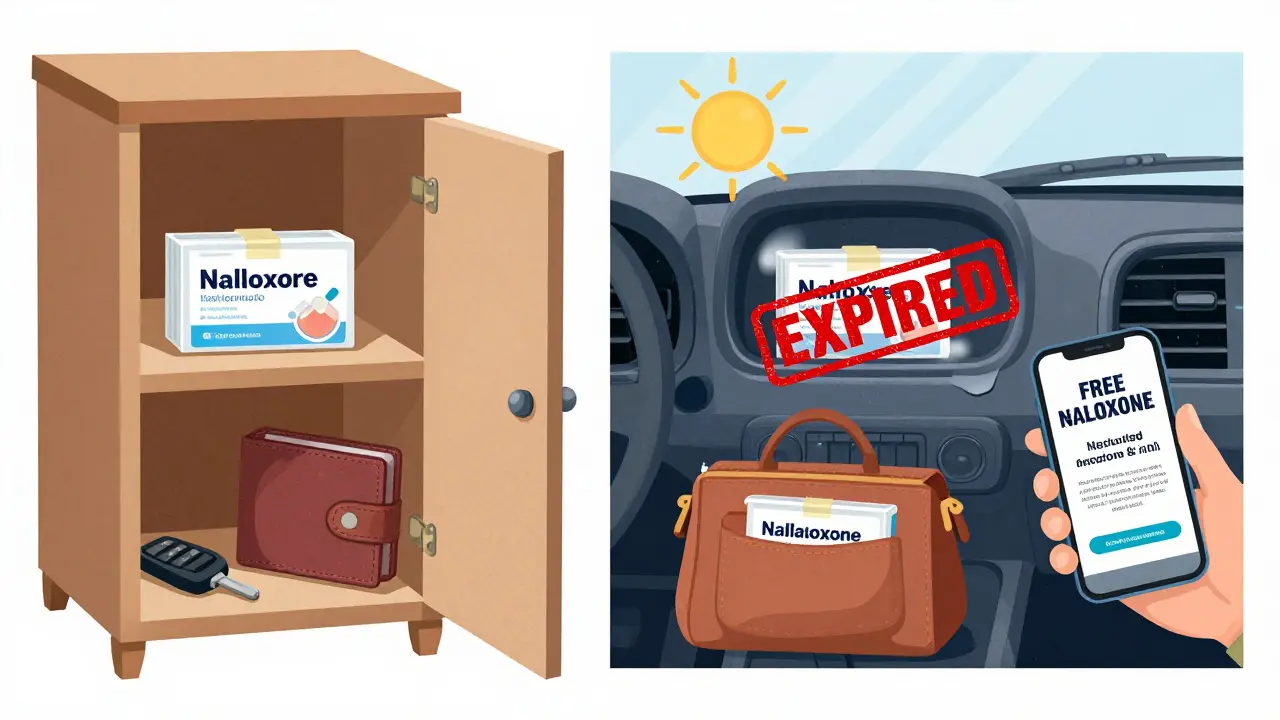
Keep it at room temperature-between 59°F and 86°F. Don’t leave it in a hot car or a freezing garage. Extreme heat or cold can break it down. Check the expiration date every few months. Most kits last two to three years.
Store it somewhere you’ll remember. Not tucked away in a drawer. Not buried under junk. Keep it with your car keys, in your purse, next to your wallet, or taped to the inside of your medicine cabinet. If you’re worried about kids finding it, use a locked box-but make sure you know where the key is.
And don’t wait until an emergency to practice. Open the box. Read the instructions. Watch a 2-minute YouTube video from the FDA or NIDA. Know how to use it before you need it. Most people panic in a crisis. If you’ve practiced, you won’t freeze.
What to Do After Giving Naloxone
After you give naloxone:
- Call 911 immediately-even if they wake up.
- Place them on their side in the recovery position. This keeps their airway open if they vomit.
- Stay with them. Don’t leave them alone.
- Be ready to give another dose if they don’t respond in 3 minutes.
- Wait for EMS. Even if they seem fine, they need to be checked.
One Reddit user, u/NaloxoneTrainer, summed it up: “I gave naloxone to my brother. He woke up, yelled at me, threw the spray at the wall. I didn’t care. He was breathing.” That’s the moment it matters. Not the anger. Not the mess. The breathing.
The Bigger Picture
Naloxone isn’t a cure for the opioid crisis. It’s a stopgap. A tool. A way to buy time so people can get treatment. But without it, thousands more would die every year.
The CDC found that every 10% increase in naloxone distribution leads to a 2.3% drop in overdose deaths. That’s real. That’s measurable. And it’s growing. In 2022, over 1.2 million naloxone kits were distributed through community programs. That’s up 300% from 2019.
The Biden administration just pledged $200 million to get even more kits into homes and community centers. New, higher-dose nasal sprays (8 mg) are now available for fentanyl overdoses. Research is underway for longer-lasting versions that could keep working for hours instead of minutes.
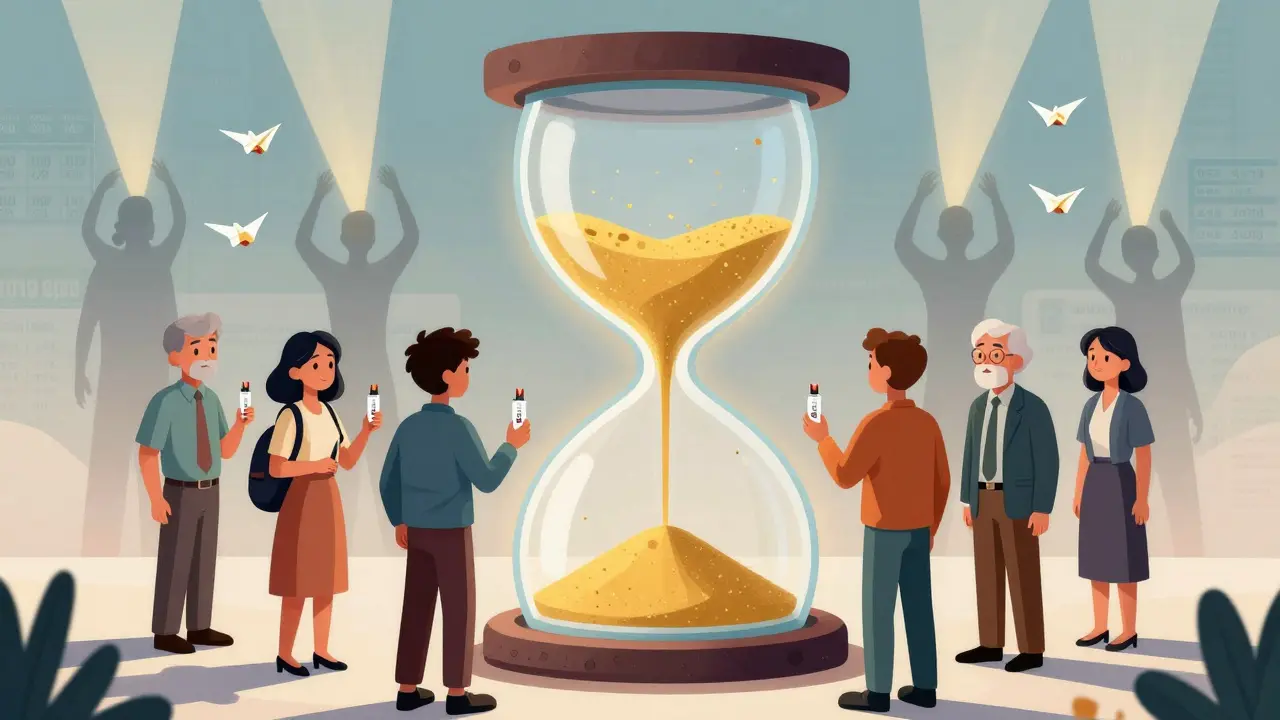
But none of that matters if no one has it. Or if no one knows how to use it. Or if people are too afraid to carry it because they think it’s only for “those people.”
It’s not. It’s for anyone. For your neighbor. Your sibling. Your coworker. Your child. For you.
Final Thought: You Don’t Need Permission to Save a Life
You don’t need a medical degree. You don’t need to be brave. You just need to be ready.
Go to your pharmacy. Ask for naloxone. Take it home. Put it where you can find it. Tell someone you care about where it is. Practice opening the box. Know what to do.
Because when the moment comes, you won’t have time to read the instructions. You’ll only have time to act. And if you’ve prepared, you might just be the reason someone lives to see tomorrow.


Naloxone is one of those things that should be in every household-like fire extinguishers or first-aid kits. I keep two in my glovebox, one in my wallet, and one taped to the inside of my medicine cabinet. It’s not about judging people-it’s about knowing that anyone can slip up. I’ve seen it happen: a guy on pain meds after a car accident, mixes it with a sleeping pill, and boom-stops breathing. No drama. No stigma. Just a spray and a prayer. And it works. Every time.
Don’t wait for permission. Don’t wait for a sign. Just get it. It’s cheaper than your monthly coffee habit. And honestly? If you’re not carrying it, you’re just one bad night away from regretting it.