
Orthostatic Hypotension Risk Calculator
Calculate your risk of experiencing dizziness or fainting when standing up based on your medications and age.
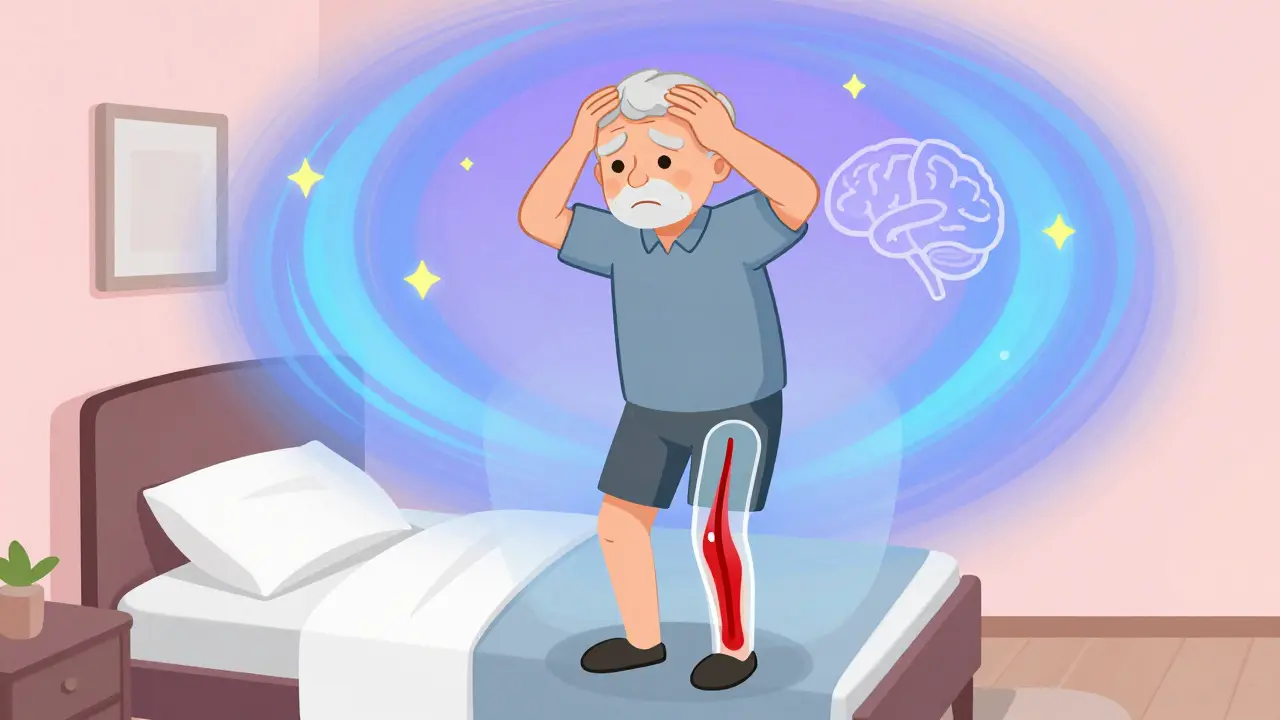
Have you ever stood up quickly and felt the room spin? Maybe your vision went dark for a second, or you felt like you were going to faint. If this happens often, especially after starting a new prescription, it might not just be "getting older." It could be orthostatic hypotension, also known as postural hypotension. This condition is defined by a sudden drop in blood pressure when you move from sitting or lying down to standing. Specifically, it’s a drop of more than 20 mm Hg in systolic pressure or 10 mm Hg in diastolic pressure within three minutes of standing. While it sounds technical, the feeling is very real: lightheadedness, weakness, or even fainting (syncope). And if you are taking multiple medications, your drugs might be the main culprit.
Why Your Blood Pressure Drops When You Stand
To understand why medications cause this, we need to look at how your body normally works. When you stand up, gravity pulls about 500-700 milliliters of blood into your legs and abdomen. Normally, your autonomic nervous system kicks in immediately. It signals your heart to beat faster and your blood vessels to constrict (tighten) to push that blood back up to your brain. This is called the baroreceptor reflex.
When you take certain medications, they interfere with this reflex. Some drugs block the signals that tell your blood vessels to tighten. Others lower your overall fluid volume or depress the central nervous system so much that your body doesn't react fast enough. The result is reduced cerebral perfusion-meaning less blood reaches your brain. That’s what causes the dizziness. According to cardiovascular consensus standards documented in the Merck Manual, drug-related orthostatic hypotension is one of the most common causes of this condition, particularly in older adults.
The High-Risk Medication List
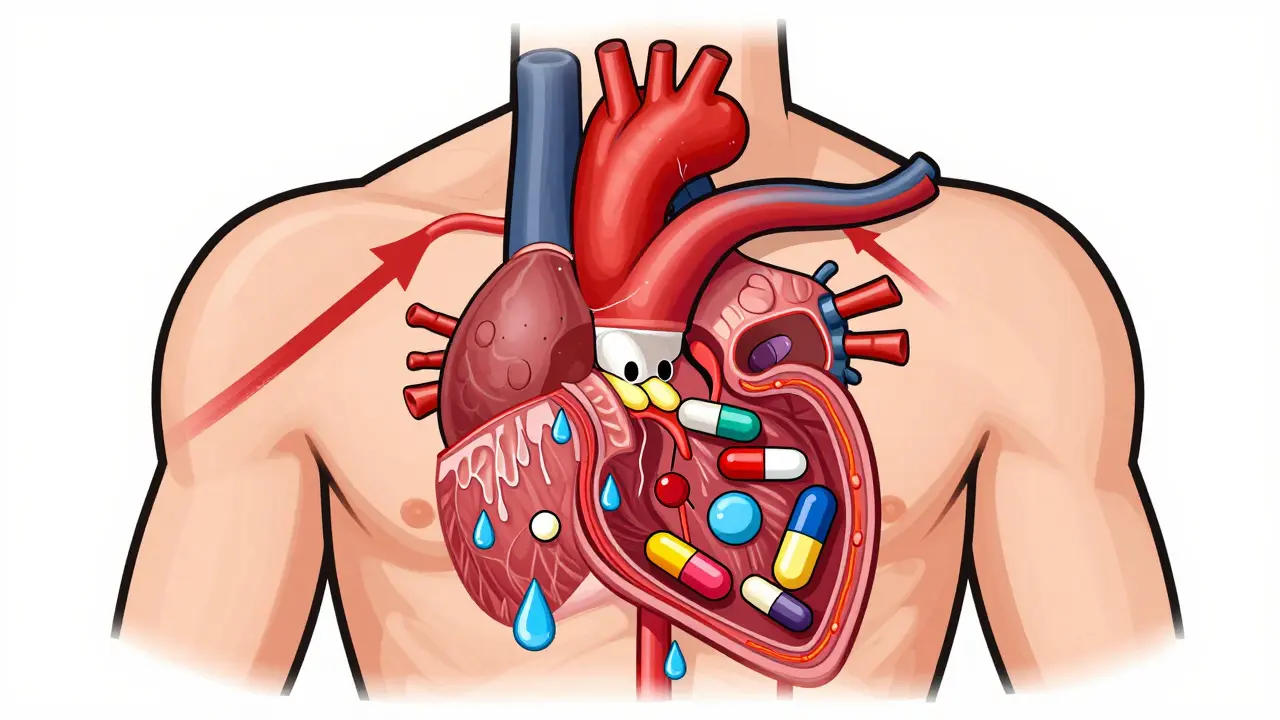
Not all pills create this problem, but several classes of drugs are notorious for causing blood pressure drops. If you are on any of these, pay close attention to how you feel when you change positions.
- Antipsychotics: Drugs like chlorpromazine, clozapine, and quetiapine can cause orthostatic hypotension in 20-40% of patients, especially at higher doses. Clozapine carries the highest risk, with incidence rates between 35-45%. These medications often block alpha-adrenergic receptors, which are crucial for keeping blood vessels tight.
- Opioids: Painkillers such as morphine and oxycodone can induce this condition in 15-25% of elderly patients. The risk skyrockets if you combine them with benzodiazepines or alcohol, increasing the danger by 2.3-fold.
- Parkinson’s Disease Medications: Levodopa is essential for managing Parkinson’s, but it causes orthostatic hypotension in 30-50% of patients. The disease itself affects the autonomic nervous system, and the medication adds another layer of complexity.
- Diuretics: Water pills like hydrochlorothiazide reduce fluid volume in your body. Less fluid means less pressure. Studies show an odds ratio of 1.9 for developing orthostatic hypotension with diuretic use.
- Alpha-blockers: Often used for high blood pressure or prostate issues, drugs like tamsulosin directly relax blood vessels. They carry an odds ratio of 2.8 for causing this side effect.
- Tricyclic Antidepressants: Older antidepressants like amitriptyline have an odds ratio of 3.2 for inducing orthostatic hypotension due to their anticholinergic and alpha-blocking properties.
| Medication Class | Incidence Rate / Risk Factor | Primary Mechanism |
|---|---|---|
| Antipsychotics (e.g., Clozapine) | 35-45% (High Risk) | Alpha-adrenergic blockade |
| Parkinson's Meds (e.g., Levodopa) | 30-50% | Dopamine agonist effects & autonomic dysfunction |
| Opioids (e.g., Morphine) | 15-25% (Elderly) | CNS depression & histamine release |
| Diuretics (e.g., Hydrochlorothiazide) | OR 1.9 | Volume depletion |
| Alpha-blockers (e.g., Tamsulosin) | OR 2.8 | Vasodilation |
Who Is Most at Risk?
You are not immune just because you are young, but age plays a massive role. Patients aged 70 and older have a 3.2 times higher risk of developing orthostatic hypotension compared to younger adults. But the biggest predictor isn't just age-it's the number of pills you pop. This is known as polypharmacy. If you are taking four or more medications, your risk jumps by 5.7 times. The average patient suffering from medication-induced orthostatic hypotension takes about 6.2 medications daily.
Other factors compound the issue. Dehydration, diabetes, and existing autonomic nerve damage make you more susceptible. In fact, up to 30% of all orthostatic hypotension cases are directly linked to medication regimens. The American Geriatrics Society Beers Criteria specifically lists 12 high-risk medications for the elderly, highlighting how critical this issue is in geriatric care.
How to Spot the Difference
It’s easy to blame a dizzy spell on low blood sugar or just being tired. But there are specific signs that point to orthostatic hypotension. The key symptom is timing: the dizziness happens *only* when you stand up and usually resolves within a few minutes once you sit or lie back down. Other signs include blurred vision, nausea, fatigue, and confusion. In severe cases, you might experience syncope (fainting).
Interestingly, up to 40% of people with this condition are asymptomatic-they have the blood pressure drop but don't feel dizzy. This makes it dangerous because they are still at risk for falls without warning. Diagnosis requires precise measurement. Doctors should check your blood pressure after five minutes of lying down, then again at one, two, and three minutes after standing. A drop meeting the >20/>10 mm Hg criteria confirms the diagnosis.
Managing the Dizziness: Practical Steps
If you suspect your meds are causing this, do not stop taking them abruptly. That can be dangerous. Instead, follow these steps to manage the risk and discuss changes with your doctor.
- Review Your Medications: This is the first-line approach. Ask your doctor or pharmacist to review every pill you take. Are any of them on the high-risk list? Can the dose be lowered? Is there a safer alternative? For example, switching from a tricyclic antidepressant to an SSRI might eliminate the dizziness while treating the depression.
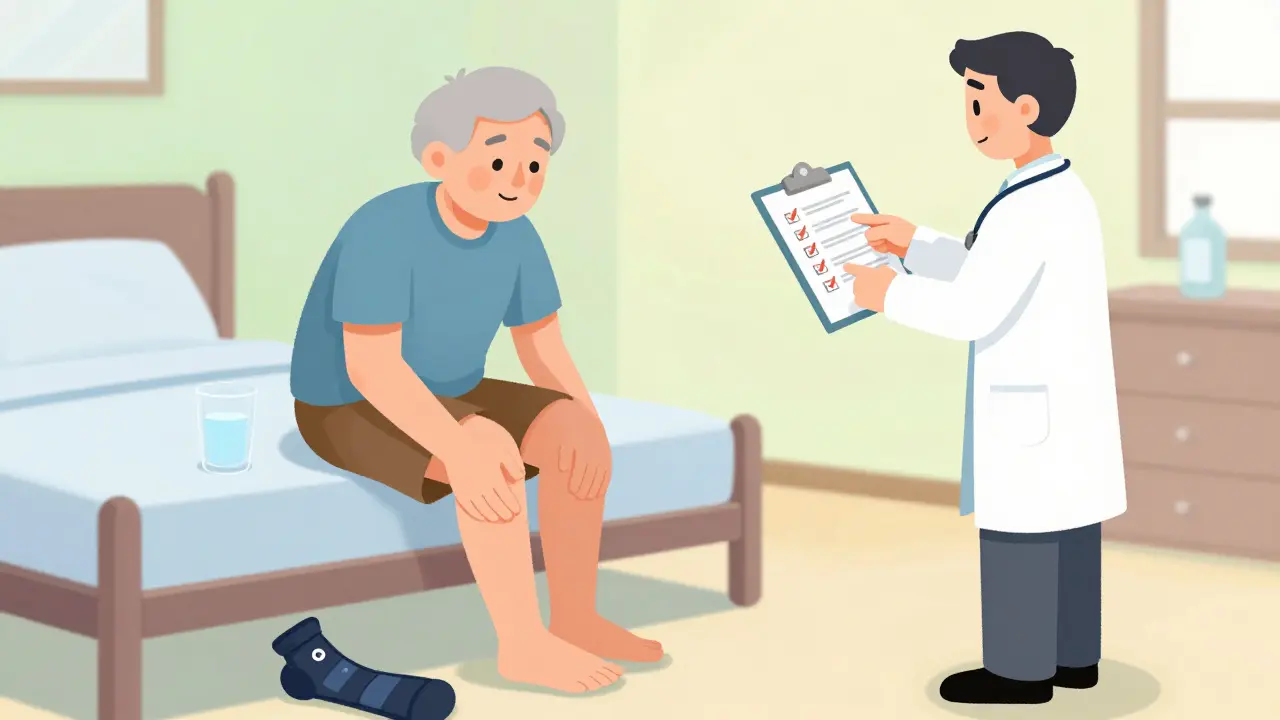
- Change Positions Slowly: Make it a habit to sit on the edge of the bed for a minute before standing. Pump your ankles up and down to get blood flowing. Then stand up slowly, holding onto something stable if needed.
- Hydrate Aggressively: Aim for 2-2.5 liters of water a day unless your doctor has restricted fluids. Volume helps maintain pressure. Electrolyte drinks can help if you are sweating heavily or losing salts through diuretics.
- Wear Compression Stockings: These garments squeeze your legs and abdomen, preventing blood from pooling there. Waist-high stockings are more effective than knee-high ones for this purpose.
- Eat Small, Frequent Meals: Large meals draw blood to your digestive system, which can worsen postural drops. Smaller portions keep your circulation more stable.
For many patients, these non-pharmacological interventions work wonders. Stanford Healthcare reports that 65-80% of patients achieve symptom resolution after appropriate medication adjustments and lifestyle changes. If those fail, doctors might prescribe midodrine, a medication that constricts blood vessels, typically starting at 10mg three times a day.
The Hidden Danger: Falls and Long-Term Health
We often dismiss dizziness as a minor annoyance, but the consequences are serious. People with orthostatic hypotension have a 15-30% higher risk of falling. For seniors, a fall can mean a broken hip, loss of independence, or worse. The economic impact is staggering: OH-related falls cost Medicare $31 billion annually, with 30-40% of those costs tied directly to medication-induced cases.
Beyond immediate injury, chronic low blood pressure to the brain is linked to cognitive impairment and increased mortality. Studies show a 24-32% increase in mortality risk over 10 years for those with unmanaged orthostatic hypotension. It’s not just about feeling woozy; it’s about long-term survival and brain health. This is why the FDA now mandates that any medication with a greater than 5% incidence of this side effect must include clear warnings in its labeling.
When to See a Doctor Immediately
Contact your healthcare provider if you experience frequent dizziness upon standing, especially if it leads to near-fainting or actual fainting episodes. Keep a log of when it happens, what you were doing, and what medications you took recently. Bring this log to your appointment. Early intervention is key. Research shows that 60-75% of medication-induced cases could be avoided entirely with proper selection and dosing. Don’t wait until you’ve fallen. Proactive management protects your brain, your bones, and your quality of life.
How long does it take for dizziness to resolve after stopping the offending medication?
In most cases, symptoms improve significantly within 1 to 2 weeks after adjusting or stopping the causative medication. However, if the medication has caused long-term autonomic nerve damage, recovery may take longer. Always consult your doctor before making changes.
Can dehydration alone cause orthostatic hypotension?
Yes, dehydration reduces blood volume, which can trigger orthostatic hypotension even without medication. However, when combined with drugs like diuretics or alpha-blockers, the risk increases dramatically. Staying well-hydrated is a primary defense against this condition.
Is orthostatic hypotension permanent?
Not necessarily. Medication-induced orthostatic hypotension is often reversible, with a 70-85% resolution rate after medication adjustment. Neurogenic orthostatic hypotension, caused by nerve damage from conditions like Parkinson's or diabetes, is harder to treat but can be managed with lifestyle changes and specific drugs like midodrine.
What is the difference between orthostatic hypotension and presyncope?
Orthostatic hypotension is the physiological drop in blood pressure. Presyncope is the sensation of nearly fainting. You can have orthostatic hypotension without feeling presyncope (asymptomatic), but presyncope upon standing is a classic symptom of the condition.
Are there any foods that help prevent dizziness on standing?
There are no specific "anti-dizziness" foods, but eating small, frequent meals prevents postprandial hypotension (blood pressure drop after eating). Increasing salt intake slightly may help if your doctor approves, as it retains fluid and boosts blood volume. Avoid heavy, carb-rich meals that draw blood to the gut.
