
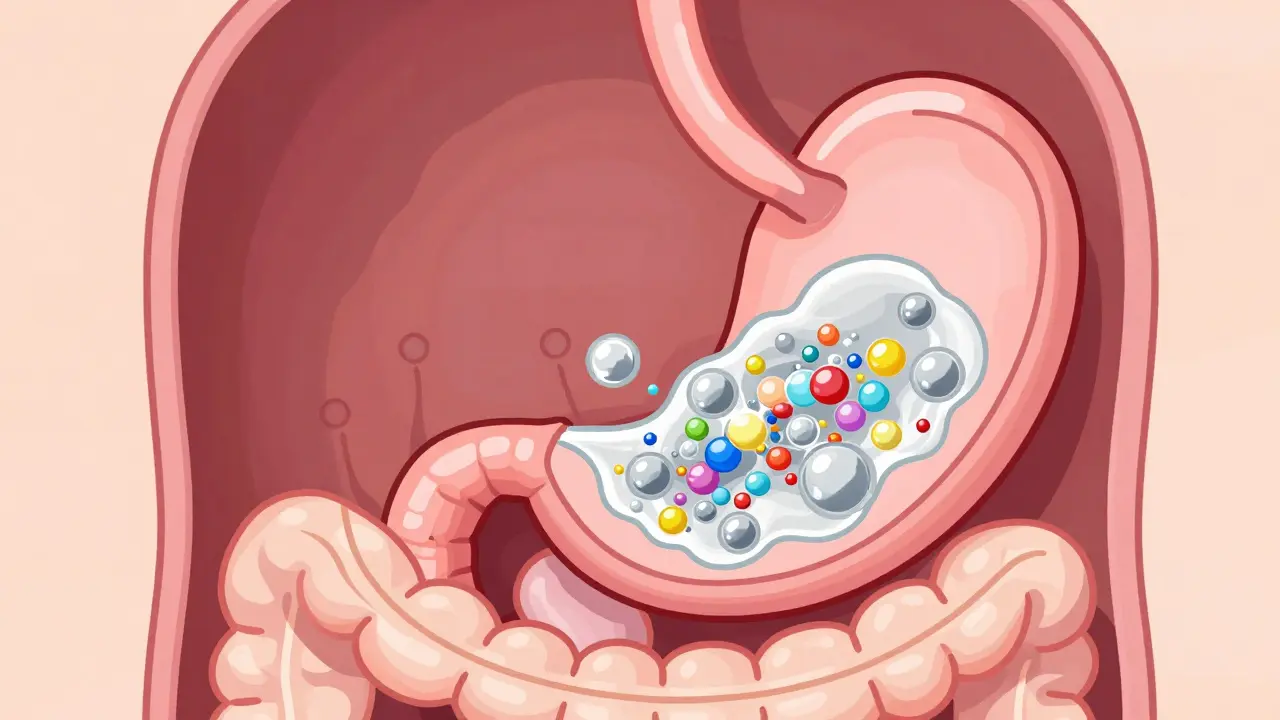
There is nothing quite as distracting as a stomach full of trapped air ruining your morning. Whether you are stuck in a long meeting, trying to relax at home, or traveling, the pressure and cramping caused by excess gas can feel urgent. Over-the-counter (OTC) remedies promise instant relief, yet walking down the pharmacy aisle often leaves more questions than answers. Some pills claim to stop gas before it starts, while others promise to pop the bubbles after they form. Understanding the difference between these two main categories-SimethiconeA silicone-based anti-flatulence agent that reduces surface tension of gas bubbles and enzyme products-is the key to picking the right tool for your discomfort.
The Mechanics of Simethicone: Moving Gas Along
Simethicone is a non-systemic surfactant, which is a fancy way of saying it changes how gas behaves inside your gut. Developed in the 1940s and approved by health authorities in many regions including the US in 1952, this compound remains a staple because it does exactly what it promises without entering your bloodstream. Think of simethicone as a tiny bubble-busting agent. When you swallow a capsule containing it, it stays in your gastrointestinal tract and reduces the surface tension of gas bubbles from approximately 72 dynes/cm to as low as 20 dynes/cm. This physical change allows those thousands of microscopic pockets of gas (typically ranging from 0.1 to 1.0 mm in diameter) to merge together into larger bubbles.
Once merged, these larger bubbles are much easier for your body to expel through belching or flatulence. This makes simethicone a reactive solution; it doesn't stop the gas from being made, but it helps get rid of it quickly once it is already there. Because it is chemically inert and stable across pH ranges of 1 to 8, it works throughout your entire digestive system, from the acidic environment of the stomach to the colon. Brands like Gas-X, Mylicon, and Phazyme utilize this exact mechanism. Clinical studies indicate effectiveness within 15 to 30 minutes of administration, making it a reliable choice for sudden, unexpected bouts of bloating.
How Enzyme Products Prevent Gas Formation
While simethicone manages existing symptoms, enzyme products aim to prevent gas formation at the source. Your body naturally produces digestive enzymes to break down carbohydrates, fats, and proteins, but sometimes specific foods overwhelm your natural supply. This is where oral enzyme supplements come in. They provide extra help breaking down complex sugars that would otherwise reach the lower intestine, where gut bacteria would ferment them into gas.
The most common type is LactaseAn enzyme that breaks down lactose sugar found in dairy products, sold under names like Lactaid. If you have lactose intolerance, your body lacks sufficient lactase to process milk sugars. Taking a lactase supplement provides the missing enzyme, allowing you to digest dairy without the subsequent fermentation that causes pain. Another popular option uses alpha-galactosidase, commonly found in brands like Beano. This targets hard-to-digest carbs in beans, cruciferous vegetables like broccoli and cauliflower, and certain grains.
The key difference lies in timing. Unlike simethicone, which you take when you feel bloated, enzyme products must be taken immediately before eating the trigger food. For example, lactase must be consumed within 5 minutes of drinking milk or eating cheese, while alpha-galactosidase requires administration 5 to 10 minutes before the meal. If you take it after digestion has started, or too early, the benefit is lost. These products do not relieve existing gas; their job is strictly preventative.

Comparative Performance: Relief vs. Prevention
| Feature | Simethicone Products | Enzyme Supplements |
|---|---|---|
| Mechanism | Coalesces gas bubbles for expulsion | Breaks down indigestible carbs |
| Timing | After meals or when symptoms occur | Immediately before eating trigger foods |
| Onset of Action | 15-30 minutes | Digestive phase (during meal) |
| Best For | Sudden, unknown cause gas | Known dietary triggers (lactose, beans) |
| Safety | No systemic absorption | Natural enzymes, minimal side effects |
Data suggests simethicone offers symptomatic relief in roughly 73.5% of cases for acute bloating, whereas enzyme products show around 68.2% prevention success when timed correctly. However, this is not an either-or scenario. Many users find success by combining strategies. For instance, you might use an enzyme supplement when you know you are attending a holiday potluck with lots of beans, but keep simethicone on hand just in case you eat something unexpectedly gassy. A representative user strategy notes, "Simethicone is my emergency button, but I use Beano preventatively when I know I'll be eating problematic foods."
Dosing Protocols and Safety Standards
Proper dosing is essential for efficacy. Simethicone typically comes in doses ranging from 40mg to 125mg per tablet or softgel. Standard adult guidelines suggest taking 40mg to 125mg after meals and at bedtime, not exceeding 500mg daily. The beauty of this formulation is its wide therapeutic index-it is incredibly safe because your body does not absorb it. There is virtually no learning curve; 98% of users dose correctly after the first time.
Enzyme products require stricter adherence. Lactase supplements often contain between 3000 to 9000 FCC units per dose. You must match the strength of the pill to the amount of dairy you consume. A glass of milk might require less enzyme power than a slice of cheesecake. Similarly, alpha-galactosidase products usually offer 450 to 1200 GalU per dose. If you take these too late, the food bypasses the small intestine and heads to the colon where fermentation begins regardless of the pill's presence.
Safety-wise, both categories are highly regarded. Simethicone has over 70 years of post-market surveillance showing 92.4% of users report no adverse effects. Enzyme products are derived from fungi like Aspergillus oryzae and are generally recognized as safe, though rare allergic reactions to the yeast base can occur. Neither interferes significantly with other medications due to their localized action in the gut lumen.

Market Landscape and Consumer Trends
The global market for these remedies continues to expand. By 2026, consumer awareness has shifted toward proactive management of digestive health. While simethicone holds the majority share due to its broad applicability, enzyme products are seeing faster growth rates. This reflects a cultural shift towards identifying specific food intolerances rather than masking all symptoms. Companies are increasingly launching combination products, mixing simethicone with enzymes to cover both bases, although these currently represent a smaller segment of sales.
Australian and international users alike face similar choices. While brand names may differ depending on your local pharmacy-for instance, Gas-X is common in North America, whereas other generics dominate elsewhere-the active ingredient remains the same. Always check the label for milligram strength to ensure consistency with recommended dosages. Regulatory bodies like the Therapeutic Goods Administration in Australia maintain strict monographs ensuring these OTC medicines meet safety standards similar to US FDA requirements regarding maximum daily doses.
Troubleshooting Common Issues
Many people struggle because they misunderstand how the medication works. The most frequent error involves using simethicone as a preventive measure. It cannot stop gas production; it only mobilizes existing gas. If you take it before lunch hoping to avoid dinner-time bloating, it won't work. Conversely, taking an enzyme after you've already eaten and felt bloated is futile because the fermentation process has likely already begun.
Another common issue involves chronic bloating. Simethicone and enzymes are effective for occasional, diet-related gas. If you experience constant pressure, distension, or pain that persists despite using these remedies, it may signal a deeper underlying condition such as Irritable Bowel Syndrome (IBS) or Small Intestinal Bacterial Overgrowth (SIBO). Experts caution that while these OTC remedies are safe for regular use, they should not replace medical evaluation for persistent digestive distress.
Does simethicone reduce the amount of gas produced?
No, simethicone does not reduce the actual volume of gas produced by your body. It works by changing the surface tension of gas bubbles, helping them coalesce into larger pockets that are easier to pass via burping or flatulence.
When should I take enzyme supplements?
You must take enzyme products immediately before consuming the triggering food. Lactase works best within 5 minutes of dairy consumption, and alpha-galactosidase should be taken 5 to 10 minutes before meals containing beans or heavy veggies.
Can I take simethicone every day?
Yes, simethicone is generally considered safe for regular use because it is not absorbed into the bloodstream. It is typically taken up to four times daily, not exceeding 500mg per day for adults.
Why doesn't my gas remedy work sometimes?
It could be a timing issue or mismatched expectations. If you use enzymes too late, they won't help. If you use simethicone expecting it to prevent gas, you might be disappointed. Also, severe bloating might require medical attention beyond OTC options.
Are enzyme supplements suitable for everyone?
Most people can use them safely, but individuals with allergies to the specific fungal sources used to create the enzyme should consult a doctor first. They are specifically beneficial for those with diagnosed lactose intolerance or known difficulties digesting complex carbs.


I went to my cousin's wedding last month and the buffet was loaded with refried beans and heavy cheese platters which set off my stomach almost immediately. I remember sitting there squeezing my hands together hoping the pressure would ease but nothing helped until I remembered the emergency kit in my purse. I grabbed the simethicone bottle because I didn't know exactly what food triggered the worst reaction at that moment. It took about twenty minutes to feel any difference in my abdomen and honestly it was embarrassing walking around while everyone else was dancing. Later that night I realized I should have taken the enzyme supplement earlier when I first saw the menu options on the table. My mom always told us that prevention is better than cure but I rarely listen until the pain becomes undeniable. Since then I have been keeping a small packet of the enzyme pills in my bag before every social event involving dairy products. There is something satisfying about knowing you planned ahead instead of scrambling to fix the problem after it started manifesting. People often forget that these medicines function differently depending on the exact timing of ingestion relative to eating. If you miss that five minute window the whole mechanism fails completely and you end up miserable again. I wish more people understood this distinction clearly enough to stock their medicine cabinets properly. You can see the confusion in many threads discussing these remedies without clear separation between reactive and proactive strategies. It really changes how I approach holidays now because I don't dread the meal times nearly as much anymore. Having a reliable backup plan definitely reduces the anxiety associated with public dining scenarios significantly. Now I try to eat smaller portions to give myself less work to digest regardless of the medication I choose.