
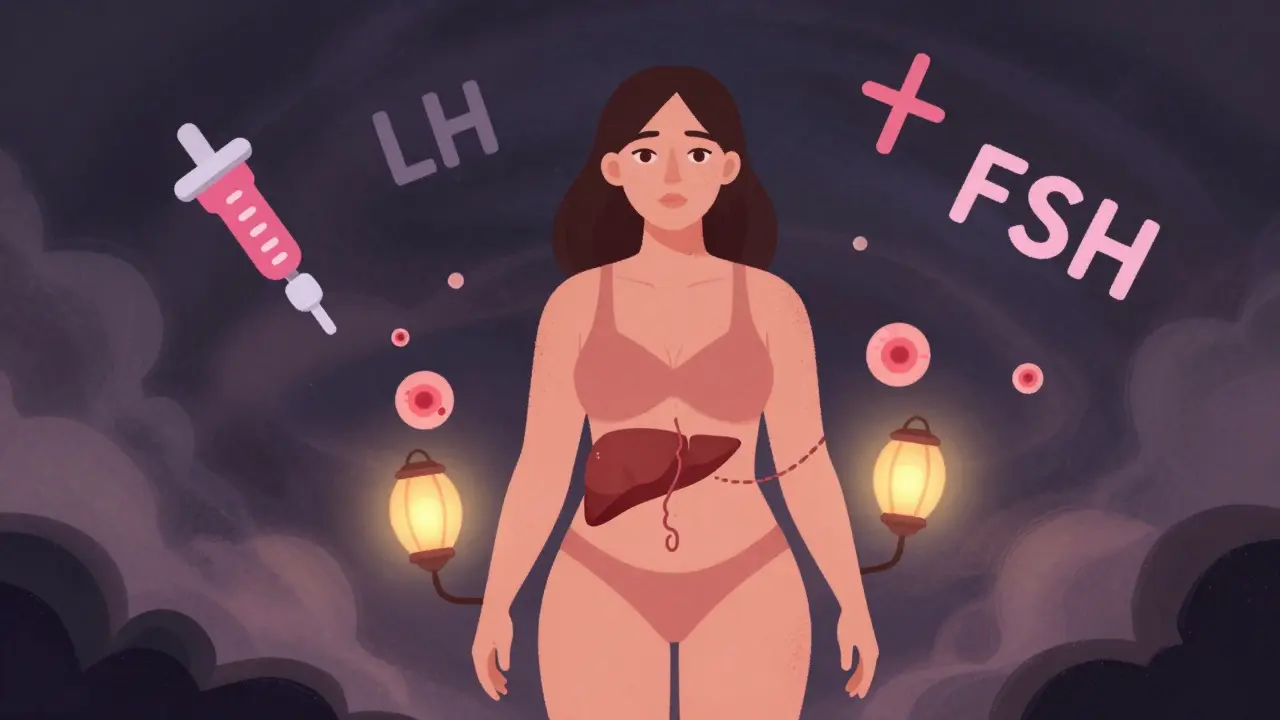
Polycystic Ovary Syndrome, or PCOS, isn’t just about cysts on the ovaries. It’s a hormonal storm that affects how your body works - from your period to your metabolism, your mood to your chances of getting pregnant. Around 1 in 10 women of childbearing age have it, and many don’t even know it until they’re trying to conceive. If you’ve been struggling with irregular periods, unexplained weight gain, acne, or excess hair growth, you might be dealing with PCOS. The good news? We know a lot more now than we did even five years ago about what causes it and how to treat it - especially when it comes to fertility.
What’s Really Going on Inside?
At its core, PCOS is about hormones going off track. It’s not one broken system - it’s a chain reaction. Most women with PCOS have too much of the male hormones, like testosterone. Normal levels? About 15 to 25 ng/dL. In PCOS? Often 30 to 50 ng/dL. That’s why some women grow hair on their chin or upper lip, get stubborn acne, or notice thinning hair on their scalp. But testosterone alone doesn’t explain everything.
Here’s the real kicker: insulin resistance. About 7 in 10 women with PCOS have it, even if they’re not overweight. When your body can’t use insulin properly, your pancreas pumps out more of it. That extra insulin doesn’t just mess with blood sugar - it tells your ovaries to make more testosterone. It also lowers a protein called SHBG, which normally keeps testosterone in check. So now you’ve got more free testosterone floating around, and your body doesn’t know how to handle it.
Then there’s your brain. The pituitary gland sends out two key signals to your ovaries: LH (luteinizing hormone) and FSH (follicle-stimulating hormone). In PCOS, LH is often double what it should be, while FSH stays low. This imbalance stops follicles from maturing properly. Instead of one egg being released each month, you get a bunch of tiny, stalled follicles - the "cysts" you hear about on ultrasounds. Without ovulation, progesterone doesn’t rise. That means estrogen is running unchecked, which can lead to heavy or irregular periods - or no period at all for months.
Why Diagnosis Takes So Long
Many women wait years before getting diagnosed. Why? Because doctors often look for the "classic" signs - like being overweight or having visible hair growth. But PCOS doesn’t look the same in everyone. Some women are thin, have regular periods, and still have PCOS. Others have severe acne but no cysts on ultrasound. The official diagnosis (using the Rotterdam criteria) only needs two out of three things: irregular ovulation, signs of high androgens, and polycystic ovaries on scan.
And here’s the catch: ultrasounds aren’t reliable for teens. Their ovaries naturally have lots of small follicles. That’s why experts now say not to diagnose PCOS in teenagers based on scans alone. Instead, doctors should look at hormone levels, menstrual history, and rule out other conditions like thyroid problems or adrenal disorders - which mimic PCOS in about 1 in 5 cases.
One woman in Melbourne told me she saw five doctors over four years. Her periods were irregular since age 12, but every doctor said it was "just teenage hormones." She only got tested after she stopped birth control and couldn’t get pregnant. That’s not rare. The average delay is two to three years. And during that time, untreated insulin resistance can quietly raise your risk of prediabetes - something 50% of women with PCOS develop by age 40.
Fertility Treatment: What Actually Works
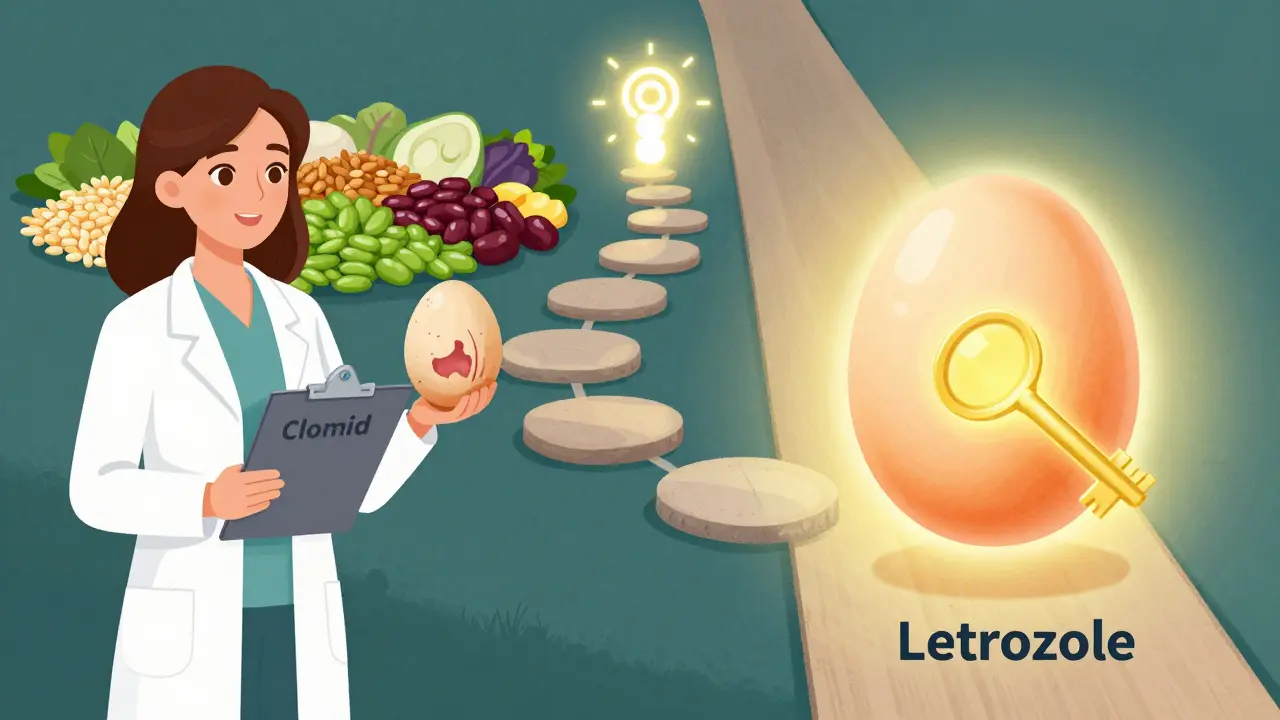
If you’re trying to get pregnant, your first step isn’t fertility drugs - it’s lifestyle. Even a 5% drop in body weight can restore ovulation in half the women who are overweight. That doesn’t mean crash diets. It means consistent changes: 150 minutes of walking or swimming a week, cutting sugary drinks, and eating protein and fiber with every meal. A low-glycemic diet (think whole grains, beans, vegetables) cuts insulin spikes by 30%. One study showed women on this diet had 35% more regular periods in just 12 weeks.
When lifestyle isn’t enough, medications kick in. Clomiphene citrate (Clomid) has been the go-to for decades. It works by tricking your brain into thinking estrogen is low, so it releases more FSH. About 7 out of 10 women ovulate on it, and 3 in 10 get pregnant within six cycles. But for some, it just doesn’t work - about 1 in 4 women are resistant.
That’s where letrozole comes in. Originally a breast cancer drug, it’s now the top choice for PCOS fertility. A major 2014 trial found it led to more ovulation and more live births than Clomid - 27.5% versus 19.1%. It’s now recommended as first-line treatment in the U.S. and Europe. It’s also cheaper and has fewer side effects than Clomid. Many women report getting pregnant on their first cycle.
Metformin, a diabetes drug, helps too - but not as a standalone. It’s best paired with Clomid or letrozole, especially if you have insulin resistance or a BMI over 35. It doesn’t make you ovulate on its own, but it boosts the success rate of other drugs by 30 to 50%. The catch? It can cause nausea or diarrhea. Many women quit because they don’t know how to start slow. The trick? Begin with 500 mg once a day, increase over weeks, and take it with food.
When Medications Don’t Work
If oral drugs fail, injectable hormones (gonadotropins) are next. These directly stimulate the ovaries. Pregnancy rates jump to 15-20% per cycle. But there’s a big risk: multiple pregnancies. About 1 in 5 women end up with twins or more. There’s also a 5-10% chance of ovarian hyperstimulation syndrome (OHSS) - a dangerous swelling of the ovaries. That’s why these treatments require close monitoring with blood tests and ultrasounds.
In vitro fertilization (IVF) is usually saved for cases with other issues - blocked tubes, male factor infertility, or after multiple failed treatments. But PCOS women on IVF need special care. They respond more strongly to stimulation, so doctors use lower doses of hormones. Still, OHSS risk stays higher than average - 10-20% versus 1-5% in non-PCOS patients. Many clinics now use freeze-all cycles: retrieve eggs, freeze embryos, and transfer later when hormone levels have settled. This cuts OHSS risk by more than half.
The Bigger Picture: It’s Not Just About Babies
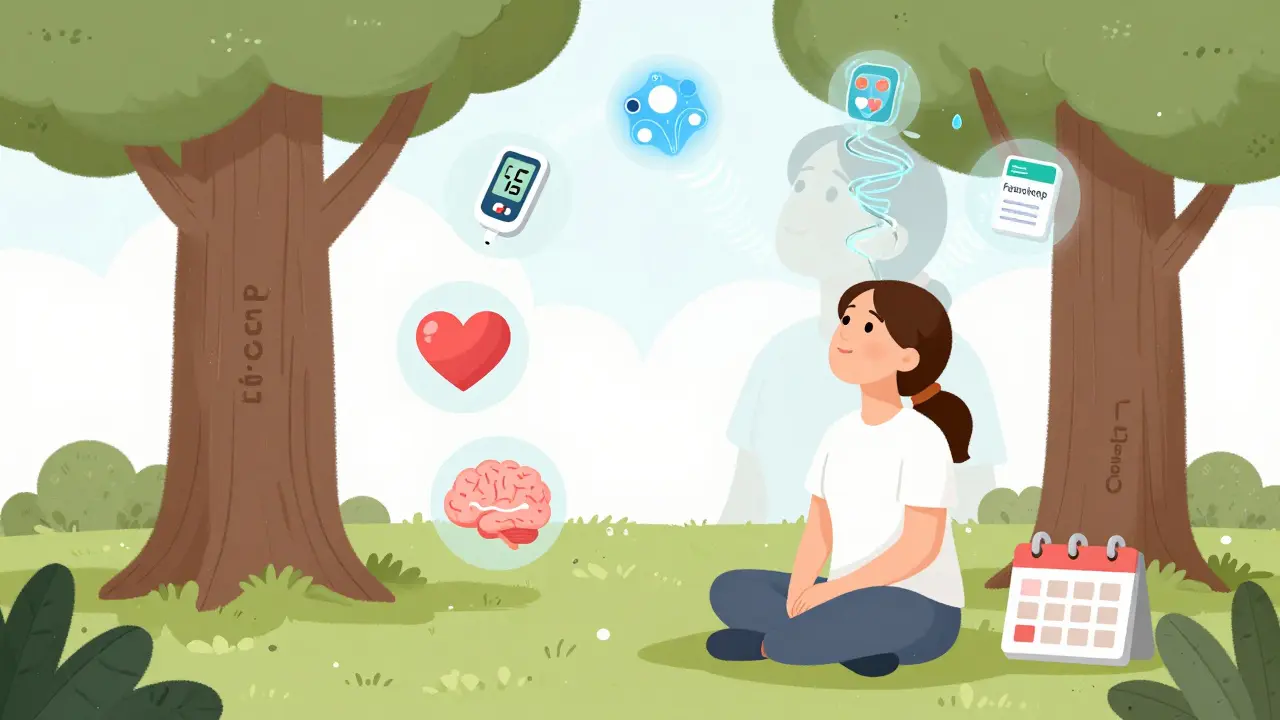
PCOS doesn’t disappear after pregnancy. In fact, if you don’t manage it, your long-term health is at risk. Women with PCOS are twice as likely to have heart disease. By age 40, half will have prediabetes or type 2 diabetes. Endometrial cancer risk goes up 2 to 6 times because of unopposed estrogen. That’s why experts now say PCOS isn’t a fertility problem - it’s a lifelong metabolic condition.
That’s why care should include more than just a fertility specialist. You need regular checks: fasting glucose, cholesterol, and blood pressure at least once a year. Mental health matters too. Depression and anxiety affect 30-50% of women with PCOS - often worsened by weight stigma, misdiagnosis, or feeling dismissed by doctors. One survey found 78% of women felt judged for their weight during medical visits. That’s not just unfair - it’s harmful.
There’s hope. New digital tools like the FDA-approved Femaloop app guide users through personalized diet and exercise plans. In trials, it improved menstrual regularity by 28% in six months. And research is moving fast. A new drug, Myfembree, is in phase III trials and shows promise in regulating periods. AI tools are being trained to diagnose PCOS using hormone patterns and ultrasound images - with over 90% accuracy in early tests.
What You Can Do Today
- Track your periods with an app - even if they’re irregular, patterns matter.
- Ask your doctor for a fasting insulin test and HbA1c (long-term blood sugar) - don’t wait for symptoms.
- If you’re trying to conceive, start with letrozole before Clomid - it’s more effective.
- Don’t give up on lifestyle changes. Even small, consistent habits (like walking after dinner) make a difference.
- Find a provider who listens. If you’re being told it’s "just stress" or "you’re just overweight," find someone who understands PCOS as a medical condition.
PCOS isn’t your fault. It’s not laziness. It’s biology. And while it can feel overwhelming, the tools to manage it - and get pregnant if you want to - are clearer and more effective than ever.
Can you get pregnant with PCOS without treatment?
Yes, some women with PCOS get pregnant naturally, especially if they’re under 30 and have only mild symptoms. But because ovulation is irregular, it often takes longer - sometimes years. About 30% of women with PCOS conceive without treatment within a year. For most, though, a little help - like lifestyle changes or a simple medication - significantly improves the odds.
Does losing weight cure PCOS?
No, weight loss doesn’t cure PCOS - but it can reverse many of its symptoms. Losing just 5-10% of body weight often restores regular ovulation, lowers testosterone, and improves insulin sensitivity. For some women, periods return and acne clears up. But even women who are thin can have PCOS and need treatment. It’s not about being "fat" - it’s about insulin and hormones.
Why is metformin prescribed for PCOS if I don’t have diabetes?
Metformin helps your body use insulin better - even if your blood sugar is normal. In PCOS, high insulin drives testosterone production and blocks ovulation. By lowering insulin, metformin can reduce hair growth, acne, and improve menstrual cycles. It’s not a magic pill, but when paired with other treatments, it boosts pregnancy rates - especially in women with insulin resistance.
Can birth control pills treat PCOS?
Birth control pills don’t treat the root cause of PCOS, but they manage symptoms. They lower testosterone, regulate periods, and protect the uterus from overgrowth. For women not trying to get pregnant, they’re often the first step. But if you’re trying to conceive, you’ll need to stop them and switch to ovulation-inducing drugs. They’re a symptom manager, not a cure.
Is PCOS genetic?
Yes, there’s a strong genetic link. If your mother or sister has PCOS, your risk is 2 to 3 times higher. Researchers have identified several genes tied to insulin signaling and hormone regulation. But genes alone don’t cause it - environment matters too. Diet, stress, and toxins can trigger PCOS in people with the genetic tendency.


Okay but have you ever considered that PCOS is just Big Pharma's way of selling metformin to women who eat too much gluten? I mean, my cousin's yoga instructor said the real cause is electromagnetic fields from 5G towers messing with your hypothalamus. They don't want you to know this. Also, why is letrozole FDA-approved for breast cancer but not for PCOS? Coincidence? I think not.