
Serotonin Syndrome Risk Calculator
Risk Assessment Tool
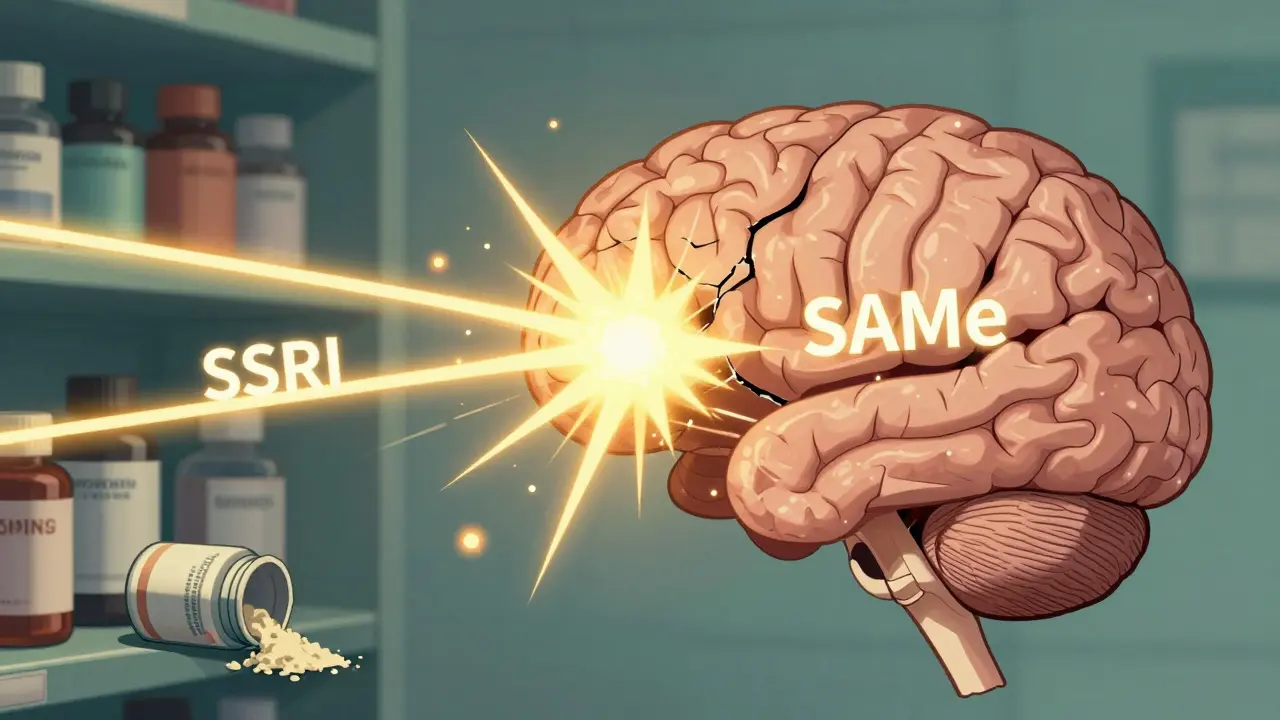
People turn to SAMe for depression when standard treatments don’t work-or when they want something more natural. But mixing it with antidepressants? That’s where things get dangerous. You might think, "It’s just a supplement," but SAMe isn’t harmless. It directly changes brain chemistry, and when combined with SSRIs or SNRIs, it can push serotonin levels into a dangerous zone. This isn’t theoretical. Real people have ended up in the ER because of it.
What Is SAMe, Really?
SAMe, or S-adenosylmethionine, is a compound your body makes naturally. It’s involved in over 200 chemical reactions, including making neurotransmitters like serotonin, dopamine, and norepinephrine. Think of it as a methyl donor-something that adds a chemical group to molecules to help them work better. That’s why it’s been studied for depression: more serotonin, more dopamine, better mood.
It’s been around since the 1950s, but its use as a mood booster took off in Europe and then the U.S. Today, it’s sold in pharmacies and online as a dietary supplement. Most products come in 400 mg capsules, with doses ranging from 200 mg to 1,600 mg daily. But here’s the catch: supplements like SAMe aren’t regulated like drugs. The FDA doesn’t test them for safety or effectiveness before they hit shelves. That means what’s on the label isn’t always what’s inside. ConsumerLab found that over a third of SAMe products in 2022 contained less active ingredient than advertised.
How SAMe Affects Mood
Studies show SAMe can help with mild to moderate depression. In clinical trials, about 35-50% of people saw improvement, compared to 60-70% with standard antidepressants like sertraline or escitalopram. But SAMe works faster-some people feel better in 7 to 10 days, while SSRIs often take 4 to 6 weeks.
It’s especially useful for people with depression and joint pain. One 2018 study found that adding SAMe to duloxetine (an SNRI) reduced arthritis pain 30% more than the drug alone. That’s why some doctors recommend it for patients with both conditions.
But it doesn’t work for everyone. In severe depression, especially melancholic depression, SAMe fails more often than antidepressants. One trial showed only 18% remission with SAMe versus 42% with venlafaxine. It’s not a replacement for strong medication in serious cases.
The Big Risk: Serotonin Syndrome
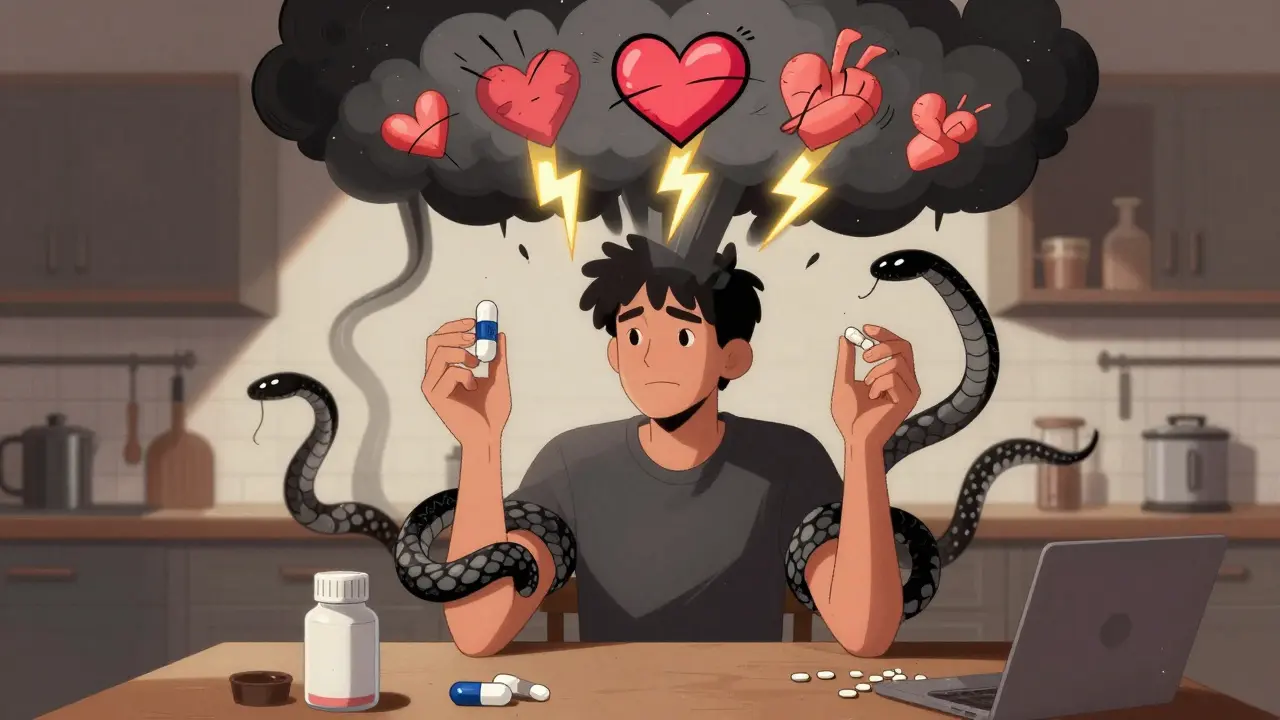
Here’s the problem: SAMe boosts serotonin. So do SSRIs, SNRIs, and other antidepressants. When you combine them, you’re stacking the deck. Too much serotonin leads to serotonin syndrome-a potentially life-threatening condition.
Symptoms include:
- Racing heart
- High blood pressure
- Muscle rigidity or twitching
- Shivering or sweating
- Confusion, agitation, or hallucinations
- High body temperature (above 38°C)
The Hunter Criteria, used by doctors to diagnose it, looks for things like spontaneous clonus (involuntary muscle contractions) plus agitation or sweating. If you have two or more of these after starting SAMe with an antidepressant, it’s likely serotonin syndrome.
It’s not common-but it’s real. Between 2000 and 2022, only about 12 published cases linked SAMe and antidepressants. But the FDA’s adverse event database recorded 32 cases between 2018 and 2022, with 9 classified as serious. One Reddit user described racing heart, muscle stiffness, and confusion after starting SAMe with Prozac. He ended up in the ER.
Doctors at Massachusetts General Hospital say the risk of serotonin syndrome increases by about 35% when SAMe is added to an SSRI. The Mayo Clinic and Natural Medicines Database both rate this interaction as “Major-Use Caution.”
Who Should Avoid Mixing SAMe and Antidepressants?
Most people should not combine them without close medical supervision. That includes:
- Anyone taking SSRIs (like Prozac, Zoloft, Lexapro)
- Anyone taking SNRIs (like Cymbalta, Effexor)
- People on MAOIs (rare now, but still used)
- Those with a history of bipolar disorder (SAMe can trigger mania)
- Anyone already experiencing anxiety or insomnia
Even if you’ve been on an antidepressant for months without issues, adding SAMe can still cause problems. The biggest risk window is the first 2-4 weeks after starting the combination. That’s when 85% of adverse events happen, according to Mayo Clinic chart reviews.
What If You Still Want to Try It?
If you and your doctor decide to try SAMe alongside your antidepressant, here’s how to do it safely:
- Start low: 200 mg twice daily. Don’t jump to 800 or 1,600 mg.
- Wait at least 5-7 days before increasing the dose.
- Monitor for symptoms: Keep a log of mood, sleep, heart rate, and muscle tightness.
- Take it with food to reduce nausea or stomach upset-this helps 65% of users.
- Avoid taking it late in the day. It can cause insomnia in 18% of people.
- Don’t mix it with other supplements that raise serotonin: St. John’s wort, 5-HTP, tryptophan.
Some people do well on the combo. One user on Healthline reported her PHQ-9 depression score dropped from 16 to 7 after adding 800 mg SAMe to Zoloft. She stayed on it for 8 months with no issues. But that’s not the norm. It’s the exception.
Quality and Cost Issues
Not all SAMe is created equal. The supplement degrades quickly if not stored properly. It needs refrigeration (2-8°C) to stay stable. Many people buy it online and leave it on the counter. That means they’re taking a product that’s already broken down.
Cost is another barrier. A month’s supply runs $80-$120. For comparison, generic sertraline costs under $10. And there’s no insurance coverage-it’s always out-of-pocket.
And don’t trust Amazon reviews. Out of 1,247 products, 42% of negative reviews say it didn’t help with depression. Another 28% mention stomach problems. That’s a lot of people spending hundreds of dollars with little to show for it.
Regulation and Future Outlook
The FDA doesn’t approve SAMe for depression. It’s sold as a supplement, so manufacturers don’t need to prove it works before selling it. In 2023, the FDA sent warning letters to three companies for claiming SAMe treats depression-a clear violation.
Europe took a stricter stance. The European Food Safety Authority banned SAMe supplements in 2015 due to safety concerns. The U.S. still allows it, but the American Psychiatric Association’s 2023 guidelines say there’s not enough solid evidence to recommend it routinely.
Research is ongoing. A major NIH trial (NCT04821234) is studying SAMe with escitalopram, with results expected in mid-2024. Scientists are also testing new versions of SAMe-like SAMe-PEG-that might have fewer interactions. Early animal studies show a 40% drop in serotonin-related side effects.
But for now, the message is clear: don’t self-prescribe. If you’re considering SAMe, talk to your doctor. Not your friend. Not your Reddit community. Your medical provider.
What to Do If You Think You Have Serotonin Syndrome
If you’re taking SAMe with an antidepressant and suddenly feel:
- Your heart is pounding
- Your muscles are stiff or twitching
- You’re confused or sweating uncontrollably
- Your body feels hot
Stop SAMe immediately. Call your doctor or go to the ER. Don’t wait. Serotonin syndrome can escalate fast. In rare cases, it’s fatal.
There’s no home remedy. Treatment involves stopping the supplements, giving fluids, and sometimes medications to block serotonin. The sooner you act, the better the outcome.
Can I take SAMe instead of my antidepressant?
No. SAMe is not a replacement for prescribed antidepressants, especially in moderate to severe depression. Studies show it’s less effective than SSRIs and SNRIs in serious cases. Stopping your medication without medical guidance can lead to withdrawal symptoms or worsening depression. If you want to switch, work with your doctor to taper off safely and evaluate whether SAMe is appropriate.
How long does SAMe take to work for depression?
SAMe often works faster than traditional antidepressants. Some people notice mood improvements in 7 to 10 days, compared to 4 to 6 weeks for SSRIs. But this doesn’t mean it’s stronger-it just acts quicker. For others, it takes 3 to 4 weeks. If you don’t feel better after 6 weeks, it’s unlikely to help.
Does SAMe cause weight gain?
Unlike many antidepressants, SAMe doesn’t typically cause weight gain. In fact, some users report reduced appetite or mild nausea, which can lead to slight weight loss. However, if your mood improves, you might eat more normally-which could result in weight gain. This isn’t a direct effect of SAMe, but a side effect of feeling better.
Is SAMe safe for people with bipolar disorder?
No. SAMe can trigger manic or hypomanic episodes in people with bipolar disorder. Even if you’ve been stable for years, adding SAMe could disrupt your mood balance. The risk is high enough that most psychiatrists avoid recommending it for anyone with a bipolar diagnosis.
Can I take SAMe with St. John’s wort or 5-HTP?
Absolutely not. St. John’s wort and 5-HTP both increase serotonin, just like SAMe and antidepressants. Combining them dramatically raises the risk of serotonin syndrome. Even if you’re not on prescription meds, mixing these supplements can be dangerous. Stick to one serotonin-boosting agent at a time-or better yet, avoid them altogether unless supervised by a doctor.
Final Thoughts
SAMe isn’t magic. It’s a biochemical tool with real effects-and real risks. It can help some people with mild depression, especially if they also have joint pain. But it’s not a gentle alternative. It’s a powerful compound that interacts with your brain chemistry in ways you can’t predict.
If you’re thinking about trying it, don’t do it alone. Talk to your doctor. Bring up your current meds, your symptoms, and your goals. Ask: "Is this safe with what I’m already taking?" And if they say yes, make sure you know the warning signs of serotonin syndrome. Your life could depend on it.
