
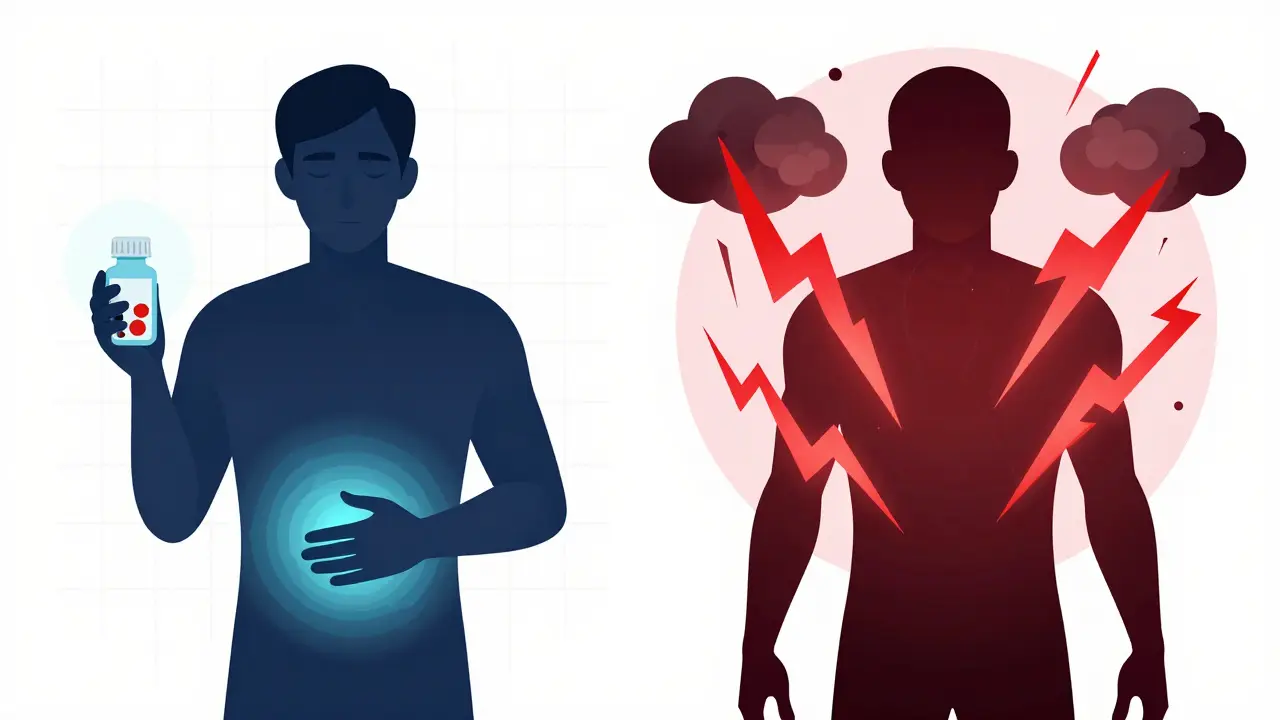
You take a new pill for your blood pressure or an antibiotic for an infection, and suddenly you feel awful. Maybe you get a rash, maybe your stomach turns, or perhaps you start wheezing. Your immediate thought is often, "I'm allergic to this." But here’s the thing: most of the time, you aren’t. You’re experiencing a side effect, which is completely different from a true drug allergy.
This distinction isn't just semantics. Mislabeling a harmless side effect as a life-threatening allergy can lock you out of effective treatments for years. It leads to more expensive medications, longer hospital stays, and even higher risks of dangerous infections like MRSA. Let’s clear up the confusion so you know exactly what’s happening in your body.
The Core Difference: Immune System vs. Pharmacology
To understand why these reactions are different, we have to look at what’s happening inside your body. A medication side effect is essentially a known, unwanted consequence of how the drug works. When you take a medication, it interacts with specific receptors in your body to achieve its therapeutic goal. Sometimes, that interaction causes secondary effects. For example, if you take an antihistamine for allergies, it might make you drowsy because it crosses into your brain. That’s not your immune system attacking the drug; it’s just the drug doing its job in a way that affects other systems.
In contrast, a drug allergy is an active defense response. Your immune system mistakes the medication for a harmful invader, like a virus or bacteria. It produces antibodies-specifically Immunoglobulin E (IgE) or T-cells-to fight it off. This triggers a cascade of inflammation and chemical release that causes symptoms like hives, swelling, or breathing difficulties. The key takeaway? Side effects are about pharmacology; allergies are about immunology.
- Side Effect: Predictable, dose-dependent, does not involve the immune system.
- Allergy: Unpredictable, involves immune sensitization, occurs even at tiny doses.
Timing Is Everything
One of the easiest ways to distinguish between the two is by looking at the clock. When did the symptoms start?
True allergic reactions usually happen quickly. Immediate-type reactions, mediated by IgE antibodies, typically occur within minutes to two hours after taking the medication. If you take a dose of penicillin and break out in hives ten minutes later, that’s a classic sign of an immediate hypersensitivity reaction. Delayed allergic reactions, driven by T-cells, take longer-usually appearing 48 to 72 hours after exposure, or sometimes up to a week later. These often present as rashes or fever.
Side effects, on the other hand, tend to follow a different pattern. They often appear shortly after starting the medication but may persist as long as you keep taking it. More importantly, many common side effects diminish over time as your body adjusts. According to clinical observations from the National Institutes of Health (NIH), 70-80% of common side effects resolve within two to four weeks. If your nausea from metformin fades after a few weeks, that was likely a temporary adjustment period, not an allergy.

Symptoms: What Does Each Look Like?
The symptoms themselves give you huge clues. Side effects are often related to the drug's primary mechanism of action. If a drug irritates the stomach lining, you’ll get gastrointestinal issues. If it affects muscle metabolism, you’ll feel soreness.
| Symptom Type | Typical Side Effect | Typical Allergic Reaction |
|---|---|---|
| Gastrointestinal | Nausea, diarrhea, upset stomach | Rarely the sole symptom of allergy |
| Skin | Mild dryness or flushing | Hives (urticaria), itching, swelling (angioedema) |
| Respiratory | Cough (e.g., ACE inhibitors) | Wheezing, shortness of breath, throat tightness |
| Systemic | Drowsiness, headache | Anaphylaxis (drop in BP, loss of consciousness) |
If you experience hives, swelling of the lips or tongue, or difficulty breathing, stop the medication and seek emergency care immediately. These are hallmarks of an allergic reaction, potentially leading to anaphylaxis, which affects approximately 0.05-0.5% of medication exposures. Conversely, if you just feel nauseous or have a mild headache, it’s far more likely to be a manageable side effect.
The Penicillin Problem
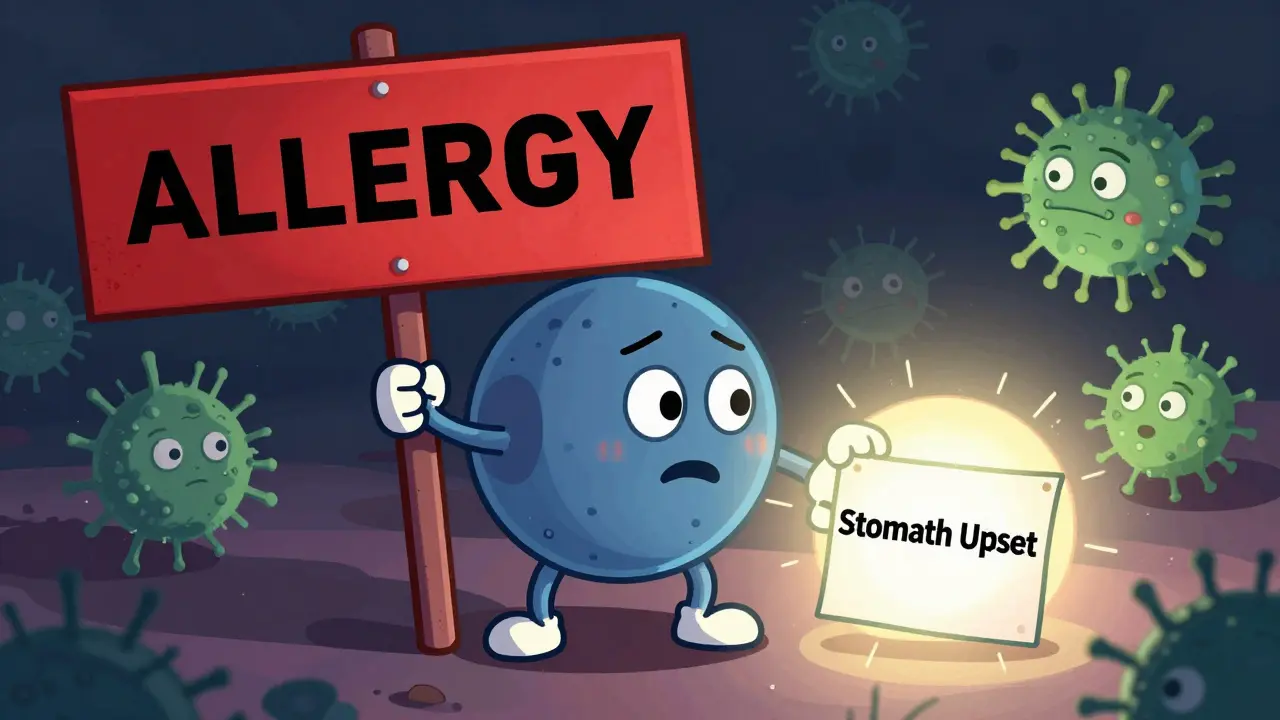
Nowhere is this confusion more costly than with penicillin. It is estimated that 80-90% of patients who report a penicillin allergy do not actually have one when tested. Many people label themselves allergic because they got diarrhea or felt sick in their stomachs as children. Those are side effects, not immune responses.
Why does this matter? Because mislabeling yourself as allergic to penicillin forces doctors to prescribe broader-spectrum antibiotics. These alternatives are often more expensive, less effective against certain bacteria, and contribute significantly to antibiotic resistance. Research from Brigham and Women's Hospital found that patients with a false penicillin allergy label face a 69% increased risk of methicillin-resistant Staphylococcus aureus (MRSA) infection. Furthermore, these unnecessary alternative drugs increase healthcare costs by roughly $4,000 per patient annually.
If you’ve been told you’re allergic to penicillin but only experienced stomach upset or a mild rash, ask your doctor about getting tested. Skin testing has a negative predictive value of 97%, meaning if you test negative, you can safely take penicillin again.
How Doctors Diagnose the Difference
When you report a reaction, healthcare providers don’t just guess. They follow specific diagnostic protocols. The process usually starts with a detailed history. Did the reaction happen immediately? Was it a single dose or cumulative? What exactly did the symptom look like?
For suspected allergies, especially with high-risk drugs like penicillin or sulfa drugs, allergists use skin testing. They prick the skin with small amounts of the drug to see if an IgE-mediated reaction occurs. If skin tests are inconclusive, they may perform an oral challenge under strict medical supervision. Recent advances include the basophil activation test (BAT), approved by the FDA in 2023, which offers high sensitivity and specificity for diagnosing penicillin allergies without the need for skin pricks in some cases.
For side effects, the diagnosis is often one of exclusion and observation. If lowering the dose reduces the symptom, it’s almost certainly a side effect. Allergies generally do not improve with lower doses; even a crumb of the allergen can trigger a response.
What Should You Do?
If you’re unsure whether you had an allergy or a side effect, don’t just write it off. Here is a practical approach:
- Document the details: Write down exactly what happened, when it started relative to the first dose, and what the symptoms were. Photos of rashes are incredibly helpful for doctors.
- Don’t self-diagnose 'allergy': Unless you had hives, swelling, or breathing trouble, avoid using the word "allergy" in your medical records. Use "adverse reaction" or "intolerance" instead.
- Talk to an allergist: If you have a documented allergy that limits your treatment options, seek evaluation. Clarifying a false allergy can open doors to safer, cheaper, and more effective medications.
- Report to FDA: Whether it’s a side effect or allergy, reporting it to the FDA Adverse Event Reporting System (FAERS) helps track safety data for everyone.
Understanding the difference between a side effect and an allergic reaction empowers you to take better control of your health. It prevents unnecessary fear of medications and ensures you get the best possible treatment for your conditions. Don’t let a past bad experience dictate your future health without proper investigation.
Can a side effect turn into an allergy?
No, a side effect cannot turn into an allergy. They are biologically distinct mechanisms. However, repeated exposure to a drug can sensitize the immune system, leading to an allergic reaction upon subsequent exposures, even if previous doses caused no issues.
Is nausea a sign of a drug allergy?
Nausea is rarely a sign of a true drug allergy. It is most commonly a side effect, particularly with antibiotics, pain relievers, and diabetes medications. True allergies typically present with skin symptoms (hives, itching) or respiratory distress.
How long does a drug allergy last?
Symptoms of an immediate allergic reaction can last from several hours to a few days after stopping the medication. However, the immune memory remains. Most drug allergies fade over time; about 80% of penicillin allergies disappear within 10 years, but you should never re-challenge yourself without medical supervision.
What is the most common drug allergy?
Penicillin and other beta-lactam antibiotics are the most common causes of severe drug allergies, accounting for approximately 80% of all reported drug allergies. Sulfa drugs and NSAIDs (like ibuprofen) are also frequent culprits.
Can I be allergic to a generic drug but not the brand name?
You cannot be allergic to the active ingredient in one version but not the other if they are the same drug. However, you might react to inactive ingredients (fillers, dyes, binders) used in one formulation but not another. This is often mistaken for an allergy to the drug itself.
