
Vitamin E & Warfarin Risk Checker
Use this tool to check how your Vitamin E intake may interact with Warfarin. Disclaimer: This is for educational purposes and not a substitute for professional medical advice.
Taking a daily vitamin to stay healthy seems like a no-brainer, but when you're on a blood thinner, a simple supplement can turn into a medical emergency. If you are taking Warfarin is a vitamin K antagonist anticoagulant used to prevent blood clots in people with atrial fibrillation or mechanical heart valves, adding high doses of Vitamin E to your routine isn't just a minor change-it's a potential risk. The core issue is that while these two substances are meant to help your health, they can team up to make your blood too thin, significantly increasing your chance of internal bleeding.
How Vitamin E Changes the Way Warfarin Works
To understand the danger, you first have to look at what Vitamin E actually does. Also known as alpha-tocopherol, it is a fat-soluble antioxidant that helps protect cells from damage. While it's essential for your body, in high doses, it acts as a mild anticoagulant on its own.
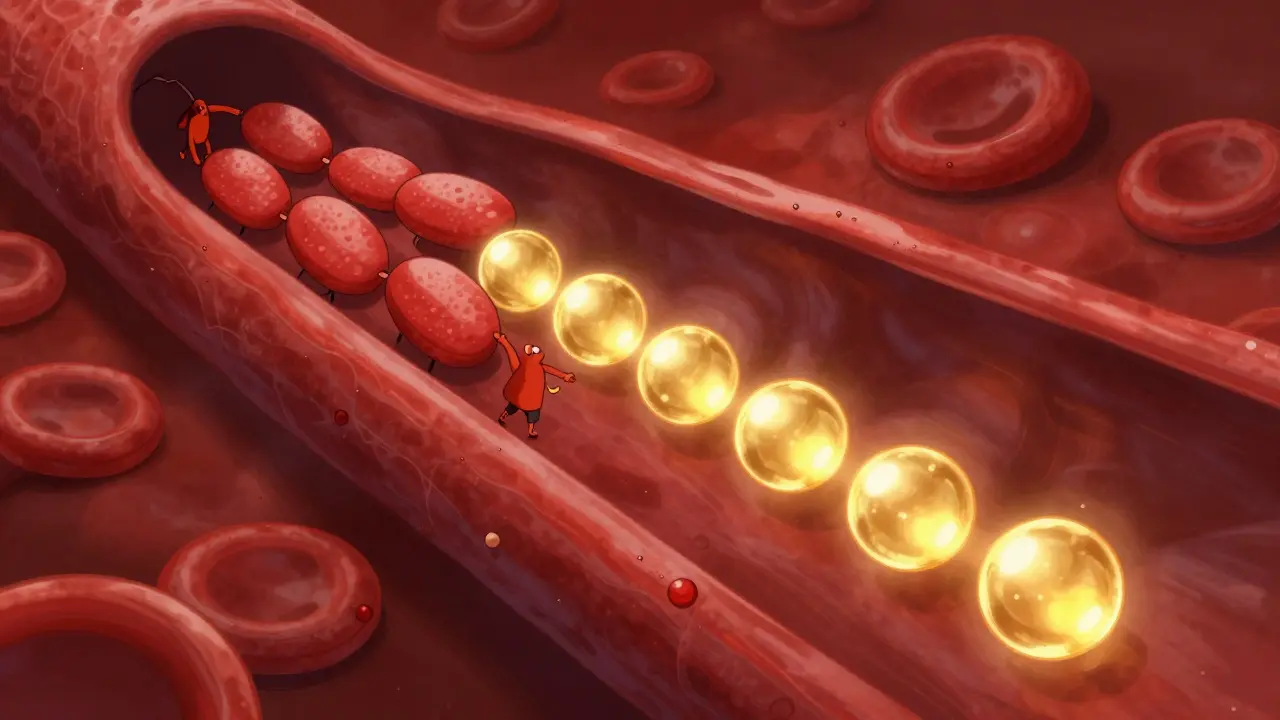
When you combine Vitamin E with Warfarin, you get an "additive effect." This means the supplement doesn't necessarily change the amount of medication in your bloodstream, but it enhances the anticoagulation risks by interfering with how your platelets clump together to stop bleeding. Essentially, Warfarin stops the liver from using Vitamin K to make clotting factors, and Vitamin E adds another layer of "anti-clotting" activity. If your blood cannot clot effectively, a simple bump to the arm or a small cut can lead to bruising or bleeding that won't stop.
The 400 IU Threshold: When Does it Become Dangerous?
Not every single milligram of Vitamin E is a threat. Most doctors and clinical guidelines, including those from the University of California San Diego, point to a specific tipping point: 400 IU. If you are getting your Vitamin E from a balanced diet-like eating a few almonds or some spinach-you are likely perfectly safe. The danger arises with concentrated supplements.
Research shows that doses above 400 IU daily are where the risk of hemorrhagic stroke and major bleeding events spikes. Interestingly, this interaction isn't always instant. Some case reports show that a person might take 800 IU of Vitamin E for three weeks with no issues, only to experience abnormal bleeding in the fourth week. This cumulative effect makes it a "silent" risk; you might feel fine until you suddenly aren't.
| Dosage Level | Risk Profile | Common Clinical Advice |
|---|---|---|
| Dietary Amounts | Low | Safe and encouraged |
| Under 400 IU/day | Moderate/Low | Generally acceptable with monitoring |
| Over 400 IU/day | High | Avoid or strictly monitor via INR |
Conflicting Research: Why the Confusion?
If you look at old medical papers, you'll find a confusing mix of results. For example, a well-known 1996 study from the University of California, Davis, suggested that Vitamin E didn't change the International Normalized Ratio (INR) in patients and concluded it was safe. This created a false sense of security for years.
However, newer and larger studies have painted a scarier picture. A retrospective study published in the Journal of the American Heart Association analyzed over 1,000 patients with atrial fibrillation. They found that patients with higher serum levels of Vitamin E-specifically those above 5.56 μmol/mmol cholesterol-had a significantly higher risk of major bleeding, including cerebral hemorrhages. The key takeaway here is that the old studies focused on the INR (the lab test for blood thickness), but the new studies looked at actual bleeding events. You can have a "normal" INR on paper but still bleed internally because Vitamin E affects your platelets, which the INR test doesn't measure.
Other Supplements That Mimic This Risk
Vitamin E isn't the only supplement that plays havoc with blood thinners. Many natural products have a similar "antiplatelet" effect, meaning they make your blood "slippery" and harder to clot. If you're already concerned about Vitamin E, you should be equally cautious with these commonly used supplements:
- Fish Oil (Omega-3): High doses can increase bleeding tendencies.
- Garlic and Ginger: Often taken for heart health, but both can thin the blood.
- Ginkgo Biloba: Known to interfere with platelet aggregation.
- Turmeric: Contains curcumin, which has natural anticoagulant properties.
When you mix any of these with Warfarin, you're essentially stacking different ways to stop your blood from clotting, which is a recipe for disaster.
Managing the Risk: What to Do Now
If you are currently taking both, don't panic and stop your medication abruptly, but do take immediate action. The first step is a conversation with your healthcare provider. Because everyone's body processes these substances differently-partly due to genetics like the CYP2C9 enzyme-your doctor needs to customize your monitoring.
If a doctor allows you to continue a supplement, expect a much tighter monitoring schedule. This usually involves a baseline INR check, followed by weekly tests for the first month, and biweekly checks thereafter. This ensures that if your blood becomes too thin, your Warfarin dose can be adjusted downward to compensate for the supplement's effect.
Can I take a multivitamin that contains a small amount of Vitamin E?
Generally, yes. Most standard multivitamins contain dosages well below the 400 IU threshold. However, you should always show the label to your doctor to ensure there are no other high-dose antioxidants or herbal blends that could interfere with your anticoagulation therapy.
What are the warning signs that my blood is too thin?
Watch for unusual bruising without a known cause, nosebleeds that take a long time to stop, bleeding gums when brushing teeth, or dark, tarry stools. If you experience a sudden, severe headache or dizziness, seek emergency care immediately, as this could indicate internal bleeding.
Why doesn't my INR test show the effect of Vitamin E?
The INR test measures how long it takes for your blood to clot based on clotting factors in the plasma. Vitamin E, however, often works by affecting platelets (the tiny cells that plug leaks). Since the INR doesn't track platelet function, you could have a "perfect" INR score but still be at a high risk for bleeding.
Is Vitamin E safe for people on newer blood thinners like DOACs?
While most of the intense research focuses on Warfarin (a Vitamin K antagonist), the antiplatelet effect of high-dose Vitamin E still exists. It is generally advised to be cautious with high-dose antioxidants regardless of which anticoagulant you are using.
Does eating almonds or spinach count as high-dose supplementation?
No. Dietary sources of Vitamin E are processed differently and usually don't reach the extreme concentrations found in 400-1200 IU supplements. A balanced diet is safe and healthy for Warfarin patients.
Next Steps and Troubleshooting
Depending on your situation, here is how to handle your supplements moving forward:
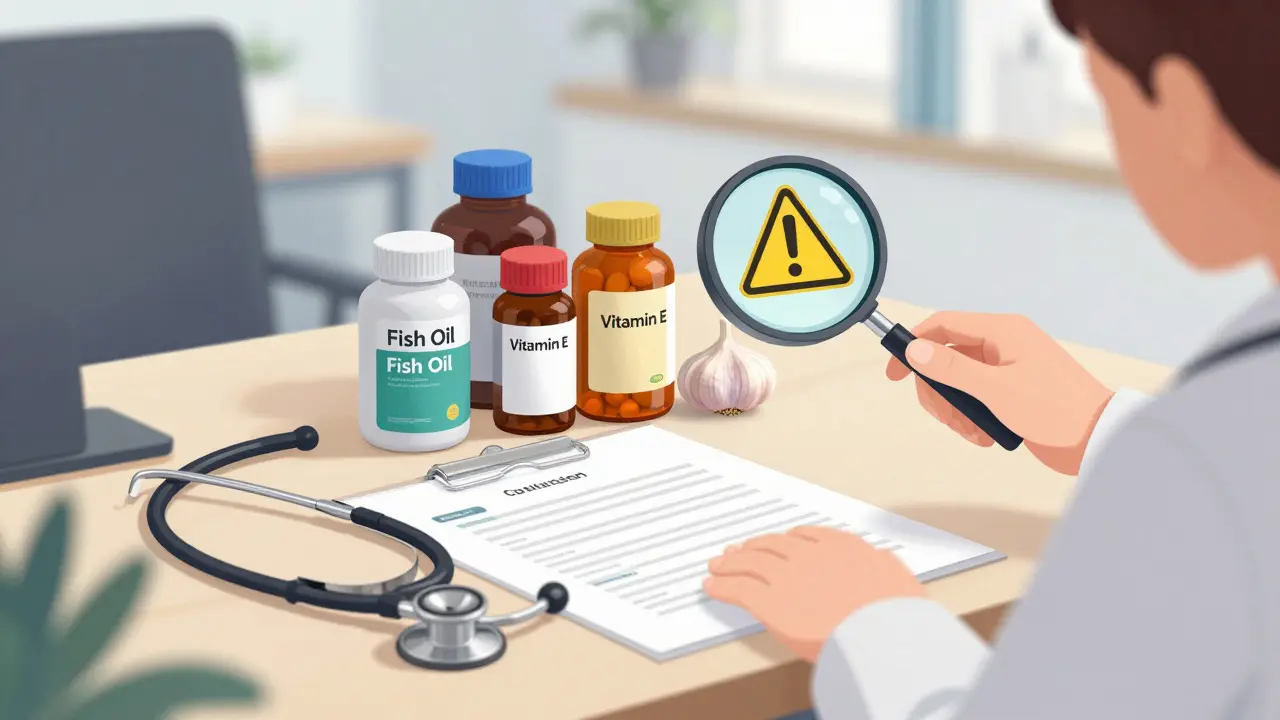
If you are a patient: Make a list of every supplement, tea, and vitamin you take. Bring the actual bottles to your next appointment. Ask your doctor: "Does this supplement have an antiplatelet effect, and should we adjust my INR monitoring frequency?"
If you notice new bruising: Do not wait for your next scheduled blood test. Contact your anticoagulation clinic immediately. They may need to perform an urgent INR check or a platelet function test to determine if a supplement is pushing your bleeding risk into the danger zone.
If you are starting a new diet: Be consistent. Whether it's a sudden increase in green leafy vegetables (which provide Vitamin K) or a new regimen of health supplements, consistency is key to keeping your blood levels stable.


This is such a helpful reminder for anyone dealing with heart issues. It's easy to forget how small things can add up