
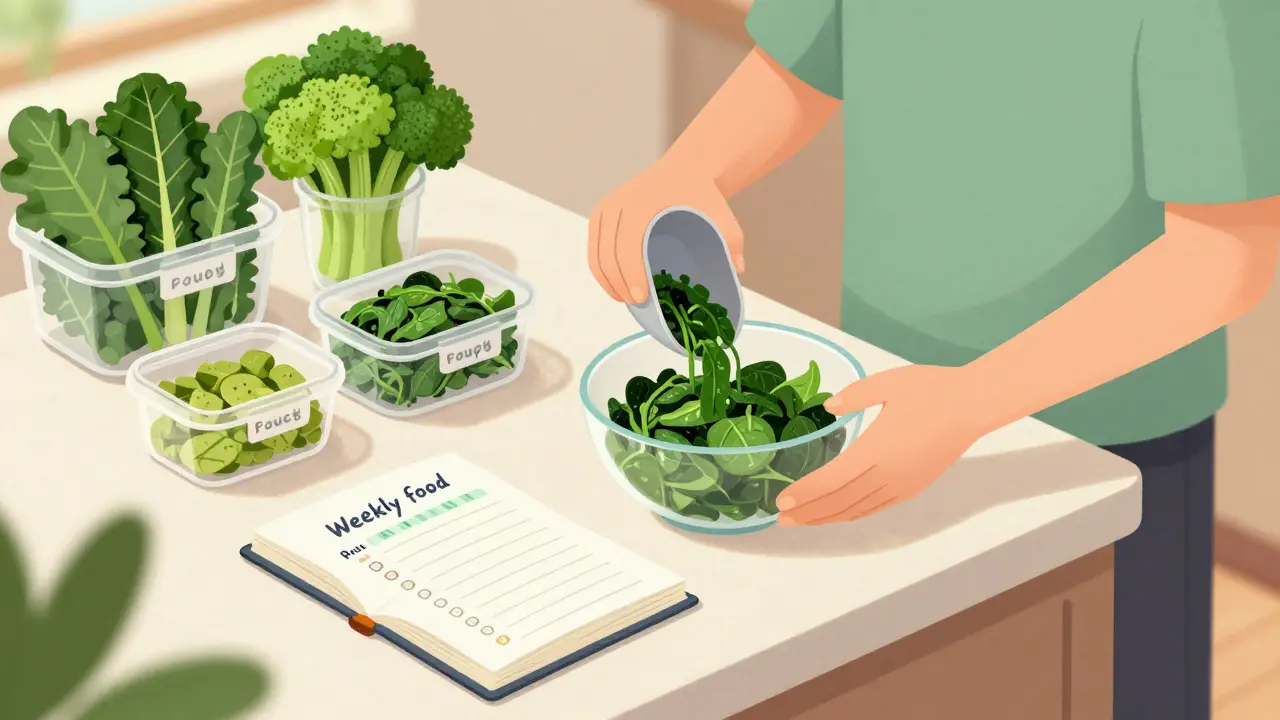
Vitamin K Intake Calculator
This tool helps you track your vitamin K intake from common foods. Consistency is key when taking warfarin - not avoiding vitamin K entirely.
The American Heart Association recommends maintaining a consistent daily intake of vitamin K, not a low one. This calculator helps you stay within the recommended 20% range of your normal intake.
Key guidelines:
- Keep intake within 20% of your normal amount
- Studies show people within 20% of normal stay in safe INR range 78% of the time
- Sudden changes in vitamin K intake can cause dangerous INR fluctuations
When you're on warfarin, your diet isn't about eating healthy or avoiding certain foods-it's about keeping things consistent. It’s not the vitamin K in your spinach that’s dangerous. It’s the sudden switch from eating it every day to skipping it for a week, or going from one salad a week to three in a row. That’s what throws off your blood clotting time-and that’s when things get risky.
Why Vitamin K Matters With Warfarin
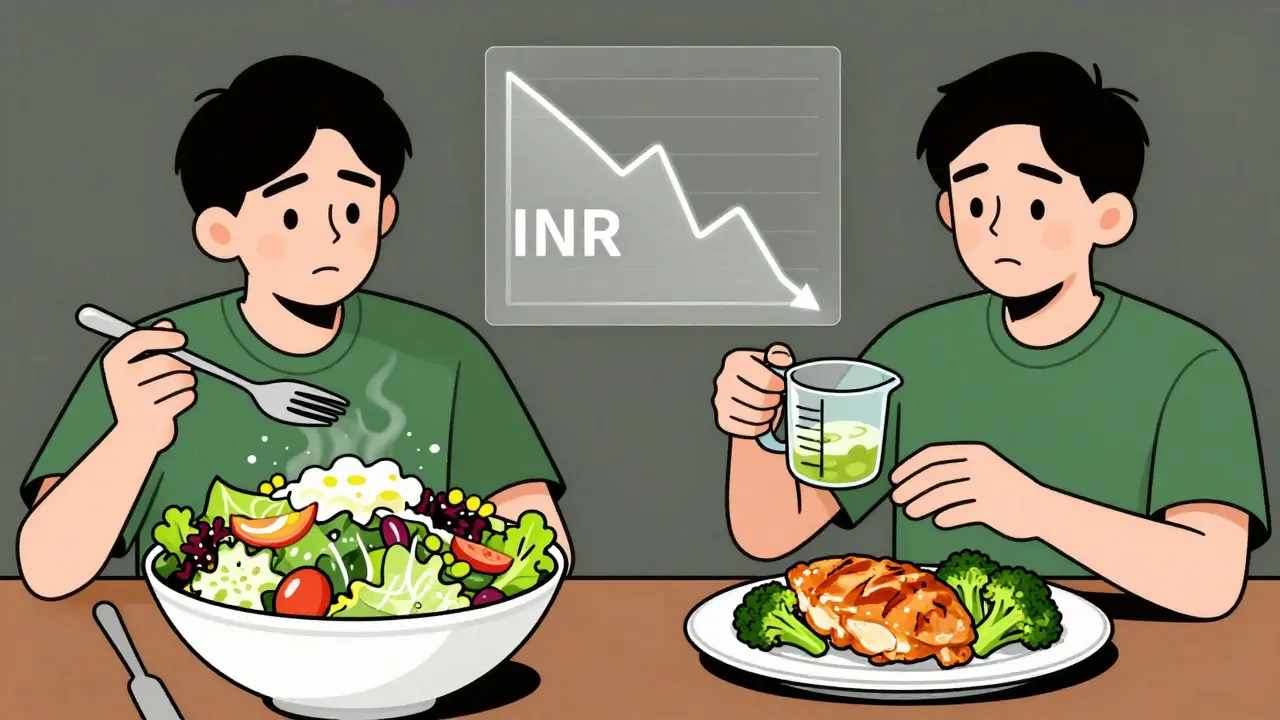
Warfarin works by blocking vitamin K’s role in making blood clotting proteins. Without enough vitamin K, your blood takes longer to clot, which is exactly what you want if you’re at risk for strokes or clots. But if you suddenly eat a lot more vitamin K-say, a big bowl of kale or a serving of broccoli every day-your body gets more of what warfarin is trying to block. That makes the drug less effective. Your INR drops. Your blood clots faster. Risk of stroke or clot goes up.On the flip side, if you suddenly eat way less vitamin K-maybe you go on a juice cleanse or stop eating greens altogether-your body has even less of the vitamin to compete with warfarin. Now the drug works too well. Your INR spikes. You’re at risk for bleeding, even from a small cut or bump.
It’s not about cutting out vitamin K. It’s about keeping your intake steady. The American Heart Association says it plainly: “Maintain a consistent daily intake of vitamin K, not a low one.” Your doctor doesn’t want you to avoid spinach. They want you to eat the same amount every week.
Which Foods Have the Most Vitamin K?
Vitamin K1, the kind that affects warfarin, comes mostly from plants. Here’s what’s packed with it:- Cooked kale: 1,062 mcg per cup
- Cooked spinach: 889 mcg per cup
- Raw Swiss chard: 299 mcg per cup
- Raw broccoli: 85 mcg per cup
- Brussels sprouts: 156 mcg per cup
- Asparagus: 70 mcg per cup
- Green tea: 41-88 mcg per serving
These aren’t the only sources. Other leafy greens, cabbage, and even some vegetable oils contain vitamin K, but the ones listed above are the biggest players. You don’t need to avoid them. You just need to know how much you’re eating-and stick to it.
Consistency Over Quantity
The Mayo Clinic found that people who kept their daily vitamin K intake within 20% of their normal amount stayed in the safe INR range 78% of the time. Those who swung wildly? Only 42% of the time.One patient in the Stop the Clot registry kept his INR stable for eight years by eating exactly two cups of cooked spinach every Tuesday and Thursday. That’s it. No more, no less. He didn’t avoid greens-he made them part of his routine.
Another patient, after eating three days of kale salads during a detox, saw his INR drop from 2.8 to 1.9. His doctor had to bump up his warfarin dose by 15% to get him back on track. He didn’t eat too much vitamin K-he just changed his pattern.
Studies show that people whose vitamin K intake varied by more than 50% from day to day were over three times more likely to have dangerous INR swings. It’s not the amount. It’s the inconsistency.
What About Other Sources of Vitamin K?
Vitamin K2, found in fermented foods like natto, cheese, and egg yolks, also plays a role-but it’s far less common in typical Western diets. You don’t need to track it unless you eat a lot of natto or aged cheeses daily. For most people, the main issue is K1 from leafy greens.Supplements can be tricky. If you take a multivitamin with vitamin K, make sure it’s the same brand and dose every day. Switching brands or skipping days can throw off your balance. Talk to your doctor before starting or stopping any supplement.
Restaurant Meals and Eating Out
This is where things get messy. A salad at a restaurant might have spinach, kale, arugula, and broccoli-all high in vitamin K. But you don’t know how much. One place might serve a half-cup. Another might pile on two cups. You can’t control it.Patients on warfarin often report INR changes after eating out. One survey found 32% had issues with inconsistent vitamin K in restaurant meals. The fix? Stick to your usual. If you normally eat grilled chicken and rice, do that. If you usually have a side of steamed broccoli, order it. Avoid “healthy” salads unless you know the ingredients and portion size.
Ask for dressings on the side. Olive oil-based dressings add vitamin K, too. And skip the garnish-those sprigs of parsley or chives? They add up.
Seasonal Changes and Shopping
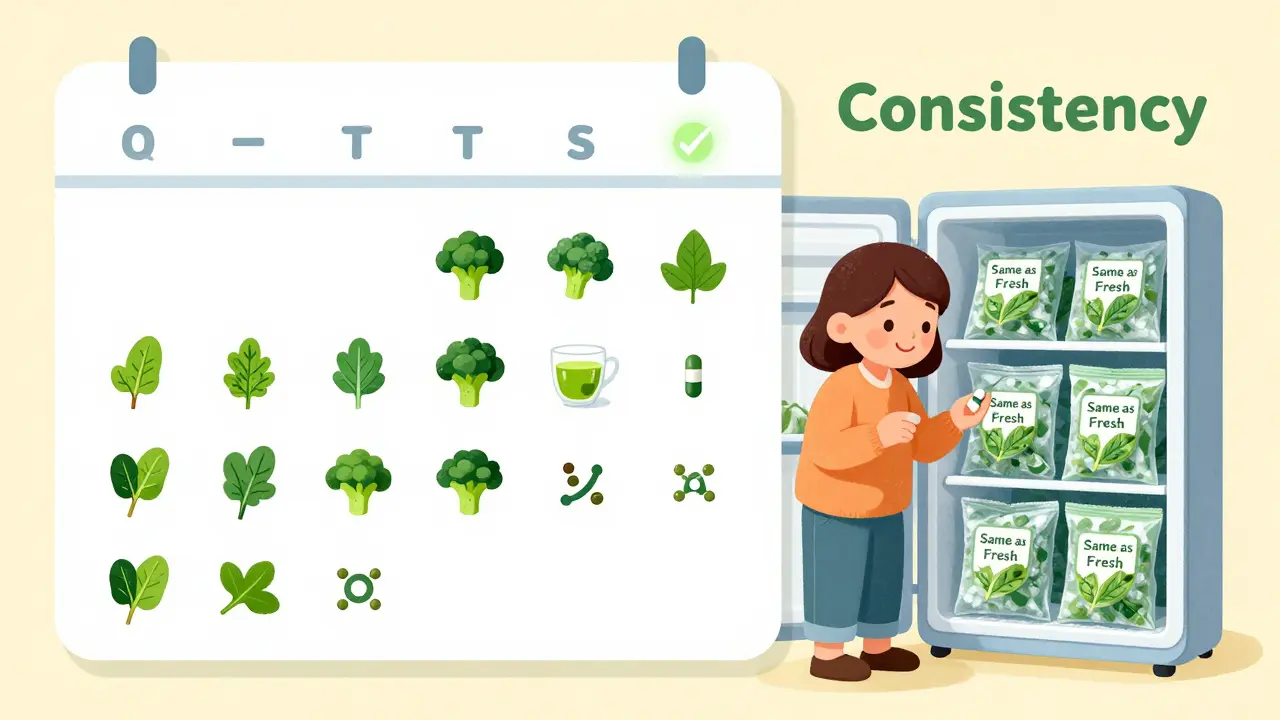
Winter means fewer fresh greens. Spring brings a flood of spinach and kale. If you normally eat one cup of cooked greens a week and suddenly you’re eating three because everything’s on sale, your INR will drop. If you’re used to eating spinach every day in summer and then stop because it’s gone, your INR will rise.Plan ahead. If you know kale is in season, buy extra and freeze it. Cook it in batches. That way, you can keep eating the same amount even when fresh produce is scarce. Frozen spinach has nearly the same vitamin K content as fresh-just thaw and cook it the same way.
What to Do If You Eat Too Much (or Too Little)
If you accidentally eat a huge amount of vitamin K-say, a whole tray of steamed broccoli in one sitting-don’t panic. Don’t skip your warfarin. Don’t try to “fix” it yourself.Call your anticoagulation clinic. They might suggest a small dose adjustment the next day, usually 10-20% higher than normal, based on your usual intake. They’ll likely want to check your INR sooner than usual.
If you go a few days without any vitamin K-rich foods, don’t suddenly overcompensate. Just get back to your normal routine. Your body doesn’t store vitamin K long, so skipping a few days won’t cause an immediate spike in INR. But don’t make it a habit.
Tools to Help You Stay on Track
You don’t need to be a nutritionist. But you do need to be mindful.- Keep a food diary for a week. Write down everything you eat that’s high in vitamin K. Use measuring cups, not guesses. “A handful” isn’t enough.
- Use an app like MyFitnessPal or Cronometer. They track vitamin K content in foods. Enter your meals daily.
- Take your multivitamin at the same time every day-if you take one at all.
- See a dietitian who specializes in anticoagulation. The University of North Carolina found that patients who worked with one stayed in range 85% of the time, compared to 65% with standard care.
Many clinics now give patients a simple handout: “Your normal week includes two cups of cooked spinach. Stick to that. If you eat more, tell your doctor.” That’s it.
What Happens If You Don’t Stay Consistent?
Unstable INR means more blood tests. More doctor visits. More anxiety. More risk.Too high? You could bleed internally from a fall, a nosebleed, or even a headache. Too low? You could have a stroke or a pulmonary embolism.
And it’s not just you. Warfarin is one of the most common drugs linked to emergency hospital visits because of diet and drug interactions. The CDC says the key is “you decide how much vitamin K you choose to eat… just keep it about the same amount each day.” That’s not a suggestion. It’s your safety plan.
Final Thought: It’s a Habit, Not a Diet
You don’t need to give up your favorite foods. You don’t need to eat bland meals. You don’t need to be perfect.You just need to be predictable.
Make your vitamin K intake part of your routine, like brushing your teeth or taking your pill. If you like spinach, eat it twice a week-every week. If you hate it, skip it entirely and find another low-K vegetable you can eat consistently, like carrots or bell peppers.
Stable INR means fewer blood tests. Fewer dose changes. Fewer hospital visits. And most importantly-it means you’re protected.
Consistency isn’t glamorous. But it works.
Can I eat spinach if I’m on warfarin?
Yes, you can eat spinach-but keep the amount consistent. If you normally eat one cup of cooked spinach twice a week, keep doing that. If you suddenly eat three cups in one day, your INR may drop. It’s not about avoiding it. It’s about keeping your intake steady.
What if I eat a big salad at a restaurant?
Don’t skip your warfarin. Don’t panic. Just note it in your food diary and call your anticoagulation clinic. They may adjust your dose slightly the next day or ask to check your INR sooner. Most clinics have a protocol for this.
Do I need to avoid green tea?
No, but be consistent. Green tea contains vitamin K (41-88 mcg per serving). If you drink one cup daily, keep doing it. If you suddenly start drinking five cups a day, your INR may drop. It’s the change that matters, not the tea itself.
Can I take a vitamin K supplement?
Only if your doctor says so. If you’re already taking a multivitamin with vitamin K, stick with the same brand and dose. Switching supplements or skipping days can cause INR fluctuations. Don’t start a new supplement without talking to your care team.
How often should I get my INR checked?
If your INR is stable, you’ll usually get tested every 2-4 weeks. But if you change your diet, start a new medication, or get sick, your clinic will want to check it sooner-often within a few days. Always tell them about any dietary changes.
Is it better to eat very little vitamin K?
No. Very low vitamin K intake can make your INR unstable too. Research shows that consistent moderate intake (75-100 mcg per day) leads to better control than very low intake. Your goal is balance, not deprivation.
Can I eat broccoli every day?
Yes, if you’ve been eating it every day. If you’ve never eaten it before and suddenly start having a cup daily, your INR will likely drop. The key is consistency, not the food itself.
If you’re unsure about your diet, ask your anticoagulation clinic for a simple handout. Most have one: “Eat the same amount of vitamin K every day.” That’s the whole rule.


So let me get this straight-I can eat a whole damn kale smoothie every morning as long as I do it like clockwork? That’s the whole secret? No wonder my INR’s been stable since I started treating my greens like a daily commute.
Also, who the hell puts parsley on everything? That’s not garnish, that’s a vitamin K ambush.