

The Hidden Danger in Your Medicine Cabinet
You take your morning coffee, swallow a multivitamin, maybe a capsule of turmeric for inflammation, and then head to the doctor. When the physician asks, "Are you taking any new medications?", you nod no. After all, vitamins aren't "medicines," right? They're natural. They're safe.
This assumption is one of the most dangerous gaps in modern healthcare. Dietary supplements are non-prescription substances including vitamins, minerals, herbs, botanicals, and amino acids that patients consume alongside conventional treatments. While they feel harmless, they carry potent biological activity. The problem isn't just that you might be taking something risky; it's that your doctor doesn't know you're taking it at all.
Think about it: if you took an extra pill of blood pressure medication, you'd tell your doctor immediately. But when you add St. John’s wort or garlic pills to your routine, you often stay silent. This silence creates a perfect storm for adverse reactions. In this guide, we’ll break down why disclosure matters, why so many people fail to share this information, and exactly how to have that conversation without feeling judged.
Why Most People Stay Silent
If you’ve ever withheld supplement info from your provider, you’re not alone. In fact, you’re part of a massive trend. Studies show that only about 33% of supplement users actually tell their conventional healthcare providers what they’re taking. Even among adults with chronic conditions-who are at the highest risk-disclosure rates hover around 50%.
So, why do we hide this? It usually comes down to three reasons:
- The "Natural" Myth: Many believe that because a product is derived from a plant, it cannot interact with synthetic drugs. This is false. Herbs contain active compounds that work on the same metabolic pathways as prescription meds.
- Fear of Judgment: Some patients worry their doctor will dismiss their efforts to be healthy or lecture them about spending money on "useless" pills.
- Lack of Inquiry: Doctors are busy. A typical appointment lasts 15-20 minutes. If the doctor doesn’t ask specifically about supplements, patients assume it’s not relevant.
A survey by ConsumerLab.com found that 68% of users believed their providers didn't need to know because supplements are "natural and safe." Another 42% assumed their doctors would simply discourage use. These assumptions lead to critical information staying out of your medical record.
The Real Risk: Herb-Drug Interactions
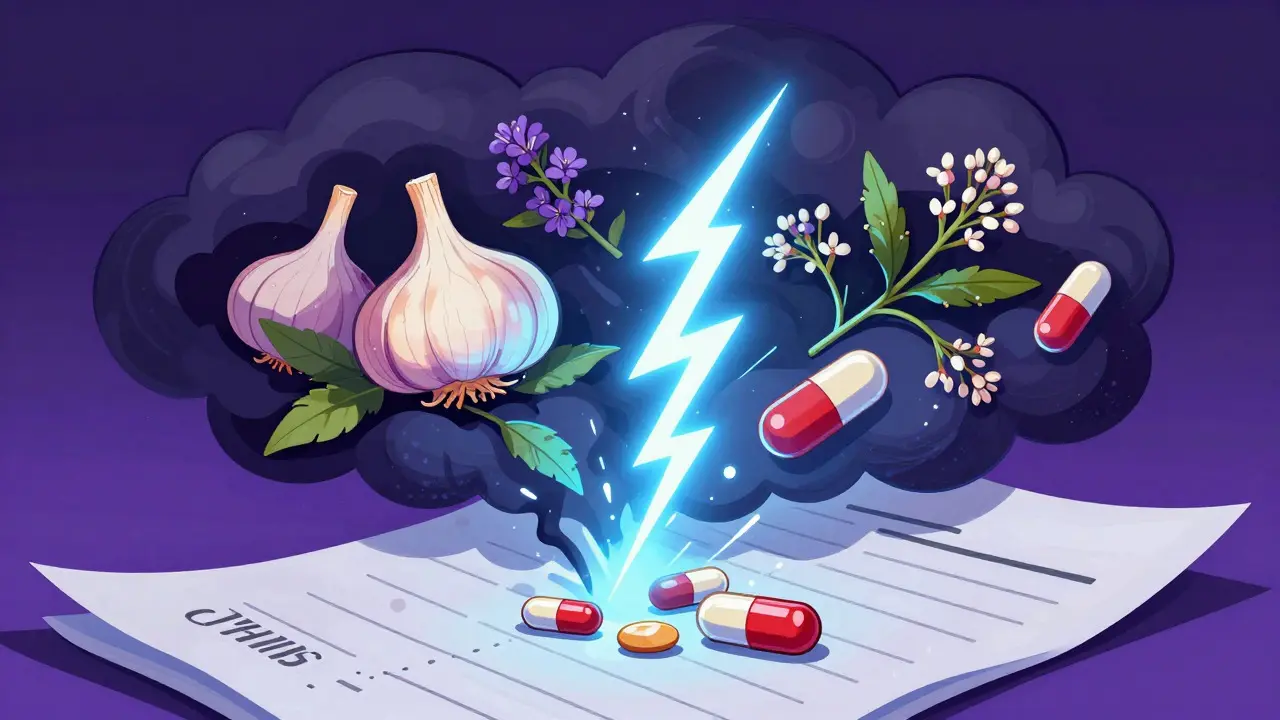
Let’s get concrete. What happens when you don’t disclose? The biggest risk is an Herb-drug interaction is a chemical reaction between a dietary supplement and a prescription medication that alters the drug's effectiveness or increases side effects.
Here are two common scenarios that happen far too often:
- The Blood Thinner Trap: You’re on warfarin (Coumadin) for heart health. You start taking high-dose vitamin K greens or garlic supplements for immunity. Garlic can increase bleeding risk, while vitamin K counteracts warfarin. Result? Either excessive bleeding or a stroke risk because your blood wasn’t thin enough.
- The Birth Control Failure: You take oral contraceptives. You start using St. John’s wort for mild depression or stress. St. John’s wort speeds up liver enzymes that metabolize hormones. Result? Your birth control becomes ineffective, leading to unintended pregnancy.
Dr. Edzard Ernst, a former Professor of Complementary Medicine, noted that the most dangerous aspect of herbal medicine isn't the herbs themselves-it's the secrecy surrounding their use. When your doctor prescribes a new med, they run checks against your current prescriptions. They rarely check against your pantry.
Who Is Checking? Provider Knowledge Gaps
It’s not just on you. There’s a systemic issue here. Only 27% of physicians feel adequately trained to discuss supplements with patients. Many medical schools still offer minimal curriculum on integrative medicine.
However, there is a bright spot. Disclosure rates jump significantly depending on who you see. Patients are much more likely to tell integrative or naturopathic practitioners about their supplements (45%) compared to primary care physicians (13%). Why? Because integrative providers explicitly ask. They create a space where supplements are part of the treatment plan, not an afterthought.
If your current doctor never asks, don’t assume they don’t care. Assume they are constrained by time and training. That’s why proactive disclosure is your best safety net.
How to Disclose Like a Pro
You don’t need to be a chemist to talk about supplements. You just need to be organized. Here is a simple strategy to ensure your provider has the full picture:
| Action Step | Why It Works |
|---|---|
| Bring the Bottles | Labels change. Dosages vary. Showing the physical container allows your doctor to see exact ingredients, fillers, and strength. |
| List Everything | Include vitamins, minerals, herbs, protein powders, and even over-the-counter pain relievers. Nothing is "too small" to mention. |
| Note Timing | Tell them when you started and when you stop. Recent changes are often the culprit behind new symptoms. |
| Ask Directly | Say: "I'm taking X. Could this interact with my blood pressure medication?" This prompts a specific clinical check. |
Using a standardized approach helps. Some clinics now use screening tools that ask five specific questions about supplement use. If your clinic doesn’t, bring a printed list. It takes 30 seconds to hand over, but it could save hours of confusion later.

Navigating the Regulatory Gray Area
Part of the confusion stems from how supplements are regulated. Under the Dietary Supplement Health and Education Act (DSHEA) of 1994, supplements do not require pre-market approval by the FDA. Unlike drugs, they aren’t tested for safety and efficacy before hitting shelves.
This means: DSHEA regulations mean dietary supplements are classified as food, not drugs, allowing them to be sold without prior FDA safety testing.
- No Quality Guarantee: Studies have shown that some supplements contain less than the labeled ingredient amount, or worse, hidden contaminants like heavy metals.
- Label Warnings: You’ve seen the disclaimer: "Not evaluated by the FDA." This isn't just legal jargon; it’s a warning that the burden of proof is on you and your doctor to assess safety.
Because the regulatory net is wide, your doctor’s knowledge of specific brands is limited. Bringing the bottle helps them verify if the manufacturer follows Good Manufacturing Practices (GMP).
What Happens If You Don’t?
Let’s look at real-world consequences. On health forums, patients frequently share stories of undisclosed interactions. One user reported excessive bleeding during minor surgery because they hadn’t mentioned daily garlic pills. Another shared that their cardiologist had to adjust their blood pressure meds after discovering they’d been taking turmeric for years.
These aren't rare edge cases. The FDA receives reports of serious adverse events from supplements, but experts estimate that only 1% of actual adverse events are reported. Most go undocumented because the link between the herb and the symptom is missed.
By staying silent, you become a test subject in your own body. Disclosure turns you back into a partner in your care.
Making It Easier: Tools and Tips
If writing lists feels tedious, technology can help. Apps like MyMedList allow you to store a digital inventory of all your medications and supplements. You can generate a PDF to email to your doctor before appointments. In trials, these digital tools improved disclosure accuracy by 44%.
Also, pay attention to the timing of your visit. Disclosure is most effective during:
- New medication prescriptions
- Pre-surgical consultations
- Annual physicals
- When experiencing new side effects
Don’t wait for the doctor to ask. Make it the first thing on the agenda. Say, "Before we start, I want to make sure you know everything I’m putting in my body." This sets a tone of transparency and collaboration.
Do I need to tell my doctor about multivitamins?
Yes. While standard multivitamins are generally low-risk, they can still interact with certain medications. For example, high doses of Vitamin K can interfere with blood thinners like warfarin. Calcium and iron can reduce the absorption of antibiotics and thyroid medications. Always disclose even "basic" supplements.
Will my doctor judge me for taking herbal remedies?
Ideally, no. Most doctors prioritize safety over judgment. However, if you feel hesitant, frame it as seeking advice: "I've been taking this for energy, but I want to make sure it's safe with my other meds." This invites collaboration rather than criticism.
Which supplements are most likely to cause interactions?
High-risk supplements include St. John's Wort (interacts with antidepressants, birth control, and HIV meds), Garlic and Ginseng (increase bleeding risk with anticoagulants), and Green Tea Extract (can affect liver function and stimulant metabolism). Always check these specifically.
Does the FDA approve supplements before they are sold?
No. Under DSHEA, supplements are regulated as food, not drugs. Manufacturers do not need to prove safety or efficacy to the FDA before selling. The FDA can only act to remove products after they are found to be unsafe or misbranded.
What should I do if I forgot to mention a supplement during my last visit?
Call your doctor's office or send a message through their patient portal. Provide the name, dose, and frequency of the supplement. Ask if it requires any adjustment to your current treatment plan. Better late than never.
