

Why Generic Drugs Are the Norm in Workers’ Compensation
When a worker gets hurt on the job, the workers’ compensation system steps in to cover medical care-including prescriptions. But here’s the thing: generic drugs are now the default choice for treating work-related injuries. Not because they’re cheaper to make, but because they work just as well-and save employers and insurers millions every year.
Back in 2015, about 84.5% of prescriptions in workers’ compensation were generics. By 2023, that number jumped to 89.2%. In states like California, it’s nearly 93%. That’s not a fluke. It’s policy. And it’s working.
How Generic Substitution Works-Legally and Medically
Generic drugs aren’t knockoffs. They’re FDA-approved copies of brand-name medications. To get approval, a generic must have the same active ingredient, strength, dosage form, and route of administration. It must also prove it’s absorbed into the body at the same rate and to the same extent as the brand. That’s called bioequivalence.
The FDA doesn’t just approve generics and walk away. They monitor them. If a generic fails to meet standards, it’s pulled. And if a brand-name drug gets recalled, the generic version gets pulled too. They’re held to the same exacting standards.
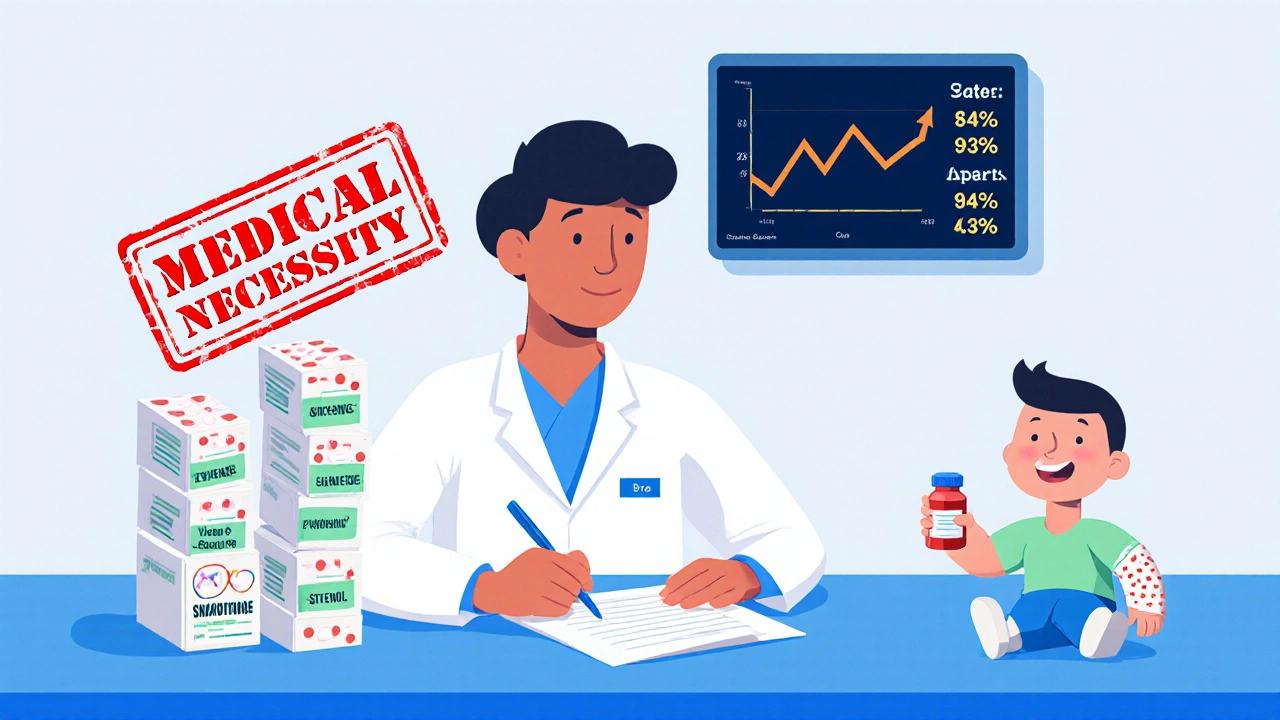
States have jumped on board. As of 2025, 44 states and Washington, D.C., have laws that either require or permit generic substitution in workers’ compensation-unless a doctor writes a specific reason why the brand is needed. Tennessee’s 2023 Medical Fee Schedule says it plainly: “An injured employee should receive only generic drugs… unless the authorized treating physician documents medical necessity.” That means no more automatic brand prescriptions. Doctors have to justify them.
The Cost Difference Is Staggering
Let’s say an injured worker is prescribed a brand-name painkiller that costs $100 per month. The generic version? Around $20. That’s an 80% drop. Over a year, that’s $960 saved per person. Multiply that by hundreds of thousands of claims, and you’re talking billions.
From 2014 to 2019, the list price of the most common brand-name drugs used in workers’ comp rose 65.5%. Meanwhile, the price of generic versions dropped 35%. Even the cost of milk and bread only went up 7.4% in that same period.
Pharmacy Benefit Managers (PBMs)-the middlemen who handle drug benefits for insurers-push hard for generics. OptumRx, Express Scripts, and Prime Therapeutics control about 65% of the workers’ comp pharmacy market. They build formularies that list which drugs are preferred. Generics are at the top. Brands? They need prior authorization. That means the doctor has to call in, explain why the brand is necessary, and wait for approval. It’s not impossible, but it’s designed to make the brand the exception, not the rule.
Why Some Workers and Doctors Still Hesitate
Despite all the data, skepticism lingers. A 2019 survey found 68% of injured workers believed brand-name drugs were better. Even today, many still think generics are “weaker” or “made in cheaper factories.”
That’s a myth. The same companies that make brand-name drugs often make the generics too. The difference? Packaging and marketing. The active ingredient? Identical.
Doctors, too, sometimes default to brands out of habit. Or because they’ve never been trained on the science behind generics. A 2021 survey by the American College of Occupational and Environmental Medicine found 73% of providers said managing patient expectations about generics was one of their biggest challenges.
There are rare exceptions. For drugs with a narrow therapeutic index-like warfarin or levothyroxine-switching between brands and generics can be risky. But even then, studies show that when properly managed, generic substitution is safe. Less than 2% of cases involve any therapeutic issue.
What’s Changing in 2025
Things are moving fast. Colorado passed a rule in 2023 requiring 95% generic utilization for all drugs on its workers’ comp formulary-effective January 1, 2024. Texas started allowing biosimilars (the next generation of generics for complex biologic drugs) in 2022. These are drugs used for inflammation, nerve pain, and autoimmune conditions that used to cost thousands per month.
By 2025, experts predict generic use in workers’ comp will hit 93.5%. Why? Because brand-name prices keep climbing. Insurers won’t pay them unless forced. And with 38 states now having formal drug formularies, the pressure to use generics is built into the system.
But it’s not all smooth sailing. Some generic manufacturers have been accused of colluding to keep prices high. In 2022, one analysis found that in certain cases, generic prices spiked instead of falling-because competition dried up. That’s why regulators are watching more closely than ever.
What Providers and Workers Need to Do
If you’re a doctor treating injured workers: know your state’s formulary. Learn how to document medical necessity properly. Don’t just write “patient prefers brand.” That’s not enough. You need clinical reasons-like allergies, adverse reactions, or documented failure of the generic.
If you’re an injured worker: ask questions. If you get a generic, ask your pharmacist: “Is this the same as the brand?” They’ll tell you yes. Ask your doctor: “Why this one?” If they can’t give you a clear answer, get a second opinion.
Employers and insurers? Keep pushing for formulary compliance. Train your claims staff. Educate your workers. The savings aren’t just numbers on a spreadsheet-they’re lower premiums, fewer disputes, and faster recoveries.
What’s Next for Generic Substitution
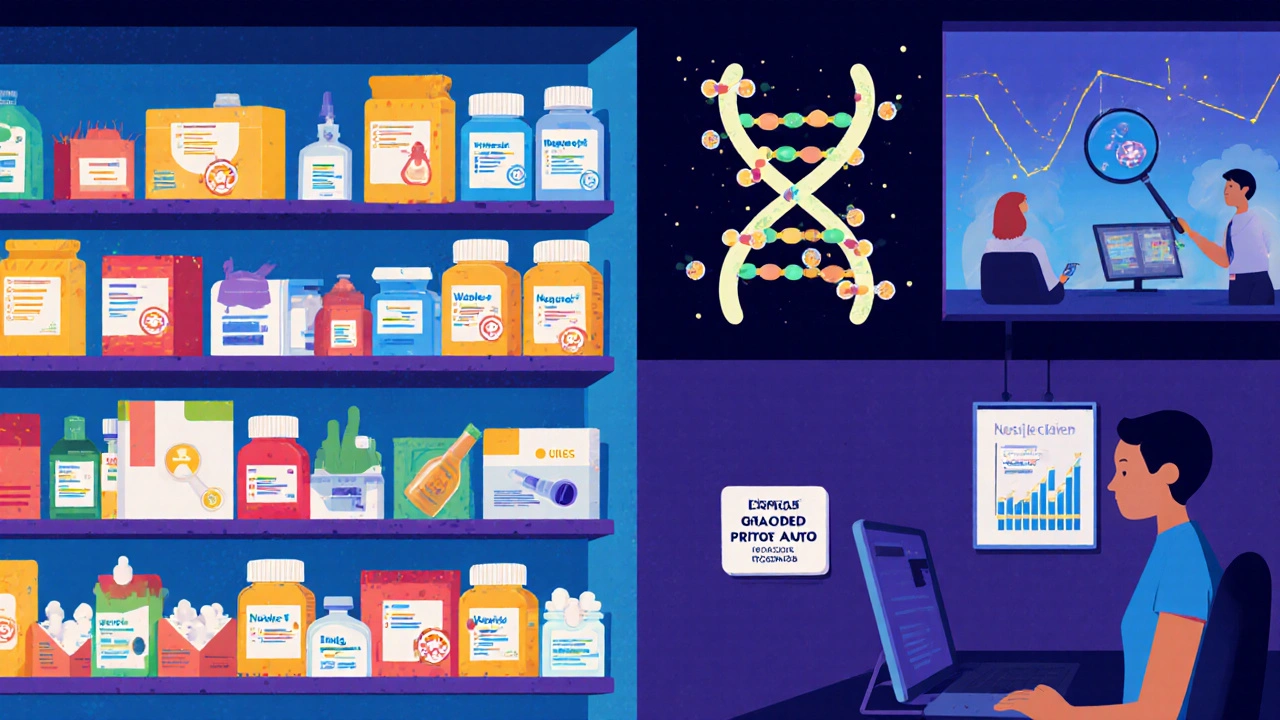
The future isn’t just about more generics. It’s about smarter substitution. Pharmacogenomic testing-where your DNA is analyzed to predict how you’ll respond to a drug-is starting to show up in workers’ comp. That means we might soon know ahead of time whether a generic will work for you… or if you need the brand.
Specialty drugs are still a challenge. They make up 12.7% of pharmacy costs but have only 4.3% generic potential. That’s where biosimilars come in. As patents expire, more of these expensive drugs will have cheaper alternatives.
But here’s the bottom line: generic substitution isn’t going away. It’s getting stronger. And for workers’ compensation systems struggling with rising costs, it’s one of the few tools that actually works.
Frequently Asked Questions
Are generic drugs really as effective as brand-name drugs in workers’ compensation?
Yes. The FDA requires generics to have the same active ingredients, strength, dosage form, and bioequivalence as brand-name drugs. Studies show they work the same way in the body. Over 89% of prescriptions in workers’ compensation are now generics, and outcomes for injured workers haven’t declined. In fact, faster access to affordable meds often leads to quicker recovery.
Can my doctor refuse to prescribe a generic drug?
In most states, yes-but only if they document medical necessity. Generic substitution is the default. If your doctor wants to prescribe a brand-name drug, they must explain why, in writing. Reasons might include allergies, documented failure of the generic, or a narrow therapeutic index where switching could be risky. Patient preference alone isn’t enough.
Why are some generic drugs more expensive than others?
It’s not about quality-it’s about supply and competition. If only one company makes a generic, they can charge more. If five companies make it, prices drop. In recent years, some generic manufacturers have been accused of price-fixing, leading to unexpected spikes. Regulators are investigating these cases, and insurers are switching suppliers to keep costs low.
Do workers’ compensation systems cover brand-name drugs at all?
Yes, but only under specific conditions. If no generic exists, or if a doctor proves the brand is medically necessary, insurers will cover it. But prior authorization is required. Many claims are denied at first because the paperwork is incomplete. The key is clear, clinical documentation-not just saying “I prefer the brand.”
What happens if a generic drug doesn’t work for me?
If you try a generic and feel it’s not helping-or if you have side effects-you should report it to your doctor. They can request a brand-name alternative with proper documentation. This happens in less than 2% of cases. Most people respond the same to generics as they do to brands. If you’re unsure, ask your pharmacist to compare the active ingredients.


I've been on generic pain meds after my work injury and honestly? I didn't notice any difference. My back still hurts, but at least I'm not broke. Thanks for the clear breakdown!